
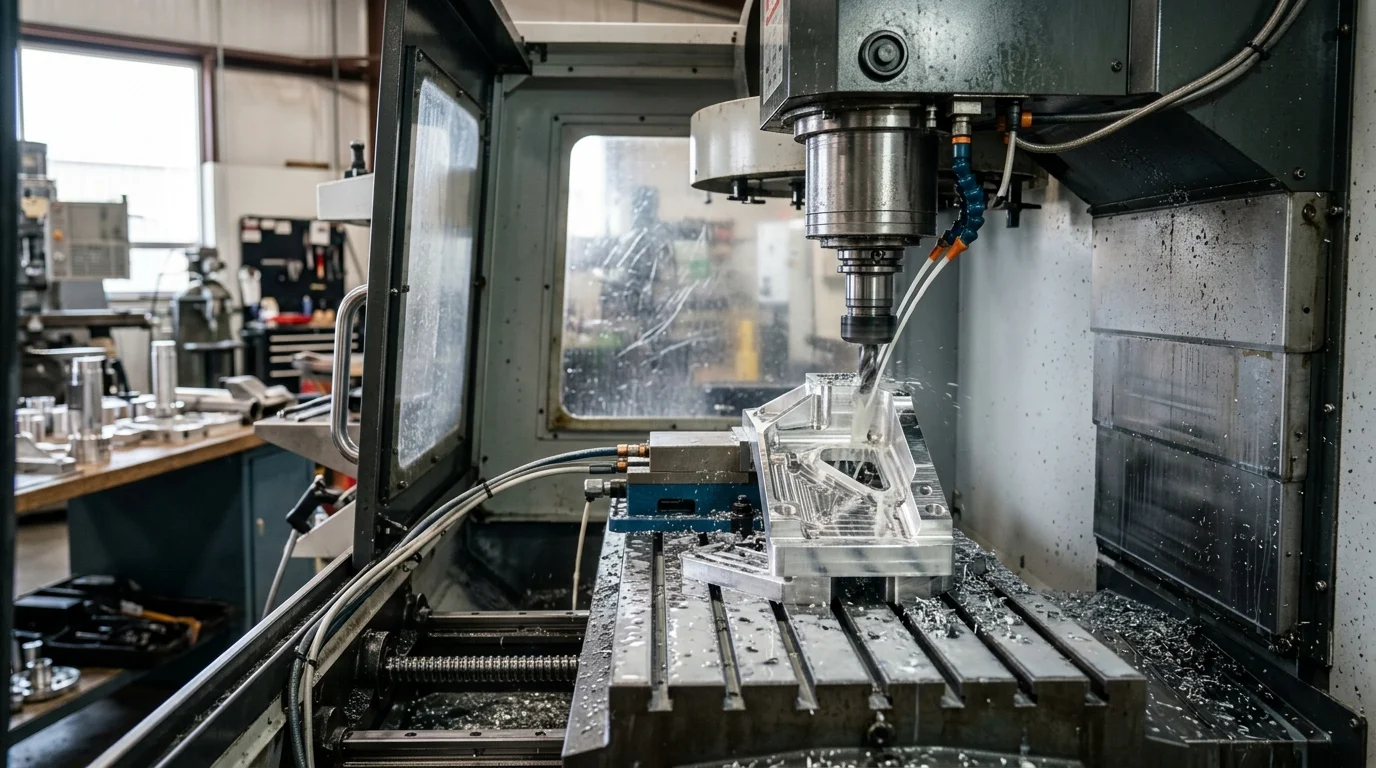
Why High-Precision CNC Matters
In the modern manufacturing landscape, high-precision CNC machinery has transitioned from a niche requirement to a baseline standard for global competitiveness. For procurement teams and wholesale buyers, sourcing equipment capable of micron-level accuracy is no longer just about meeting technical specifications; it is a strategic maneuver to protect profit margins and elevate supply chain reliability.
When dealing with tolerances as tight as ±0.001 mm to ±0.005 mm, the margin for error is virtually nonexistent. Investing in high-precision infrastructure directly influences a manufacturer’s ability to scale production while adhering to stringent international quality standards.
Impact on throughput and scrap reduction
The operational impact of high-precision CNC machines is most visible in throughput metrics and scrap reduction. Legacy or low-rigidity equipment often suffers from thermal distortion and vibration, leading to scrap rates that can easily exceed 4% to 6% in complex metalworking runs. By upgrading to micron-level capable machines, facilities can drive defect rates down to below 0.5%.
Furthermore, superior precision eliminates the need for secondary finishing operations, such as manual polishing or secondary grinding. This consolidation of operations significantly boosts Overall Equipment Effectiveness (OEE) and shortens cycle times, allowing production lines to yield higher output per shift.
Industries that require micron-level accuracy
Certain manufacturing sectors operate under strict regulatory and safety frameworks that mandate micron-level precision. In the aerospace industry, turbine blades and structural components require exact geometric tolerances to withstand extreme aerodynamic stresses. Similarly, the medical device sector relies on high-precision 5-axis machining centers to produce orthopedic implants and surgical instruments where surface finish and dimensional accuracy are critical for biocompatibility.
The automotive and heavy machinery sectors also demand exacting standards for components like wheel hubs, crankshafts, flywheels, and hydraulic valves. For these applications, Tier 1 and Tier 2 suppliers must deploy rigid, high-speed CNC turning and milling centers to ensure seamless assembly and long-term mechanical reliability.
How buyers should define tolerance requirements
Procurement professionals must clearly distinguish between different accuracy metrics when communicating with suppliers. Buyers should define requirements using ISO 230-2 standards, explicitly separating “positioning accuracy” (often targeted at 0.004 mm to 0.008 mm) from “repeatability” (typically required at 0.002 mm to 0.005 mm).
A common pitfall in equipment sourcing is accepting generalized tolerance claims without specifying the operational environment. Buyers must define their requirements based on the material being machined (e.g., titanium vs. aluminum), expected spindle loads, and the thermal conditions of the factory floor, ensuring the supplier guarantees these tolerances under actual production conditions.
Machine Design Factors That Drive Accuracy
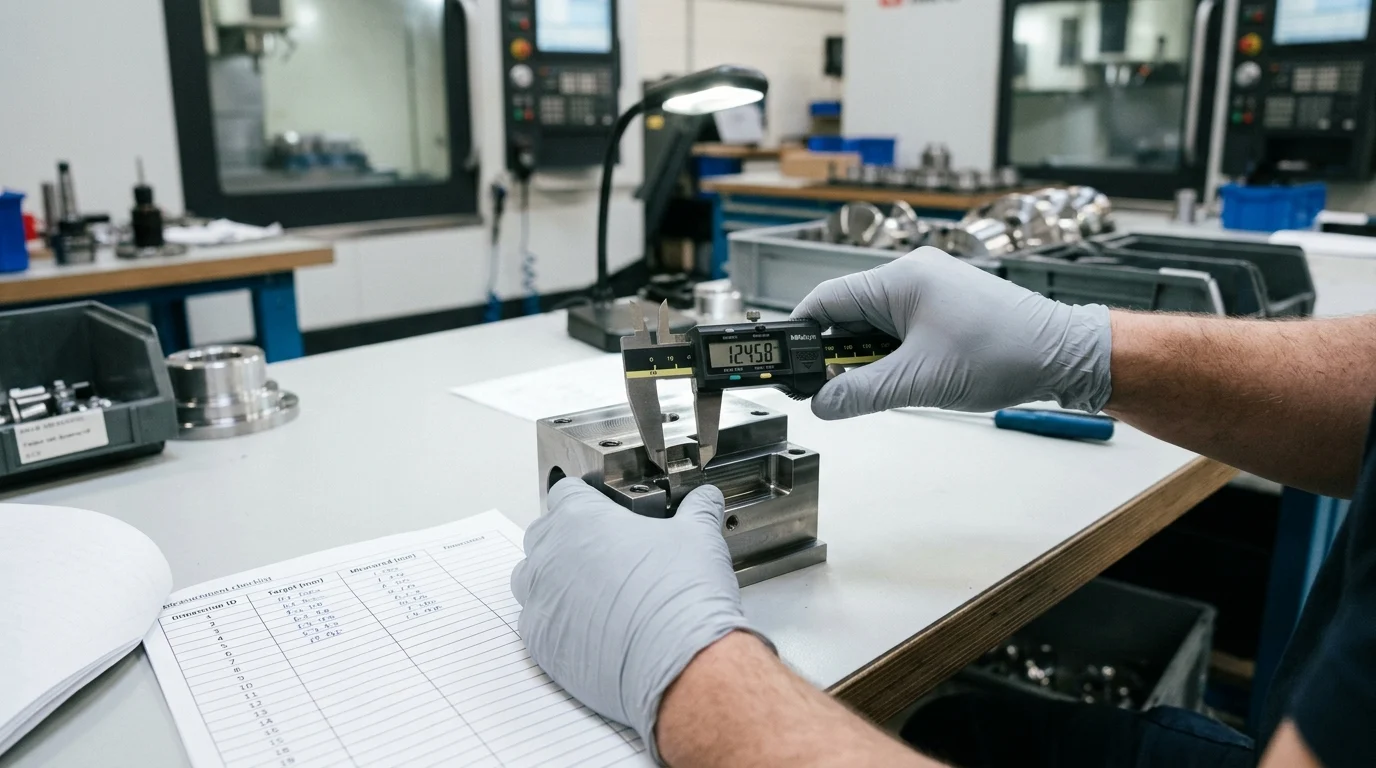
Software and control systems, while critical, cannot compensate for a weak mechanical foundation. Micron-level accuracy is fundamentally dictated by the physical design, mass, and structural integrity of the CNC machine. Sourcing teams must evaluate the underlying architecture of the equipment to ensure it can maintain precision during heavy-duty cutting cycles over a multi-year lifespan.
Rigidity, thermal stability, and spindle quality
Rigidity begins with the machine bed. High-precision machines typically utilize high-grade Meehanite cast iron or polymer concrete bases, which offer exceptional vibration absorption and structural stability compared to standard steel weldments. This rigidity prevents tool deflection during high-feed operations.
Thermal stability is equally vital. Spindles rotating at 12,000 to 24,000 RPM generate immense heat, which can cause micro-expansions in the machine frame. Premium CNC machines integrate advanced thermal compensation systems, including spindle chillers and coolant-through-ball-screw designs, to maintain structural equilibrium. High-quality spindles must exhibit runout of less than 2 microns to guarantee superior surface finishes.
Key specifications procurement teams should compare
When comparing supplier proposals, procurement teams must look beyond the base price and analyze specific mechanical and electrical specifications. The choice of linear guideways (roller vs. ball) or traditional box ways dictates the machine’s balance between speed and heavy cutting capability.
| Specification Category | Standard CNC Capability | High-Precision CNC Capability | Impact on Production |
|---|---|---|---|
| Positioning Accuracy | ±0.010 mm | ±0.004 mm | Eliminates secondary finishing operations |
| Repeatability | ±0.008 mm | ±0.002 mm | Ensures batch-to-batch consistency |
| Spindle Runout | < 5 microns | < 2 microns | Maximizes tool life and surface finish |
| Rapid Traverse Rate | 24 m/min | 36 – 48 m/min | Reduces non-cutting time and boosts throughput |
| Control Resolution | 1 micron | 0.1 micron (Nanometer control) | Enables ultra-smooth contouring in mold making |
Additionally, buyers should compare the torque curves of the spindle motors and the thrust force of the servo axes. These quantitative metrics provide a clearer picture of how the machine will perform under the stress of aggressive metal removal rates.
When to choose vertical, horizontal, gantry, or turning machines
Selecting the right machine architecture depends heavily on the workpiece dimensions, batch sizes, and required cycle times. Vertical Machining Centers (VMCs) offer excellent versatility and lower investment costs, making them ideal for flat parts, mold making, and general metalworking. Horizontal Machining Centers (HMCs) excel in high-volume production; their tombstone fixtures and superior chip evacuation make them the preferred choice for complex automotive castings like engine blocks and valves.
For massive components exceeding 2,000 mm in length—such as aerospace bulkheads or heavy railway parts—Gantry or double-column machining centers provide the necessary structural span and rigidity. Alternatively, when dealing with cylindrical parts requiring simultaneous milling and turning, multi-tasking turning centers or 5-axis machining centers reduce setup times and minimize the tolerance stacking errors that occur when moving parts between multiple single-purpose machines.
How to Validate CNC Accuracy Before Ordering
Procurement teams cannot rely solely on marketing brochures to confirm micron-level capabilities. Validating a CNC machine’s accuracy requires a rigorous, data-driven approach prior to shipment. Establishing a strict Factory Acceptance Test (FAT) protocol ensures that the equipment meets all contractual specifications before the final balance payment is released.
Inspection methods, test cuts, and acceptance criteria
The gold standard for validating CNC geometry is laser interferometer testing, which maps the linear positioning and pitch/yaw errors across the entire travel of the axes. Suppliers should provide documentation proving the machine meets ISO or JIS accuracy standards. Additionally, ballbar testing is crucial for assessing simultaneous multi-axis interpolation; a circularity error of less than 0.005 mm is typically expected for high-precision models.
Beyond static measurements, buyers must mandate test cuts. The NAS 979 “circle-diamond-square” test is a universally recognized benchmark. The finished test piece must be measured on a calibrated Coordinate Measuring Machine (CMM) to verify that the dynamic cutting performance mirrors the static accuracy claims.
How to assess supplier capability and customization
Assessing a supplier goes beyond evaluating a single machine; it involves auditing their engineering depth and quality control infrastructure. Global buyers should verify the supplier’s ISO 9001 certification and request virtual or third-party factory audits to inspect their assembly environments. High-precision machines must be assembled in temperature-controlled facilities (typically maintained at 20°C ± 1°C) to prevent thermal expansion during the scraping and alignment phases.
Furthermore, suppliers should demonstrate the capability to provide industry-specific solutions. This includes customizing rotary tables, integrating robotic loading/unloading systems, and designing specialized hydraulic fixtures tailored to the buyer’s exact metalworking requirements.
Commercial terms: MOQ, lead time, training, and warranty
Commercial terms for high-value capital equipment require careful negotiation to mitigate buyer risk. While the Minimum Order Quantity (MOQ) is generally one unit, buyers ordering multiple units for an entire production line should negotiate staggered delivery schedules. Lead times for high-precision CNC machines typically range from 60 to 120 days, heavily dependent on the complexity of custom automation and controller configurations (e.g., Fanuc, Siemens, or Heidenhain).
Warranty and training are non-negotiable elements. A standard commercial warranty should cover parts and labor for 12 to 24 months. Because operating high-precision, 5-axis, or multi-tasking machines requires specialized skills, the purchase contract must include comprehensive training—often 1 to 2 weeks of on-site instruction covering advanced programming, collision avoidance, and routine maintenance.
Trade, Logistics, and Compliance Risks
Cross-border procurement of heavy industrial machinery introduces a complex web of logistical, financial, and regulatory challenges. A high-precision CNC machine is a delicate instrument encased in a massive cast iron body, often weighing anywhere from 5,000 kg to over 30,000 kg. Safeguarding this asset from the factory floor to the final installation site requires meticulous planning.
Packaging, handling, crating, and shipping risks
The physical vulnerabilities during transit are significant. High humidity, salt-laden ocean air, and severe mechanical shocks can compromise the machine’s electronics and precision guideways. Equipment must be enveloped in vacuum-sealed aluminum foil with industrial desiccants to prevent oxidation.
Crating must utilize heavy-duty, steel-reinforced wooden structures that comply with ISPM 15 standards for international shipping. To ensure accountability during transit, procurement teams should mandate the installation of shock monitors and tilt indicators on the crating. If a container experiences an impact exceeding 50G, these indicators will flag potential hidden damage to the spindle bearings or linear rails before the machine is even unpacked.
Required documentation and electrical compliance
Customs clearance delays can incur severe demurrage charges and disrupt production timelines. Importers must ensure all commercial invoices, packing lists, and Bills of Lading are perfectly aligned with the harmonized system (HS) codes for CNC machinery. More importantly, the equipment must meet regional regulatory and safety compliance standards.
For the European market, machines must carry genuine CE marking, complying with the Machinery Directive (2006/42/EC) and the Electromagnetic Compatibility (EMC) Directive. For North America, UL or CSA certification for the electrical cabinet is usually mandatory. Buyers must also clearly specify their facility’s electrical infrastructure prior to manufacturing—such as 3-phase 380V/50Hz for Europe and Asia, or 480V/60Hz for the United States—to avoid costly post-delivery transformer installations.
Total landed cost, ROI, and after-sales support
Calculating the Total Landed Cost (TLC) is essential for accurate capital expenditure planning. The FOB (Free On Board) price of the machine is only the starting point. Buyers must account for ocean freight (often 8% to 15% of the machine cost depending on flat-rack or open-top container requirements), import tariffs (which can range from 3% to 25%), port handling fees, inland heavy-haul transport, and specialized rigging services required for installation.
A comprehensive ROI analysis should target a payback period of 18 to 36 months, driven by the increased throughput and reduced scrap rates discussed earlier. Finally, buyers must secure guarantees regarding after-sales support. Partnering with suppliers who maintain overseas marketing and sales centers ensures access to localized spare parts, rapid technical troubleshooting, and minimized machine downtime.
How Procurement Teams Should Choose a Supplier

Choosing the right supplier for high-precision CNC machinery is a strategic decision that extends far beyond securing the lowest initial purchase price. Procurement teams must balance capital investment against long-term operational reliability, technical support, and the supplier’s proven track record in delivering micron-level metalworking solutions.
Supplier selection framework for price, precision, and risk
To objectively compare potential manufacturing partners, procurement teams should utilize a structured supplier evaluation framework. This minimizes subjective bias and ensures all critical risk and performance factors are quantified.
| Evaluation Criteria | Weight | Key Metrics & Indicators | Minimum Acceptable Standard |
|---|---|---|---|
| Technical Capability | 35% | Spindle runout, positioning accuracy, cast iron grade | ISO 230-2 compliance, <2μm runout |
| Quality Assurance | 25% | CMM test cut verification, laser calibration data | Documented FAT, ISO 9001 facility |
| Total Cost of Ownership | 20% | FOB price, spare parts cost, energy efficiency | Clear TLC breakdown, standard components |
| After-Sales & Logistics | 20% | Warranty duration, localized service, ISPM 15 packing | 12-month warranty, overseas service access |
By applying this matrix, buyers can filter out suppliers who offer aggressive pricing but cut corners on critical components like ball screws, servomotors, or thermal compensation systems—compromises that inevitably lead to degraded accuracy and premature machine failure.
Aligning sourcing decisions with business goals
Ultimately, sourcing decisions must align with the broader business goals of the manufacturing enterprise.
Key Takeaways
- Wholesale sourcing and supply-chain implications for high precision CNC
- Specifications, compliance, and commercial terms buyers should validate
- Actionable recommendations for distributors and procurement teams
Frequently Asked QuestionsWhat tolerance should buyers specify for high-precision CNC machines?
Define both positioning accuracy and repeatability separately, ideally to ISO 230-2. For micron-level work, target about 0.004–0.008 mm positioning and 0.002–0.005 mm repeatability under real shop conditions.
Which machine features most affect micron-level accuracy?
Prioritize high rigidity, thermal stability, low spindle runout, and vibration absorption. Look for cast iron structures, quality spindles, thermal compensation, and guideway designs matched to your cutting load.
How can OTURN Machinery help match the right high-precision CNC to my parts?
OTURN can recommend suitable lathes, machining centers, 5-axis, gantry, or special-purpose machines based on your materials, tolerances, part size, and production volume.
Which industries typically need micron-level CNC accuracy?
Aerospace, medical, automotive, and precision industrial parts often require it. Common examples include implants, turbine parts, wheel hubs, crankshafts, valves, and mold components.
How does a high-precision CNC machine reduce scrap and cost?
Better rigidity and thermal control reduce dimensional drift, vibration, and rework. That can cut scrap dramatically, reduce secondary finishing, shorten cycle times, and improve ROI.
Media Contact
Company Name: SHANGHAI OTURN MACHINERY CO., LTD.
Email: Send Email
Country: China
Website: https://www.oturnmachinery.com/