
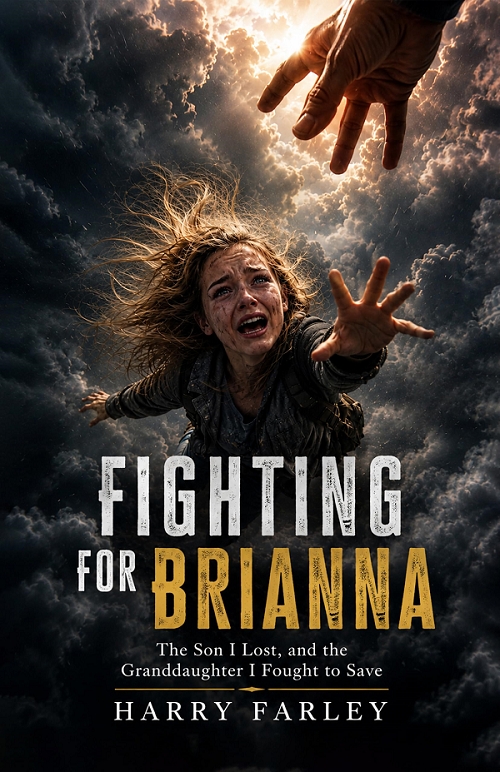
UNITED STATES – November 5, 2026 – Addiction can enter a family’s life quietly, gradually transforming ordinary moments into years of fear, uncertainty, and heartbreak. For author, educator, and family advocate Harry Farley, the devastating consequences of addiction became deeply personal when he lost his son Jason. Years later, he faced the unimaginable possibility of experiencing that same tragedy again as his granddaughter Brianna struggled with addiction.
In his compelling memoir, Fighting for Brianna: The Son I Lost, and the Granddaughter I Fought to Save, Farley shares an extraordinary true story of family, grief, dangerous circumstances, difficult choices, faith, and the possibility of recovery.
Drawing from years of firsthand experience, Farley takes readers inside two generations of his family’s struggle with addiction. Through painful memories, emotional revelations, and moments of unexpected hope, he explores how addiction affects not only the person struggling with substance use but also the parents, grandparents, siblings, and loved ones who desperately want to help.
Rather than presenting a conventional recovery guide, Farley offers something deeply human: the honest perspective of a father who endured an irreversible loss and a grandfather who learned that unconditional love, while essential, cannot replace an individual’s commitment to recovery.
At the heart of his story lies a powerful message: families cannot control every outcome, but understanding, compassionate support, healthy boundaries, and hope can make a meaningful difference.
Two Generations, One Family, and the Devastating Reality of Addiction
For Harry Farley, family had always been the foundation of his life.
As a devoted husband, father, grandfather, and educator, he believed strongly in responsibility, guidance, and the importance of being present for the people he loved.
Yet those convictions were tested when his son Jason began exhibiting troubling changes in behavior.
What initially appeared to be ordinary teenage difficulties gradually developed into a serious struggle with substance use. Declining school performance, unfamiliar friendships, unexplained absences, and increasingly concerning behavior revealed a situation far more dangerous than the family initially understood.
Despite repeated efforts to help Jason, including professional intervention and addiction treatment, his condition continued to deteriorate.
On January 5, 2002, Jason collapsed at the family home. He had developed sepsis associated with a contaminated needle, and despite emergency medical intervention, he died the following morning.
The loss devastated the Farley family.
For Harry, grief became intertwined with overwhelming guilt and unanswered questions. He repeatedly examined his decisions, wondering whether greater understanding, different boundaries, or earlier intervention might have changed his son’s fate.
That emotional struggle continued long after Jason’s death, shaping Harry’s understanding of parenthood, responsibility, and the painful limitations of love.
Years later, just as the family had learned to live with its grief, another crisis emerged.
Harry’s granddaughter Brianna began struggling with addiction, bringing back the same fears that had haunted the family during Jason’s final years.
But Brianna’s journey would unfold through an even more complicated series of events, forcing Harry to confront situations he never imagined a grandfather would face.
A Grandfather’s Fight Against Fear, Danger, and Despair
Brianna was more than a granddaughter to Harry and his wife, Jackie.
Having played a central role in raising Brianna and her younger brother, Ethan, they shared a particularly close relationship with both children.
When Brianna began experiencing problems with substance use, Harry initially believed that their strong emotional bond might help persuade her to change direction.
Instead, the family entered a prolonged period of uncertainty marked by disappearances, legal complications, repeated crises, and growing concerns about Brianna’s physical and emotional well-being.
One of the book’s most frightening episodes occurred in May 2019, when Harry learned that Brianna had been taken against her will.
After receiving an alarming message suggesting she was in danger, Harry contacted authorities. Police eventually located Brianna, who had been drugged and, according to the family’s account, was at risk of being trafficked.
Although she survived that ordeal, her struggle with addiction continued.
Farley recounts further emergencies involving arrests, hospitalization, serious illness, and moments when the family feared Brianna might not survive.
These experiences reveal the exhausting uncertainty faced by many families affected by addiction, particularly when a loved one’s safety remains beyond their control.
Throughout the narrative, Harry describes the emotional consequences of constantly anticipating another emergency.
Sleepless nights, strained relationships, overwhelming anxiety, and repeated efforts to rescue Brianna gradually took a toll on his own well-being.
Through these experiences, Fighting for Brianna raises a difficult but essential question: How can families continue loving someone struggling with addiction without sacrificing their own health, stability, and peace?
When Love Isn’t Enough: Understanding the Importance of Healthy Boundaries
One of the memoir’s most significant themes is the distinction between offering meaningful support and unintentionally enabling destructive behavior.
For years, Harry responded to family emergencies as many loving parents and grandparents would.
He provided financial assistance, arranged legal representation, intervened during crises, and repeatedly tried to protect his loved ones from the consequences of their actions.
Each decision came from a genuine desire to help.
Over time, however, he began to question whether some of those interventions were preventing the personal accountability needed for meaningful change.
Through his experiences with Jason and Brianna, Farley came to understand that supporting someone through addiction does not mean taking responsibility for every decision they make.
A turning point occurred when he discovered Parents of Addicted Loved Ones (PAL), a support organization that provides education and community for families affected by addiction.
Through group discussions and educational sessions, Farley gained a deeper understanding of enabling, healthy boundaries, self-care, and the emotional challenges that accompany a loved one’s substance use disorder.
He learned that boundaries are not intended to punish someone struggling with addiction.
Instead, they can help families protect their emotional well-being, establish realistic expectations, and maintain healthier relationships.
These insights also changed how Harry approached Brianna’s eventual return from structured treatment.
Rather than repeating the same patterns of rescue and intervention, he began setting clearer expectations while still supporting her recovery.
The book emphasizes that loving someone doesn’t mean shielding them from every consequence, and that maintaining boundaries doesn’t mean abandoning them.
For readers in similar circumstances, these reflections offer an honest perspective on the difficult decisions families may face while supporting a loved one.
Faith, Family, and the Search for Strength DuringUnimaginable Hardship
Beyond its examination of addiction and recovery, Fighting for Brianna explores the powerful role of faith, marriage, friendship, and emotional support during periods of profound uncertainty.
For Harry, faith had long been central to his life.
Yet the loss of Jason and the prolonged struggle to help Brianna challenged his spiritual beliefs in ways he had never anticipated.
He describes moments of unanswered prayers, emotional exhaustion, and uncertainty about why his family had endured so much suffering.
At times, he questioned whether he possessed the strength to continue.
Nevertheless, unexpected events during Brianna’s struggle gradually renewed his hope and reinforced his belief that even the darkest circumstances could hold moments of grace.
The memoir also highlights the importance of Harry’s wife, Jackie, whose unwavering support helped sustain the family through years of heartbreak.
Their marriage endured the devastating loss of a son, the strain of financial and emotional uncertainty, and the exhausting challenges of helping a granddaughter through addiction.
Farley reflects on how spouses can experience grief differently and why protecting a marriage and maintaining emotional support are especially important during prolonged family crises.
Friendships and community connections also play meaningful roles throughout the narrative.
Rather than portraying strength as the ability to endure suffering alone, Farley shows how accepting support and acknowledging vulnerability became essential to his healing.
His experiences demonstrate that recovery and resilience are not limited to the individual struggling with addiction.
Families, too, may need opportunities to rebuild their emotional health, restore relationships, and rediscover purpose.
From National Television to a Mission of Addiction Awareness
Following Jason’s death, Harry struggled for more than a year with unresolved guilt and grief.
His search for understanding eventually led him to write a letter to television personality Dr. Phil McGraw.
That letter resulted in an invitation for Harry and Jackie to appear on The Dr. Phil Show.
On May 6, 2003, the couple participated in an episode titled “What’s Behind Our Choices,” during which Harry discussed Jason’s addiction, his death, and the overwhelming responsibility he felt as a father.
The experience became an important turning point in Harry’s grieving process.
During the discussion, he was encouraged to recognize that even the strongest parental commitment cannot guarantee a different outcome when a child is struggling with addiction.
The conversation helped him begin releasing some of the guilt he had carried since Jason’s death.
Harry subsequently participated in another television appearance involving a family confronting addiction, further strengthening his desire to turn personal tragedy into an opportunity to help others.
Years later, his involvement with Parents of Addicted Loved Ones gave him another avenue to carry that commitment forward.
Today, Farley serves as a PAL facilitator, sharing his experiences with parents, grandparents, and other family members navigating circumstances similar to those his family endured.
He also draws on his background as an educator to speak about addiction awareness, warning signs, difficult choices, boundaries, and the importance of seeking support.
His approach is shaped by personal experience rather than claims of clinical expertise.
By sharing both his mistakes and the lessons he learned, Harry hopes to encourage more open conversations about addiction while helping families recognize that they do not have to face these challenges in isolation.
A Story of Recovery, Second Chances, and the Courage to Begin Again
Although Fighting for Brianna begins with devastating loss, its central emotional journey ultimately moves toward the possibility of healing.
Unlike Jason’s tragic outcome, Brianna’s story eventually takes a different direction.
After years of serious challenges, she entered a structured substance abuse treatment program that became an important turning point in her recovery.
Through treatment, counseling, accountability, and continuing support, Brianna began taking responsibility for rebuilding her life.
For Harry, witnessing that transformation brought both relief and a deeper understanding of what meaningful recovery requires.
He recognized that while family support remained important, Brianna’s progress depended on her own determination and willingness to make lasting changes.
Her recovery also allowed Harry and Jackie to begin restoring a sense of stability that had been absent for years.
The family’s journey demonstrates that recovery can involve difficult transitions, significant personal work, and the gradual rebuilding of trust.
It also challenges the assumption that an individual’s darkest circumstances must determine their future.
Through Brianna’s experience, Farley emphasizes that addiction does not erase a person’s humanity, potential, or capacity for change.
The memoir encourages readers to approach people struggling with addiction through compassion rather than judgment, while recognizing the importance of professional treatment, personal accountability, and ongoing support.
For Harry, Brianna’s recovery represents something particularly meaningful: the possibility of witnessing a different outcome after experiencing a loss that could never be reversed.
Bringing the Message of Hope to a Wider Audience
The story behind Fighting for Brianna has also reached audiences beyond the book’s pages.
As part of its promotional campaign, the book was featured on a large digital display in New York City’s Times Square, bringing its message of family, addiction awareness, and perseverance to one of the world’s most recognizable public settings.
The promotional display marked a notable moment in the book’s public journey, highlighting a story that began with one family’s private struggles and has since become an opportunity to encourage broader conversations about addiction.
For Farley, the book’s greater significance lies in its ability to reach people who may recognize their own experiences in his family’s story.
Parents waiting anxiously for a missing child, grandparents struggling to understand a loved one’s behavior, spouses overwhelmed by repeated crises, and individuals searching for encouragement may all find familiar emotions within its pages.
By bringing these experiences into the open, Farley hopes to challenge the silence and stigma that often surround addiction.
His story reinforces the importance of education, community support, and compassionate understanding, reminding readers that addiction affects families across different backgrounds and circumstances.
Turning Personal Tragedy Into a Lasting Message of Hope
At its heart, Fighting for Brianna is more than a memoir about addiction.
It is a deeply personal examination of what happens when love encounters circumstances it cannot control.
Through Jason’s tragic death, Brianna’s struggle for survival, and the family’s gradual journey toward healing, Farley explores the difficult truths that many families discover only after experiencing addiction firsthand.
He encourages readers to recognize early warning signs, educate themselves about substance use disorders, seek appropriate support, establish healthy boundaries, and protect their own emotional well-being.
He also emphasizes that families should not measure their love or worth solely by the outcomes of another person’s addiction.
The book’s central message is especially relevant to parents, grandparents, educators, counselors, faith leaders, and community members seeking a deeper understanding of the challenges affected families face.
Rather than offering simplistic solutions or promises of recovery, Farley presents a story grounded in loss, humility, perseverance, and compassion.
His journey demonstrates that healing does not require forgetting those who have been lost and that meaningful hope can coexist with lasting grief.
Through Fighting for Brianna: The Son I Lost, and the Granddaughter I Fought to Save, Harry Farley transforms his family’s most painful experiences into an opportunity to raise awareness and encourage understanding.
The message is clear: love cannot control another person’s addiction, but compassion, knowledge, healthy boundaries, and the courage to keep hoping can help families find a way forward.
About the Author
Harry Farley is an American author, educator, father, grandfather, and addiction awareness advocate whose personal experiences have shaped his commitment to helping families understand the devastating impact of substance use disorders.
After losing his son Jason to addiction in 2002, Farley spent years confronting grief, guilt, and the unanswered questions that frequently accompany the loss of a loved one.
When his granddaughter Brianna later experienced her own struggle with addiction, he faced another emotionally demanding journey involving serious health emergencies, legal challenges, difficult family decisions, and eventual recovery.
Farley has appeared on The Dr. Phil Show to share his experiences and the lessons he learned through personal tragedy.
Today, he serves as a facilitator with Parents of Addicted Loved Ones (PAL). He participates in educational presentations focused on addiction awareness, family support, boundaries, and the difference between helping and enabling.
Through Fighting for Brianna: The Son I Lost, and the Granddaughter I Fought to Save, Farley seeks to encourage compassion, increase awareness, and remind families that meaningful support and the possibility of recovery can exist even during life’s most difficult circumstances.
Book Information
Title: Fighting for Brianna: The Son I Lost, and the Granddaughter I Fought to Save
Author: Harry Farley
Genre: Memoir, Addiction & Recovery, Family Relationships, Faith, Grief, and Inspirational Nonfiction
Publication Year: 2026
Author Website: https://authorharryfarley.com/
Amazon:
https://us.amazon.com/Fighting-Brianna-granddaughter-fought-save-ebook/dp/B0HJBLY7RP
Bookshop.org:
https://bookshop.org/p/books/fighting-for-brianna-harryfarley/92ce2551584bede3
Barnes & Noble:
Smashwords: https://www.smashwords.com/books/view/2102958
Facebook: https://www.facebook.com/people/Harry-Farley/61592010776502/
Instagram: https://www.instagram.com/harryfarleyauthor/
Stage 32: https://www.stage32.com/profile/1380858/about
Fighting for Brianna is available at the book retailers listed above. Readers can visit the official author website to learn more about Harry Farley’s story, discover his addiction awareness work, and explore the book.
For more, send an email via info@authorharryfarley.com.
Media Contact
Company Name: Harry Farley
Contact Person: Media Relations
Email: Send Email
Country: United States
Website: https://authorharryfarley.com/