
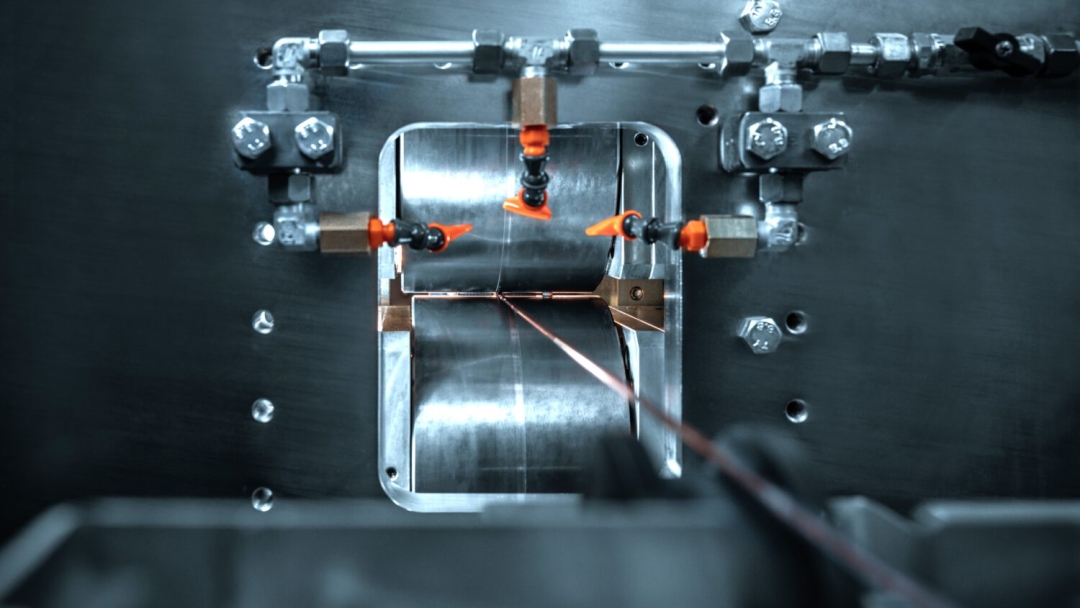
Zhangjiagang, Jiangsu, China – September 18, 2026 – Jiangsu Goodroller Machinery Co., Ltd., operating under the GRM brand, is highlighting its precision rolling and wire-forming equipment portfolio for manufacturers evaluating production machinery based on dimensional accuracy, material compatibility, automation, integration, operating costs, equipment footprint, and long-term technical support. The company supplies precision rolling mills and related equipment for applications involving copper, aluminum, alloys, and other metal wire and conductor products, with solutions covering flat wire, round wire, profile wire, strip wire, wire reduction, and solar photovoltaic ribbon production.
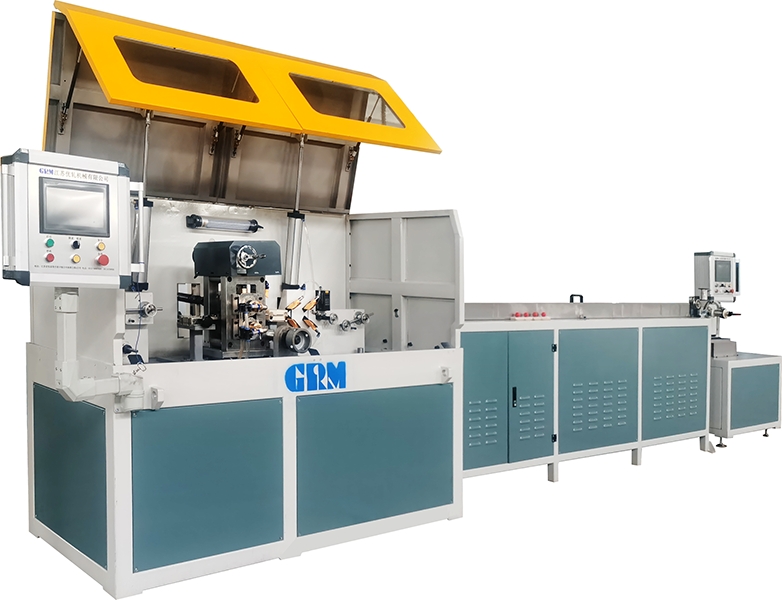
As industrial manufacturers increasingly assess equipment purchases according to total production requirements rather than machine specifications alone, GRM has structured its offering around production-process compatibility, customized engineering, precision control, and lifecycle support. The company’s portfolio includes flat wire rolling mills, wire reducing mills, profile wire rolling mills, round wire rolling mills, solar PV ribbon machines, strip wire rolling mills, and auxiliary equipment.
Precision Rolling Equipment for Defined Production Requirements
GRM’s equipment is designed for precision rolling and forming applications where manufacturers need controlled dimensions and repeatable processing conditions. The company states that its equipment can process wire diameters ranging from 0.1 mm to 12 mm and can support more than 20 metal materials, including copper, aluminum, and various alloys.
For manufacturers purchasing a rolling mill for a specific wire or strip product, material characteristics, finished dimensions, production speed, tolerance requirements, and downstream processes are important considerations. GRM provides custom engineering based on these requirements, including 3D modeling and process simulation during the pre-sales stage. Customers can also submit plant layouts for simulation and equipment-footprint evaluation.
The company offers L-type and S-type equipment layouts, while compact rolling mill configurations can have a minimum footprint of approximately 10 square meters, according to GRM’s stated equipment specifications. This approach allows production planners to consider machine configuration alongside available factory space and existing production-line arrangements.
Flat Wire, Profile Wire, Round Wire and Strip Rolling
GRM’s flat wire rolling mills are intended for applications requiring the transformation of metal wire into flat or rectangular products. Its product portfolio also includes profile wire rolling mills for shaped wire requirements and round wire rolling mills for round-section products.
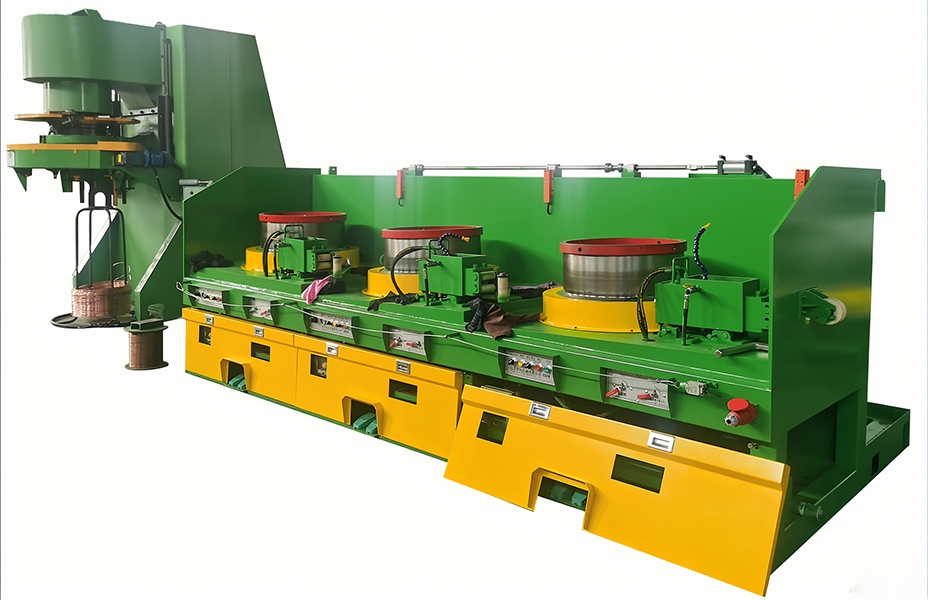
Wire reducing mills and wire reduction rolling mills are positioned for controlled dimensional reduction in wire-processing applications. These systems can be configured according to material specifications and required finished dimensions.
The company’s strip rolling mill portfolio addresses manufacturers working with narrow metal strip and conductor products. Precision rolling mills can be applied across electronics, photovoltaic, automotive, and medical-related manufacturing environments where controlled thickness and dimensional consistency are important production requirements.
GRM also identifies precision thickness measurement and closed-loop thickness control as important elements of its rolling technology. For one stated application, a GRM-180 system operating at 1,200 meters per minute with 1.2 mm copper strip is specified to maintain a tolerance of ±0.004 mm under the applicable operating conditions.
Precision Control and Process Stability
For industrial purchasing teams, rolling accuracy is closely connected to production yield, downstream compatibility, and product consistency. GRM states that its mills incorporate closed-loop thickness control and adaptive control algorithms, with equipment designed to achieve tolerances as low as ±0.002 mm for applicable applications.
The company also identifies proprietary PLC control systems as part of its equipment architecture. According to GRM’s stated performance information, intelligent PLC-based upgrades can improve rolling efficiency by approximately 30% to 40%, depending on the equipment and production application.
The company provides equipment designed around automated process monitoring and control rather than relying solely on manual adjustment. This can be relevant to manufacturers seeking repeatable production parameters across different batches and material specifications.
GRM’s systems are also described as compatible with OPC UA and MTConnect, with verified integration with Siemens MES. These capabilities allow equipment integration to be considered as part of a broader manufacturing system when customers are planning automated production environments.
Multi-Material Processing and Changeover Considerations
Material flexibility is another factor in industrial machinery purchasing decisions. GRM states that its equipment can process copper, aluminum, stainless steel, and other materials, with rolling parameters customizable according to material specifications.
The company also identifies a patented quick-change system designed to support material switching in approximately 10 minutes for applicable production configurations. Such a configuration is intended for manufacturers that need to accommodate multiple materials without designing a separate rolling system for every product type.
For purchasing teams, this type of flexibility can be considered alongside initial equipment investment, expected utilization, changeover requirements, tooling consumption, maintenance planning, and production scheduling.
Total Cost of Ownership and Energy Considerations
GRM also addresses equipment purchasing from a total cost of ownership perspective. Its stated TCO approach includes a calculator template for automated five-year cost analysis, enabling customers to evaluate equipment-related expenses over a defined operating period rather than focusing solely on the initial purchase price.
Energy consumption is another factor included in the company’s equipment information. GRM states an energy consumption figure of approximately 80 kWh per ton for copper strip in an applicable production configuration, while ECO mode is stated to reduce consumption by approximately 12%.
The company also describes an oil-management system using three-stage filtration, with a stated oil reuse rate of 92% and an associated 15% reduction in waste-oil treatment costs. These figures are presented as equipment-specific operating information and can be evaluated by customers against their own production conditions, maintenance practices, and environmental-management requirements.
Roll Life, Maintenance and Spare Parts
Rolling tools and wear components are important considerations when manufacturers evaluate the lifecycle cost of a precision rolling mill. GRM lists standard 9CrMo rolls with a stated service life of approximately 720 hours and coated rolls using WC-Co plasma spray with a stated service life of approximately 3,000 hours under applicable conditions.
The company also describes a smart prediction system intended to provide advance alerts approximately 14 days before certain maintenance or replacement requirements. Such predictive information is intended to support production planning and reduce the likelihood of unexpected maintenance interruptions.
GRM states that spare parts can be delivered domestically within 48 hours and that international orders can generally be delivered within five business days by air freight. Actual delivery timing can depend on component availability, destination, customs processing, and logistics conditions.
PV Ribbon Equipment and Integrated Production Solutions
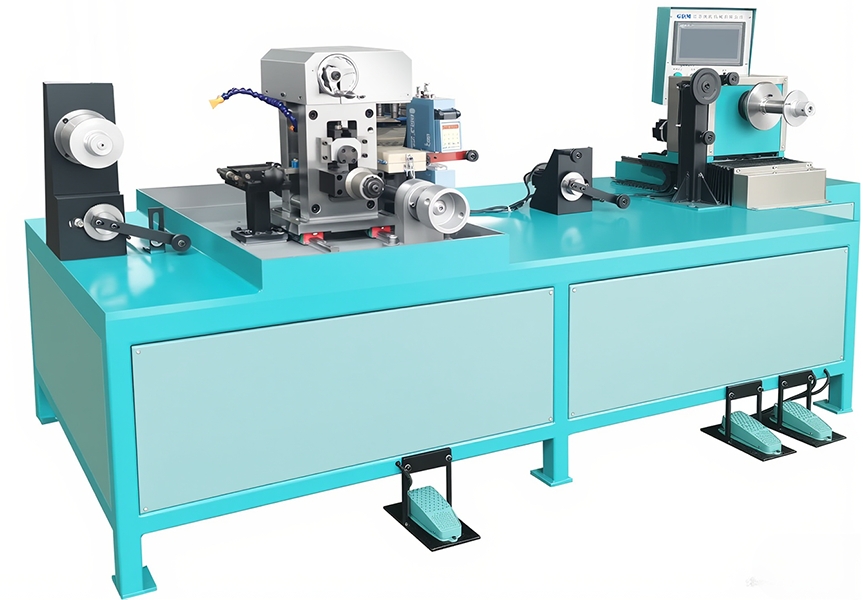
In the photovoltaic sector, GRM provides integrated rolling-tinning machines, annealing machines, and precision winding machines for solar PV ribbon production. The company reports that it partnered with Yubao New Materials to develop integrated rolling-tinning equipment and states that the resulting solution increased PV ribbon production efficiency by 40%.
PV ribbon manufacturers often need to consider several connected production stages rather than an individual rolling machine in isolation. GRM’s equipment portfolio therefore includes rolling, tinning, annealing, winding, and auxiliary equipment for customers seeking coordinated production configurations.
The company’s broader turnkey approach includes pre-sales process simulation, customized equipment design, manufacturing, testing, installation support, and after-sales technical service.
Applications Across Industrial Manufacturing
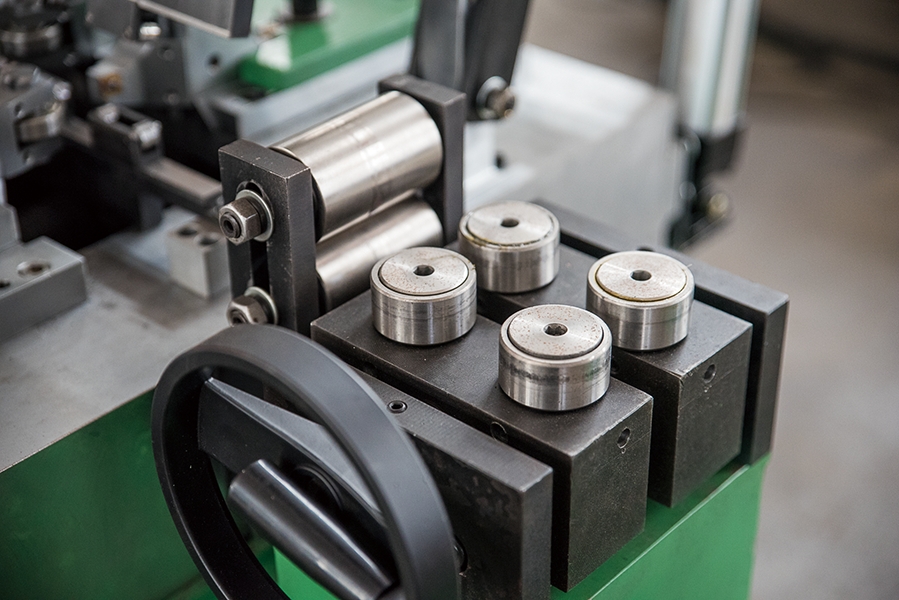
GRM’s precision rolling and forming equipment serves several industrial application areas. In electronics and wire manufacturing, precision rolling can be used for controlled flat and shaped conductor products. In the automotive sector, the company reports collaboration with BYD on specialized flat wire rolling mills.
The company also identifies medical and high-precision wire applications among the industries requiring tight dimensional control. Its stated equipment tolerance capabilities are intended to address demanding applications involving medical-grade and electronic-grade wires, subject to the specific material, product geometry, process configuration, and testing conditions.
For manufacturers evaluating specialized machinery, GRM’s scope is focused on precision rolling and forming of high-accuracy wire and conductor products. The company does not supply melting furnaces, continuous casting machines, or hot rolling systems.
Manufacturing, R&D and Quality Control
GRM’s manufacturing facility is located at No. 425, Yangjin Road, Zhangjiagang, Jiangsu Province, China. The company describes its manufacturing base as covering approximately 20 acres, with an integrated system combining research and development, machining, assembly, testing, and quality control.
The production system includes Japanese CNC machining centers, laser precision equipment, automated production lines, and precision measuring instruments. These resources are used for the manufacture and inspection of rolling mill components and complete equipment.
As of 2025, GRM reported a workforce of 60 professionals, with R&D personnel accounting for more than 30% of its employees. The company states that it holds more than 50 product patents and has developed technologies including an automatic feeding device for polygonal wire and busbar rolling equipment.
GRM also identifies itself as a National High-Tech Enterprise and holds EU CE certification under Certificate No. M.2022.206.C74631. The company reports exports to the United States, Russia, Southeast Asia, and other international markets.
Engineering Support From Specification to Production
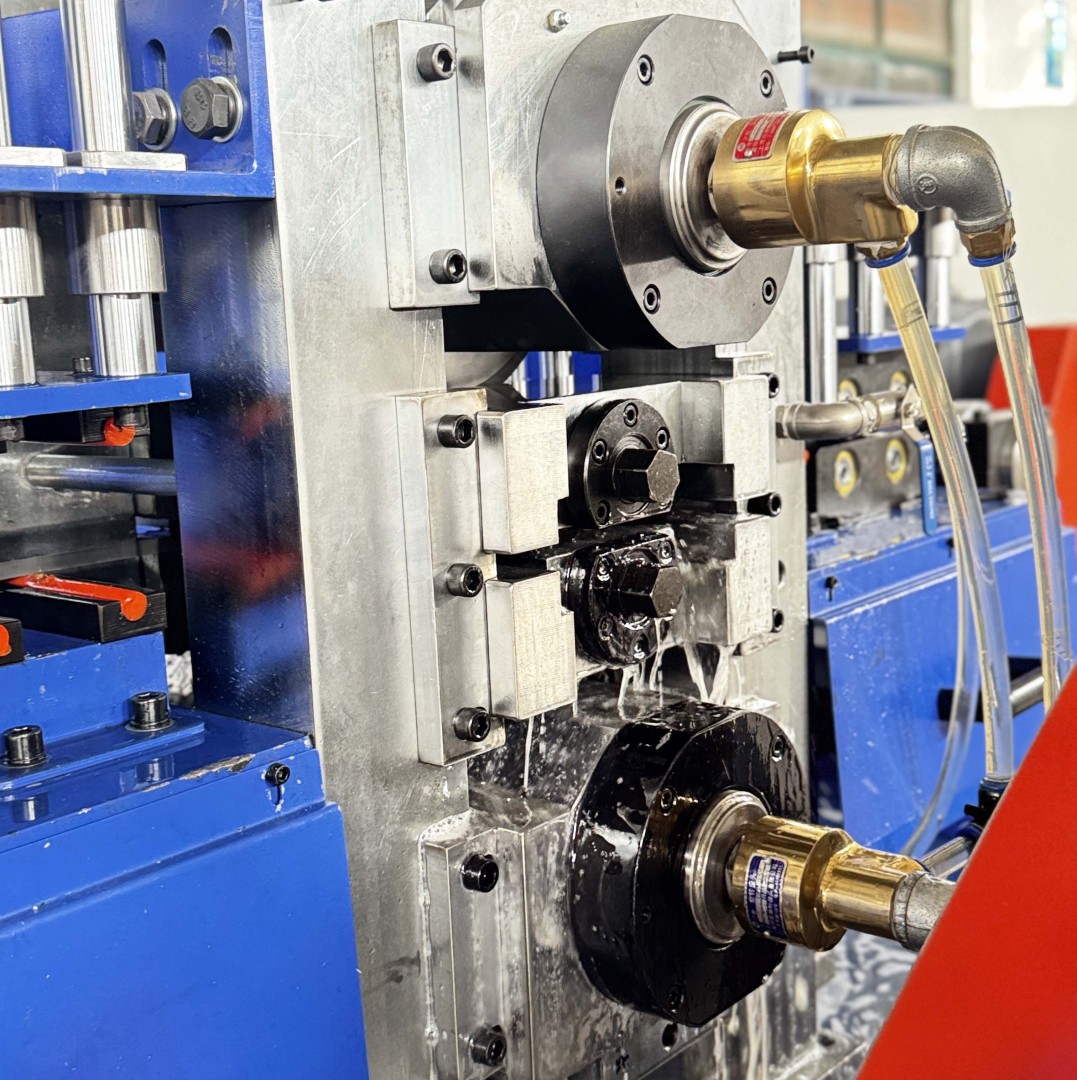
For customers purchasing customized rolling equipment, GRM’s stated process begins with understanding the required product dimensions, materials, production capacity, tolerance, layout, and downstream process. The company can then provide custom 3D modeling and process simulation before production.
During manufacturing, GRM states that customers can receive production progress information, while equipment is manufactured under its quality-management and production procedures. After delivery, the company provides global technical response services and lifetime technical support.
This full-cycle approach allows purchasing teams, process engineers, production managers, and maintenance personnel to evaluate a rolling mill according to multiple criteria, including technical suitability, factory integration, maintenance requirements, spare-parts planning, energy consumption, and long-term support.
GRM’s current product strategy reflects the company’s focus on specialized metal-forming equipment rather than general-purpose heavy industrial machinery. Its portfolio is centered on precision rolling mills, wire reduction equipment, flat and profile wire rolling, strip rolling, solar PV ribbon equipment, and associated auxiliary systems.
Manufacturers seeking equipment for copper, aluminum, alloy, and other precision wire or conductor applications can define their requirements according to material, input and output dimensions, tolerance, production speed, process sequence, factory layout, and automation requirements. GRM’s engineering team uses these parameters as the basis for customized equipment configurations and production-line proposals.
About Jiangsu Goodroller Machinery Co., Ltd.
Jiangsu Goodroller Machinery Co., Ltd., operating under the GRM brand, traces its origins to Zhangjiagang Hongxinyuan Technology Co., Ltd., founded in 2008, and underwent strategic restructuring in 2015. The company has accumulated 16 years of expertise in metal-forming technology and specializes in precision rolling mills, wire-forming equipment, and photovoltaic ribbon production equipment. Its core mission is to provide precision manufacturing equipment and customized rolling solutions for customers in electronics, photovoltaic, automotive, medical, and related industrial applications.
Media Contact
Company Name: Jiangsu Goodroller Machinery Co., Ltd.
Contact Person: Rayna
Email: Send Email
Phone: 86 -173 1474 6343
Address:No. 425, Yangjin Highway, Zhangjiagang City
City: Suzhou
State: Jiangsu
Country: China
Website: https://www.grmrollingmill.com/