
Incentive advertising, as a popular advertising format, is widely used in fields such as games and utility applications due to its dual value of “active user participation and efficient monetization for advertisers,” and is gradually becoming a mainstay in the advertising monetization field.
The core advantage of this type of advertising in helping developers maximize their commercial value lies in its ability to balance the different needs of developers, users, and advertisers.
| Developers |
| Users are 20%-40% more likely to watch rewarded videos compared to other ad formats, which can bring developers higher and more stable revenue. |
| user |
| Incentive-based advertising allows users to earn valuable rewards for free by watching ads without affecting their user experience. |
| Advertiser |
| The existence of ad rewards enhances the attractiveness of ads, and users will choose to watch more incentivized ads, which naturally increases the advertiser’s ROAS. |
The excellent performance of rewarded ads has led to a gradual increase in their penetration rate in in-app advertising monetization. This means that the number of players watching these ads is increasing, with particularly significant growth in the Tier 1 and Tier 2 markets. Google offers the following three suggestions on how to achieve the best results with rewarded ads:
I. Advertising Design
The incentive advertising funnel consists of four steps: ad prompt, ad display, ad reward, and reward usage time.The ad prompts and ad rewards are within the developer’s control, and the following points can be used to design or optimize ads.
Design prompt message
1. Focus on clearly communicating the value of advertising to users.
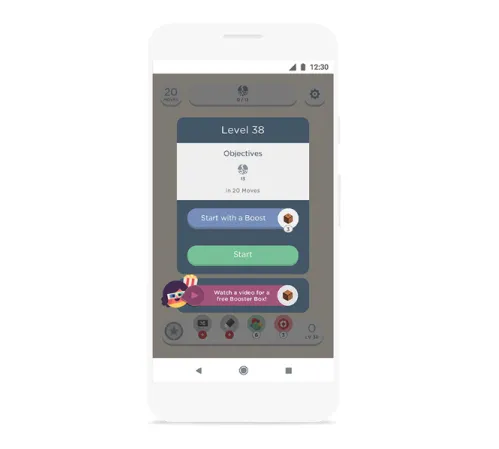
The notification message should clearly state the value exchange that is about to occur.
Ad examples
The notification message is clear and relevant to the application (including design and color scheme), explicitly stating that users can obtain enhancement item gift boxes by watching advertisements.
2. Tailor-made for the target audience.
Understanding who will see and interact with your ads helps you design them based on their needs and preferences.
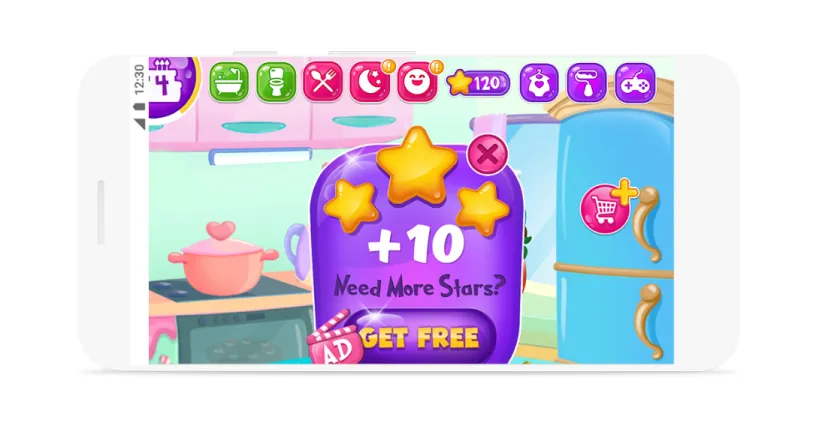
TutoTOONS ran brightly colored, well-designed ads that not only attracted its core audience but also seamlessly integrated with the app’s aesthetics. Thanks to these incentivized ads, TutoTOONS’ ad revenue surged by 20%.
Design with appropriate rewards
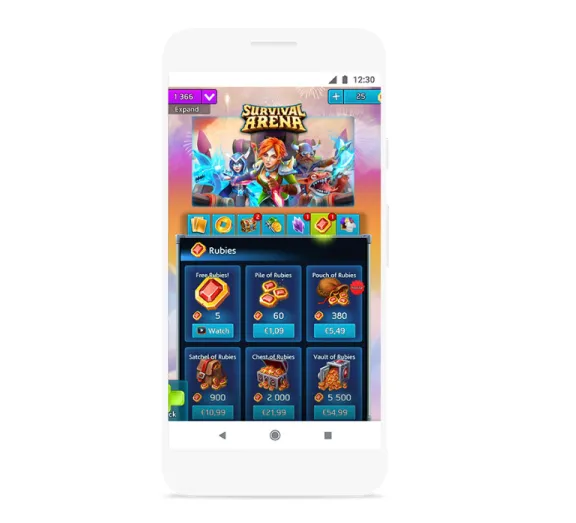
Offer players various rewards during their game experience to increase session duration. The rewards should not be too high in value to avoid impacting in-app purchases, but should be attractive enough to entice users to watch ads in exchange for rewards.
Ad examples
In this case, rubies are a valuable currency that can be exchanged for various in-game items. However, players can only obtain 5 rubies by watching ads. To obtain more, they need to make in-app purchases.
II. Choosing the best display location
The choice of ad placement for incentivized videos is crucial; selecting the right placement can drive significant revenue growth.
1. Display rewarded ads in areas with high user traffic.
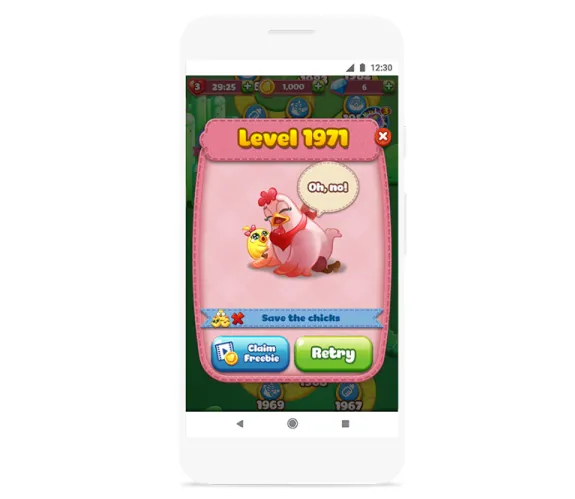
The homepage is an excellent location, ensuring that all users can see your ads. You can also use pop-up options to select which users to view to further increase ad visibility.
Ad examples
CookApps displayed a rewarded ad notification at the end of a game session and made this rewarded ad a pop-up message, increasing ad visibility and engagement. Thanks to rewarded ads, CookApps ad revenue surged 86%, and ARPDAU also increased by 4%.
2. Display ads at key points that affect user experience.
Through rigorous user testing, advertisers can analyze which parts of the game players choose to watch more often. Displaying ads in these areas can increase engagement and revenue.
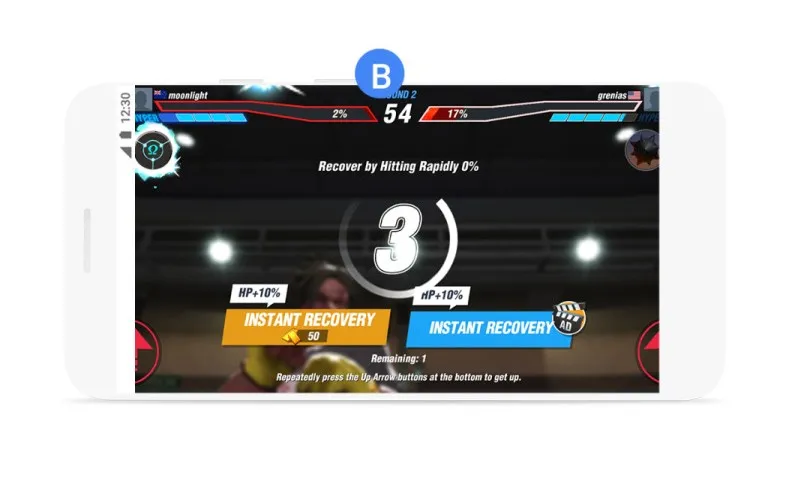
Ad examples
In Boxing Star, an incentivized ad is displayed when a player loses a boxing match, giving the user 10 seconds to process the ad. The time in seconds determines whether to choose to watch, and provides… The offer of 50 gold bars as a reward for watching the ad makes it seem more valuable.
3. Utilize the in-app purchase store to attract users to make purchases.
Rewarded ads are ideal for helping users discover in-app rewards that can’t be obtained through ads. They also help increase awareness of new app features, such as power-ups, in-game items, or paid services.
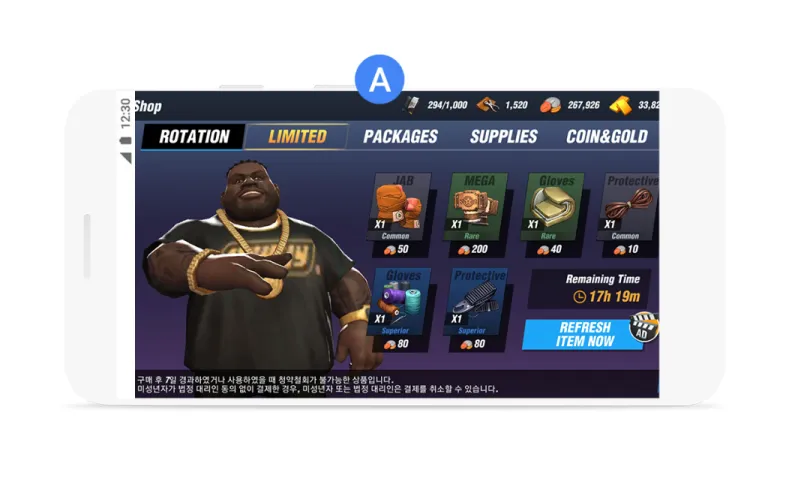
Ad examples
Four Thirty-Three has placed ad prompts in its in-app game store. Users frequently view these ads in this area of the app, which helps increase the exposure of other in-app rewards.
III. Best Practices for Incentivizing Product Placement
Follow these key points to help advertisers organize and track best results:
1. Test Ads. Ad performance will vary depending on the design of the notification message, the ad placement, the app category, and the user’s geographic location. Therefore, advertisers need to try multiple designs and conduct A/B testing to compare the effects of different designs.
2. Review the incentive advertising policy to ensure your ads comply with the requirements. Following the platform’s official guidelines will make it easier for ads to deliver a superior experience for users, developers, and advertisers alike.
3. Track impressions and full view rates to monitor performance. An ad can be considered effective only if more than half of daily active users engage and the full view rate reaches 80%. Use data to adjust and update the ad in real time.
That concludes this issue. Advertisers can contact us in detail via Telegram at the bottom of the homepage.
Media Contact
Company Name: Whale Interactive Technology Co., Ltd.
Email: Send Email
Country: China
Website: https://en.jyadc.net/