
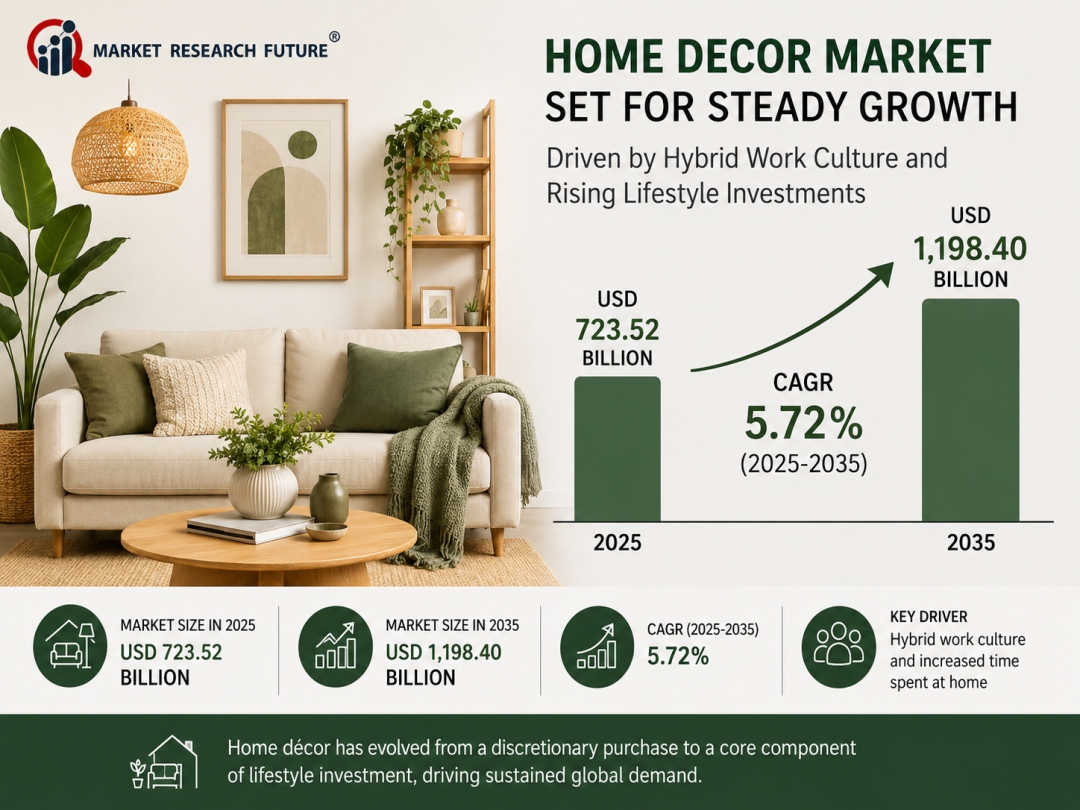
The growing inclination toward curated interiors, combined with rapid urbanization in emerging economies such as India and China, continues to accelerate market expansion. Additionally, the integration of e-commerce platforms and advanced visualization technologies is enabling consumers to make more informed purchasing decisions, further strengthening the market outlook.
Key Market Trends
One of the most prominent trends shaping the Home Decor Market is the increasing demand for personalized and experiential living spaces. Consumers are prioritizing designs that reflect individuality, cultural identity, and comfort. This has led to a surge in demand for customized furniture, artisanal décor, and unique decorative accessories.
Sustainability has also emerged as a critical trend, with consumers actively seeking eco-friendly materials such as bamboo, jute, and recycled fabrics. Regulatory frameworks, including sustainable product standards in Europe, are further pushing manufacturers to adopt environmentally responsible practices.
Another key trend is the rise of smart and connected décor products. The integration of smart lighting, sensor-enabled decorative elements, and voice-controlled home accessories is gaining traction, especially in premium segments. Additionally, the concept of wellness-centric interiors—incorporating low-VOC materials, biophilic design, and health-focused elements—is reshaping consumer preferences.
E-commerce growth is also redefining the purchasing landscape. Online channels accounted for approximately 22% of global home décor sales in 2024, with mobile commerce dominating transactions in Asia-Pacific. Technologies such as augmented reality (AR) are enhancing customer experience by enabling virtual visualization of décor items.
Recent Developments
- April 2024 – Regulatory authorities in the European Union finalized the Ecodesign for Sustainable Products Regulation, mandating digital product passports for furniture sold in the region starting from 2027, enhancing supply chain transparency.
- June 2024 – Leading online retailers expanded AR-based “try-before-you-buy” solutions, significantly reducing product return rates and improving conversion rates in furniture and decorative accessories segments.
- September 2024 – The global smart home ecosystem surpassed USD 130 billion, with increasing overlap between smart home technologies and decorative lighting, making connected décor one of the fastest-growing premium segments.
- November 2024 – Rising concerns regarding counterfeit interior decoration products, estimated at USD 8.5 billion globally, prompted stricter quality control measures across online marketplaces.
Top Companies Profile
The Home Decor Market is highly competitive, with the presence of global and regional players focusing on innovation, design differentiation, and digital transformation. Key companies are investing in product diversification, sustainability initiatives, and omnichannel distribution strategies to strengthen their market position.
Major players (Inter IKEA, Home Depot, Wayfair, Ashley Global Retail, MillerKnoll, Williams-Sonoma, Target, Overstock.com, Havells India, Nitori Holdings) are increasingly leveraging advanced technologies such as AR and AI-driven personalization tools to enhance customer engagement. Strategic collaborations with designers, expansion into emerging markets, and focus on premium product offerings are also key growth strategies adopted by leading companies. Additionally, companies are emphasizing sustainable sourcing practices and certifications to align with evolving consumer expectations.
Request for Sample Copy: https://www.marketresearchfuture.com/sample_request/11525
Segments Analysis
The Home Decor Market is segmented based on product category, distribution channel, and region.
By product category, furniture remains the largest revenue contributor, valued at approximately USD 215.60 billion in 2025. Floor coverings accounted for a significant 38.27% share in 2025, driven by increasing adoption of laminate and luxury vinyl tiles in residential remodeling projects. Meanwhile, textiles—including curtains, cushion covers, and throws—are expected to witness the fastest growth, registering a CAGR of 7.84% through 2035 due to frequent replacement cycles and evolving fashion trends.
In terms of distribution channels, specialty stores dominated the market with a 49.38% share in 2025, reflecting consumer preference for tactile shopping experiences. However, DIY and mass merchandisers are projected to grow at the fastest pace, with a CAGR of 8.52% during the forecast period, supported by expanding product assortments and competitive pricing strategies.
Regionally, North America held the largest share of 44.89% in 2025, driven by a strong home renovation culture and high consumer spending on interior décor. Europe accounted for approximately 24.3% of the market, supported by sustainability-focused purchasing behavior. Asia-Pacific is expected to be the fastest-growing region, with a CAGR of 8.76%, fueled by rapid urbanization, rising middle-class income, and increasing demand for decorative lighting and rugs in emerging economies.
The Home Decor Market is poised for sustained growth over the next decade, driven by changing consumer lifestyles, technological advancements, and increasing emphasis on personalized and sustainable living spaces. As the boundaries between functionality, aesthetics, and technology continue to blur, the market presents significant opportunities for innovation and expansion. Companies that can effectively align with evolving consumer preferences, adopt sustainable practices, and leverage digital transformation are expected to gain a competitive edge in this dynamic and rapidly evolving industry.
Browse More:
Home Decor and Accessories Market
Media Contact
Company Name: Market Research Future
Contact Person: Media Relations
Email: Send Email
Country: United States
Website: https://www.marketresearchfuture.com