
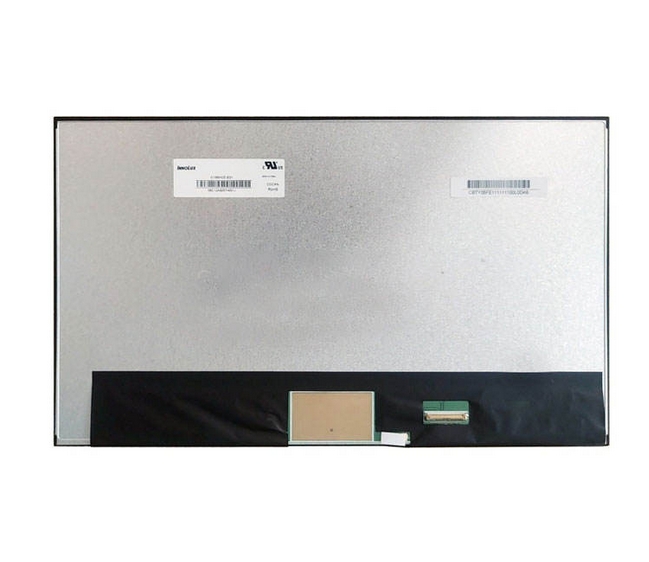
In the intricate ecosystem of modern electronics, the display panel serves as the critical nexus between user and machine, defining the quality of visual interaction. Among the myriad of components available to engineers and product designers, the G156HCE-E01 from Innolux stands out as a meticulously engineered solution for applications demanding reliability and sharp clarity. This 15.6-inch TFT-LCD module, with its Full HD 1920×1080 resolution, represents more than just a screen; it is a convergence of optical performance, electrical efficiency, and robust mechanical design tailored for integration into a diverse range of professional and commercial devices.
This article delves into a comprehensive analysis of the G156HCE-E01, moving beyond basic specifications to explore its defining characteristics, technological underpinnings, and optimal application scenarios. We will dissect its performance metrics, from luminance and color gamut to power consumption, and examine the design considerations that make it a preferred choice. Our journey will provide OEMs, system integrators, and technology enthusiasts with the insights needed to evaluate this display module’s potential in driving the next generation of kiosks, industrial control systems, portable monitors, and interactive digital signage.
Unpacking the Core Specifications and Architecture
The foundation of the G156HCE-E01‘s performance lies in its precise technical architecture. As a 15.6-inch diagonal a-Si TFT LCD, it employs an In-Plane Switching (IPS) panel technology. This is a critical differentiator, as IPS is renowned for delivering superior color consistency, wider viewing angles (typically 85/85/85/85 degrees), and reduced color shift compared to older TN panels. The native resolution of 1920 x 1080 pixels translates to a pixel density of approximately 141 PPI, offering a balance between sharp detail and system rendering demands.
The module operates on a standard LVDS (Low-Voltage Differential Signaling) interface, a reliable and widely supported protocol that ensures stable data transmission with minimal electromagnetic interference. Its optical stack includes a surface-hardened treatment for scratch resistance and an option for various backlight configurations, typically utilizing WLED edge-lighting for uniform brightness and longevity. Understanding this architecture is key to appreciating how the module achieves its balance of performance and durability in challenging environments.
Performance Metrics: Brightness, Color, and Contrast
Quantifying visual performance requires a close look at key metrics. The G156HCE-E01 typically offers a luminance level of 250 nits (cd/m²) or higher, making it suitable for indoor applications under controlled or moderately bright lighting. Its color gamut coverage, often around 45% NTSC or 62% sRGB, is adequate for general-purpose applications where exact color reproduction is not the paramount concern, such as in POS systems or industrial HMIs.
The static contrast ratio, commonly at 700:1, defines its ability to render deep blacks against bright whites, contributing to perceived image depth and clarity. Response time, another crucial factor for moving images, is sufficiently fast for non-gaming applications, preventing noticeable smearing in dynamic content. These metrics collectively paint a picture of a display engineered for clarity and reliability rather than ultra-high-fidelity multimedia consumption, positioning it squarely in the professional and commercial domain.
Power Efficiency and Thermal Design Considerations
In embedded and portable applications, power management is not a luxury but a necessity. The G156HCE-E01 is designed with efficiency in mind. The WLED backlight system consumes significantly less power than older CCFL technology, and the panel’s driving electronics are optimized for low operational current. Typical power consumption for the panel itself falls within a range that allows for integration into fanless systems or battery-powered devices without imposing excessive thermal or runtime burdens.
This inherent efficiency directly influences thermal design. Lower power draw translates to less heat dissipation, simplifying the product’s overall thermal management architecture. For designers, this means greater flexibility in enclosure design, potential reduction in cooling components, and enhanced system stability over extended operational periods—a critical factor for devices expected to run 24/7, such as digital signage or information displays.
Mechanical Robustness and Environmental Durability
The physical construction of the G156HCE-E01 is tailored to withstand the rigors of integration and daily operation. The module features a solid metal frame that provides structural integrity, protects the glass substrate from flexing, and serves as a reliable mounting point. The surface of the polarizer is often treated with a hard coating (3H pencil hardness or similar) to resist scratches from casual contact during installation and cleaning.
While not inherently a fully ruggedized display, its design considers typical environmental stresses. It operates reliably across a standard commercial temperature range (e.g., 0°C to 50°C). This robustness makes it an excellent candidate for applications beyond benign office settings, including light-industrial environments, transportation systems, and medical carts, where vibration, variable temperatures, and physical handling are common challenges.
Typical Integration and Application Scenarios
The true value of a component is realized in its application. The G156HCE-E01 finds its niche in a spectrum of B2B and commercial products. Its form factor and performance make it ideal for self-service kiosks (ticketing, check-in), where clarity and durability are paramount. In industrial automation, it serves as a human-machine interface (HMI) for monitoring and controlling machinery, benefiting from the wide viewing angles that allow operators to see the screen from various positions.
Other prominent applications include portable all-in-one computers, slim client terminals, and interactive digital signage in retail or corporate settings. Its compatibility with standard driver boards and controllers simplifies the design-in process for OEMs, allowing them to focus on their core product differentiation rather than display subsystem development.
Comparative Analysis and Market Positioning
Placing the G156HCE-E01 within the competitive landscape clarifies its strategic position. It competes directly with similar 15.6″ FHD modules from other major manufacturers like AUO, BOE, and LG Display. Its strengths often lie in a competitive cost-structure, consistent supply chain from Innolux (a top-tier panel maker), and a balanced specification sheet that avoids over-engineering for cost-sensitive projects.
When compared to higher-gamut displays or panels with extreme brightness, the G156HCE-E01 may seem modest. However, this is precisely its advantage: it delivers the essential performance required for its target applications without unnecessary features that inflate cost and power consumption. It is positioned as the workhorse display—a reliable, high-value component for volume-driven, professional embedded systems.
Conclusion
The Innolux G156HCE-E01 15.6-inch FHD TFT-LCD display emerges as a quintessential component for professional and industrial visual interfaces. Its value proposition is not rooted in cutting-edge consumer specs but in delivering a balanced, reliable, and cost-effective visual solution. Through its IPS technology, it ensures consistent viewing, while its efficient design and robust construction address the practical concerns of power consumption, thermal management, and longevity in continuous-use scenarios.
For product developers and system integrators, this module represents a low-risk, high-compatibility choice that accelerates time-to-market. It fulfills the core requirement of presenting clear, stable digital information, making it an unsung hero in the seamless operation of countless kiosks, control panels, and commercial displays worldwide. In the landscape of embedded display solutions, the G156HCE-E01 stands as a testament to the principle that optimal engineering is about meeting precise application needs with elegance and efficiency.
Media Contact
Company Name: Yingi Technology
Contact Person: Media Relations
Email: Send Email
Country: China
Website: https://www.invshop.com/