
Times to Return Law and Order to the American People, the new book by Dr. Richard A. Vargus, digs into a question most headlines skip: how did a single Supreme Court case and a few lines of state law evolve into the controversial practice of Stop, Question and Frisk – and what happened when politics took over?
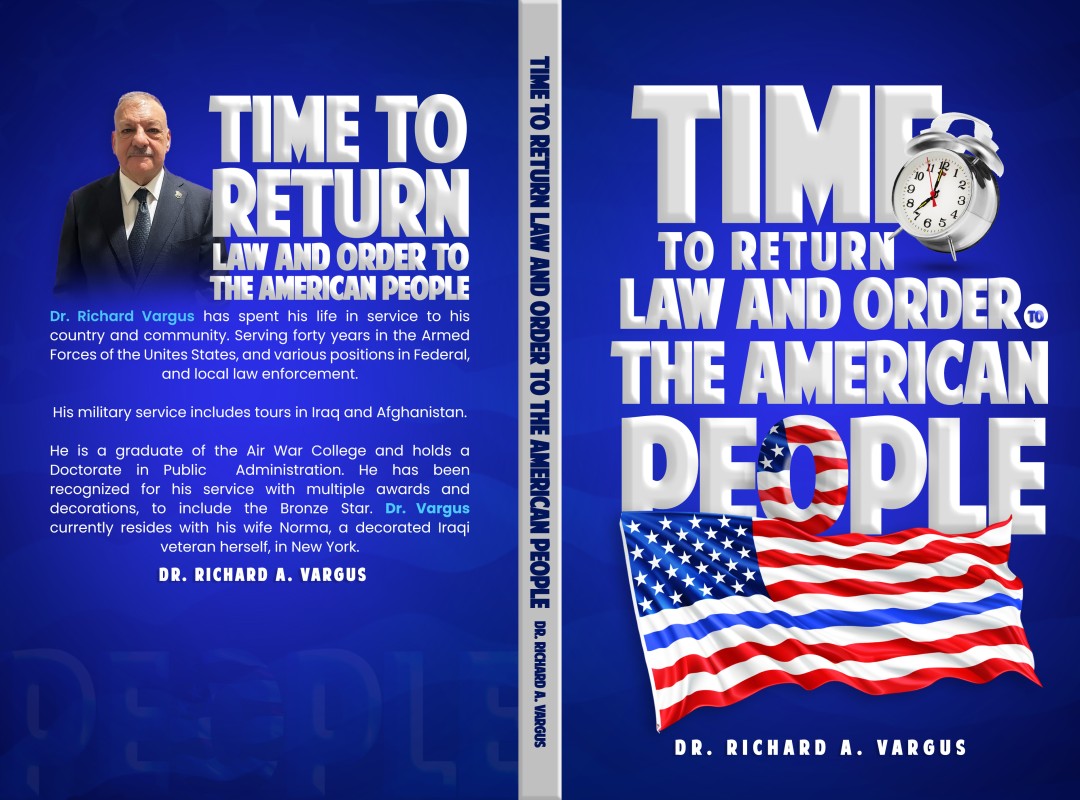
Vargus uses his background in law enforcement and public administration to walk readers from court rulings to the street corner, showing how legal tools that once helped cut crime were later turned into a political football.
Tracing the Legal Foundation: From English Common Law to Terry v. Ohio
The book opens with a legal history lesson that actually matters for real life. Vargus shows that the idea of briefly stopping suspicious people is centuries old, starting with English common law and constables detaining “nightwalkers” as far back as 1066.
He then moves to the turning point: Terry v. Ohio (1968). In that case, the Supreme Court ruled that officers may stop and frisk a person based on reasonable suspicion rather than full probable cause. That ruling became the legal backbone of what officers now call “Terry stops”.
“Terry didn’t invent police instincts,” Vargus writes. “It gave those instincts a clear constitutional lane and a set of rules.”
He argues that this decision didn’t weaken the Fourth Amendment. Instead, it tried to balance the right to be left alone with the need to intervene before a weapon is used.
How New York Turned Law into Practice: Stop, Question and Frisk
From there, Times to Return explains how New York State translated Terry into statute through Penal Law 140.50, which authorises temporary questioning in public places and limited searches for weapons when an officer believes crime “is, has or will occur.”
Vargus breaks that law into plain steps:
- When an officer can lawfully stop someone
- When they can ask for basic information
- When a frisk for weapons is allowed
- What can and cannot be stored in databases
On paper, he says, it is meant “to balance public safety with individual rights” and depends heavily on the officer’s discretion and judgment.
“Probable suspicion, used honestly, takes guns off the street,” Vargus notes. “Probable suspicion, turned into a quota, takes trust out of the community.”
In the book, he explains how this legal structure paved the way for Stop, Question and Frisk in New York City – first as a limited tool, then as a large-scale strategy.
Defining the Terms the Public Always Hears But Rarely Understands
One of the strengths of Times to Return is that it pauses to explain the vocabulary that shapes every argument about policing:
- Crime – what the state defines and prosecutes, not just what feels wrong
- Search – “prying into that which is hidden” under Supreme Court language
- Seizure – when movement or property is taken under authority
- Reasonable suspicion – a lower threshold than probable cause, but still based on facts
- Furtive movements – the “shady” behaviour officers are trained to read
Vargus points out that these terms aren’t academic games. They decide who gets stopped, who gets frisked, and where the line sits between legitimate enforcement and overreach.
“You can’t judge a stop if you don’t understand the rulebook the officer is supposed to be playing by,” he writes.
Themes That Link Law, Data and Street Reality
After laying down the legal foundation, Vargus moves into the wider themes that run through the book:
- Was SQF a success, a failure, or both?
- How did CompStat turn from a data tool into a “hot seat” for commanders?
- Where does race fit into crime statistics and stop patterns?
- What happens to communities when order policing disappears?
He returns again and again to one idea: there was a period where law, strategy, and street work lined up and crime fell sharply. Over time, that balance cracked.
“When politicians discovered they could campaign on numbers, they stopped asking why the numbers looked good and started demanding more of them,” he says.
Minority Officers, Community Trust and the Numbers Game
A key angle in Times to Return is Vargus’ research with minority officers who served through the full SQF era. According to the interviews he cites, they believed:
- SQF, used with genuine reasonable suspicion, was effective at pulling weapons off the street.
- The real damage started when stops and UF-250 forms became performance targets instead of tools.
“It worked until it became a scoreboard,” one officer tells him. That shift, Vargus argues, fuelled accusations of racial targeting and turned a once-effective approach into a flashpoint.
The book doesn’t ask readers to pick a side between police talking points and civil liberties reports. Instead, it lays out the legal standards, the crime data and the lived experiences, then pushes the reader to look at all of it together.
A Warning About Forgetting the Law That Built Safer Streets
In later chapters, Vargus connects this legal history to current trends: defund-the-police rhetoric, soft prosecution, rising violence in major cities, and the erosion of tools born out of Terry and codified in state law.
He frames it bluntly: America is forgetting the legal foundations that once helped pull crime down, while keeping the anger those tactics created at their worst.
“We dismantled the tools but kept every grievance,” he writes. “That is not reform. That is surrender.”
About the Author
Dr. Richard A. Vargus is a veteran law enforcement officer and a Doctor of Public Administration. His doctoral work focused on minority officers’ perceptions of Stop, Question and Frisk during its peak use in New York City, giving him a rare mix of street experience and academic research. Over his career he has served alongside the officers he dedicates this book to – men and women he calls “heroes all.” Times to Return Law and Order to the American People is his latest effort to walk citizens through the laws, strategies and politics that shaped modern street policing, and to challenge them to decide what kind of public safety they want next.
Media Contact
Company Name: Book Writers Hub
Contact Person: Richard A. Vargus
Email: Send Email
Country: United States
Website: https://livefortheblue.com/