
Yueqing City, Zhejiang Province, China.-September 16, 2026
Enhancing Wear Resistance in Locator Abutments: The Role of Advanced Titanium Nitride (TiN) Coatings
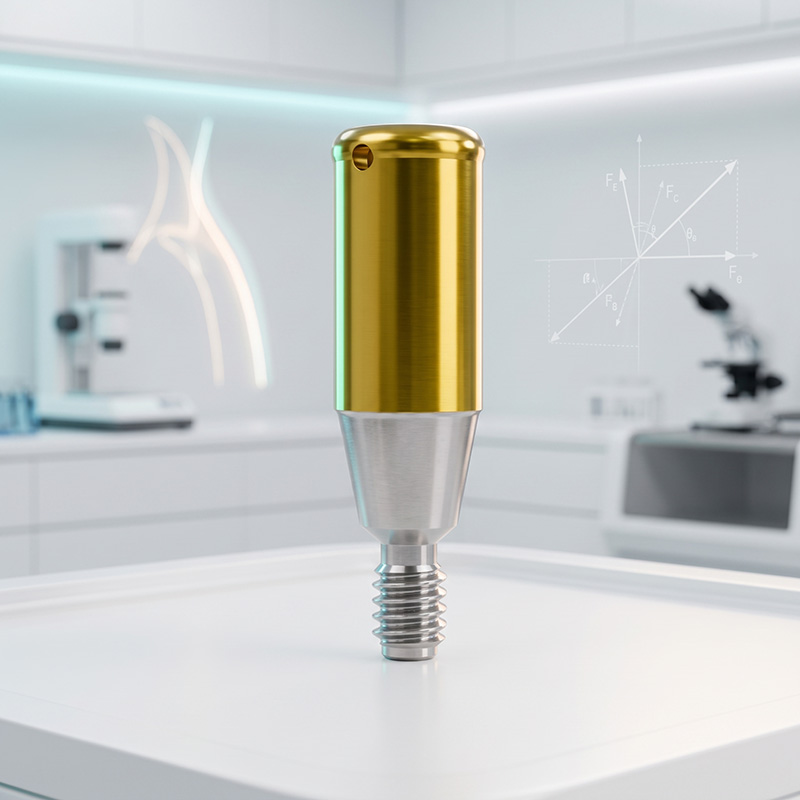
For removable implant-supported overdentures, attachment components must withstand repeated insertion, removal, chewing forces, moisture, cleaning procedures, and occasional misalignment. Over time, this combination of mechanical and chemical stress can affect retention, increase maintenance requirements, and reduce the patient’s confidence in the restoration.
Locator Abutments with an advanced Titanium Nitride coating are being evaluated as one way to improve surface durability while maintaining the precision required by a modern Implant System. The coating does not replace sound implant planning or proper maintenance, but it can add a protective surface layer to components that experience frequent contact and friction.
This guide explains how TiN coatings work, where they may provide value, what buyers and dental professionals should verify before selection, and how coated narrow healing and attachment abutments may support a more reliable clinical and laboratory workflow.
Why Wear Resistance Matters in Locator-Style Attachments
Locator-style attachments are designed to provide a stable connection between an implant-supported overdenture and the attachment housing embedded in the prosthesis. The abutment, retention insert, housing, and implant connection must work together as a single mechanical system.
Everyday use creates repeated loading cycles. A patient may insert and remove the denture several times per day, while chewing produces vertical, lateral, and rotational forces. If the overdenture is not aligned correctly during insertion, the attachment components may also experience additional side loading.
Common factors that influence attachment wear include:
| Wear factor | Possible effect |
|---|---|
| Repeated insertion and removal | Gradual loss of retention and increased friction |
| Off-axis loading | Uneven contact, component deformation, or accelerated insert wear |
| Food particles and cleaning debris | Abrasive action at contacting surfaces |
| Saliva and oral fluids | Corrosion-related surface changes in susceptible materials |
| Insufficient prosthetic space | Thin housing walls, compromised alignment, or excessive stress |
| Incorrect component compatibility | Poor fit, unstable retention, or implant connection damage |
It is important to recognize that the abutment is only one part of the wear equation. Retention inserts, attachment housings, denture base materials, implant angulation, occlusion, and patient handling all influence long-term performance. A wear-resistant abutment surface can reduce one source of mechanical degradation, but it cannot compensate for an unsuitable treatment plan or poor prosthetic alignment.
What Is Titanium Nitride?
Titanium Nitride, commonly abbreviated as TiN, is a hard ceramic coating applied to a metal substrate. It is widely recognized for its high surface hardness, low friction characteristics, chemical stability, and distinctive gold-colored appearance. In dental and medical component applications, TiN is typically deposited using a controlled physical vapor deposition process, although the exact technology varies by manufacturer.
During coating, titanium and nitrogen are introduced in a vacuum environment. The resulting TiN layer bonds to the surface of the underlying component. Because the coating is thin compared with the bulk metal, the base material continues to provide the component’s structural strength while the surface layer contributes enhanced resistance to friction, abrasion, and certain corrosive conditions.
The performance of a TiN coating depends on more than its name. Important variables include coating thickness, substrate preparation, surface roughness, deposition temperature, coating uniformity, adhesion strength, edge coverage, and post-coating dimensional inspection. A poorly prepared or poorly bonded coating may provide limited benefit
About us
Zhejiang Trusyou Medical Instruments Co., Ltd. was founded in 2012. It is a modern high-tech enterprise integrating R&D, design, production and sales. It focuses on providing dental implant systems, surgical tools and instruments, advanced biomaterials and all-round digital solutions to global users. Product sales cover more than 50 countries and regions including North America, Europe, the Middle East, and Southeast Asia, and are widely recognized.
Media Contact
Company Name: Zhejiang Trusyou Medical Instruments Co., Ltd.
Contact Person: Media Relations
Email: Send Email
Phone: +86 15158460117
Country: China
Website: https://www.trusyou.com/