
DongGuan, GuangDong, China – October 12, 2026 – A Snap Hook is the small part that connects an entire leash to the collar or harness. Buyers sourcing custom leash hardware for their own brand need to evaluate how the gate, spring, swivel, attachment eye, material, and finish behave together — not simply compare a breaking-load figure.
The most useful approval process reproduces real leash geometry and repeated handling. It also distinguishes cosmetic expectations from defects that can affect attachment, movement, or long-term reliability.
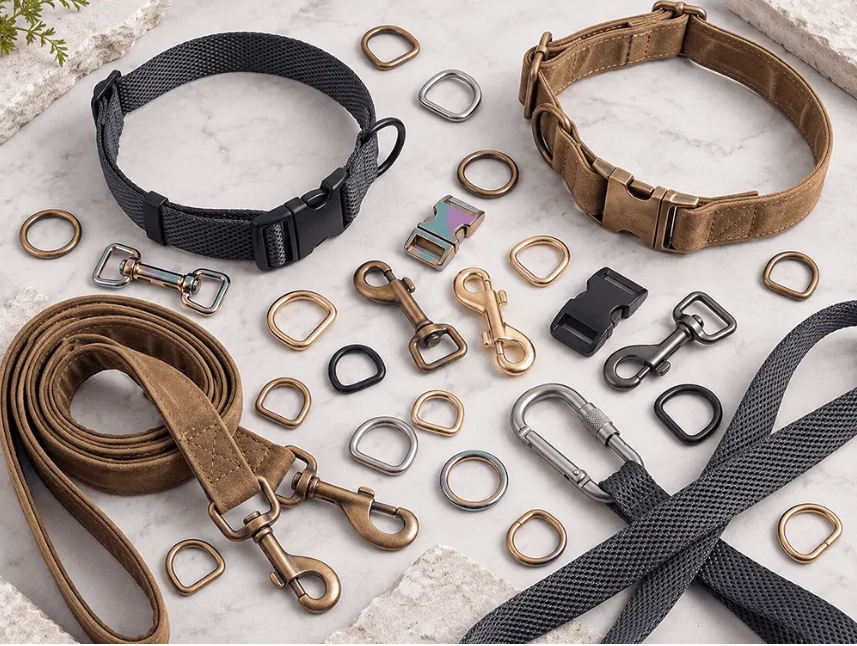
Define the Leash Before Choosing a Snap Hook
State whether the hook is for a narrow fashion lead, daily walking leash, training line, double-ended lead, or heavy webbing product. Include strap construction, finished width and thickness, target dog size, use environment, and desired hand feel.
Weight Balance
A very large hook can make a short leash feel unbalanced, while an undersized hook may not provide adequate geometry or confidence. Evaluate the part on the finished leash rather than judging it from a catalog photo.
Match the Gate Style to How the Leash Will Be Used
Bolt snaps, trigger snaps, carabiner-style hooks, and quick-release hooks open differently. Consider one-handed use, gloves, finger clearance, accidental activation, and whether the owner can see the collar ring during attachment.
Check Operation With One Hand
Open and release the hook in the position a handler will use. Gate shape, spring force, and surrounding body clearance all affect practical operation.
Inspect the Snap Hook’s Gate Opening
The opening must accept the intended D Ring without forcing the user to twist or scrape the parts together.
Test the Intended D Ring or Attachment Point
A nominal opening can still be difficult to use if the mating ring is thick or approaches at an angle. Approve the two parts together.
- · Measure the clear opening at its narrowest usable point.
- · Check access around the lever or trigger.
- · Attach the hook to the actual collar or harness ring.
- · Look for gaps, side play, or surfaces that can catch webbing.

Test Spring Return on the Snap Hook Repeatedly
A strong first closure does not prove consistent operation. Cycle the gate repeatedly and inspect whether it returns fully from different opening positions. Add light side pressure to identify binding that a straight bench test may miss.
Listen and Feel for Changes
A slower return, rough movement, new clicking sound, or gate that stops short can reveal wear or contamination before complete failure. Record these observations during sample evaluation.
Evaluate Swivel Action Under Tension
The swivel helps a leash untwist, but it must rotate without excessive looseness or roughness. Test it unloaded, under moderate tension, and after repeated cycles. Check the joint for visible separation or permanent play.
Match the Attachment Eye to the Finished Leash
Specify the internal eye width and shape against the finished loop. The strap should lie flat and leave room for stitching or rivets. An eye that is too narrow bunches material; one that is too wide may let a narrow strap wander and wear at the edges.
Build the Sewn or Riveted End
Fit the hook to the production webbing or leather with the planned fold and reinforcement. The finished end should sit flat without restricting swivel movement.
Compare Snap Hook Materials by Application
Zinc alloy, solid brass, and stainless steel offer different combinations of detail, weight, finish options, corrosion resistance, and cost. Material selection should follow the hook geometry, target use, test requirement, and brand position rather than a generic ranking.
|
Reference comparison for custom leash hardware buyers — confirm exact performance with your supplier and test reports. |
||||
|
Material |
Typical Strength |
Detail & Finish |
Weight |
Cost Position |
|
Zinc Alloy |
Good for light–moderate loads |
High detail, wide finish range |
Lighter |
Economical |
|
Solid Brass |
Good, application-dependent |
Strong natural luster, ages well |
Heavier |
Mid–premium |
|
Stainless Steel |
Generally higher, application-dependent |
Clean industrial look, fewer plating options |
Heavier |
Premium |
Treat the Finish as a Functional Layer, Not Just Cosmetic
Plating and coating influence color, wear, clearance, and corrosion performance. Inspect areas that rub during opening and rotation, not only broad decorative faces.
00001. Approve tone and gloss on the production base material.
00002. Inspect recesses, edges, gate contact points, and swivel joints.
00003. Cycle the sample after finishing to check for coating buildup.
00004. Define packaging that prevents hooks from scratching one another.

Specify a Meaningful Pull Test for Snap Hooks
Write down the loading direction, attachment fixture, rate, target value, hold time, and pass criteria. A number without a method cannot be compared reliably between samples or suppliers.
Examine Deformation, Not Only Breakage
A hook may remain in one piece but become unsafe if the gate opens, body stretches, swivel loosens, or attachment eye changes shape. Record permanent deformation and whether the hook still operates after loading.
Test Corrosion Resistance Without Ignoring Movement
Select the exposure method around the target market and use conditions. After testing, rinse and condition samples as agreed, then operate the gate and swivel. Corrosion products inside a joint can affect function before they become obvious on the outside.
Approve the Snap Hook on a Finished, Production-Representative Leash
Create a production-representative leash with the real strap, fold, thread, rivets, and reinforcement. Confirm sewing access, attachment-eye fit, hanging angle, balance, and contact between the hook and leash hardware.
Build a Reliable Incoming Inspection Routine for Custom Leash Hardware
Incoming checks should be fast enough for regular use and focused on characteristics that matter.
Sample Across Cartons and Production Time
Spread the inspection beyond one top layer. Hooks from different cartons and production intervals give a better view of dimensional, spring, and finish consistency.
- · Measure critical openings and attachment-eye width.
- · Cycle gates and swivels from samples across the lot.
- · Compare finish against the approved master.
- · Inspect edges, parting lines, and packing damage.
- · Run functional or load sampling at the agreed frequency.
Separate Cosmetic Variance From Functional Defects
A tiny shade difference and an incomplete gate closure do not carry the same risk. Define defect categories before shipment so the factory and buyer apply consistent decisions. Functional defects should receive tighter limits and clear containment actions.
Place Orders With a Complete Technical Specification
The purchase description should include model or drawing number, material, dimensions, finish code, logo, test method, approved sample reference, quantity, packing, and inspection level. This turns a visual selection into a controlled production item.
Identify the Approved Mating Hardware
Record the leash width, attachment ring, finish master, and test assembly with the hook specification so reorders are evaluated in the same system.
Related reading: Explore custom metal pet hardware for leash production
Ready to move from spec sheet to sample? Share your leash design and target hardware requirements.
Submit a Snap Hook Specification
FAQ: Dog Leash Snap Hooks for Custom Hardware Buyers
These questions address the details that most often affect snap hook approval for buyers developing their own leash hardware.
Which material is best for a dog leash snap hook?
There is no single best material. Choose according to hook geometry, expected load, corrosion exposure, weight, finish, target price, and verified test results.
Why is the swivel important on a dog leash hook?
A functioning swivel helps the leash untwist and improves handling. It must rotate smoothly without excessive looseness, binding, or separation under tension.
Is the breaking load enough to approve a snap hook?
No. Buyers should also evaluate gate closure, permanent deformation, swivel condition, corrosion behavior, leash fit, and consistency across production samples.
What measurements should be included in a custom hardware order?
Include overall size, gate opening, attachment-eye width and height, key section thicknesses, swivel dimensions, and any tolerances that affect the leash assembly.
About Us
Our company named Dongguan King Ming Hardware Co., Ltd. was founded in 2000, which is a professional manufacturer with more than 27 years of rich experience. We specialize in letter buckle, D ring, O ring, Hook for bag, handbag label, belt buckle, Zipper, Key Chain, metal Eyelet, Bag Handles Kiss Lock and pet hardware, and so on.
Media Contact
Company Name: Dongguan Kingming Hardware Plastic Technology Co., Ltd.
Contact Person: Media Relations
Email: Send Email
Country: China
Website: https://www.kmhardware.com/