
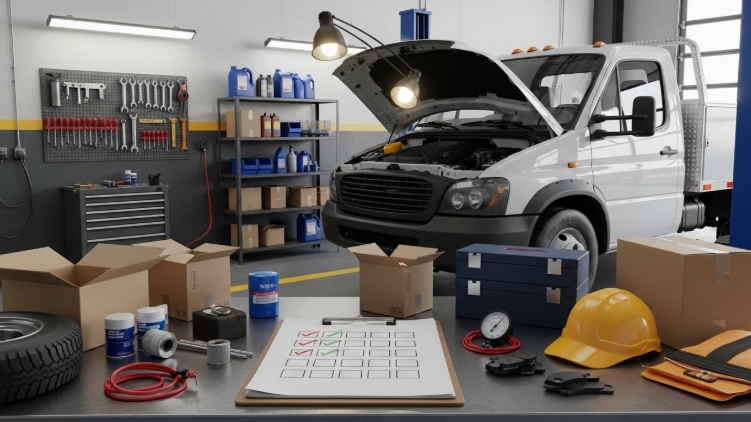
Work trucks are the backbone of construction, delivery, and field services. A single breakdown halts operations, delays projects, and destroys your reputation. Reliable trucks protect drivers, reduce liability, and keep your business moving. The difference between a fleet that stays on the road and one that doesn’t? Consistent maintenance.
Comprehensive Maintenance & Reliability Metrics
|
Maintenance Type |
Interval |
Key Focus Areas |
Critical Impact |
Required Tools |
|
Daily Pre-Trip |
Before every shift |
Brakes, tires, lights, fluids, leaks |
Prevents roadside failures |
Checklist, flashlight, pressure gauge |
|
Weekly/Monthly |
Every 7–30 days |
Battery terminals, belts, hoses, suspension, tire rotation |
Extends component life |
Visual inspection, multimeter, torque wrench |
|
Seasonal Check |
Quarterly |
Cooling/heating systems, exhaust, emissions, corrosion |
Adapts to weather changes |
Temperature gauge, emissions tester |
|
Annual Service |
12,000–15,000 miles |
Full chassis, structural inspection, fluid replacement |
Catches systemic issues |
Full service equipment, lift |
|
Breakdown Reduction |
Consistent execution |
All checks combined |
Fleet reliability impact |
Proper training, digital logs |
The Daily Checklist: Your First Line of Defense
Before every shift, drivers should check:
-
Brakes & Tires – Check brake pad thickness and listen for air leaks. Verify tire pressure and tread depth. Inspect your 20-inch rims for cracks, bends, or corrosion that could compromise safety.
-
Lights – Test all exterior bulbs, including original OEM headlights, to ensure visibility and compliance.
-
Fluid Levels – Check oil, coolant, brake fluid, and windshield washer. Address any leaks immediately.
-
Emergency Equipment – Verify fire extinguisher, reflective triangles, and first aid kit are in place and accessible.
This takes 10 minutes. It prevents catastrophic failures.
Weekly & Monthly: Catch Wear Before It Fails
Battery & Electrical Clean battery terminals and check for corrosion. Test voltage to catch slow discharge before you’re stranded.
Belts & Hoses Inspect for cracks, fraying, or leaks. These failures cause overheating and loss of power steering; both are dangerous.
Suspension & Steering Check for loose bushings, leaking shocks, and steering wheel play. Worn suspension causes uneven tire wear and reduces control.
Tire Rotation & Alignment: Rotate tires every service interval to extend life. When rotating, inspect 20-inch rims for damage and verify all lug nuts are properly torqued.
Seasonal & Annual: Prepare for Weather & Age
Summer & Winter: Check coolant levels and hose condition before summer heat. Verify antifreeze concentration and test the heater before winter cold.
Emissions & Exhaust Inspect for leaks, rust, and loose hangers. Urban fleets need more frequent emissions checks due to stop-and-go traffic.
Structural & Chassis Inspections Look for rust, cracks, and loose bolts, especially around mounting points. When evaluating add-ons like wild top truck caps, check for secure attachment, water intrusion, and corrosion where the cap meets the bed.
Modern Maintenance: Predictive vs. Routine
The old way: fix it when it breaks. The new way: predict when it will break, then prevent it.
Telematics & Predictive Maintenance Real-time monitoring systems collect data on engine performance, fluid levels, and component wear. This lets you schedule service before failure occurs, not after. Predictive sensors alert drivers to subtle changes that humans miss.
Digital Maintenance Logs: Digital records streamline compliance and improve accountability. Cloud-based platforms automate reminders, securely store documentation, and make it easy to retrieve records during DOT audits.
Inventory & Parts Management: Track high-wear items (filters, belts, headlights) and automatically reorder them. This ensures critical parts are always available and minimizes downtime.
Real-World Strategy: Adapting to Your Environment
Different conditions demand different maintenance focus.
Coastal & Humid Areas: Extra attention to corrosion protection on 20-inch rims, undercarriage, and fasteners.
Desert Operations: Focus on cooling system maintenance, dust control, and brake inspections.
Mountain Routes: Reinforced brake inspections and suspension checks.
Urban Fleets: More frequent emissions checks, filter replacements, and lighting maintenance (especially OEM headlights) due to regulations.
Building a Reliability Culture
Fleet managers who stay on the road longer do three things consistently:
-
Empower drivers to report issues without fear. Reward proactive problem-spotting.
-
Train regularly on inspection routines and new technologies. Keep the team current.
-
Use data to coach, not punish. When telematics show a driver skipping pre-trip checks, it’s a training opportunity, not a penalty.
Drivers who know their truck will be maintained trust management. Truck-maintaining managers keep customers happy.
Your Reliability Roadmap
A reliable work truck results from consistent maintenance and a proactive approach to emerging issues.
Start with daily pre-trip inspections. 10 minutes before every shift catches most problems.
Execute weekly and monthly checks. Battery, belts, suspension, and tire rotation. These extend component life dramatically.
Adapt for seasons and environments: summer cooling, winter heating, and corrosion in humid areas. Adjust based on where your trucks operate.
Inspect all accessories regularly. Wheels, caps, lights, and anything attached to the truck need attention. Wild top truck caps and OEM headlights, especially.
Track everything digitally. Maintenance logs prove compliance and identify patterns.
Staying ahead of maintenance protects your investment, keeps drivers safe, and customers satisfied.
The Bottom Line
Reliability doesn’t happen by accident. It happens when you commit to consistent maintenance, train your team, and use data to stay ahead of problems.
Your work trucks will keep running. Your drivers will stay safe. Your customers will get their jobs done on time.
That’s what a proper checklist and a disciplined approach deliver.
FAQs: Work Truck Reliability
Q: What should be on a basic work truck inspection checklist?
A: Brakes, tires, lights, fluid levels, emergency equipment, and visible leaks. Daily pre-trip inspections are required for safety and compliance. See the maintenance metrics table above for full intervals.
Q: How often should maintenance be performed?
A: Daily checks before every shift. Weekly and monthly inspections for wear. Seasonal adjustments for temperature. Annual full services. See the table above for specific intervals and what to check at each.
Q: How do accessories affect maintenance?
A: Add-ons like wild top truck caps introduce new failure points if not correctly installed. Inspect them regularly for secure attachment, water intrusion, and corrosion.
Q: What’s predictive maintenance, and how does it help?
A: Telematics and sensors monitor vehicle health in real time, allowing service before failures occur. This reduces downtime and repair costs compared to waiting for breakdowns to happen.
Media Contact
Company Name: discountedwheelwarehouse
Email: Send Email
Country: United States
Website: https://www.discountedwheelwarehouse.com