
Qingdao, China.-November 19, 2026
A Differential Lock Solenoid Valve plays an important role in controlling a vehicle’s differential locking system. When forklifts or other vehicles operate on muddy, snowy, sandy, or uneven surfaces, differences in wheel traction can affect driving stability. The differential lock helps coordinate wheel rotation, while the solenoid valve controls the locking and unlocking process.
When an existing valve needs replacement, choosing a product based only on its appearance can lead to compatibility problems. Differences in electrical connections, hydraulic requirements, installation dimensions, and control functions may prevent the replacement from working correctly. For buyers sourcing a Differential Lock Solenoid Valve, the priority is to find a product that matches the vehicle’s existing system and restores reliable operation.
Why Does a Differential Lock Solenoid Valve Need Replacement?
A differential lock solenoid valve receives an electrical signal and uses electromagnetic force to move its internal valve core. This changes the hydraulic flow path and allows the differential locking mechanism to engage or disengage, depending on the system design.
In forklifts and other material-handling vehicles, this function is particularly important when operating on surfaces with limited traction. If the valve cannot respond correctly, the differential lock may fail to engage, release too slowly, or operate inconsistently.
Common reasons for replacement include:
- Unresponsive locking control:The differential lock does not engage or release when activated.
- Intermittent operation:The locking function works inconsistently, affecting vehicle operation.
- Electrical or coil damage:A damaged coil, loose connector, or wiring problem prevents normal actuation.
- Internal wear or contamination:Contamination or wear affects valve movement and hydraulic flow.
- Equipment maintenance:The original valve needs replacement during repair or system modification.
These symptoms do not always indicate a defective solenoid valve. Wiring faults, control switch problems, insufficient hydraulic supply, and mechanical failures can produce similar results. Checking the complete system before ordering helps prevent unnecessary replacement costs.
What Should Buyers Check Before Replacing a Differential Lock Solenoid Valve?
The most important step is confirming that the replacement matches the original system. Two valves may look similar but have different electrical and hydraulic requirements.
|
Compatibility Factor |
What to Confirm |
Why It Matters |
|
Model and Application |
Original model, part number, and vehicle type |
Helps identify the correct product |
|
Electrical Requirements |
Rated voltage and power supply |
Prevents electrical mismatch |
|
Connector |
Connector type and wiring arrangement |
Ensures compatibility with the control circuit |
|
Hydraulic Conditions |
Working pressure, flow, and fluid compatibility |
Supports reliable valve operation |
|
Installation |
Port positions, mounting method, and dimensions |
Reduces fitting and modification problems |
|
Control Function |
Required locking and unlocking behavior |
Confirms the valve performs the intended function |
Confirm Electrical Requirements
Electrical compatibility should be checked before purchasing a replacement. The solenoid valve must match the vehicle’s power supply and control arrangement. Differences in rated voltage or connector configuration can prevent direct replacement, even when the valve body looks similar.
Buyers should confirm the original valve’s voltage, connector type, and wiring arrangement. If the product label is unreadable, clear photographs of the valve and electrical connection can help manufacturers identify the configuration.
It is also important to distinguish valve failure from an electrical supply problem. Damaged wiring or a faulty control switch may prevent the valve from receiving the correct signal. Replacing the valve without checking these components may not solve the problem.
Check Hydraulic Compatibility
A Differential Lock Solenoid Valve must operate within the vehicle’s hydraulic conditions. Working pressure, required flow, and hydraulic fluid compatibility all influence performance. An unsuitable valve may cause delayed response, unstable switching, or insufficient control. Buyers should therefore provide the hydraulic system’s operating information instead of relying only on the original valve’s external dimensions. If the original specifications are unavailable, equipment manuals, maintenance records, or information from the service team can help establish the required conditions.
Compare Installation Details
Installation compatibility is another important consideration. Port positions, mounting arrangements, connector locations, and available space may vary between valve models. Before ordering, buyers should compare the replacement with the original component. A valve that requires changes to hydraulic lines or mounting brackets may increase installation time and additional costs.
For direct replacement projects, matching the original installation arrangement should be a priority. If the vehicle has been modified, however, the current system configuration should be used as the reference.
What Problems Can an Incompatible Replacement Cause?
Selecting an unsuitable valve can affect both installation and vehicle operation. A product may fit physically but still fail to deliver the required control function.
|
Compatibility Issue |
Possible Result |
What to Check |
|
Incorrect voltage |
Valve fails to actuate or operates abnormally |
Rated voltage and power supply |
|
Different connector |
Difficult or unreliable electrical connection |
Connector and wiring |
|
Unsuitable hydraulic rating |
Unstable or inadequate operation |
Pressure and flow requirements |
|
Different port arrangement |
Additional piping or mounting modifications |
Port positions and connection type |
|
Incorrect control function |
Locking or unlocking does not work as intended |
Valve function and hydraulic circuit |
These problems can increase maintenance costs and extend equipment downtime. For forklifts and other vehicles used in warehouses or construction environments, longer repair periods may also interrupt daily operations. To reduce these risks, buyers should confirm the replacement requirements before production or shipment rather than addressing compatibility problems after delivery.
What Information Should Buyers Provide When Ordering?
Providing clear application information helps manufacturers identify a suitable Differential Lock Solenoid Valve more efficiently. Instead of submitting only a product name, buyers should provide details about the original component and its working environment.
Useful information includes:
- Original valve model, part number, or equipment identification.
- Vehicle brand, model, and application, such as a forklift or another vehicle with a differential lock system.
- Photos of the valve body, electrical connector, hydraulic ports, and installation position.
- Electrical and hydraulic requirements, including rated voltage and working pressure.
- Replacement restrictions, such as limited installation space or the need to retain existing connections.
If the original valve is unavailable, drawings, maintenance records, or photographs of its installation position can still help clarify the requirements. This information helps manufacturers determine whether a standard product is suitable or whether a customized configuration should be considered.
Selecting a Differential Lock Solenoid Valve for Different Applications
Different vehicles may have different operating requirements. Forklifts used in warehouses and outdoor material-handling areas may need to handle frequent operation and changing surface conditions. Vehicles working on construction sites or rough terrain may experience more frequent traction changes.
This does not mean every application requires a completely different valve. However, the replacement must be assessed against the vehicle’s actual electrical and hydraulic system. A valve suitable for one equipment configuration should not automatically be assumed to fit another. For fleet operators and maintenance teams, keeping records of valve models and replacement specifications can also simplify future maintenance. It reduces the time needed to identify the correct component when another replacement is required.
MPM Differential Lock Solenoid Valve for Replacement Requirements
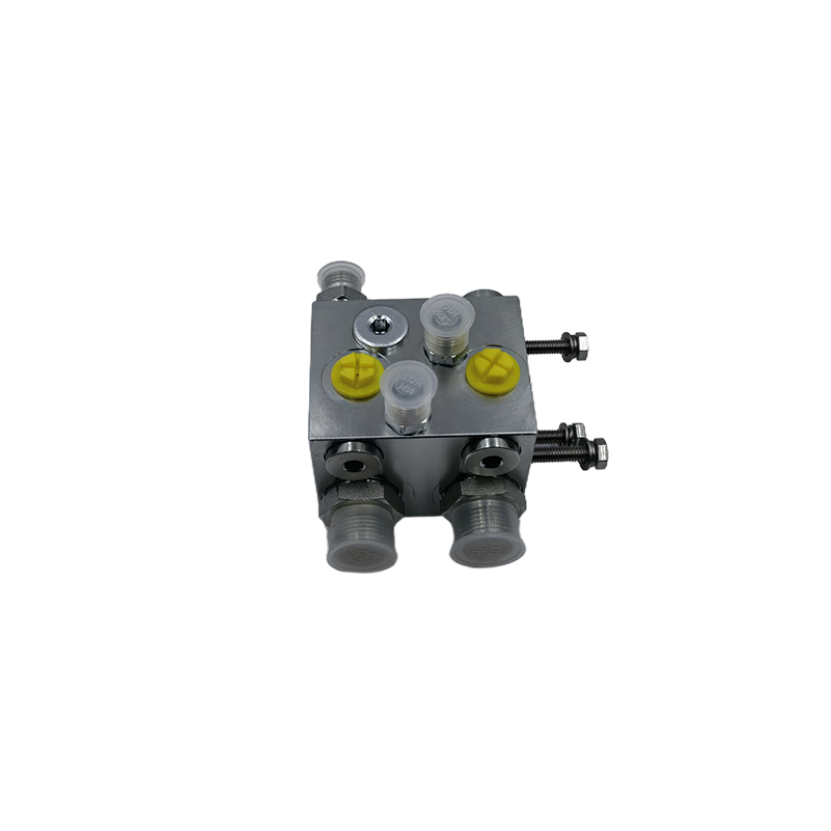
MPM offers the Differential Lock Solenoid Valve MPM-DLSV12 for vehicle differential lock systems. The product is designed to control locking and unlocking through electromagnetic actuation and is intended for applications such as forklifts operating on muddy, snowy, sandy, and other challenging surfaces.
For replacement projects, buyers should confirm the original valve model, electrical requirements, hydraulic conditions, and installation details before selecting the MPM-DLSV12. When a standard configuration does not match the existing equipment, customized products can also be discussed based on customer requirements and drawings. Providing clear product photographs and application information helps determine whether the available model or a customized solution is more appropriate.
Conclusion
Replacing a Differential Lock Solenoid Valve requires more than finding a component with a similar appearance. Electrical ratings, hydraulic requirements, installation details, and control functions all influence compatibility with the vehicle’s differential lock system.
By confirming these details before ordering, buyers can reduce replacement risks, avoid unnecessary modifications, and improve the chances of restoring reliable operation. Clear information about the original valve and its application also helps manufacturers recommend a more suitable replacement.
FAQs
1. Can I replace a differential lock solenoid valve with a similar-looking model?
Not necessarily. Similar external dimensions do not guarantee matching voltage, hydraulic requirements, connector arrangements, or control functions. Confirm these details before installation.
2. Why might the differential lock fail after valve replacement?
Possible causes include an incompatible valve, incorrect wiring, insufficient hydraulic supply, or a mechanical problem in the differential lock system. The complete circuit should be checked.
3. Can a differential lock solenoid valve be customized?
Customization may be possible when electrical, hydraulic, or installation requirements differ from a standard product. Buyers should provide drawings, original part information, and application details.
4. What information is most useful when identifying a replacement valve?
The original model or part number is a good starting point. Clear photos of the valve body, electrical connector, hydraulic ports, and installation position are also useful when the original specifications are unavailable.
About Us
Established in 2006, Qingdao Micro Precision Machinery is a manufacturer specializing in hydraulic cylinders, hydraulic components, hydraulic manifolds, valve blocks and CNC machining parts, guided by a service mindset prioritizing customer responsibility. We supply premium products and services to world-renowned brands including Sandvik, Lemken and Kubota, covering construction, agricultural and mining machinery sectors.
Media Contact
Company Name: Qingdao Micro Precision Machinery Co., Ltd.
Contact Person: Media Relations
Email: Send Email
Phone: +86-15589891818
Address:No. 438, Wangsha Road, Chengyang District, Qingdao, China
Country: China
Website: https://www.mpmmachine.com/