
Jiaxing, Zhejiang, China – September 20, 2026
Picking the right elastomer seals isn’t just about flipping through a catalog—it’s really about understanding the specific application. Sure, a seal might look perfect on a clean drawing, but real-world equipment brings in heat, pressure, vibrations, chemicals, and uneven surfaces that can change everything. During maintenance checks, engineers often discover tiny details—like a rough shaft finish or a groove that’s just a little undersized—that can cause big leaks. Sometimes, the material choice is just based on habit rather than actual needs.
This guide dives into key factors like hardness, operating temperature, fluid compatibility, compression set, and installation conditions. It compares common elastomers like NBR, EPDM, FKM, and silicone. Plus, it highlights how elastomer bellows seals can really come in handy—they help protect moving parts from dust, moisture, and constant flexing. Using standards like ISO 3601 for dimensions or ASTM D2000 for classification can help keep your specs on point, but keep in mind—they’re not a substitute for actual testing. Nothing beats real-world testing because lab results can’t fully replicate the mess of a dirty pump room or the cold start of winter.
A solid seal choice isn’t just about what the data says; it’s about what actually happens in the field. Make sure to check how the seal swells after exposure to fluid, measure leakage, friction, and how well it recovers after compression. Always record the real operating temperature, not just an estimate. It’s also smart to ask for traceability—batch info and clear quality documentation matter. Honestly, finding a perfect fit is pretty rare. Even the most experienced teams might miss an occasional pressure spike. That’s something to be aware of, not hide away. In the sections ahead, I’ll help translate these insights into practical advice—making it easier for you to match seal geometry and materials to your equipment’s specific needs with more confidence.
 What Are Elastomer Seals and How Do They Work?
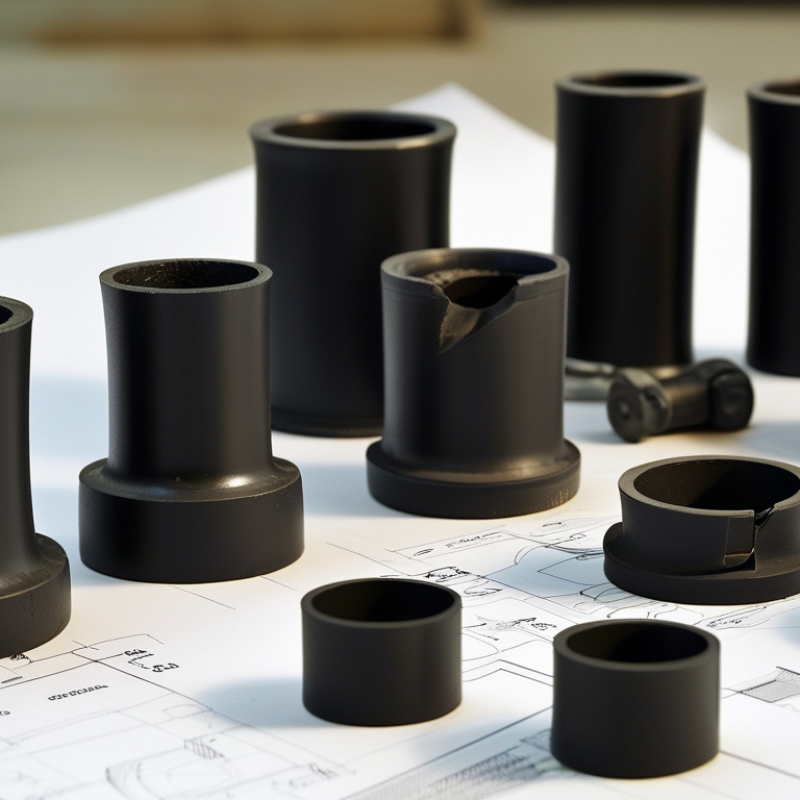
Elastomer Seals are flexible polymer components that prevent fluids or gases from escaping. Common forms include O-rings, lip seals, and bonded seals. They work through controlled deformation. An O-ring sits inside a machined groove. Assembly compresses it against two surfaces. Internal pressure then pushes the elastomer toward tiny gaps. The seal is not glue. It needs correct squeeze, contact, and surface finish. The U.S. Department of Energy reports that compressed-air leaks can waste 20–30% of compressor output. The Compressed Air and Gas Institute reports a similar range in its system-performance guidance. A small damaged seal can create a large operating cost.Choosing the right material requires more than checking temperature. Consider the fluid, pressure, movement, installation method, and cleaning chemicals. Nitrile suits many oil applications. Fluoroelastomers often tolerate higher heat and chemical exposure. Silicone remains useful across broad temperature changes, but it may resist abrasion poorly. These are general tendencies, not guarantees. Check test data. ISO 3601 provides dimensional guidance for O-rings, while ASTM D2000 helps classify rubber compounds. In practice, inspect the groove with a light and a clean probe. Scratches matter. A seal can look perfect and still leak after repeated cycling. I have found that many failures begin with a rushed installation, not an incorrect compound. That assumption deserves review.
How to Choose the Right Elastomer Seals?
Typical Continuous Service Temperature Ranges
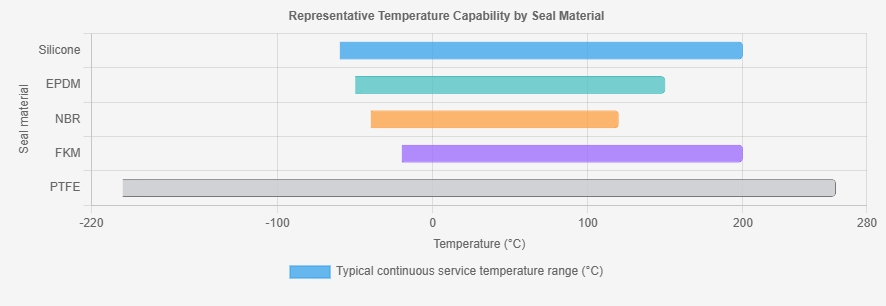
Elastomer seals are flexible polymer components that prevent leakage between mating surfaces. Temperature resistance is one of the first selection factors: EPDM is commonly suited to hot water and weathering, NBR to oils and fuels, FKM to higher-temperature chemical and fuel service, silicone to wide-temperature applications, while PTFE offers an even wider temperature range but behaves differently from conventional elastomers. Actual limits depend on compound formulation, pressure, chemicals, and exposure time.
How to Define the Sealing Application and Operating Conditions
How to Choose the Right Elastomer Seals?How to Define the Sealing Application and Operating ConditionsStart with the application, not the elastomer catalog. Record whether the seal is static, reciprocating, rotating, or exposed to pressure cycling. Face Seals usually work in axial, static joints, such as flanges and covers. Measure the groove width, seal cross-section, compression, and extrusion gap. Measure it cold. Then repeat after thermal expansion, because metal dimensions may shift during operation.List the actual operating conditions. Include minimum and maximum temperature, pressure spikes, shaft speed, fluid chemistry, installation force, and cleaning exposure. A seal touching hydraulic oil behaves differently from one exposed to steam, fuel, or abrasive dust. ISO 23936-2 highlights the importance of evaluating elastomer compatibility in oil and gas environments. The U.S. Department of Energy reports that compressed-air leaks can waste 20–30% of compressor output in poorly maintained systems. Poor sealing affects energy use, not only leakage.Allow for imperfect field conditions. Dirt, misalignment, rough surfaces, and repeated assembly often matter more than the laboratory result. Check surface finish and corner radii before approving the design. A clean spreadsheet can still miss reality. Test the seal with the real fluid, pressure cycle, and temperature range whenever possible. Document any swelling, flattening, cracking, or extrusion after testing. That evidence is more useful than selecting a material from habit.
How to Match Elastomer Materials with Chemical CompatibilityHow to Choose the Right Elastomer Seals?How to Match Elastomer Materials with Chemical Compatibility
Start with the fluid. Identify its chemical name, concentration, temperature, and pressure. A compatibility chart helps, but it is not a final decision. Real service conditions can change the result.
Temperature changes everything. A seal exposed to hot oil may swell faster than one tested at room temperature. Check the fluid’s safety data sheet and operating records before selecting an elastomer.
Nitrile often suits petroleum oils, while EPDM usually performs better with water, steam, and some glycol fluids. Fluorocarbon elastomers can handle many fuels and higher temperatures, but they are not suitable for every chemical. Strong bases, amines, or certain hot solvents may cause rapid damage.
For Pump Seals, also consider shaft speed, pressure cycling, and friction. Chemical resistance alone is not enough.
Look for swelling, cracking, softening, or permanent deformation after exposure. A small sample test under actual temperature is more useful than a perfect chart match. Measure mass and hardness before and after testing.
I have seen seals appear acceptable after one day, then lose strength after several weeks. That assumption can fail.
When the fluid contains additives, request compatibility data for the complete mixture, not only its primary ingredient. Document the test conditions, because an unrecorded result is difficult to trust.
How to Select the Correct Seal Design, Size, and ProfileHow to Choose the Right Elastomer Seals?
Selecting the correct elastomer seal begins with the seal design. Static applications may use O-rings, while moving shafts often need lip seals or energized profiles. Mixer Seals require special attention because rotation, heat, and abrasive materials can act together. Check whether the seal will face pressure, vacuum, or repeated movement. A simple profile can outperform a complex one when conditions are stable.
Size must match the housing, shaft, and groove dimensions precisely. Measure the bore and shaft rather than relying on old drawings. Confirm groove width, depth, and clearance with the equipment manual. Excessive squeeze can create friction and heat. Too little squeeze may allow leakage. Leave room for thermal expansion and material swelling. Small errors matter.
Profile selection also depends on surface finish and installation method. A sharp groove edge can damage a new seal during fitting. Use a clean tool and avoid stretching the seal across threads. Review temperature cycles, fluid compatibility, pressure spikes, and expected service hours. I have seen suitable materials fail because the shaft surface was rough. That mistake is easy to repeat. Testing a sample under real operating conditions is wiser than trusting a catalog table alone. Even experienced engineers should question an apparently perfect fit.
How to Evaluate Temperature, Pressure, Friction, and WearHow to Choose the Right Elastomer Seals?How to Evaluate Temperature, Pressure, Friction, and Wear
Start with the real operating temperature, not the catalog average. Record normal, peak, and shutdown temperatures. A seal may harden after repeated heat cycles. It may also soften when exposed to hot fluid. Check chemical compatibility at the actual temperature, because laboratory data can look deceptively safe.
Pressure needs equal attention. Measure static pressure and pressure spikes during startup or sudden valve movement. A seal that works at steady pressure may extrude during a short surge. Inspect the groove, clearance, and backup support together. Material selection alone cannot fix poor hardware design. This is often missed.
Friction and wear reveal what happens during movement. For a sliding seal, review speed, stroke length, lubrication, surface roughness, and side load. Excess friction can increase energy use and generate heat. Wear may appear as small particles, edge rounding, or a polished track. Check the seal after testing, not only before installation. Small details matter. In my experience, field conditions rarely match the original worksheet perfectly. Humidity, misalignment, and cleaning chemicals can change performance. A controlled test with production parts is more dependable than assumptions. Still, one test is not enough. Repeat it after thermal cycling and pressure changes.
How to Compare Service Life, Cost, Standards, and Supplier Quality
How to Choose the Right Elastomer Seals?Service life should be compared under real operating conditions, not catalog promises. Check temperature cycles, pressure spikes, shaft movement, chemical contact, and compression set. A seal that lasts ten years in clean oil may fail within months in abrasive water. Request test data from applications resembling yours. Laboratory results help, but field history matters more.Cost comparison should include installation, inspection, downtime, and replacement labor. A low-priced seal can become expensive after one unexpected shutdown. Compare the total cost over the planned service period. Ask whether the supplier controls compound mixing, curing temperature, and dimensional inspection. Small variations can create large leakage problems. They happen.Standards provide a common technical language. For example, ISO 3601 supports O-ring dimensions and acceptance requirements, while ASTM D2000 helps classify rubber performance. Confirm that certificates match the actual material and production batch. Supplier quality also depends on traceability, change control, and corrective-action records. Request sample inspection reports, not polished claims. An on-site audit can reveal storage issues, unclear labeling, or rushed final checks. No supplier is perfect, and even strong systems need review when the application changes.
FBD Marine Pump Seals: Insights from Grand View Research and Fortune Business Insights Reports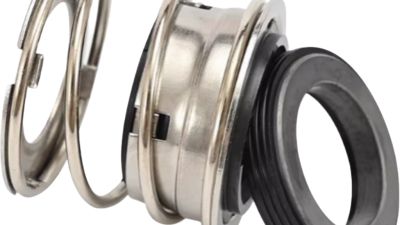
FBD Series Mechanical Seals for Marine Water Pumps – China Suppliers & Factory for Reliable Sealing Solutions
FBD marine pump seals are gaining attention as adaptable solutions for rotating equipment used in marine and industrial environments. Recent market research reports on mechanical seals highlight the growing demand for dependable, low-maintenance components that can support pumps, blowers, and other fluid-handling systems. Designed in China, the FBD series responds to these needs with a non-equilibrium sealing structure that combines practical performance with installation convenience.Featuring a single spring and rubber corrugated tube, the FBD seal helps reduce common problems found in traditional designs, including spring blockage and excessive compensation resistance. Its flexible rotation direction allows it to accommodate different equipment configurations, while the straightforward installation process minimizes preparation time and eliminates the need for complicated pre-use adjustments. This design can contribute to stable operation and easier maintenance in demanding marine pump applications.As industries continue to seek reliable sealing components with broad compatibility, the FBD series offers a balanced option for equipment operators, maintenance teams, and industrial suppliers. Its robust construction and adaptable design make it suitable for various operating conditions where consistent sealing, efficient servicing, and dependable long-term use are essential.
Conclusion
Choosing the right Elastomer Seals begins with understanding how they function: they create a flexible barrier that prevents fluids, gases, or contaminants from passing between mating surfaces. A successful selection requires clearly defining the application, including the media being sealed, movement type, pressure, temperature range, installation conditions, and expected operating cycles. These factors provide the foundation for choosing a suitable elastomer material with reliable chemical compatibility and resistance to swelling, hardening, cracking, or softening.The seal design must also match the required size, profile, contact force, and available installation space. During evaluation, consider friction, wear, pressure fluctuations, thermal expansion, and the possibility of extrusion or deformation. Finally, compare expected service life, maintenance needs, total cost, applicable industry standards, and supplier quality controls. A well-selected seal should deliver dependable performance, stable operation, and practical long-term value under real working conditions.
About Us
Located in the core area of the Yangtze River Delta, the most economically dynamic region in China, Jiashan County is not only famous as the “Hometown of Hardware and Machinery”, but also an indispensable R&D and manufacturing center of precision mechanical seals in the global industrial chain. After decades of deep cultivation and development, Jiashan has formed a large-scale, mature technology, supply chain integrity of the mechanical seals characteristics of the industrial belt.
Media Contact
Company Name: Jiashan County Hardware and Machinery Industry Zone
Contact Person: Media Relations
Email: Send Email
Country: China
Website: https://www.jiashanhardware.com/