
Shenzhen,Guangdong,China-November 10, 2026
Look, China’s electronics manufacturing sector is really booming, and it’s all thanks to a market that just can’t get enough of semiconductors, smart devices, and circuit boards that are getting smaller by the day. Actually, the WSTS’s fall 2024 forecast says global chip sales should hit around $700.9 billion in 2025 – that’s up from the estimated $626.9 billion in 2024. Now, these figures don’t directly measure reflow equipment sales – that’s not their job. But they do give you a real sense of the enormous scale of the electronics supply chain that leans on reliable soldering processes.So, this is really where Reflow Equipment makes a difference. You know, in a production line, the little things—like how consistent the temperature is, how stable the conveyor runs, and how well you control the recipe—can totally make or break the solder joints on thousands of boards. And honestly, just a couple of degrees off? That’s enough to cause headaches. So if you’re a buyer checking out the top 10 reflow equipment manufacturers in China, looking at brand names isn’t gonna cut it. You’ve gotta dig into the practical stuff, like what products they actually offer, how capable their processes are, what kind of technical support you’d get, and what you can find out about the company itself. That’s what this overview tries to get at. Honestly, you’ll find that public details are all over the place, and some claims just can’t be checked on your own. That’s something to keep in mind, though. So when you look at those manufacturer rankings, treat them as a rough guide—definitely not a substitute for actually going to the factory, running samples, or having real technical chats. If you shortlist carefully—and I mean really carefully—you’ll have a better shot at picking suppliers whose equipment lines up with your board designs, throughput targets, and production setup.
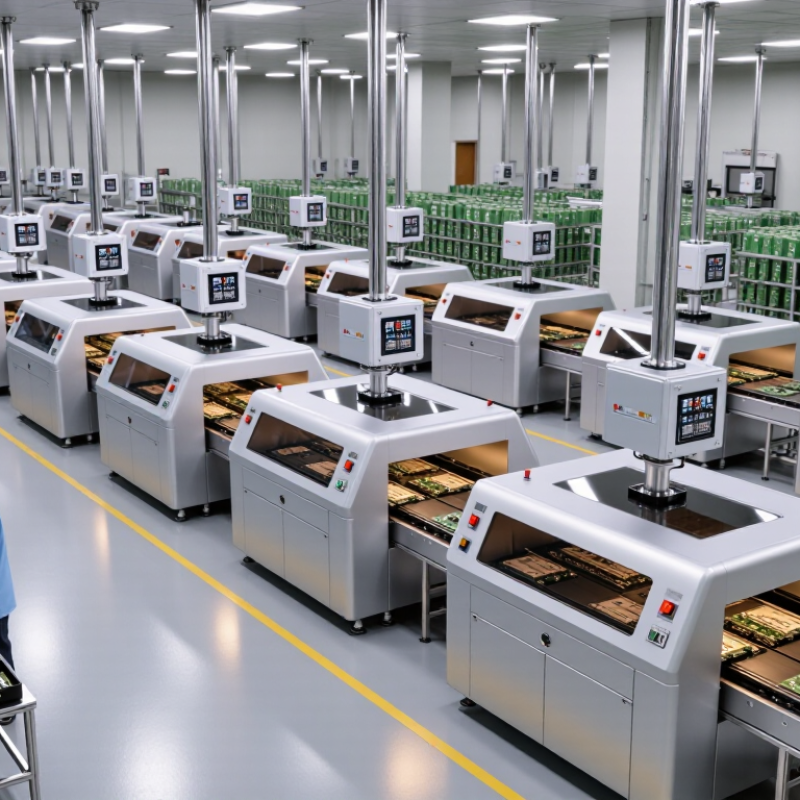
China’s Reflow Equipment Industry: Scope and Development
China’s reflow equipment industry serves electronics assembly lines that join surface-mounted components to printed circuit boards. Its scope includes oven design, temperature control, conveyor systems, process monitoring, and technical support. A typical oven uses several heating and cooling zones to follow a thermal profile suited to the solder paste and components. Careful profiling matters: excessive heat can damage parts, while insufficient heat may weaken solder joints.
Development is shaped by demand for compact devices, varied production volumes, and more consistent process records. Equipment makers are improving zone control, energy use, and data collection. Some systems also offer nitrogen processing for applications that need it. Buyers should compare usable board width, temperature uniformity, service access, and profile repeatability—not just advertised capacity. Progress is real, but uneven. A specification sheet cannot show every challenge on a busy factory floor, and setup still depends on skilled operators.
Tips: Request a profile test using representative boards and solder paste. Check how quickly the oven stabilizes after a production change. Ask what maintenance the cooling section and conveyor need. Small details matter. A good fit may take more evaluation than expected.
Reflow Soldering Equipment: Types and Core Functions
Reflow Soldering Equipment uses controlled heat to form reliable solder joints after components are placed on a printed circuit board. Common systems include forced-convection ovens, infrared ovens, and vapor-phase machines. Convection models transfer heat through circulating hot air and suit many mixed-component assemblies. Infrared systems heat boards with radiant energy, though component size and surface color can affect temperature consistency. Vapor-phase equipment uses condensing vapor to deliver uniform heat, but requires careful process control. Each type has trade-offs. That matters.Grand View Research estimated the global surface-mount technology market at about USD 5.1 billion in 2023, with growth expected through 2030. This market estimate signals sustained investment in assembly capacity, not a guarantee that one oven design fits every factory. In practice, the machine’s core task is to follow a thermal profile: preheat the board, activate flux during soak, melt solder above its liquidus temperature, then cool joints at a controlled rate. A profile that looks acceptable on screen can still hide cold joints beneath large components. Not quite. Engineers should verify temperatures with thermocouples on representative boards, then adjust conveyor speed and zone settings. Small profile changes can matter. Solder paste, board thickness, and component limits all shape the result.
China Top 10 Reflow Equipment Manufacturers – Reflow Soldering Equipment: Types and Core Functions
Reflow equipment configurations are often combined in a single production line. The categories below describe common heating methods and machine configurations, not individual manufacturers or brands.
| Equipment Type or Configuration | Heating or Process Method | Core Functions | Typical Applications | Key Considerations |
|---|---|---|---|---|
| Forced-convection reflow oven | Circulating heated air transfers heat to the PCB and components. | Preheats assemblies, activates solder-paste flux, brings solder above its liquidus temperature, and cools joints in a controlled profile. | General surface-mount assembly, including mixed component sizes. | Airflow, zone settings, conveyor speed, and board loading affect the measured thermal profile. |
| Nitrogen-atmosphere reflow oven | Reflow takes place in an oxygen-reduced nitrogen environment, commonly using convection heating. | Limits oxidation during heating and can support solder wetting for oxidation-sensitive processes. | Assemblies or soldering processes where reduced oxidation is beneficial. | Gas consumption, oxygen level, sealing, and process validation add operating considerations. |
| Infrared (IR) reflow oven | Infrared radiation heats exposed surfaces; some systems combine radiation with circulating air. | Provides controlled heating and cooling for solder-paste reflow. | Applications suited to radiant heating and carefully controlled board profiles. | Heating can vary with surface absorptivity, component geometry, and shadowing; profile testing is important. |
| Hybrid IR/convection reflow oven | Combines radiant heating with forced hot-air circulation. | Uses both heat-transfer methods to manage temperature uniformity and respond to varied board designs. | Assemblies with differing thermal masses or a mix of component types. | The actual result depends on heater layout, airflow, board design, and recipe settings. |
| Vapor-phase reflow system | Heat is transferred as vapor condenses on cooler assemblies inside the process chamber. | Heats assemblies toward the working fluid’s boiling temperature to melt solder paste. | Specialized or lower-volume production where this heating approach fits the process needs. | Working-fluid selection, chamber size, cycle time, and board loading must suit the assembly and solder process. |
| Vacuum reflow system | Applies heat in a chamber that can be evacuated during a defined part of the cycle. | Supports soldering processes designed to reduce voiding in solder joints. | Power modules and other assemblies with demanding void-control requirements. | Results depend on solder materials, joint design, vacuum timing, and the full thermal cycle. |
| Lead-free-process reflow oven | Uses a programmable thermal profile suitable for the selected lead-free solder paste. | Controls ramp-up, soak, time above liquidus, peak temperature, and cooling according to process requirements. | Manufacturing with lead-free solder alloys, including common tin-based formulations. | The profile must follow the solder-paste and component limits; lead-free processes do not all use the same settings. |
| Dual-lane reflow oven | Conveyor system transports boards through heated zones using two lanes. | Allows two board streams to be processed through the oven, subject to lane and recipe configuration. | Production lines seeking higher conveyor utilization or flexible lane scheduling. | Lane spacing, board width, thermal interaction, and recipe compatibility should be checked for the intended use. |
| Batch or benchtop reflow oven | Processes boards in a stationary chamber rather than on a continuous conveyor. | Runs programmable heating and cooling cycles for individual boards or small batches. | Prototyping, repair, laboratory work, and low-volume production. | Throughput and board capacity are generally more limited than in continuous inline production systems. |
| High-capacity inline multi-zone oven | Continuous conveyor transport through sequential preheat, reflow, and cooling zones. | Supports repeatable production profiles and continuous board processing at line speed. | Medium- and high-volume surface-mount manufacturing. | Zone count alone does not determine performance; usable heating length, airflow, loading, and profile capability also matter. |
Criteria for Evaluating Chinese Reflow Equipment Manufacturers
China Top 10 Reflow Equipment ManufacturersCriteria for Evaluating Chinese Reflow Equipment ManufacturersChoose a reflow oven by verified process performance, not brochure claims. Check temperature uniformity across the working width, conveyor speed stability, zone control, exhaust handling, and recipe traceability. Ask for profiling data from your own board or a representative test coupon. Measure at the center and edges, then repeat the run. Small differences can affect solder joints. A polished demonstration is not enough.Industry references help define the limits. IPC/JEDEC J-STD-020E lists package classification peak temperatures up to 260°C for certain component categories; this is a component limit, not a universal oven setting. IPC-7530A provides guidance on profiling mass-soldering processes. Ask suppliers to explain how their equipment supports the profile your assembly requires, including ramp rate, time above liquidus, and cooling. Also compare energy use per production run, maintenance access, calibration records, and response time for technical support. Some figures may be hard to compare directly.Tips: Request a signed profile report, not just a screenshot. Check three consecutive runs. If results drift, investigate before purchase.
China Reflow Equipment Manufacturers: Evaluation Criteria
Suggested weighting for comparing manufacturers. These are evaluation weights, not measured scores or rankings of specific companies.
Prioritize process capability and equipment reliability, then assess technical support, customization, delivery capacity, and lifecycle cost. Adjust the weights to fit your production requirements.
Profiles of 10 Leading Reflow Equipment Manufacturers in China
China’s reflow-equipment market serves electronics factories with very different production needs, from compact pilot lines to high-volume surface-mount assembly. The ten manufacturer profiles should therefore be read as a practical comparison, not a simple ranking. Useful details include conveyor width, heating-zone configuration, temperature uniformity, nitrogen options, and access for routine maintenance. A clear profile also explains which operating conditions its specifications assume.
Demand context matters, but it does not prove machine sales. World Semiconductor Trade Statistics reported global semiconductor sales of $627.6 billion in 2024, a 19.1% increase from 2023. That growth points to a stronger electronics supply chain, while leaving reflow-equipment investment dependent on individual factory plans. Buyers should compare thermal-profile results on their own board types, not rely on headline throughput alone. Small details matter.
Across the ten profiles, look for evidence about process control and support: documented temperature measurements, recipe management, spare-part availability, and technician response. Ask how the oven handles a dense board with large connectors beside small components. A few degrees can affect solder quality. Public specifications, however, rarely show performance under every production condition, so the comparison remains imperfect. Factory trials and reference checks can fill some gaps, though they take time and may not match every line.
Comparison of Technologies, Production Capacity, and Market Focus
Reflow equipment makers differ most in heat control, atmosphere options, and line integration. Convection ovens suit many standard assemblies, while nitrogen systems help limit oxidation on sensitive solder joints. Vacuum-capable systems target void reduction in demanding packages. A useful comparison checks temperature uniformity, zone count, conveyor width, and recipe repeatability. Smt Equipment specifications can look impressive on paper. Real results depend on board mass, component mix, and operator setup.Capacity claims need context. Boards per hour can mislead when board size, cooling time, and changeovers differ. Ask for a trial using your own panel and a measured thermal profile. A 2023 Grand View Research report estimated the global surface-mount technology market at USD 5.16 billion. That figure covers the wider SMT market, not reflow ovens alone, but it signals broad investment in assembly lines. Manufacturers serving high-volume consumer production may prioritize throughput and uptime; suppliers focused on automotive or industrial work may emphasize process control and traceability. These are tendencies, not rules. I would not rank a machine by advertised speed alone. A small temperature drift can matter more than one extra zone.
Industries and Applications Served by Reflow Equipment
Reflow equipment supports the assembly of printed circuit boards across consumer electronics, telecommunications, automotive systems, medical devices, and industrial controls. Each sector brings different board sizes, component densities, and production volumes. A compact wearable device may use a narrow board with heat-sensitive parts, while a vehicle controller can contain heavier connectors that warm slowly. The process must suit the actual assembly, not just a standard recipe. Small details matter.In an Equipment Line, reflow ovens work alongside printers, placement machines, and inspection systems. Manufacturers use them to melt solder paste and form reliable joints on surface-mounted components. Temperature zones, conveyor speed, and board support all influence results. For example, a dense power board may need a carefully adjusted heating profile to reduce uneven temperatures. Medical and communications assemblies may also require close process records and repeatable settings. Yet a profile that works for one board can fail on another. That is easy to overlook. Engineers should check real boards, measure temperatures, and review defects before raising output. Reflow is not a cure for poor paste printing or inaccurate component placement; it is one step in a connected process.
How to Choose a Reflow Equipment Manufacturer in China
China Top 10 Reflow Equipment ManufacturersHow to Choose a Reflow Equipment Manufacturer in ChinaChoosing a reflow equipment manufacturer in China starts with your actual boards, not a catalog. Share board dimensions, component heights, target throughput, and soldering requirements. Ask for a thermal profiling trial with a representative board. Check recorded temperatures across zones, conveyor speed, and peak temperature instead of relying only on brochure claims. During a factory visit, observe belt tracking, oven access, and how technicians handle a drifting sensor reading. Small details matter.Tips: Request a sample profile and a clear list of included services. Ask which parts are stocked locally and what remote support covers. Compare the supplier’s response with your production schedule, not just the quoted machine price.Assess how the oven will integrate with your Smt Line Equipment, including loader and conveyor widths. Confirm power requirements, maintenance intervals, exhaust needs, and training arrangements in writing. Ask for references from factories running similar boards and production volumes. A polished demonstration is useful, but it cannot represent every real production condition. I would not treat one successful trial as proof; board designs and materials vary. Check whether the supplier explains those limits openly, and leave time for another test if the profile needs adjustment.
Conclusion
This article examines the development and scope of China’s Reflow Equipment industry, explaining how reflow soldering systems support reliable, efficient assembly of electronic components. It outlines common equipment types and their core functions, including temperature control, conveyor operation, and process monitoring. Readers will also find practical criteria for assessing manufacturers, such as technical capabilities, production capacity, quality management, customization options, and after-sales support.Profiles of ten leading manufacturers are considered alongside a comparison of their technologies, manufacturing strengths, and market focus, without relying on brand promotion. The article also reviews the industries and applications served by Reflow Equipment, from electronics production to other precision assembly needs. By bringing these topics together, it offers a useful framework for comparing suppliers and choosing a manufacturer in China that matches specific production requirements, budget, and long-term service expectations.
About Us
As a global intelligent equipment &material provider, NSDTECH has continued to focus on SIX major fields: Semiconductor Packaging and Testing Equipment; Semiconductor Packaging and Testing Materials; AI+Vision Inspection; Automated Testing; Intelligent Manufacturing; PCBA Auxiliary Materials since 2011 for global customers. We provide customers with cost-effective to their total solutions requirement.
Media Contact
Company Name: Shenzhen Nsdtech Technology Co., Ltd.
Contact Person: Media Relations
Email: Send Email
Country: China
Website: https://www.nsdsemi.com/