
Xi’an, Shanaxi, China – October 19, 2026
So you’re looking for reliable China Bridge Strain gauge manufacturers? Honestly, it takes a lot more than just lining up catalog prices.This guide looks at suppliers serving bridge monitoring, structural testing, and civil engineering projects. It focuses on documented manufacturing experience, technical support, material consistency, and inspection procedures. The goal is practical selection, not just a sales pitch.A dependable supplier should be able to explain foil composition, gauge factor, backing material, temperature compensation, and installation limits. They should also provide calibration records, batch traceability, and clear resistance tolerances. On a bridge deck, tiny measurement errors can affect decisions about cracking, fatigue, or load distribution. Waterproof packaging matters too. So does adhesive compatibility with concrete, steel, and composite surfaces.The article compares China-based manufacturers from a buyer’s viewpoint. It considers production capability, customization, export experience, and after-sales communication. Some suppliers may look strong online but offer limited technical evidence. That’s a weakness worth paying attention to. A 4 Strain Gauge Wheatstone Bridge setup can improve sensitivity, but poor bonding still ruins the result. Bridge strain measurement depends on the complete system, not the gauge alone. Readers should verify certificates, sample performance, lead-wire quality, and environmental testing before ordering. For major infrastructure projects, factory visits or independent testing may be worth it. No shortlist is perfect. Manufacturer capabilities change, and published specs may not reflect current production. So this guide encourages direct verification and cautious comparison before you make a final pick.
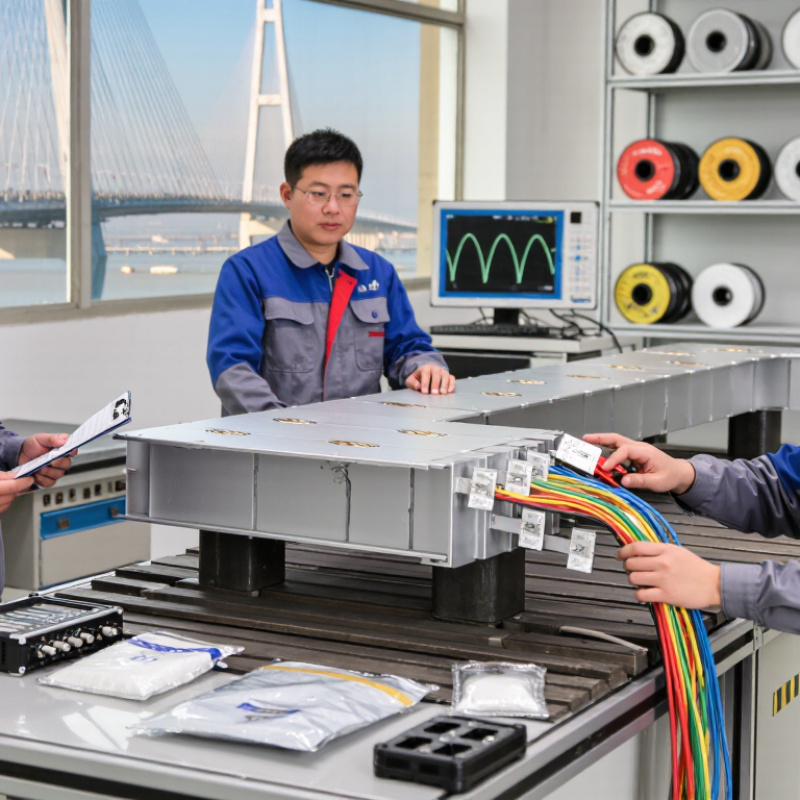 What Is a Bridge Strain Gauge and How Does It Work?
A bridge strain gauge is a small resistive sensor bonded to steel or concrete. It measures tiny surface deformation when a bridge carries traffic, wind, or thermal stress. The sensing grid stretches with the structure. Its electrical resistance then changes slightly.
Strain Gauge And Wheatstone Bridge circuits convert that small change into a usable signal. In a balanced bridge, four resistive arms produce near-zero output. Mechanical strain unbalances them. The measured voltage can then indicate tensile or compressive behavior. ASTM E251 recommends evaluating gauge sensitivity, hysteresis, creep, and temperature response. These details matter more than attractive specifications.
Field installation is less tidy. Moisture can enter a weak coating. A loose cable can imitate structural movement. Temperature compensation is essential, especially on long steel spans.
FHWA’s 2023 National Bridge Inventory recorded 617,084 bridges in the United States, with 42,391 rated poor. That scale shows why continuous monitoring deserves careful sensor selection. A 2024 MarketsandMarkets report valued the structural health monitoring market at about USD 2.1 billion in 2023 and projects approximately USD 3.4 billion by 2028.
For Chinese manufacturers, buyers should examine calibration certificates, resistance tolerance, waterproof packaging, adhesive compatibility, and long-term drift data. Laboratory results help. They do not replace site trials. I would also question unusually low prices; connector quality and installation guidance are easy to overlook. The measurement chain can fail quietly.
Why Is China a Major Bridge Strain Gauge Manufacturing Hub?
China has become a major bridge strain gauge manufacturing hub through dense electronics and metalworking supply chains. Stainless steel foil, copper wire, adhesives, and protective coatings can often be sourced within the same industrial region. This reduces transport delays and supports faster production adjustments. The process is practical. Skilled technicians can tune resistance values, inspect solder joints, and package sensors for harsh bridge environments. Many factories also use automated welding and digital resistance testing. These steps improve consistency across large monitoring projects.Demand from highways, rail bridges, and urban viaducts has strengthened local expertise. Engineers regularly develop sensors for concrete surfaces, steel beams, expansion joints, and difficult installation spaces. A 3 Wire Quarter Bridge Strain Gauge, for example, requires careful lead-wire matching and stable temperature compensation during field installation. Experienced manufacturers usually provide calibration records, batch traceability, and technical guidance for wiring and data acquisition. Export logistics also benefit from China’s extensive ports and established industrial infrastructure. That matters.However, production quality is not identical across every supplier. Some factories may present attractive prices while offering limited fatigue testing or unclear adhesive specifications. This is where professional inspection becomes essential. Buyers should review calibration methods, environmental test results, material certificates, and installation support before placing an order. In real projects, small wiring errors can distort readings for months. The manufacturing hub is strong, but supplier verification still needs patience and technical judgment.
What Defines a Top Chinese Bridge Strain Gauge Manufacturer?
What defines a top Chinese bridge strain gauge manufacturer? It is not only production volume. It is measurable reliability in harsh field conditions. The 2024 ARTBA analysis of the U.S. National Bridge Inventory reported more than 42,000 bridges in poor condition. This figure shows why accurate structural data matters. A capable manufacturer should provide gauges with stable resistance, clear gauge-factor data, temperature compensation, and documented calibration. Testing should follow recognized procedures and maintain traceability to national or international metrology systems.
Real bridge work exposes weak products quickly. Moisture enters junctions. Concrete cracks. Cable shielding fails near power equipment. A serious Chinese manufacturer should verify waterproofing, fatigue performance, signal stability, and adhesive compatibility before delivery. It should also control batch variation, not merely test one sample. ISO 9001 certification can support process discipline, but certification alone does not prove field performance. Installation records, calibration certificates, technical drawings, and responsive engineering support offer stronger evidence. In practice, this evidence is sometimes incomplete. That deserves careful questioning.
Tips:Request sample test reports, temperature-cycle results, and long-term drift data. Ask how the supplier handles rejected batches. Confirm sensor compatibility with your data acquisition system. Visit a laboratory if possible. A short factory tour cannot replace independent verification. Also, compare readings from several gauges during a controlled loading test. Small differences may reveal installation problems, not product failure. That detail is easy to overlook.
Which Chinese Manufacturers Lead the Bridge Strain Gauge Market?
China’s bridge strain gauge market is led by manufacturers with strong sensor engineering, stable production, and practical field support. The most capable suppliers usually serve highway bridges, railway structures, and large concrete projects. They produce foil gauges, weldable gauges, and fiber-compatible sensing units for different installation conditions.Experienced manufacturers provide more than a catalog. They explain resistance values, gauge factors, temperature compensation, and protective coatings. Their technical teams can recommend a Full Wheatstone Bridge Strain Gauge when quarter-bridge wiring may create excessive temperature error. Calibration records should show repeatability under controlled loading. Samples should also survive moisture, vibration, and repeated thermal cycles.I have seen projects delayed by poor surface preparation. Small details matter. Dust remains under the adhesive. Lead wires bend sharply. These errors can distort readings before the bridge carries service loads. Leading Chinese suppliers often provide installation guides, validation testing, and batch traceability. However, not every supplier applies these controls consistently. Buyers should request inspection data, environmental test results, and clear replacement terms. A low unit price may hide weak adhesive performance or unstable electrical output. Supplier claims deserve independent verification.
What Are China Top Bridge Strain Gauge Manufacturers? – Which Chinese Manufacturers Lead the Bridge Strain Gauge Market?
The table below summarizes the technical and quality indicators commonly used to evaluate leading bridge strain gauge manufacturers in China. It intentionally excludes company and brand names and focuses on verifiable product capabilities, measurement requirements, and industry benchmarks.
| Evaluation Dimension | Common Industry Data | Relevance to Bridge Applications | What Buyers Should Verify |
|---|---|---|---|
| Primary Sensor Technology | Bonded metallic foil | Bonded foil Resistance Strain gauges are widely used for measuring strain in steel, concrete reinforcement, composite members, bearings, and structural test specimens. | Confirm foil material, backing material, adhesive compatibility, gauge geometry, and suitability for long-term field monitoring. |
| Typical Gauge Factor | Approximately 2.0 to 2.2 for many metallic foil gauges | The gauge factor determines the relationship between relative resistance change and mechanical strain. A higher or lower value affects signal conditioning and calibration. | Check the specified gauge factor, tolerance, calibration method, and whether the value is supplied for the actual production batch. |
| Common Nominal Resistance | 120 Ω, 350 Ω, and 1,000 Ω are common options | Resistance affects bridge excitation, power dissipation, lead-wire sensitivity, and compatibility with data-acquisition equipment. | Match resistance to the instrumentation system and confirm resistance tolerance at the stated reference temperature. |
| Bridge Configuration | Quarter-, half-, and full-Wheatstone bridge arrangements | A quarter bridge is economical, while half and full bridges can improve temperature compensation, output level, and resistance to unwanted strain effects. | Verify whether the sensor is supplied as a single active gauge, a matched pair, or an integrated bridge assembly. |
| Quarter-Bridge Measurement Principle | For small strains, ΔV/V is approximately equal to GF × ε / 4 when one bridge arm is active | This relationship is used to estimate the expected electrical output from a measured strain and to select appropriate signal conditioning. | Confirm excitation voltage, amplifier range, balancing method, and the treatment of lead-wire resistance. |
| Temperature Compensation | Self-temperature-compensated gauges are matched to the thermal expansion behavior of the test material | Steel bridges, concrete structures, and composite members have different thermal responses. Correct matching helps reduce apparent strain caused by temperature changes. | Request the intended coefficient of thermal expansion range and apparent-strain data over the project temperature range. |
| Gauge Length Selection | Short gauges measure localized strain; longer gauges provide greater spatial averaging | Short gauges can identify stress concentrations, weld effects, and local damage. Longer gauges are useful where strain varies gradually or cracking must be averaged over a larger area. | Choose gauge length according to member geometry, expected strain gradient, crack spacing, and installation access. |
| Environmental Protection | Protective coatings, encapsulation, moisture barriers, and sealed cable exits are commonly used | Outdoor bridges are exposed to water, condensation, salt, vibration, ultraviolet radiation, and temperature cycling, all of which can reduce measurement stability. | Check the complete installed sensor system rather than the bare gauge alone, including coating materials, sealing procedures, and field-repair instructions. |
| Installation Compatibility | Surface preparation, adhesive bonding, soldering, wiring, and protective covering are critical process steps | Installation quality often has a greater effect on long-term accuracy than the nominal gauge specification, especially on rough, corroded, painted, or curved bridge surfaces. | Verify installation instructions, approved adhesives, curing conditions, surface-preparation requirements, and technician training support. |
| Signal and Data-Acquisition Compatibility | Compatibility is determined by bridge resistance, excitation, sensitivity, balancing, filtering, and sampling requirements | Structural monitoring systems may require stable low-noise readings over long cable runs and large numbers of measurement channels. | Confirm electrical specifications with the monitoring-system supplier, including cable length, shielding, grounding, channel capacity, and synchronization. |
| Quality-Control Documentation | Batch traceability, resistance inspection, gauge-factor verification, visual inspection, and packaging controls are important | Documented inspection supports repeatability across large bridge projects and makes it easier to identify the source of abnormal readings. | Request lot numbers, inspection records, calibration data, shelf-life information, storage conditions, and a clear nonconformance process. |
| Applicable Test Reference | ASTM E251 provides test methods for performance characteristics of metallic bonded resistance strain gauges | A recognized test reference helps buyers compare sensitivity, resistance, temperature response, and other performance characteristics consistently. | Confirm which tests were performed, the test conditions, the reporting format, and whether results apply to the supplied model and batch. |
| Typical Bridge Use Cases | Structural loading tests, fatigue studies, load-rating work, construction monitoring, and damage assessment | Different projects require different combinations of static accuracy, dynamic response, durability, installation speed, and remote data collection. | Evaluate the manufacturer’s experience with the specific bridge material, measurement duration, environmental exposure, and monitoring objective. |
| Market-Leading Capability Signal | Consistent specifications, documented quality control, application engineering, stable supply, and field support | Technical leadership is better assessed through repeatable performance and project support than through price or catalog size alone. | Use sample testing, reference projects, independent verification, production-capacity checks, and a controlled pilot installation before full deployment. |
Note: Performance values vary by gauge design, substrate, adhesive system, installation method, and environmental conditions. Final selection should be based on the complete sensor-and-instrumentation system rather than on nominal gauge specifications alone.How Do China’s Top Manufacturers Compare in Product Quality?
China’s top bridge strain gauge manufacturers differ most in quality control, not brochure language. A reliable supplier checks alloy consistency, backing alignment, resistance tolerance, and gauge factor for every production batch. These details affect measurement stability on steel beams, concrete bridges, and laboratory test frames.
In practical procurement checks, buyers should request calibration records and sample data. A Half Wheatstone Bridge Strain Gauge should show stable output under repeated loading. Ask for results at low, medium, and high strain levels. Temperature compensation also matters. A gauge may perform well at 20°C, then drift beside a sun-heated bridge deck. That small shift can distort long-term structural readings.
Manufacturers with stronger technical systems usually provide traceable inspection records, controlled bonding processes, and clear installation instructions. Their engineers can explain surface preparation, curing temperature, lead-wire protection, and signal conditioning without vague promises. However, quality is not always consistent across product lines. A carefully made sample may not represent a rushed batch. This is where independent testing becomes valuable. Measure resistance before installation, photograph the gauge grid, and record readings after bonding. The process takes time. It can still expose weak adhesive, uneven foil patterns, or unstable output before field deployment. Supplier communication also reveals expertise; delayed answers about creep, moisture sealing, or fatigue testing deserve closer review.
How to Select the Right Chinese Bridge Strain Gauge Supplier?
Selecting the right Chinese bridge strain gauge supplier requires more than comparing unit prices. In practical bridge monitoring projects, I check gauge construction, resistance stability, temperature compensation, and protective coating. A supplier should explain how its gauges perform on steel beams, concrete structures, and exposed expansion joints. Ask for calibration records with traceable references, not only a general quality certificate. Clear technical documents matter.
Request samples before placing a large order. Install them on a test coupon and observe signal drift during temperature changes, loading cycles, and moisture exposure. Check whether the supplier provides welding guidance, surface preparation instructions, and compatible data acquisition advice. Factory evidence also helps. A video call may show production areas, but an independent audit gives stronger confidence. Small details count, such as sealed packaging, batch labels, and readable inspection reports.
Communication can reveal more than polished brochures. Can the engineering team answer questions about gauge factor tolerance and lead-wire protection? Do they report defects honestly? I once focused too heavily on price and overlooked response time for technical changes. That caused avoidable delays. A dependable supplier should confirm lead times, replacement procedures, customization limits, and export documentation in writing. No supplier is perfect. Still, transparent records, repeatable testing, and realistic promises usually indicate a partner suitable for long-term bridge monitoring work.
How BF & BA Series Strain Gauges Improve Precision in Transducer Manufacturing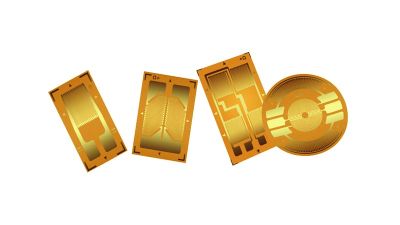
BF&BA series strain gauges for transducer manufacturers
In precision transducer manufacturing, the backing layer of a strain gauge plays an important role in signal stability, installation reliability, and measurement accuracy. BF series gauges use a modified phenolic resin backing layer, offering a practical balance of flexibility, insulation, and dependable bonding for many general-purpose transducer designs. This structure helps transfer mechanical strain efficiently from the sensing element to the gauge, reducing unwanted measurement variation during repeated loading.BA series gauges use a polyimide resin backing layer, making them well suited to applications that require greater thermal stability, flexibility, and long-term durability. Their robust construction supports consistent performance when transducers operate under changing temperatures or demanding mechanical conditions. By selecting the appropriate backing material, manufacturers can improve strain transfer, maintain stable electrical insulation, and achieve more precise output signals during calibration and operation.For specialized requirements, other backing options can also be considered: BM features a special polyimide film, BK uses a special PEEK film, and BB incorporates glass fiber reinforced polyimide. These choices allow engineers to match the gauge structure with the substrate, temperature range, bonding process, and expected service environment, supporting more consistent transducer performance from production to field use.
Conclusion
This article explains how a Bridge Strain Gauge measures structural deformation by converting tiny changes in resistance into readable electrical signals. Installed on critical components such as bridge beams, cables, and joints, these sensors help engineers monitor stress, load, fatigue, and long-term safety. It also examines why China has become an important manufacturing hub, supported by mature industrial supply chains, engineering expertise, flexible production capacity, and competitive costs.The guide describes what distinguishes a top Chinese manufacturer, including reliable materials, precise calibration, stable performance, environmental protection, quality control, technical support, and customization capabilities. It compares manufacturers according to product quality, measurement accuracy, durability, production consistency, and service responsiveness without focusing on individual brands. Finally, it offers practical advice for selecting a suitable supplier by reviewing certifications, testing procedures, project experience, delivery capability, communication, after-sales support, and total value. These factors can help buyers choose dependable sensors for bridge inspection, structural monitoring, and infrastructure maintenance.
About Us
Customized manufacturing of sensor and control instrument.
Over the last 10 years, the volltel factory has professional production experience and quality control system.
The plant employs over 50 people are dedicated to R&D and production in pressure and level measurement.
Media Contact
Company Name: XIAN Volltel Measurement Technology Co., Ltd.
Contact Person: Media Relations
Email: Send Email
Country: China
Website: https://www.volltelsensor.com/