
Shenzhen, Guangdong, China – November 21, 2026
China freight consolidation means having goods from several suppliers delivered to one warehouse in China, where they are counted, checked, labeled, packed and loaded together before shipping abroad. It helps when you buy from more than two or three factories, because you handle one shipment instead of many, and you find problems such as missing units or wrong labels while the goods are still in China, where they are easier to fix.
This guide explains what a consolidation hub does, when it is worth using, and what to prepare.
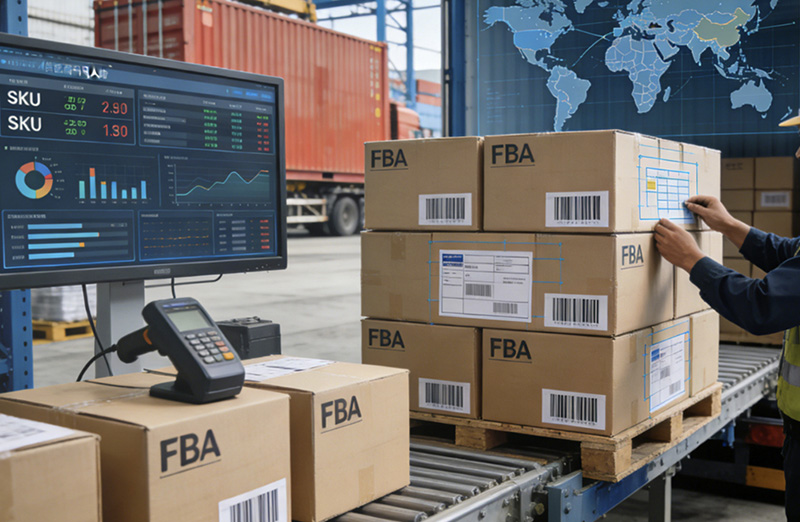
What Is China Freight Consolidation?
Consolidation is the step between the factory and the international shipment. Each supplier sends its goods to a hub, usually in a region close to the factories. The hub receives everything, checks it against your purchase orders, prepares it for the destination, and loads it into one container (or a few) for export.
It differs from simple storage. A good hub does work on the goods: counting, labeling, repacking, kitting and loading supervision. A simple warehouse only holds boxes until a container arrives.
What Problems Does Shipping Directly From Each Factory Cause?
|
Problem |
What happens |
How a hub helps |
|
Suppliers finish on different dates |
Early goods wait at the factory, or ship early at higher cost |
Goods are collected at the hub; you decide when to ship |
|
Different carton sizes |
Wasted space in the container |
Cartons are measured and loaded in a planned way |
|
Many small LCL shipments |
Separate fees and paperwork for each shipment |
One or a few container shipments, with fewer documents |
|
Wrong labels or missing units |
Found only on arrival, when it is costly to fix |
Checked at the hub before export |
|
Different packing quality |
Damage in transit |
Cartons inspected and repacked if needed |
What Does a Consolidation Hub Actually Do?
|
Step |
What happens |
Why it matters |
|
1. Receive and verify |
Count items, compare SKUs and quantities with the purchase order, check carton condition |
Shortages, wrong items and damage are found early |
|
2. Label and prepare |
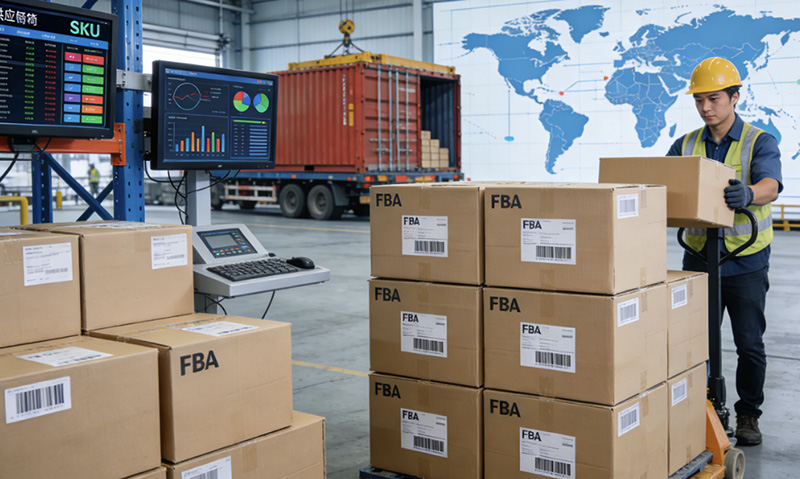
Apply labels such as Amazon FNSKU, carton labels and barcodes, based on your instructions |
Goods are ready to check in at the destination |
|
3. Palletize and plan the load |
Measure cartons, repack where needed, plan how to load the container |
Better use of container space |
|
4. Supervise loading and record it |
Check the empty container, supervise loading, photograph or film the process, seal the container |
You can see what was loaded and in what condition |
Some hubs also do kitting, which means putting several items into one pack, for example promotional bundles or subscription boxes. Doing this in China can reduce handling at the destination warehouse.
What Should Be Ready Before Goods Arrive at the Hub?
- Purchase orders with SKUs and quantities for each supplier
- A cut-off date for each supplier to deliver
- Label files and instructions (for example FNSKU labels, carton marks)
- Carton size and weight limits required by the destination warehouse or retailer, which you should check with them directly
- Shipping marks and the destination address
- Instructions for what to do with goods that are short, wrong or damaged
- The shipping method you plan to use (see our guide on choosing a shipping method for large-scale imports)
When Is Consolidation Worth It?
|
Situation |
Consolidation likely helps |
Consolidation less useful |
|
Number of suppliers |
Several suppliers |
One supplier |
|
Order timing |
Suppliers finish at different times |
One supplier shipping once |
|
Destination |
FBA or retail, with strict label rules |
Simple delivery with few requirements |
|
Order size |
Many SKUs, small quantities each |
One large order that fills a container |
For a single supplier shipping a full container, a hub adds little. For several suppliers, mixed SKUs or strict labeling needs, it usually saves time and reduces mistakes.
What Happens If a Supplier Sends the Wrong or Damaged Goods?
The hub should report it straight away, before the goods are loaded. The usual options are to have the supplier replace or correct the goods, return them, or ship without them. Fixing the issue in China takes days, while the same issue found after export can mean freight costs, customs procedures and long delays.
How Can You Tell Whether Consolidation Is Working?
|
Measure |
What it means |
|
Inbound accuracy |
How often quantity and packing errors are found at the hub, before export |
|
Container space use |
How full the container is, so you are not paying for empty space |
|
Destination acceptance |
How many shipments pass the destination warehouse check without penalties or rejections |
|
Loading records |
How many shipments have photos or video of the loading |
Ask your hub for these numbers regularly, and look at how they change over time.
How Does Sinolinkers Handle Consolidation?
Sinolinkers helps overseas buyers coordinate sourcing, production, quality control, compliance and shipping in China. Its Yiwu consolidation hub handles receiving, SKU sorting, labeling, kitting and loading. International freight is coordinated through Toncent Logistics, Sinolinkers’ in-house logistics division.
Services include:
- Receiving and checking goods from multiple suppliers
- FBA prep and retail labeling at item and carton level
- Kitting, bundling and repacking
- Palletizing and container loading, with photo records of each container
- Handling issues with suppliers when goods are wrong or damaged
When consolidation follows multi-stage QC at the factories, the hub becomes a final checkpoint before goods leave China.
FAQ
What is the difference between consolidation and FCL shipping?Consolidation is the step of collecting and preparing goods from several suppliers. FCL is how the goods are shipped afterwards, in a full container. Consolidation is what makes FCL possible when you buy from many suppliers.
Can the hub prepare goods for Amazon FBA?Yes, labeling and prep can be done at the hub. Follow Amazon’s current requirements for labels, cartons and pallets, which can change.
Do I get photos of the loading?You should. Ask for photos or video of the empty container, the loading and the sealed container, together with the packing list.
How long can goods stay at the hub?It depends on the provider. Ask for the free storage period and the fee after that in your quote.
Is consolidation useful for small orders?It can be, when goods come from several suppliers. For a single small supplier, it adds a step without much benefit.
Planning a multi-supplier shipment from China? Send Sinolinkers your supplier list, SKU quantities, destination and target shipping date to request a consolidation plan.Visit sinolinkers.com to talk to the team.
About Us
Founded in 2018, SINOLINKERS is a premier China-based global sourcing and supply chain institution trusted by enterprises across 50+ countries.
Media Contact
Company Name: SINOLINKERS COM
Contact Person: Media Relations
Email: Send Email
City: Hong Kong
State: Hong Kong
Country: HongKong
Website: https://www.sinolinkers.com/