
Waukegan, Illinois – September 22, 2026 – Special education educator and Inclusive Transition and Communication Specialist Charmaigne D. Canete, MAEd, is advancing a comprehensive framework designed to strengthen how U.S. public schools prepare secondary students with disabilities for life beyond high school. Her work, “Developing and Disseminating a Scalable Inclusive Transition and Communication Support Framework for Secondary Students With Disabilities in Underserved U.S. Public Schools,” proposes an integrated model connecting classroom instruction with communication access, individualized transition planning, functional independence, career development, and coordinated school-to-work and postsecondary pathways. The white paper presents what Canete calls the Inclusive Transition and Communication Support Framework (ITCSF). The framework is designed not simply as a classroom strategy, but as an implementation infrastructure that schools and districts could pilot, evaluate, refine, and eventually disseminate across different educational settings.
At the center of Canete’s work is a critical educational challenge: successful transition from high school is not achieved through a single meeting, form, course, or isolated intervention. Instead, transition preparation requires coordinated instruction that connects academic learning, communication, self-determination, functional skills, career preparation, family engagement, and community participation with each student’s goals for adulthood.
Creating a Connected Transition System
Canete’s framework responds to the fragmentation that can occur when special education services operate independently from one another. The ITCSF is organized around seven interconnected domains: IEP implementation and progress monitoring; accessible and differentiated instruction; augmentative and alternative communication (AAC) and communication access; positive behavior and trauma-responsive safeguards; functional post-secondary and self-determination; post-secondary and vocational preparation; and school-to-work and interagency transition.
As detailed in the framework, each domain is linked with implementation products and measurable indicators. These include goal-to-instruction maps, model lessons, Universal Design for Learning planning templates, communication profiles, partner training, prevention routines, behavioral data tools, functional-skills inventories, transition assessments, employer partnership tools, and family or interagency protocols.
Rather than allowing these areas to function as separate programs, Canete proposes that schools organize them around shared principles: student-centered planning, communication access, measurable goals, accessibility, progress monitoring, family participation, interagency coordination, and postsecondary relevance.
The result is a model intended to connect what students learn in school with what they will need to communicate, participate, work, study, make decisions, and live as independently as possible after graduation.
Turning the IEP Into an Instructional Operating System
A major principle of Canete’s framework is that an Individualized Education Program should function as an active instructional plan rather than primarily as a document revisited during formal meetings.
Under the proposed ITCSF, schools would connect priority goals to measurable objectives, instructional strategies, responsible personnel, progress-monitoring procedures, and real-world transition outcomes. For transition-age students, academic and functional goals would also be visibly connected to postsecondary ambitions, whether those ambitions involve employment, vocational training, college or other education, independent living, or community participation.
Communication Access as a Foundation for Inclusion
Communication access is another defining element of the framework. Canete argues that students should not effectively lose the ability to communicate when moving from one educational environment to another. For students with complex communication needs, ITCSF proposes communication access profiles that can document preferred modes of communication, access methods, vocabulary priorities, response latency, partner strategies, environmental accommodations, and procedures for maintaining communication support across different settings. This is particularly important as students move between classrooms, community-based experiences, vocational environments, transportation, and other settings connected with adult preparation.
The emphasis reflects Canete’s professional development in Augmentative and Alternative Communication strategies and assistive communication tools, undertaken to support students with complex communication needs in inclusive learning environments. Her training also includes advanced IEP development, Guided Language Acquisition Design, differentiated instruction, student engagement, school improvement, and inclusive education requirements.
Connecting Education with Adult Life
Canete’s framework also emphasizes functional independence, self-determination, career development, work-based learning, and school-to-work pathways. Instead of viewing transition as something that begins shortly before graduation, the model proposes embedding transition preparation into students’ secondary educational experiences. Functional preparation may address skills such as time management, scheduling, organization, community navigation, transportation, financial literacy, digital safety, self-care, problem-solving, communication, workplace expectations, and seeking assistance.
Importantly, the framework emphasizes student agency. Transition planning is intended to include student strengths, support needs, accommodations, career interests, educational objectives, communication preferences, priorities, and goals. The vocational component connects school-based instruction with career and technical education, vocational rehabilitation, work-based learning, employers, community partners, and post-secondary institutions. The model proposes working backward from students’ postsecondary objectives to identify experiences and competencies that can be developed before students leave school.
Building Capacity Beyond a Single Educator
Canete’s work recognizes that even effective classroom practices may have limited impact if they depend entirely on one educator’s expertise.
For that reason, ITCSF includes district implementation architecture centered on readiness, professional learning, coaching, measurement, and continuous refinement. The framework proposes distinguishing between core components that should remain consistent and an adaptable periphery that can respond to differences in local staffing, community partnerships, transportation, schedules, vocational opportunities, communication systems, and student populations.
The white paper also introduces a train-coach-measure-refine model. Initial training would establish understanding of the framework, while coaching would support educators as they apply it to authentic student situations. Professional learning communities could then develop peer problem-solving capacity, while measurement would help identify where implementation succeeds, where it breaks down, and where adjustments are required.
This emphasis on implementation is especially significant because Canete does not present the framework as a completed or universally validated intervention. Instead, the paper deliberately describes it as prospective: something that should be tested through pilots, measured for feasibility and fidelity, refined based on evidence, and expanded only when implementation results justify doing so.
A Five-Year Pathway from Design to Sustainable Use
The white paper proposes a five-year development pathway to guard against premature claims of scalability. As shown in the table on page 16, Year One focuses on design quality, including defining core components, co-designing usable tools, establishing measurement requirements, and determining what can be adapted locally. Year Two examines feasibility through limited pilots. Year Three focuses on replication beyond the original setting. Year Four examines transfer across different staffing, geographic, and community contexts. Year Five emphasizes sustainability, transparent reporting, refinement, and broader dissemination when supported by evidence.
The framework therefore defines scale not simply as distributing materials to a large number of schools, but as demonstrating that practices can be taught, implemented with fidelity, adapted appropriately, evaluated, sustained, and transferred across contexts.
More Than 13 Years of Educational Experience
Canete brings more than 13 years of classroom experience to the development of this work. Her professional background spans educational settings in both the Philippines and the United States.
Before joining Waukegan High School, Canete served as a Teacher 1/Classroom Teacher with the Department of Education, Cebu Province from 2017 to 2023, where she provided differentiated academic programs and held additional coordination responsibilities. Her CV notes that she received recognition for excellence in classroom structuring according to Department of Education standards during the 2022–2023 school year. Earlier in her career, she worked as a kindergarten classroom teacher at St. Paul College Foundation, Inc. and Southwestern University.
Her academic preparation includes a Master of Arts in Education major in Early Childhood Education from Cebu Technological University–Main Campus and a Bachelor of Elementary Education major in Special Education from the University of San Jose–Recoletos. She also holds an Illinois Professional Educator License (PEL) with a Learning Behavior Specialist credential covering kindergarten through age 22, as reflected in her curriculum vitae.
Canete’s continuing professional development further includes IEP implementation and bilingual IEP practices, AAC, assistive communication, artificial intelligence in education, curriculum development, assessment, school improvement planning, professional learning communities, trauma-informed practices, behavior support, crisis prevention, mental health first aid, cultural competency, equity, and legal requirements relevant to inclusive education.
Advancing Sustainable Inclusive Secondary Education
Ultimately, Canete’s research seeks to strengthen the continuity between what students with disabilities experience during secondary school and what they need to pursue meaningful lives afterward.
The framework proposes that successful transition depends on coordinated systems rather than isolated services. Communication access should connect with classroom participation. IEP goals should connect with everyday instruction. Functional learning should connect with independence. Career exploration should connect with real workplace preparation. Family engagement should connect with school planning. Post-secondary goals should influence what students are learning before they graduate.
As the conclusion of the white paper emphasizes, inclusive secondary education requires continuity between what students are promised, what educators implement, and what students can actually do in school, community, postsecondary, and employment settings. ITCSF is presented as a practical structure for strengthening continuity through coordinated planning, accessible instruction, communication support, functional learning, professional capacity building, interagency collaboration, and measurable outcomes.
Through this work, Charmaigne D. Canete, MAEd, brings together more than a decade of classroom experience, special education practice, transition preparation, communication support, differentiated instruction, and professional learning into a framework intended for responsible development and future evaluation.
Media Contact
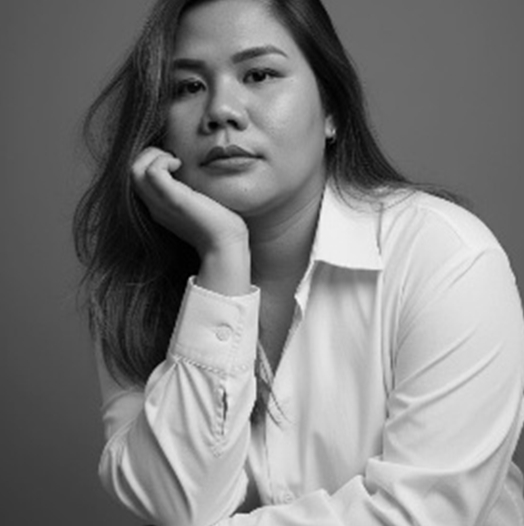
Charmaigne D. Canete, MAEd welcomes opportunities to collaborate with school districts, educational leaders, special education administrators, teachers, transition specialists, vocational rehabilitation professionals, community organizations, professional associations, and academic institutions committed to advancing inclusive secondary education and strengthening transition outcomes for students with disabilities.
Her areas of professional interest include inclusive transition planning, communication access, IEP implementation, differentiated and accessible instruction, AAC supports, functional independence, self-determination, post-secondary preparation, career and vocational pathways, educator capacity building, and sustainable implementation systems.
For media inquiries, professional collaboration, speaking opportunities, educator training, research partnerships, or discussions related to inclusive transition and communication support, interested organizations may contact Charmaigne D. Canete through the professional contact information provided in her curriculum vitae.
For inquiries related to partnerships, speaking engagements, or media features, please contact:
Danielle Elaiza G. Azurin Public
Relations Specialist, Innovators & Professionals
Danielle Elaiza G. Azurin specializes in developing media strategies, press releases, and editorial content that translate complex educational research and policy frameworks into accessible, impactful narratives for diverse audiences.

About Innovators & Professionals
Innovators & Professionals connects professionals and organizations to share expertise, ideas, and opportunities. It supports innovation, professional development, and collaborative initiatives across diverse fields.
Media Contact
Company Name: Innovators & Professionals
Contact Person: Danielle Elaiza G. Azurin
Email: Send Email
Country: United States
Website: https://www.innovatorsprofessionals.com/