
With the rise of modern industry comes a growing need for proper installations of all types, including cable glands for armoured cables. In many cases, selecting the appropriate type of cable gland for an armoured cable may mean the difference between optimal performance and the continuation of operational issues. Non-magnetic Armoured Cable Glands are designed specifically to help reduce electromagnetic interference, limit eddy current heating, and prevent corrosion from occurring in extreme environments. This article covers some of the benefits of using non-magnetic Armoured Cable Glands, as well as their uses, and will answer some common questions that will help you make an informed decision before purchasing this type of equipment.
Why Use a Non-Ferromagnetic SWA Cable Gland?
One disadvantage of using conventional cable glands that are made from ferromagnetic material is that when these materials are exposed to an alternating magnetic field, they create eddy currents, which results in an excessive amount of heat being generated due to the eddy current. Excessive heating due to eddy currents created by conventional cable glands can cause failure of the cable and increased energy loss due to the disruption of power distribution systems. With the use of non-ferromagnetic materials such as non-magnetic brass and stainless steel, non-ferromagnetic SWA cable glands eliminated the creation of eddy currents and negatively impacting the performance of cables used in applications that require long-term durability and dependability.
By using a non-magnetic design, these cable glands eliminate the overheating caused by eddy currents and therefore can be relied upon for safe and effective management of cables.
The Use of Low Magnetic Armoured Cable Glands in EMC Applications
Low magnetic Armoured Cable Glands have their primary benefit in applications where electromagnetic interference could otherwise degrade the integrity of the signals being transmitted. Examples include:
Power Plants: Ensure uninterrupted functionality and high efficiency by mitigating eddy current heating in single-core conductors.
Marine, Oil, and Gas Industries: Featuring corrosion-resistant properties, these glands thrive in high-moisture, salt-laden, or chemically aggressive environments.
Instrumentation Applications: Provide reliable connections for measurement and control systems, particularly in facilities with high EMI disturbance.
Hazardous Locations: Certified for explosive atmospheres, ensuring safe operation in ATEX and IECEx-rated environments.
These cable glands support EMC requirements while meeting stringent ingress protection standards, such asIP66 waterproof and dustproof ratings.
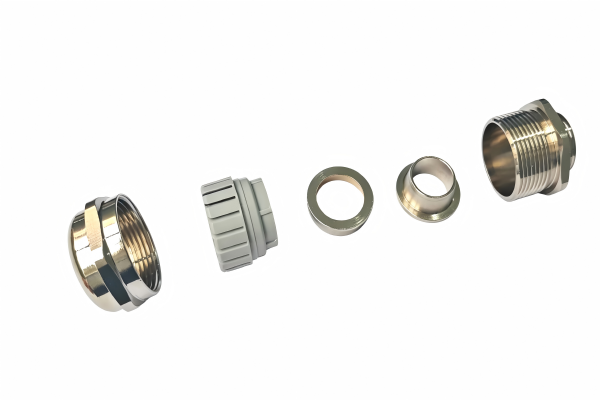
What Materials Are Non-Magnetic Armoured Cable Glands Made Of?
Non-magnetic Armoured Cable Glands are manufactured of non-ferromagnetic materials, typically brass or a stainless steel alloy depending on the mechanical strength needed and the level of corrosion resistance required. Most commonly, they are fully non-ferromagnetic structures designed to prevent the risks of magnetic interference with eddy currents, as well as corrosion. They also have high mechanical strength and can withstand extreme conditions.
Are Non-Magnetic Armoured Glands ATEX/IECEx Certified for Hazardous Areas?
Yes, leading manufacturers produce non-magnetic armoured cable glands with ATEX and IECEx hazardous area certifications, providing assurance for safe use in areas with hazardous, explosive atmospheres. Certifications prove their compliance with various international hazardous area safety standards for the oil and gas, chemical, and manufacturing industries.
How to Avoid Eddy Current Heating with Magnetic Armoured Cable Glands?
Eddy current heating in magnetic armoured glands stems from their interaction with alternating magnetic fields. The simplest way to avoid this issue is by choosing a non-magnetic armoured gland. The use of non-magnetic armoured cable glands prevents the creation of eddy current heating through electromagnetic compatibility, especially for single-core cables in high-power distribution systems.
What IP Ratings Do Non-Magnetic Armoured Cable Glands Typically Have?
To ensure reliability in harsh environments, non-magnetic armoured cable glands provide a high degree of ingress protection. Many non-magnetic armoured cable glands are rated IP66, providing protection against dust ingress and powerful water jets. For the marine, oil, and gas industry, using non-magnetic armoured cable glands enhances the safety and longevity of equipment.
Conclusion
Non-magnetic armoured cable glands provide vital service to multiple industries prioritizing electromagnetic compatibility, corrosion resistance, and compliance with ATEX and IECEx hazardous area certifications. The benefits of non-magnetic armoured cable glands include avoiding eddy current heating and performing effectively in harsh operating conditions like power plants and marine environments. Selecting the correct non-magnetic armoured cable gland will reduce operational failure and maintain an acceptable level of performance for your particular application.
Media Contact
Company Name: Zhejiang Hoonsun Cable Gland Co., Ltd.
Email: Send Email
Country: China
Website: https://www.cnhoonsun.com/