
Chengdu City, Sichuan Province, China-November 18, 2026
Here’s the thing: an EV charger can seriously boost how useful your business is to customers, employees, and even fleet drivers. Think about a hotel guest—they’ll plug in overnight while the car sits there. Or an office employee who just needs a quick top-up during the workday. These real everyday needs are what actually determine which equipment and installation plan works best. And you’d be surprised how much the small stuff matters.
So, when a business decides to get an Ev Charger, it’s not just about picking one off the shelf. You’ve really got to think about things like where people park, how much power the building can actually handle, what the charging demand is going to be, and you can’t forget the installation costs. Honestly, getting a qualified electrician to do a site assessment first is a smart move—they’ll spot any practical limits before you even start comparing models. And don’t just look at the charger itself; you’ve got to weigh up charging speeds, payment options, network features, warranty, and what the ongoing maintenance will be like. But here’s the thing—you need solid numbers to make any of this work. Without reliable data, you’re just guessing, and that’s a recipe for overspending or under-powering your setup. Look, electricity rates and how much you actually use can vary a lot. So when you’re trying to figure out your savings, don’t just plug in the rosiest numbers. Base it on what you really pay locally and what you realistically need, not some pie-in-the-sky estimates.
Think about it – the whole point of putting in Ev Charging might be to draw in more visitors, give your staff a perk, or get your own fleet ready for electric vehicles. But here’s the catch: just having chargers doesn’t mean you’ll make money from them. If nobody uses them, or if the upgrade costs are sky-high, or you stick them in a weird spot, your business case falls apart. So before you do anything, figure out what you really want to achieve. Is it about keeping customers happy? Supporting your team? Or maybe you need to charge your company’s vans? Once you’ve got that clear, pick a charger that fits that goal, and then after it’s installed, keep an eye on how it’s actually performing. And hey, your plan – it’s not set in stone. As demand goes up, you’ll probably need to tweak things. Honestly, that’s worth admitting. Look, careful planning goes a long way—it helps businesses make smarter calls and roll out charging that actually fits how folks really use the spot.
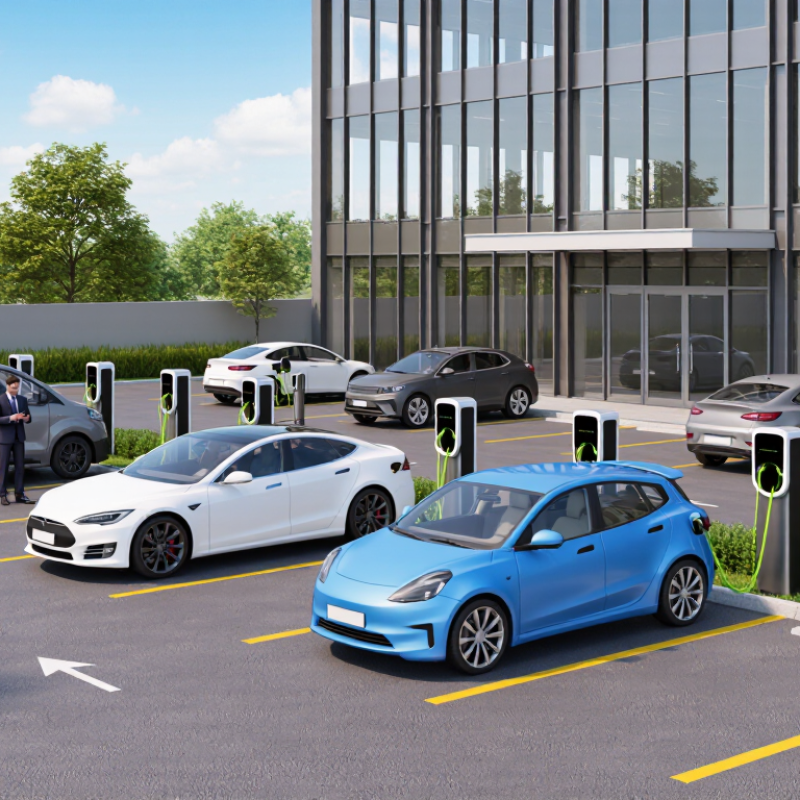
What Business EV Charging Stations Are and How They WorkWhat Business EV Charging Stations Are and How They Work
A business Ev Charging Station is equipment installed at a workplace, hotel, retail site, or fleet depot. It supplies electricity to parked vehicles and may track usage for billing or internal reporting. Drivers connect with a cable; the station communicates with the vehicle before charging begins.Simple, but not merely a plug.
Most sites use Ac Chargers for vehicles parked for several hours. The vehicle’s onboard equipment converts AC electricity into battery power. DC fast chargers perform that conversion inside the station, delivering energy more quickly but often requiring greater electrical capacity. A site management system can monitor sessions, control access, and balance charging across several vehicles. For example, it may reduce power to a delivery van while office cars charge nearby, helping avoid a sudden site-wide demand spike.
The International Energy Agency’s Global EV Outlook 2024 reported that publicly accessible charging points grew by more than 40% in 2023; fast chargers increased by 55%. These figures show expanding infrastructure, though they do not guarantee that every location has enough grid capacity. Before installation, businesses should review parking patterns, electrical service, and expected dwell times. A charger beside a loading bay may be less useful if vehicles rarely stay there long. Still, no setup is perfect. Usage can surprise even careful planners.
How Workplace Charging Supports Employees and Customers
Workplace charging supports employees and customers in practical ways. A driver arriving with a low battery can plug in during a shift, meeting, or shopping visit. That can make a workplace more convenient and encourage longer, less rushed visits. Clear signs, well-lit parking spaces, and chargers near accessible entrances help people find and use the equipment. Small details matter. Choosing an Electric Vehicle Ev Charger should start with expected demand, available electrical capacity, and how long vehicles usually stay parked. A site assessment can prevent costly surprises, though forecasts are never perfect.
Tips: Share simple instructions before launch. Mark charging spaces clearly, explain any time limits, and provide a contact for charger issues. Check usage regularly; a charger that works well on paper may be poorly placed in daily use.
Fair access also matters. Consider whether employees need reserved charging hours or whether spaces should remain open to customers. Make the policy easy to understand and review it as usage changes. If several vehicles compete for a few ports, frustration can grow quickly. More chargers are not always the answer; better placement or managed charging may help, but both deserve careful evaluation. That takes time. A reliable setup depends on listening to users, tracking downtime, and fixing small problems before they become routine.
Ways EV Chargers Can Strengthen Business Operations
An electric vehicle charger can do more than serve employees who drive electric cars. It can make a workplace easier to reach, more useful during the day, and better prepared for changing travel habits. At a hotel, a guest may plug in after checking in. The car can charge while its owner sleeps. At an office, chargers can support staff who commute from farther away, especially when transit options are limited. That matters. Retailers may give customers a reason to stay longer, though a charger alone will not guarantee extra sales. Location, access, and clear pricing still shape whether people use it.
Operational value depends on planning. Before installation, businesses should review parking turnover, electrical capacity, and likely demand with qualified professionals. Simple usage records can show peak hours and whether a few vehicles occupy spaces all day. That data helps managers set practical time limits or adjust access without guessing. Chargers can also support fleet vehicles between shifts, reducing trips to public charging sites when schedules allow. Still, the benefits are not automatic. Repairs, utility costs, and low usage can weaken the case. A plan may look tidy on paper, then falter because one cable crosses a busy walkway. That detail is easy to miss. Careful placement and routine checks help make charging convenient rather than a new daily problem.
Choosing Charger Types for Different Business Needs
Choosing a charger starts with asking how long vehicles usually stay parked. A workplace with cars parked for eight hours may need dependable AC chargers rather than high-powered equipment. Time matters. Drivers can recharge during a full shift, while the site avoids paying for capacity it rarely uses. For shops, restaurants, and hotels, chargers near entrances can support shorter visits and give customers a practical reason to stay. A few AC ports may be enough when guests typically spend an hour or two on site.
Fleet depots have different demands. Delivery vans returning between routes may benefit from an Electric Vehicle Fast Charger, especially when charging windows are brief. However, fast charging can require substantial electrical capacity and careful load planning. More power is not automatically better. A site manager should compare vehicle battery sizes, departure schedules, and existing electrical service before choosing equipment. That assessment can feel overly cautious, but overlooking peak demand may create expensive surprises. Some businesses also need a mix: slower chargers for overnight parking and faster units for urgent turnarounds. The right balance is rarely obvious on paper, so reviewing actual parking and charging patterns after installation can reveal what the original plan missed.
Why Choose an Electric Vehicle Charger for Your Business? – Choosing Charger Types for Different Business Needs
| Charger Type | Typical Power | Approximate Charging Rate | Best-Fit Business Use | Key Planning Considerations |
|---|---|---|---|---|
| Level 1 AC | About 1.2–1.9 kW | Roughly 3–5 miles of range per hour | Small workplaces or sites where vehicles remain parked for long periods and daily driving distances are modest. | Low charging speed can limit usefulness for short visits or high vehicle turnover. Check whether the electrical circuit is suitable for continuous charging. |
| Level 2 AC | Commonly 7–19.2 kW, depending on the unit and electrical supply | Often about 20–60 miles of range per hour; actual rates vary by vehicle and power level. | Offices, hotels, retail locations, apartments, and employee or visitor parking with stays lasting several hours. | A practical option for many shared parking settings. Assess available electrical capacity, parking duration, connector compatibility, and whether access management or billing is needed. |
| DC Fast Charging | Typically 50–350 kW, with vehicle acceptance rates varying widely | Can add roughly 100–200 miles in about 20–30 minutes for some vehicles under suitable conditions; charging slows as the battery fills. | High-turnover sites, travel corridors, fleet depots, and locations where drivers need a quick charge during a short stop. | Usually requires substantial electrical capacity and a higher-cost installation. Review utility service, demand charges, expected usage, site layout, and vehicle charging limits. |
| Mixed Charger Setup | A combination of Level 2 AC and, where justified, DC fast charging | Matches charging speed to how long different users typically park. | Businesses serving multiple groups, such as employees who park all day and customers or fleet vehicles that need faster turnaround. | Plan charger quantities and power sharing around real parking patterns. A staged installation can help align investment with observed demand. |
Note: Charging rates and added driving range are approximate. Results depend on vehicle capability, battery state, temperature, charger output, and other site conditions. Have a qualified electrical professional assess installation requirements.
Assessing Installation Costs, Incentives, and Long-Term Value
An Electric Vehicle Wall Charger can turn a staff parking space into a useful workplace amenity. The installed cost depends on more than the unit itself. A qualified electrician may need to assess panel capacity, cable distance, trenching, and parking layout. A short cable run is usually simpler. An older building may need electrical upgrades, which can change the budget sharply.
Get a site-specific quote, not just an online equipment price. Small detail, big difference.
Incentives can reduce upfront costs, but availability and eligibility change. Check current utility and government programs before including them in your financial plan. Keep records of quotes, invoices, and expected usage. Then compare those costs with electricity rates, maintenance, and possible demand charges.
Usage matters. A charger used by two employees each week may not justify the same investment as one serving a busy fleet. It is easy to overestimate demand; staff interest does not always become regular charging. Review the numbers again after a few months, when real usage is clearer.
Long-term value may include easier fleet planning and employee convenience, but those benefits are not guaranteed. A cautious estimate is less exciting, and often more useful.
Planning for Safe, Scalable, and Reliable Charging Infrastructure
A business charging site should be planned around how people actually use it. Employees may plug in before work, while customers need clear access and predictable charging times. A charger placed far from the parking entrance can be technically sound but frustrating in daily use. Walk the site at busy times and note traffic flow, accessible spaces, and where cables might cross pedestrian routes.
Safety starts with an assessment of electrical capacity, installation conditions, and expected demand. A qualified electrician can determine whether the existing supply supports the planned chargers and what upgrades may be needed. Use suitable protective equipment, weather-rated enclosures where exposed, and cable management that keeps walkways clear. Small details matter. Signage should explain basic operation without making drivers guess.
Plan for growth, but avoid installing more capacity than the site can use. A Smart Electric Vehicle Charger with load management can help distribute available power as demand changes. Leave room for additional units and consider how the charging area will be monitored and maintained. Reliability takes ongoing attention. Review usage and fault reports regularly; an early estimate may not match real traffic, and the plan may need adjustment. A charging system is never quite “finished.”
Power on the Go: How a 3–11 kW Portable EV Charger Fits Modern Driving
A portable EV charger rated from 3 to 11 kW gives drivers more flexibility when their routine takes them beyond the usual home charging spot. Its compact format makes it practical to keep in the car, while a choice of interchangeable plugs can match compatible sockets at home, at a holiday rental, or during a trip abroad. Instead of carrying several separate chargers, drivers can use one adaptable unit and select the plug suited to the outlet available.
Charging speed depends on the vehicle, the power supply, and the socket’s rating, so choosing a compatible connection matters as much as choosing a charger. At home, a lower-power outlet may offer convenient overnight charging; where a suitable higher-capacity supply is available, the charger can deliver more power, up to its rated limit. This combination of portability and adjustable charging capability fits modern driving, where journeys and parking locations can vary from day to day. A compact charger with the right plug options helps make charging more convenient without requiring drivers to rely on the same outlet everywhere.
Conclusion
An Electric Vehicle Charger can help a business make the transition to electric mobility practical and welcoming. These stations supply power to vehicle batteries through equipment suited to different charging speeds and usage patterns. At workplaces, charging gives employees a convenient option during the day and can make a business more attractive to customers who drive electric vehicles. Clear access policies and thoughtfully placed chargers help ensure the service fits smoothly into daily operations.
Choosing the right setup means considering how long vehicles stay parked, how many people may need charging, and whether chargers will serve staff, visitors, or business vehicles. Installation costs, available incentives, electricity use, and expected demand all contribute to the long-term value. Careful planning should also account for safe installation, reliable maintenance, and room to expand as needs grow. With a scalable charging plan, businesses can support users today while preparing their facilities for increased electric vehicle use in the future.
About US
Chengdu AEFA Electronic Technology Co., Ltd. was established in 2015 and is headquartered in Chengdu, Sichuan Province, the science and technology innovation center of southwest China and the hometown of pandas. As a high-tech enterprise specializing in the research, development, production and sales of electric vehicle charging equipment, we have a modern industrial park covering an area of 22 acres and equipped with 15,000 square meters of standard factory buildings, committed to providing high-quality charging solutions for global customers.
Media Contact
Company Name: Chengdu AEFA Electronic Technology Co., Ltd.
Contact Person: Media Relations
Email: Send Email
Country: China
Website: https://www.aefa-evse.com/