
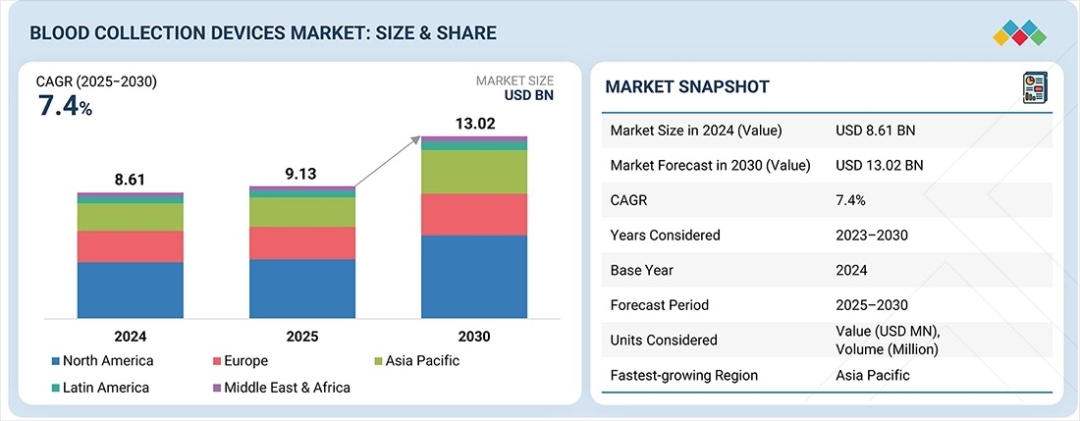
The worldwide blood collection devices market is expanding rapidly, valued at USD 9.13 billion in 2025 and projected to reach USD 13.02 billion by 2030, growing at a CAGR of 7.4%. This growth reflects fundamental shifts in global healthcare as organizations increasingly prioritize advanced diagnostic capabilities and patient safety. Rising infectious diseases, chronic conditions like diabetes and cardiovascular disorders, and growing trauma cases are driving urgent demand for reliable blood collection solutions across hospitals, diagnostic laboratories, and healthcare facilities worldwide.
Download PDF Brochure: https://www.marketsandmarkets.com/pdfdownloadNew.asp?id=39733117
WHY THIS MATTERS FOR YOUR ORGANIZATION
The global emphasis on preventive healthcare and early disease detection is reshaping diagnostic workflows. Healthcare leaders are investing in advanced blood collection devices to support routine health screenings, improve sample quality, and accelerate diagnostic accuracy. The emergence of liquid biopsy tests—which enable early disease detection through blood analysis—is further driving demand for sophisticated collection devices that preserve sample integrity. For C-suite executives, this represents a strategic opportunity to align infrastructure investments with cutting-edge diagnostic capabilities and improve patient outcomes.
MARKET SEGMENTS DRIVING GROWTH
Blood collection tubes dominate the market, accounting for the largest revenue share due to widespread use in diagnostic testing and blood banking. Complementary products including needles, syringes, blood bags, and lancets complete the collection ecosystem. Diagnostic applications represent the primary market driver, as blood testing remains essential for disease identification and preventive screening. Manual collection methods remain foundational in cost-sensitive regions, while automated solutions are gaining adoption among leading healthcare systems offering enhanced safety and reduced contamination risks.
WHERE DEMAND IS STRONGEST
Hospitals, ambulatory surgical centers, and nursing homes represent the largest end-user segment, driven by high patient volumes and surgical procedures. Diagnostic and pathology laboratories form a second major segment, as blood analysis underpins disease detection and prevention strategies. Blood banks maintain critical reliance on collection devices for efficient blood processing and storage. North America leads globally with robust healthcare infrastructure and strong adoption of advanced diagnostic technologies, while emerging regions are accelerating adoption as healthcare infrastructure expands and diagnostic awareness grows.
KEY OPPORTUNITIES AND CHALLENGES
Technological innovations in blood collection—including minimally invasive, closed-system, and laser-assisted devices—are creating significant growth opportunities. Integration of automation, digital monitoring, and connectivity solutions reduces human error and streamlines laboratory workflows. However, elevated costs of automated systems pose barriers in developing markets, particularly for smaller healthcare facilities with budget constraints. Additionally, a critical shortage of skilled phlebotomists and trained laboratory technicians—especially in rural and resource-limited settings—threatens service quality and market expansion. Healthcare organizations must address these gaps through workforce training programs and strategic investment in automation.
INDUSTRY LEADERS SHAPING THE MARKET
Major global players driving innovation include Fresenius Kabi AG (Germany), Becton, Dickinson and Company (United States), Terumo BCT, Inc. (Japan), Greiner Bio-One International GmbH (Austria), and Cardinal Health (United States). These organizations continue advancing collection device technology, expanding geographic reach, and establishing industry standards that shape clinical practice worldwide.
Request Sample Pages: https://www.marketsandmarkets.com/requestsampleNew.asp?id=39733117
STRATEGIC IMPERATIVE FOR DECISION-MAKERS
Healthcare organizations, diagnostic service providers, and equipment manufacturers that strategically invest in advanced collection infrastructure and workforce development will strengthen competitive positioning and improve clinical outcomes. The 7.4% CAGR expansion through 2030 represents both a clinical necessity and a compelling business opportunity. Rising disease prevalence, accelerating diagnostic demand, and technological innovation are creating sustained market tailwinds—making now the optimal time for C-suite executives to align capital investment with market momentum and position their organizations for sustainable growth.
Related Reports:
Media Contact
Company Name: MarketsandMarkets™ Research Private Ltd.
Contact Person: Mr. Rohan Salgarkar
Email: Send Email
Phone: 18886006441
Address:1615 South Congress Ave. Suite 103, Delray Beach, FL 33445
City: Florida
State: Florida
Country: United States
Website: https://www.marketsandmarkets.com/Market-Reports/blood-collection-market-39733117.html