
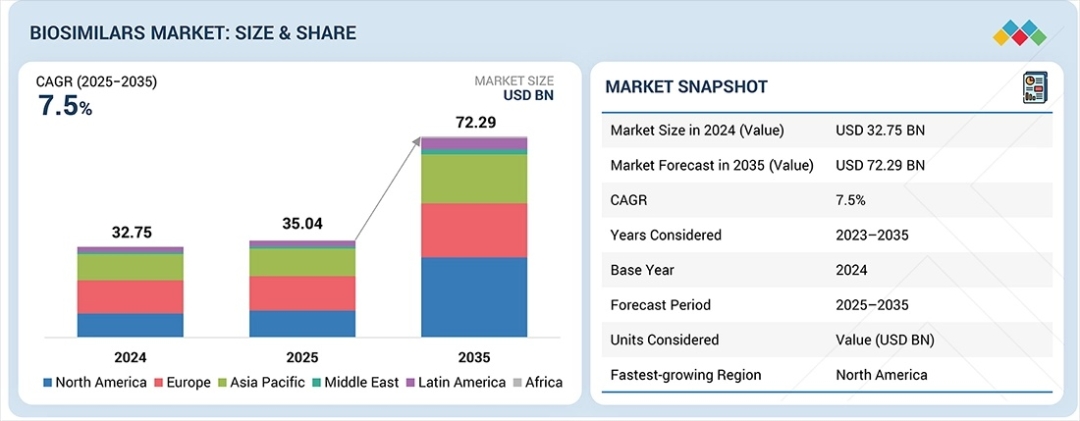
The global Biosimilars Market is poised for a decade of transformative growth, with its valuation projected to surge from USD 35.04 billion in 2025 to USD 72.29 billion by 2035. According to the latest analysis by MarketsandMarkets, this expansion represents a steady CAGR of 7.5% over the forecast period. The primary catalysts for this upward trajectory include the escalating global burden of chronic conditions such as cancer, diabetes, and autoimmune disorders and the critical need for more affordable therapeutic alternatives. As high-revenue biologic “blockbusters” approach their patent sunsets, the introduction of biosimilars is set to democratize access to advanced medicine, significantly reducing the financial strain on both patients and national healthcare systems.
Download PDF Brochure:https://www.marketsandmarkets.com/pdfdownloadNew.asp?id=40
Dominance of Monoclonal Antibodies and the Shift Toward Oncology
The monoclonal antibody (mAbs) segment remains the most influential drug class within the biosimilars ecosystem, having dominated the market in 2024. This segment, which includes biosimilars for major therapies like Adalimumab, Infliximab, and Trastuzumab, is expected to maintain its lead with a projected CAGR of 9.1%. These complex molecules are essential for treating life-threatening conditions, but their high cost often limits patient reach. The entry of biosimilar versions is fundamentally shifting the oncology and autoimmune landscape. In 2024, the Oncology segment stood as the dominant indication, largely due to the staggering rise in new cancer cases projected by the American Cancer Society to hit 35 million annually by 2050. By offering clinically comparable efficacy at a lower price point, oncology biosimilars are enabling healthcare providers to manage larger patient volumes without compromising on the quality of care. This transition is particularly vital as eight of the ten most expensive drugs currently on the market are indicated for cancer, making the push for biosimilar adoption a matter of economic necessity.
Strategic Breakthroughs in GLP-1 and Metabolic Health
One of the most anticipated frontiers in the biosimilars market is the emergence of GLP-1 receptor agonist biosimilars. Currently, medications like semaglutide and liraglutide marketed under brand names such as Ozempic, Wegovy, and Victoza have revolutionized the treatment of Type 2 Diabetes and obesity. With these blockbuster biologics approaching patent expiration specifically with liraglutide’s patent ending in 2024 and semaglutide’s looming expiry in major regions like China by 2026 a new wave of market competition is imminent. Manufacturers such as Hangzhou Jiuyuan Gene Engineering are already in advanced clinical stages, positioning themselves to be first-movers in providing cost-effective weight loss and diabetes solutions. This shift is expected to be a major market driver, especially in emerging economies where the prevalence of metabolic disorders is rising rapidly. The introduction of GLP-1 biosimilars will likely lower the entry barrier for millions of patients who currently find these life-changing therapies financially out of reach, thereby creating a substantial new revenue stream for biosimilar developers.
Request Sample Pages-https://www.marketsandmarkets.com/requestsampleNew.asp?id=40
Regional Dynamics and the Competitive Frontier
Geographically, Europe currently holds the largest share of the biosimilars market, accounting for 36.5% in 2024. This success is attributed to a mature and supportive regulatory framework that has long encouraged biosimilar switching and physician acceptance. However, North America is projected to be the fastest-growing region during the forecast period. The US FDA has already approved 74 biosimilars, and increasing collaborations between industry giants like Sandoz Group AG, Pfizer Inc., and Amgen Inc. are accelerating commercialization. Despite this growth, the industry faces significant hurdles. The manufacturing of biosimilars is an incredibly resource-intensive process, often costing up to USD 250 million and requiring five to seven years for development. Additionally, originator companies are employing defensive strategies including patent litigation and reformulations to maintain their market share. To navigate these challenges, “Star Players” like Sandoz are leveraging robust R&D divisions and global distribution networks to maintain a competitive edge, while emerging leaders like Eli Lilly and Company are investing heavily in advanced manufacturing technologies to ensure long-term market viability.
Media Contact
Company Name: MarketsandMarkets™ Research Private Ltd.
Contact Person: Mr. Rohan Salgarkar
Email: Send Email
Phone: 18886006441
Address:1615 South Congress Ave. Suite 103, Delray Beach, FL 33445
City: Florida
State: Florida
Country: United States
Website: https://www.marketsandmarkets.com