
Hangzhou, Zhejiang, China-October 15, 2026
A Battery Energy Storage System is more than a group of batteries connected together. Behind the battery cells, there is a control system that continuously monitors operating conditions, manages charging and discharging, and helps protect the battery from abnormal conditions.
This system is called a Battery Management System, or BMS.
For residential storage, commercial projects, and large-scale energy storage stations, the BMS plays an important role in keeping battery operation under control. But how exactly does it work inside a BESS?
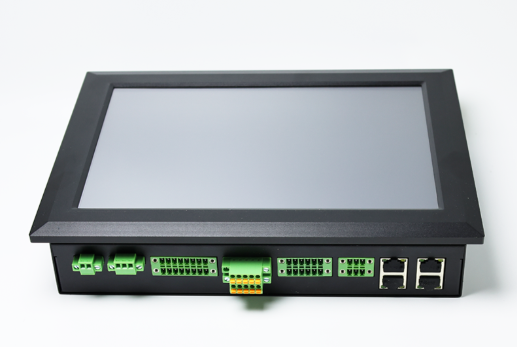
What Is a Battery Management System?
A Battery Management System is an electronic control system designed to monitor and manage rechargeable batteries.
In a typical energy storage application, many individual battery cells are connected in series or parallel to form battery modules and battery packs. These cells may have small differences in voltage, temperature, capacity, and internal resistance.
The BMS collects operating data from the battery and uses this information to manage the battery system.
Depending on the system design, a BMS can monitor:
- Cell voltage
- Battery temperature
- Pack current
- State of charge (SOC)
- State of health (SOH)
- Charging and discharging conditions
- Insulation status
- Communication status
The collected information can then be used by the control system to make decisions about battery operation.
How Does a BMS Work in a BESS?
The basic working process can be understood as:
Data Collection → Data Analysis → Battery Protection → Balancing → Communication → System Control
1. Collecting Battery Data
The first job of a BMS is to collect real-time information from the battery.
Sensors and monitoring circuits measure cell voltage and temperature, while current information is used to understand the charging and discharging status of the battery.
For a large Battery Energy Storage System, there can be thousands of cells. Monitoring every cell individually creates a large amount of data.
This is why the architecture of the BMS becomes increasingly important as the size of the energy storage system increases.
2. Analyzing Battery Conditions
After collecting data, the BMS evaluates the current condition of the battery.
For example, if one cell has a significantly different voltage from the other cells, the system can identify the difference and determine whether further action is required.
The BMS can also use battery data to estimate parameters such as SOC and SOH.
SOC indicates how much usable energy remains in the battery, while SOH provides information about the battery’s current condition compared with its original performance.
Accurate battery information is important because other parts of the energy storage system depend on these parameters when managing charging, discharging, and energy distribution.
3. Protecting the Battery
Protection is one of the most important functions of a BMS for Energy Storage.
During operation, the system needs to detect conditions such as:
- Overvoltage
- Undervoltage
- Overcurrent
- Overtemperature
- Undertemperature
- Abnormal insulation conditions
When an abnormal condition is detected, the BMS can issue an alarm or trigger appropriate protection actions according to the system design.
Qualtech’s SBMU series, for example, is designed to monitor cell voltage and battery temperature during charging and discharging. The units can detect overvoltage, undervoltage, overtemperature, and undertemperature conditions and report data to the master controller through CAN communication.
This type of continuous monitoring helps create a more controlled operating environment for the battery system.
4. Managing Cell Balancing
Battery cells do not always behave exactly the same way.
Even when cells are manufactured to the same specifications, differences can develop during operation. If the voltage difference between cells becomes too large, the available capacity of the battery pack may be affected.
Cell balancing is therefore another important BMS function.
There are different approaches to balancing, including passive balancing and active balancing.
Qualtech currently offers both passive balancing SBMU products and active balancing ABMU products for energy storage applications.
The purpose is not simply to make every cell identical. Instead, balancing helps manage differences between cells so that the battery pack can operate in a more coordinated way.
5. Communicating With Other Energy Storage Equipment
A BMS does not work alone.
In a complete energy storage system, the BMS may need to communicate with the EMS, PCS, thermal management system, and other controllers.
The BMS focuses mainly on battery-related information and protection, while the EMS manages energy flows and the PCS handles power conversion.
Communication between these systems allows the complete Energy Storage BMS architecture to respond to changing operating conditions.
For example, battery information collected by the BMS can be passed to higher-level controllers, which can then adjust charging or discharging strategies according to the system requirements.
Why Large BESS Projects Need a Hierarchical BMS
The larger the battery system becomes, the more difficult it is for one controller to directly manage every battery cell.
This is why large energy storage systems often use a hierarchical BMS structure.
Qualtech’s current technical approach includes a three-level BMS architecture consisting of a battery management unit at the cell or module level, a sub-master controller for regional management, and a master BMS for higher-level system control.
In simple terms, each level has a different responsibility.
The lower level focuses on collecting detailed battery information. The middle level manages groups of battery modules, while the master level handles higher-level control and system information.
This structure can make it easier to manage large battery arrays and organize the large amount of data generated by the system.
BMS and Other Parts of a BESS
A Battery Management System is only one part of a complete BESS.
A typical system can include:
| System Component | Main Function |
|---|---|
| Battery | Stores electrical energy |
| BMS | Monitors and protects the battery |
| PCS | Converts electrical power between AC and DC |
| EMS | Manages energy flow and operating strategies |
| TMS | Controls battery temperature |
| Cloud Platform | Provides monitoring, data analysis, and remote management |
Qualtech describes its energy storage portfolio using a 4S+C structure covering BMS, EMS, PCS, TMS, and a cloud-based intelligent platform.
This means the BMS can be integrated into a broader energy management architecture rather than operating as an isolated component.
What Should Buyers Look for in an Energy Storage BMS?
When selecting an Energy Storage BMS, buyers should consider more than the number of battery channels.
Important factors can include:
- Supported battery chemistry and configuration
- Voltage and current range
- Temperature monitoring
- Balancing technology
- Communication interfaces
- Protection functions
- System scalability
- Compatibility with PCS and EMS
- Data monitoring and storage
- Software upgrade capability
For large projects, the BMS architecture is also important. A solution designed for a small residential battery pack may not be suitable for a large commercial or grid-scale installation.
Qualtech’s SBCU-3131, for example, is designed as a cluster-level controller for large energy storage systems and can communicate between the master controller and multiple downstream SBMU units.
From Battery Monitoring to Complete BESS Control
As energy storage systems become larger and more complex, the role of the BMS is also expanding.
It is no longer simply a device that measures voltage and temperature. Modern BMS solutions need to collect large amounts of data, identify abnormal conditions, manage balancing, communicate with other systems, and support higher-level energy management.
For a BESS Manufacturer, this makes BMS technology an important part of overall system development.
Qualtech focuses on BMS development as well as broader energy storage solutions, including BMS, EMS, PCS, TMS, cloud platforms, and complete energy storage system integration.
Conclusion
A Battery Management System acts as the control and monitoring layer between battery cells and the wider energy storage system.
It collects battery data, monitors operating conditions, manages cell balancing, detects abnormal conditions, and communicates with other system components. In larger BESS projects, a hierarchical architecture can further divide monitoring and control responsibilities across different levels.
Understanding how the BMS works is therefore important for anyone evaluating a Battery Energy Storage System.
For system integrators, project developers, and energy storage equipment buyers, the right BMS should match the battery configuration, system voltage, application requirements, communication architecture, and future expansion plans. A well-designed BMS can provide the monitoring and control foundation needed for a more organized and manageable energy storage system.
About us
Zhejiang Qualtech Co., Ltd. was established in 2011 and is headquartered in Hangzhou, Zhejiang. It is a national high-tech enterprise, the third batch of specialized, refined, and new “little giant” enterprises by the Ministry of Industry and Information Technology, and currently a leading enterprise in both the new energy vehicle BMS and energy storage BMS sub markets in China.
Media Contact
Company Name: Zhejiang Qualtech Co., Ltd.
Contact Person: Media Relations
Email: Send Email
Country: China
Website: https://www.qualtechenergy.com/