
Introduction
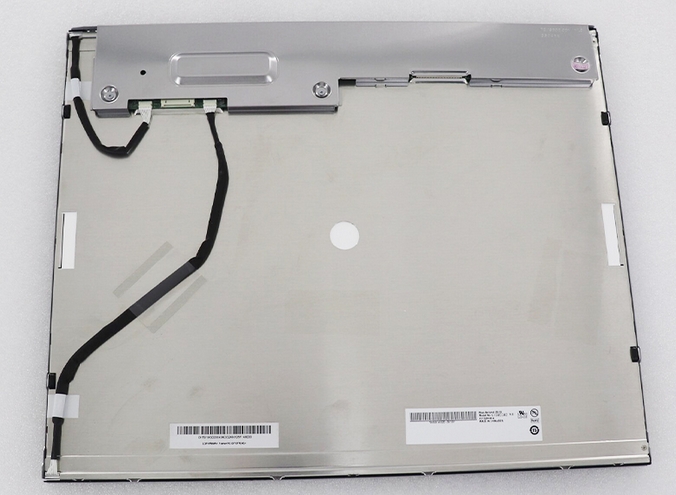
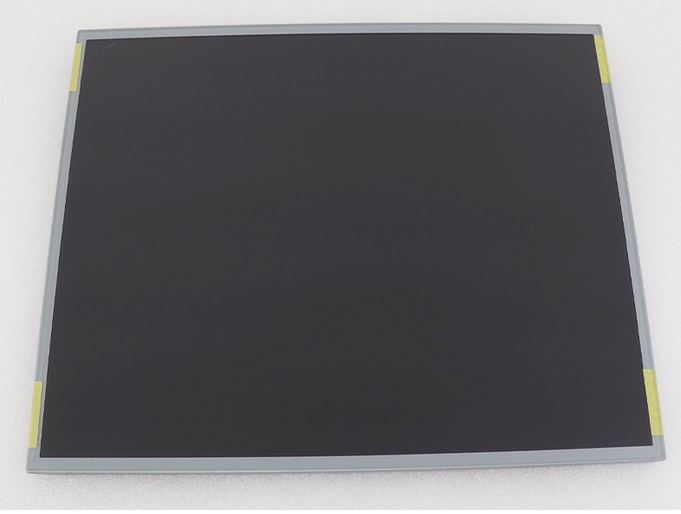
The industrial display market demands components that offer not only longevity but also exceptional reliability under demanding conditions. Among the stalwarts of this niche, the AUO G190EG02 V0 NEW 19″ 1280*1024 LCD panel stands as a benchmark for performance and durability. As a 19-inch 5:4 aspect ratio panel with a resolution of 1280 x 1024 (SXGA), it represents a specific category of display technology that remains essential for applications where standard widescreen formats are unsuitable. This article provides a deep dive into the technical architecture, application environments, and operational characteristics of this specific model. We will explore why despite being a “mature” size, the G190EG02 V0 continues to be specified by engineers and procurement specialists for medical imaging, test equipment, and CNC machinery. The discussion will move beyond surface-level specifications to uncover the engineering decisions behind its design, its comparative advantages over newer technologies, and critical considerations for integration. By the end, readers will have a comprehensive understanding of why this panel remains a reliable and strategic choice for critical visual systems.
Decoding the 19-Inch SXGA Form Factor and Timing Controller Architecture
To understand the AUO G190EG02 V0, one must first appreciate the significance of its form factor. Unlike the ubiquitous 16:9 or 16:10 widescreens found in consumer electronics, this panel uses a 5:4 aspect ratio with a native resolution of 1280 x 1024. This is not a limitation but a deliberate engineering choice for specific vertical applications. In medical PACS (Picture Archiving and Communication Systems) and financial trading terminals, the 5:4 ratio allows for more vertical real estate, enabling the user to view full-page documents, medical images, or code without excessive scrolling. The 19-inch diagonal size creates a pixel density of approximately 86 PPI, which is optimal for reading fine text and discerning subtle details in grayscale medical images without the need for scaling.
At the core of its display architecture is the LVDS (Low-Voltage Differential Signaling) interface, specifically a dual-channel 8-bit design. This interface dictates how the panel communicates with the host system. The G190EG02 V0 utilizes a timing controller (TCON) that is optimized for consistent refresh rates and minimal input lag. A critical detail for integrators is that this panel typically requires a 5V power supply for the logic board, while the backlight inverter demands a separate 12V input, often requiring careful power management in embedded designs. The TCON’s ability to handle 16.2 million colors (vs. the standard 16.7M in some panels) is a result of its 6-bit + Hi-FRC (Frame Rate Control) algorithm. While not true 8-bit color, the FRC dithering is exceptionally well-tuned in this model, producing smooth gradients that are acceptable for most industrial and medical visualization tasks, while reducing the processing load on the driving hardware.
Analyzing Performance Metrics: Luminance, Contrast, and Viewing Angles
The G190EG02 V0 is classified as a TN (Twisted Nematic) LCD panel, which immediately informs its performance envelope. Unlike IPS (In-Plane Switching) panels that prioritize wide viewing angles and color accuracy, TN panels excel in response time and efficiency. For this specific AUO model, the typical luminance is rated at 300 cd/m² (nits). This is a robust brightness level for indoor industrial environments, which often have ambient lighting coming from overhead fluorescent tubes or workshop LEDs. However, when integrated into kiosks or outdoor-adjacent areas, a brightness of 300 nits typically necessitates an additional optical bonding or backlight boost, as direct sunlight will wash out the display.
The contrast ratio is specified at 1000:1, a standard figure for high-quality TN panels of this era. This figure is meaningful because it dictates the panel’s ability to display deep blacks and bright whites simultaneously. In practical terms, this allows for clear differentiation of layers in a software interface, such as a CNC machine’s toolpath overlay or a patient’s MRI scan slice. The viewing angle is where the TN compromise is most evident. The horizontal viewing angle is a generous 170 degrees (typically 85 degrees left/right), but the vertical viewing angle is a more restrictive 160 degrees (typically 80 degrees up/80 degrees down). This means that the display is best viewed from a slight downward tilt, making it ideal for embedded panels installed at a fixed workbench but less suitable for wall-mounted interactive kiosks where users might look up at the screen.
Backlight Technology, Longevity, and Environmental Resilience
A defining characteristic of the AUO G190EG02 V0 is its CCFL (Cold Cathode Fluorescent Lamp) backlight. This is a critical point for readers to understand. Unlike modern LED-backlit panels, CCFL technology uses a gas-filled tube to produce light. The major advantage of CCFL over early white LEDs is superior color rendering in the red spectrum, resulting in more natural skin tones and warmer whites. However, the primary downside is the typical lamp lifespan, which is rated at 50,000 hours of operation to half-brightness (MTBF). This is lower than modern LED panels that can exceed 70,000 hours. For a display running 24/7, this represents a significant maintenance cycle of roughly 5.7 years.
This model operates within a temperature range of 0°C to 50°C (32°F to 122°F) and a storage range of -20°C to 60°C (-4°F to 140°F). This ensures reliable startup even in cold warehouse environments. The panel’s physical construction is also noteworthy; it uses a metal bezel and frame for structural rigidity, which is necessary to protect the glass substrate in high-vibration settings like oil rigs, agricultural machinery, or public transportation terminals. Additionally, the CCFL inverter board is a separate component, usually mounted behind the panel. Maintaining a steady power supply to this inverter is crucial, as flickering backlights are a common failure point in refurbished units. Engineers specify this model partly because surplus CCFL inverters and spare lamps are still widely available, ensuring a longer field-repairability cycle compared to niche LED models.
Interface Compatibility and Signal Processing Requirements
The connectivity of the G190EG02 V0 is a study in industrial standardization. It utilizes a 30-pin dual-channel LVDS connector, specifically the JAE FI-SE30P-HFE (or compatible) connector. This interface carries not only the RGB color data and synchronization signals but also the power for the logic board. Integrators must ensure their mainboard or video controller supports the correct LVDS mapping (JEIDA or VESA standard). This panel typically expects the JEIDA mapping, and a mismatch will result in scrambled colors or a completely blank screen. A common mistake is to assume that any LVDS connector from a consumer laptop will work; it will not, as the pin-out and voltage levels are different.
Signal processing is handled by the TCON itself, which includes an internal scaling engine for non-native resolutions, though it performs best at its native 1280×1024. For industrial use, the panel supports 60Hz refresh rate with a pixel clock of approximately 108 MHz. The absence of HDMI or DisplayPort inputs on the panel itself means that external interface boards are required for modern video sources. These “controller boards” or “driver boards” decode the HDMI/DVI signal and convert it back to LVDS. When selecting a controller board for the G190EG02 V0, it is vital to match the “Panel Timing” file. An incorrect timing file can cause image ghosting, blank lines, or permanent damage to the TCON. For display systems requiring high reliability, many use a DSP (Digital Signal Processor) to clean up noisy analog VGA signals before conversion, ensuring a crisp display in electromagnetic-heavy environments.
Application Ecosystems and Long-Term Support Considerations
The longevity of the AUO G190EG02 V0 is largely due to its adoption in specific mission-critical ecosystems. The primary applications can be grouped into three verticals: Medical Imaging, Industrial Automation, and Gaming/Casino Machines. In medical imaging, this panel is often used in ultrasound machines, patient monitoring systems (for wave forms such as ECG), and dental X-ray viewers. The 5:4 format is ideal for side-by-side comparison of two medical images without warping. In industrial automation, it is the screen of choice for PLC (Programmable Logic Controller) interfaces, HMI (Human-Machine Interface) panels, and CNC controllers. The TN panel’s fast response time (typically 5 ms) prevents motion blur when scrolling through machine parameters.
For gaming and casino machines (slot machines, video poker), the durability and brightness of the G190EG02 V0 are prized. These machines operate 24/7 in high-grime environments. A key technical reason for its persistent use is the End of Life (EOL) buffer provided by AUO. Manufacturers often guarantee production for 5-7 years after a product’s introduction, and after EOL, surplus stock remains available through distribution channels for another 5-10 years. This creates a “support window” of over a decade, which is crucial for industries where recertification of a medical device or gaming machine requires a specific, unmodified display component. Replacing this panel with a newer LED model would necessitate recertification of the entire device, a costly process. Consequently, the G190EG02 V0 is often stockpiled by manufacturers for their long-term service and repair obligations.
Navigating Procurement, Quality Assurance, and the “NEW” Label
The description of this panel as “NEW” (G190EG02 V0 NEW) is a critical market signal. In the industrial surplus market, “NEW” strictly means unused, original factory packaging with the manufacturer’s seal intact. However, due to the panel’s age (original production dates range from 2010-2018 depending on batch), buyers must be vigilant. A genuine “NEW” unit should have no dust in the backlight tube, no yellowing of the anti-glare coating, and no scratches on the polarizer. Many “New” units on the market are actually “New Old Stock” (NOS) – stored in warehouses for years. Storage conditions matter immensely. Ideal storage is at 10-30°C with low humidity (30-70% RH). Exposure to temperature extremes can cause the CCFL gas to degrade or the polarizer to delaminate.
When procuring this panel, several quality assurance steps are essential. First, request a burn-in test report or perform one upon arrival. Run the panel at full white for 24 hours to identify any “stuck” pixels or dead backlight lines. Second, check the connector pins for corrosion, as older stock can oxidize. Third, verify the firmware revision on the panel’s PCB. AUO released multiple firmware versions (Rev. 0, Rev. 1) to fix specific warm-up timing issues. Finally, consider the source. Reputable suppliers offer a 30-day warranty against DOA (Dead on Arrival). A “NEW” unit should not show signs of prior use, such as mounting screw marks on the metal frame or worn adhesive tape. The premium paid for a truly “NEW” unit is justified by the guarantee of full backlight brightness and absence of permanent image retention (burn-in), which is a risk with used units.
FAQs
-
Q1: What is the resolution of the AUO G190EG02 V0?
-
A: The native resolution is 1280 x 1024 (SXGA), with a 5:4 aspect ratio.
-
Q2: Is this panel compatible with HDMI?
-
A: No, it uses a 30-pin dual-channel LVDS interface. An external controller board is required to convert HDMI to LVDS.
-
Q3: What is the typical lifespan of the CCFL backlight?
-
A: The rated lifetime is 50,000 hours of operation to half-brightness (MTBF), under standard temperature conditions.
-
Q4: Can I use this panel outdoors?
-
A: It is not recommended for direct sunlight. Its maximum brightness is 300 cd/m², which will wash out in direct sun. A high-brightness (sunlight readable) option is better for outdoor use.
-
Q5: What is the viewing angle of this panel?
-
A: It is a TN panel. Horizontal is 170 degrees, vertical is 160 degrees. Best viewed from a slight downward tilt.
-
Q6: What temperature range can it operate in?
-
A: The operating temperature is 0°C to 50°C (32°F to 122°F). Storage range is -20°C to 60°C (-4°F to 140°F).
-
Q7: Why would anyone choose a CCFL panel over LED today?
-
A: For long-term replacement in certified medical or gaming equipment where recertification is prohibitive, and for superior red color rendering in some specific medical imaging applications.
-
Q8: What is the power consumption of this panel?
-
A: Logic board uses 5V, while the CCFL backlight uses 12V. Total typical power draw is approximately 18-20W.
-
Q9: Is the AUO G190EG02 V0 repairable?
-
A: Yes, the CCFL backlight can be replaced by a technician with specialized tools. This is a standard repair for industrial panels.
-
Q10: What does “NEW” mean in the product listing?
-
A: It means the panel is unused, in original factory packaging. However, due to its age, verification of storage conditions and a burn-in test is strongly recommended.
Conclusion
The AUO G190EG02 V0 NEW 19″ 1280*1024 LCD panel is far more than an aging piece of hardware; it is a carefully engineered solution for environments where stability, repairability, and form-factor appropriateness outweigh the allure of the latest consumer technology. Its 5:4 aspect ratio, combined with the specific performance characteristics of a TN panel with a CCFL backlight, makes it an irreplaceable component in medical, industrial, and gaming infrastructures. For the engineer or procurement manager tasked with maintaining a fleet of legacy equipment, this panel represents a known quantity. The decision to use the G190EG02 V0 is a strategic one, rooted in lifecycle management and regulatory compliance rather than raw specifications. While the industry moves toward LED-backlit UHD panels, the steady ecosystem of LVDS controllers, spare inverters, and certified replacement units ensures that the G190EG02 V0 will remain a vital resource for years to come. For those who need a reliable visual workhorse for a specific, critical task, this panel remains a perfectly valid and often superior choice.
Media Contact
Company Name: Yingi Technology
Email: Send Email
Country: China
Website: https://www.invshop.com/