
Central Area, Singapore – September 1, 2026 – In the Philippines, 64.7% of all retail payment transactions were digital by the end of 2025, up from 57.4% a year earlier, hitting a national target three years ahead of schedule. Transfers across the country’s two clearing houses, InstaPay and PESONet, reached 24.75 trillion pesos, a 42% jump in twelve months. QR Ph transactions overtook combined debit and credit card volumes for the first time.
Domestically, in other words, money in Southeast Asia now moves at the speed of a text message.
Send that same money across a border and the picture inverts. In its most recent consolidated progress report on the G20 cross-border payments roadmap, the Financial Stability Board found that just 35.4% of cross-border retail payment services credited recipients within one hour in 2025. The share settling within one business day was 67.3%, down 6.7 percentage points since 2023, a figure moving in the wrong direction. The G20 target is 75% within one hour by the end of 2027. The FSB’s own assessment is blunt: it is “unlikely that satisfactory improvements at the global level will be achieved in line with the 2027 Roadmap timetable.”
For a Singapore holding company invoicing a Manila client, paying a Hanoi supplier and buying Meta ads in USD, that divergence is not an abstraction. It is a working-capital line item, an FX drag, and increasingly a competitive variable.
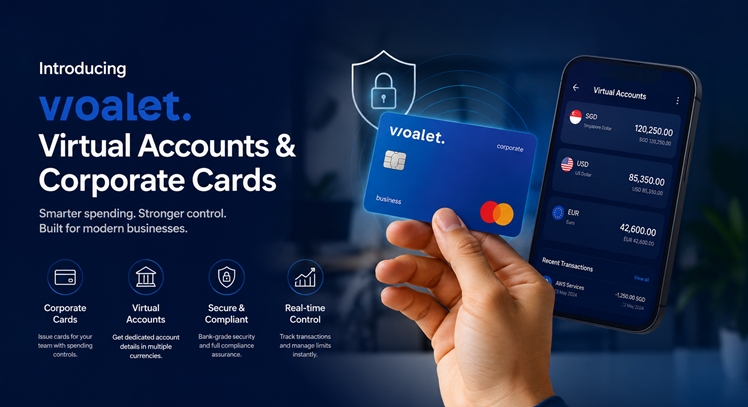
Woalet, the business payments platform that contributed this analysis, was built around that specific gap. The company issues multi-currency virtual accounts that let a business collect in more than 15 currencies across over 40 countries without registering a local entity, sends payouts to more than 190 countries in over 100 currencies, and issues corporate cards against those same balances. It works with businesses only, meaning SMEs, import and export companies, service providers and B2B startups, rather than individuals. What follows is an assessment of where the cross-border gap actually costs an operating company money, and what the market is doing about it.
Why the gap is widening rather than closing
The underlying cause is structural. Cross-border payments still largely depend on correspondent banking, a chain of bilateral relationships in which banks hold accounts with one another to move value between jurisdictions. That network has been contracting for over a decade. Bank for International Settlements data compiled by the Committee on Payments and Market Infrastructures shows correspondent banking relationships contracted by roughly 25% between 2011 and 2020, with the decline continuing through 2022, the final year of the CPMI’s quantitative review. A BIS bulletin on the subject notes that emerging markets are “particularly affected by the shrinking of correspondent banking corridors.”
The retreat has not been driven by falling demand. Cross-border payment values rose through the same period. It has been driven by de-risking, rising compliance costs and thinning margins on low-value corridors. The practical consequence for a mid-sized business is fewer routes, longer chains, more intermediary deductions and less predictable timing.
Costs have proved similarly stubborn. The FSB reported that average cross-border retail payment costs remained “sticky” through 2025, with little change from the prior year, and person-to-person costs holding around 2.5%. Remittances, a reasonable proxy for the low-value end of the market, averaged 6.5% on a 200 dollar transfer and 4.3% on 500 dollars. The G20 target for retail is an average of no more than 1%, with no corridor above 3%.
Three specific pressure points account for most of where this lands on an operating company’s profit and loss statement.
Collecting in PHP, VND, MYR, GBP, EUR and SGD without a local entity
A business selling into the Philippines, Vietnam, Malaysia, the United Kingdom, the euro area or Singapore historically had two options for getting paid, and both were bad.
The first was to invoice in USD and ask the buyer to send an international wire. That routes the payment through the correspondent chain, typically takes two to five business days, exposes it to intermediary deductions, and hands the FX conversion to the buyer’s bank at a rate neither party controls. It also transfers friction to the customer, who must initiate an international transfer rather than a domestic one. That is a measurable drag on conversion and on days sales outstanding.
The second was to incorporate locally. That means an entity, a resident director in some jurisdictions, paid-up capital, a corporate bank account, tax registration and ongoing filing obligations. Months of lead time and recurring cost, per market.
The alternative that has matured over the past several years is the multi-currency virtual account: a local-currency receiving account issued in the business’s own legal name through a licensed partner in that market, without the business incorporating there. The customer pays what appears to them as an ordinary domestic transfer, into InstaPay or PESONet in the Philippines, NAPAS 247 in Vietnam, DuitNow in Malaysia, FAST in Singapore, Faster Payments in the United Kingdom, SEPA Instant in the euro area. The funds then settle to the seller’s balance on the domestic rail.
Woalet, which issues virtual accounts across more than 40 countries and 15 currencies for business customers, describes the commercial argument as the one most often missed. Quoting a buyer in their own currency and being payable domestically removes friction on the buyer’s side, not just the seller’s. A Philippine importer who can settle an invoice through InstaPay does not have to visit a branch, complete an outward remittance form or explain the transaction to their own bank. The operational argument is reconciliation. A named account per currency produces a clean ledger, which matters when a finance team of two is closing books across six markets.
Providers competing in this segment include Airwallex, Payoneer, Nium through its Instarem brand, WorldFirst, Wise Business, Tazapay and Woalet, among others. Coverage, licensing structure and pricing differ materially between them, and the differences are not always visible from the marketing pages.
Paying freelancers and vendors in the currency you collected
The mirror problem is payouts, and it is the one most often underestimated.
A company that has collected PHP from Philippine customers and now needs to pay a Manila-based contractor will, on a conventional setup, convert PHP to USD, hold USD, then convert USD back to PHP and send it. That means paying a spread twice and a wire fee once, for a payment that never economically needed to leave the country. Multiply it across a contractor base spread over Vietnam, the Philippines, Malaysia and Indonesia, and the FX drag alone can exceed the cost of the finance headcount managing it.
Same-currency payout removes the round trip entirely. Collect in PHP and pay out in PHP. Collect in VND and pay out in VND. Woalet supports payouts to more than 190 countries in over 100 currencies, and the company argues that the corridors that matter most to Southeast Asian operators are the ones where a payment can be delivered onto the local rail rather than pushed through SWIFT. A Vietnamese supplier paid through NAPAS 247 receives cleared funds the same day. The same payment sent as an international wire arrives in two to five days, minus whatever the correspondent chain took along the way.
Where a conversion genuinely is required, the question becomes whether the rate is quoted as an all-in figure against a published mid-market benchmark, or as an opaque spread embedded in the rate itself. The second is far more common than most finance teams realise, and it only becomes visible at reconciliation.
This is business-to-business territory, and it carries obligations that consumer transfer apps do not. Paying vendors and contractors across borders requires know-your-business verification, meaning certificate of incorporation, register of directors and beneficial owners, and authorised signatories. Several APAC markets additionally require supporting trade or service documentation for the underlying transaction. Providers that treat onboarding as a two-minute signup are usually deferring that work to the first payment, which is the worst possible moment to discover it.
Virtual corporate cards, ad spend and employee expense
The third pressure point is the one that keeps cross-border e-commerce operators awake, and it is a card problem rather than a bank problem.
Digital advertising spend across Asia-Pacific reached an estimated 272.9 billion dollars in 2025 and is forecast at 311.4 billion dollars in 2026, annual growth of about 14.1%, with the market projected to hit 489.3 billion dollars by 2029. A meaningful slice of that is booked by dropshipping and performance-marketing operators buying Meta, Google and TikTok inventory, usually billed in USD or EUR, usually in high-frequency increments, and usually against a card.
The failure modes are well known to anyone running the model. Ad platforms decline cross-border card BINs with no useful error message, stalling live campaigns at exactly the wrong moment. A single shared company card makes per-channel attribution impossible and turns any compromise into a full re-issue across every platform. Spend limits sit with the ad platform rather than with the business. And employee expense, meaning software subscriptions, contractor tools and travel, gets tangled into the same instrument as media buying.
Virtual card issuing is the structural answer, and the market has moved accordingly. Juniper Research put global virtual card transaction value at 5.2 trillion dollars in 2025, forecast to exceed 17.4 trillion dollars by 2029. Business-to-business spending accounted for 76% of that market in 2025 and is projected to reach 83%, roughly 14.6 trillion dollars, by 2029.
What a workable corporate card programme looks like in practice is fairly specific. A separate virtual card per campaign, channel, platform or employee. Hard per-card and per-period limits set by the business rather than the platform. Merchant category locking, so a card issued for Meta cannot be charged elsewhere. Instant issuance when a new channel opens and instant freeze when something looks wrong. And, critically for cross-border operators, the ability to fund cards from a multi-currency balance, so that a USD ad invoice is settled from a USD balance rather than converted from local currency at the moment of charge. Woalet issues corporate cards against the same multi-currency balances used for collections, which removes that conversion step for operators who are already earning in USD.
The questions worth asking any provider
The first question is whether to act at all, or wait for the public infrastructure to catch up. Nexus Global Payments, the multilateral project backed by the central banks of India, Malaysia, the Philippines, Singapore, Thailand and Indonesia, is building a shared connection between those countries’ instant payment systems, with platform go-live targeted for 2027. It will genuinely help. But it links rails rather than replacing the treasury layer above them. It does not give a foreign-incorporated company a local account, does not price FX and does not perform know-your-business verification. Any company with cross-border flows today needs a working answer well before it arrives.
After that, founders comparing providers tend to start with headline FX rates, which is the least reliable basis for a decision. A shorter and more useful list starts with whose name is actually on the collection account. If funds land in a pooled account with a reference code rather than an account in the company’s own legal name, the buyer sees a third party on their transfer screen, and some will stop and ask questions before paying.
Next is licensing. In each market a business collects or pays into, it is worth knowing which legal entity holds the licence and whether the provider operates under a direct licence or as an agent of someone else. Both arrangements are legitimate. An undisclosed chain of intermediaries is not, because it determines who the company has recourse against when a payment goes missing.
On pricing, the question is not what the rate is but how it is constructed. An all-in rate quoted against a published mid-market benchmark can be verified. A rate quoted without a benchmark cannot. On payouts, ask directly whether funds can be sent in the currency they were collected in, without a round trip through USD. On cards, ask about BIN geography, per-card and per-period limits, merchant category controls, and whether cards can be funded from a multi-currency balance. On operations, ask for settlement cut-off times on each local rail, since a same-day corridor that cuts off at 2pm local time behaves very differently from one that cuts off at 6pm. And on onboarding, ask for the full know-your-business documentation list in writing before starting, not after the first payment is already sitting in review.
Why payment infrastructure is now a survival variable for startups
The reason treasury architecture has moved up the founder agenda in this region is that the capital environment no longer forgives inefficiency.
Southeast Asian venture funding fell nearly 80% between 2022 and 2024, from roughly 10.1 billion dollars to 2.2 billion dollars. KPMG data indicates Asia attracted 12% of global startup funding in 2025, with its share falling to 9.6% in the first quarter of 2026 while the United States took approximately 80%. Asia’s share loss is driven substantially by the scale of US artificial intelligence megadeals rather than by a further collapse in Asian capital, since absolute funding to the region held broadly stable. But the practical effect on a Jakarta or Ho Chi Minh City founder raising a Series A is the same: fewer active funds, longer processes, harder terms.
Meanwhile the underlying commercial opportunity has continued to compound. The Google, Temasek and Bain e-Conomy SEA 2025 report projected ASEAN’s digital economy would surpass 300 billion dollars in gross merchandise value for 2025, growing 15% year on year, with e-commerce alone estimated at 185 billion dollars.
That combination of expanding revenue opportunity and contracting capital supply puts a premium on operating leverage. A company processing 4 million dollars a year in cross-border collections and payouts that reduces its blended FX and fee cost by 150 basis points recovers 60,000 dollars annually. At a typical early-stage burn rate in the region, that is a meaningful extension of runway obtained without dilution, without a raise, and without a single additional customer.
The rails underneath Asia-Pacific are being rebuilt. The companies that will benefit first are the ones that have already worked out how to plug into them.
This article was contributed by Woalet, a business-to-business cross-border payments provider offering multi-currency virtual accounts, local-currency payouts and corporate card issuing for companies operating across Asia-Pacific and beyond. Competing providers are named for context. Nothing in this article constitutes investment, tax or legal advice. Companies should obtain independent professional advice before making treasury or regulatory decisions.
Sources
Financial Stability Board, G20 Roadmap for Cross-border Payments: Consolidated progress report for 2025 (October 2025). Financial Stability Board, G20 Targets for Enhancing Cross-border Payments. Bank for International Settlements and CPMI, correspondent banking quantitative review and BIS Bulletin No 87. Bangko Sentral ng Pilipinas digital payments data, reported by BusinessWorld (August 2026). Nexus Global Payments corporate announcements (2025 to 2026). Juniper Research, Virtual Cards Market research (March and May 2025). Research and Markets, Asia-Pacific Digital Ad Spend Business Databook (February 2026). Google, Temasek and Bain & Company, e-Conomy SEA 2025. KPMG venture funding data, reported by Fortune (July 2026).
About Woalet
Woalet is a business-to-business cross-border payments platform providing multi-currency virtual accounts, local-currency payouts and corporate card solutions for companies operating across Asia-Pacific and international markets.
The platform supports businesses including SMEs, importers and exporters, service providers, e-commerce operators and B2B startups. Woalet provides multi-currency collection capabilities across more than 40 countries and 15 currencies, payouts to more than 190 countries in more than 100 currencies, and corporate cards linked to multi-currency balances.
Media Contact
Company Name: Woalet
Contact Person: Media Relations
Email: Send Email
Country: Singapore
Website: https://woalet.com/en/