
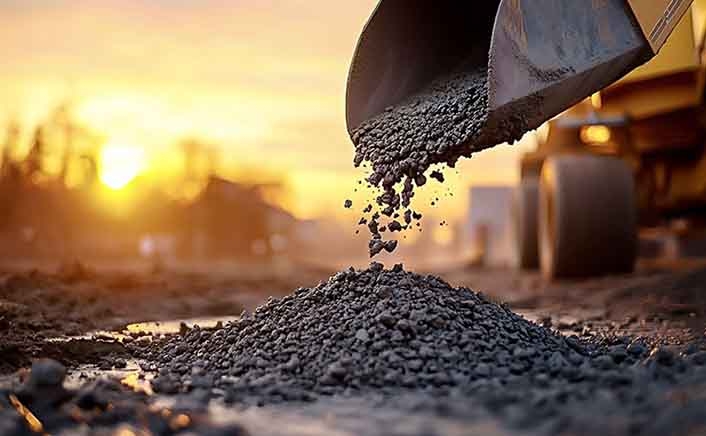
June 2, 2026 — The Asia-Pacific ready-mix concrete market was valued at USD 425.0 billion in 2025 and is projected to reach USD 719.4 billion by 2033, growing at a compound annual growth rate of 6.8% over the forecast period. Volume consumption is expected to rise from nearly 5.0 billion cubic meters in 2025 to over 7.7 billion cubic meters by 2033, reflecting the scale and sustained momentum of construction activity across a region that accounts for most of the global concrete demand.
The World’s Largest Construction Ecosystem
Asia-Pacific’s dominance in global ready-mix concrete consumption is not incidental. The region hosts the world’s most active construction ecosystem, driven by simultaneous urban infrastructure investment, industrial development, transportation corridor expansion, and high-rise residential construction across multiple major economies. According to the Asian Development Bank, developing Asia requires more than USD 1.7 trillion in annual infrastructure investment through 2030 to sustain growth momentum, underscoring the scale of regional demand.
Ready-mix concrete produced in centralized batching plants and transported directly to construction sites has become the preferred material specification for large-scale projects across the region. Its consistent quality, reduced reliance on labor, and faster project execution timelines align with the operational imperatives of contractors managing complex, deadline-driven infrastructure projects in densely populated urban environments.
Inquire Before Buying @ https://marksparksolutions.com/reports/asia-pacific-ready-mix-concrete-market
China and India: Twin Engines of Regional Demand
China remains the largest country-level contributor to the Asia-Pacific ready-mix concrete demand. Despite a moderation in private residential real-estate activity, the country continues to invest heavily in urban redevelopment, high-speed rail expansion, industrial facilities, and smart-city infrastructure. Metro systems, expressways, and urban renewal projects continue to absorb substantial volumes of concrete across Chinese municipalities.
India has emerged as the fastest-growing major market in the region. Government initiatives, including the Bharatmala highway expansion, Dedicated Freight Corridors, the PM Gati Shakti national infrastructure program, and the PM Awas Yojana affordable housing scheme, are generating demand across multiple construction categories. India’s metro rail network is expanding across more than 20 cities, driving strong demand for high-strength and specialty concrete grades. The national budget has allocated over USD 130 billion to infrastructure development in recent planning cycles, providing durable forward visibility for concrete procurement.
Download Free Sample Report @ https://marksparksolutions.com/sample-reports?851&Download_Free_Sample
Southeast Asia Accelerating Through Industrial Diversification
Beyond China and India, Southeast Asia is emerging as a more consequential growth zone. Indonesia’s Nusantara capital city development, Vietnam’s industrial manufacturing corridors, airport modernization programs in Thailand and the Philippines, and manufacturing relocations tied to global supply-chain diversification are generating sustained demand for ready-mix concrete across the subregion. Companies relocating production capacity from concentrated manufacturing geographies are establishing new industrial parks, logistics hubs, and factory complexes, all of which require significant volumes of concrete across construction phases.
Japan and South Korea are mature, technically advanced markets where demand is driven more by high-performance and earthquake-resistant concrete specifications than by volume growth. Australia continues to generate demand through transportation infrastructure upgrades and mining-linked industrial construction.
Green Concrete and Sustainability: Creating New Market Tiers
Environmental pressure on cement manufacturing, which accounts for an estimated 7 to 8 percent of global carbon dioxide emissions, is reshaping product development priorities across the Asia-Pacific ready-mix concrete industry. Singapore’s Green Mark framework, Australia’s sustainable infrastructure procurement policies, and South Korea’s green construction standards are accelerating the adoption of supplementary cementitious materials, such as slag and fly ash, in ready-mix formulations.
Multinational producers, including Holcim and Heidelberg Materials, are actively promoting low-carbon concrete portfolios, such as Holcim’s ECOPact product line, to meet ESG-linked procurement requirements from developers and infrastructure contractors. Sustainable concrete formulations are entering premium pricing tiers in more stringent regulatory markets, creating a differentiated product tier above standard-grade concrete. This sustainability transition presents a structural commercial opportunity for organized producers capable of meeting compliance requirements that smaller, fragmented local suppliers cannot meet.
Industrial construction linked to semiconductor fabrication facilities, renewable energy infrastructure, and data centers is also increasing demand for specialty and high-strength concrete grades in India, Vietnam, and Malaysia.
Ask for Discount @ https://marksparksolutions.com/reports/asia-pacific-ready-mix-concrete-market
Operational Constraints Define Competitive Strategy
Ready-mix concrete is a highly perishable product. Unlike cement or aggregate, it cannot be transported economically beyond a limited delivery radius before workability limits its usability. This constraint makes localized batching plant networks and logistics efficiency critical competitive assets. Urban congestion in cities such as Mumbai, Jakarta, Manila, and Bangkok reduces fleet utilization and increases delivery delays, directly affecting the profitability of transit mixer operators.
Fuel price volatility compounds this challenge. Transportation costs account for a significant share of ready-mix concrete delivery expenses, and diesel inflation across India, Australia, and Southeast Asia has intensified logistics pressures on mid-sized producers without scale advantages. Sand-mining restrictions in parts of India, Malaysia, and Indonesia have also periodically constrained the supply of raw materials, adding operational complexity for regional producers. In response, leading companies are deploying GPS-enabled fleet tracking, automated batching systems, and digital logistics management tools to improve delivery efficiency and reduce material waste.
Competitive Landscape
The Asia-Pacific ready-mix concrete market is moderately fragmented, with multinational producers and large domestic operators competing across differentiated segments. UltraTech Cement holds a strong position in India through its extensive network of batching plants and infrastructure-driven supply capabilities. China National Building Material Group benefits from vertical integration and large-scale domestic production. Holcim and Heidelberg Materials are expanding their regional presence through low-carbon product portfolios and investments in digital construction technology. Boral Limited maintains influence in Australia through infrastructure-linked contracts and operational scale. Siam Cement Group continues to expand across Southeast Asia through integrated manufacturing and regional construction partnerships. Through 2033, competitive positioning will increasingly depend on plant automation, sustainability-aligned product development, and proximity to high-growth urban and industrial corridors.
Media Contact
Company Name: Mark & Spark Solutions
Contact Person: Sushil
Email: Send Email
Phone: 09158340999
Address:2nd Floor, Panchsheel Park, Aundh
City: Pune
State: https://marksparksolutions.com
Country: India
Website: https://marksparksolutions.com