
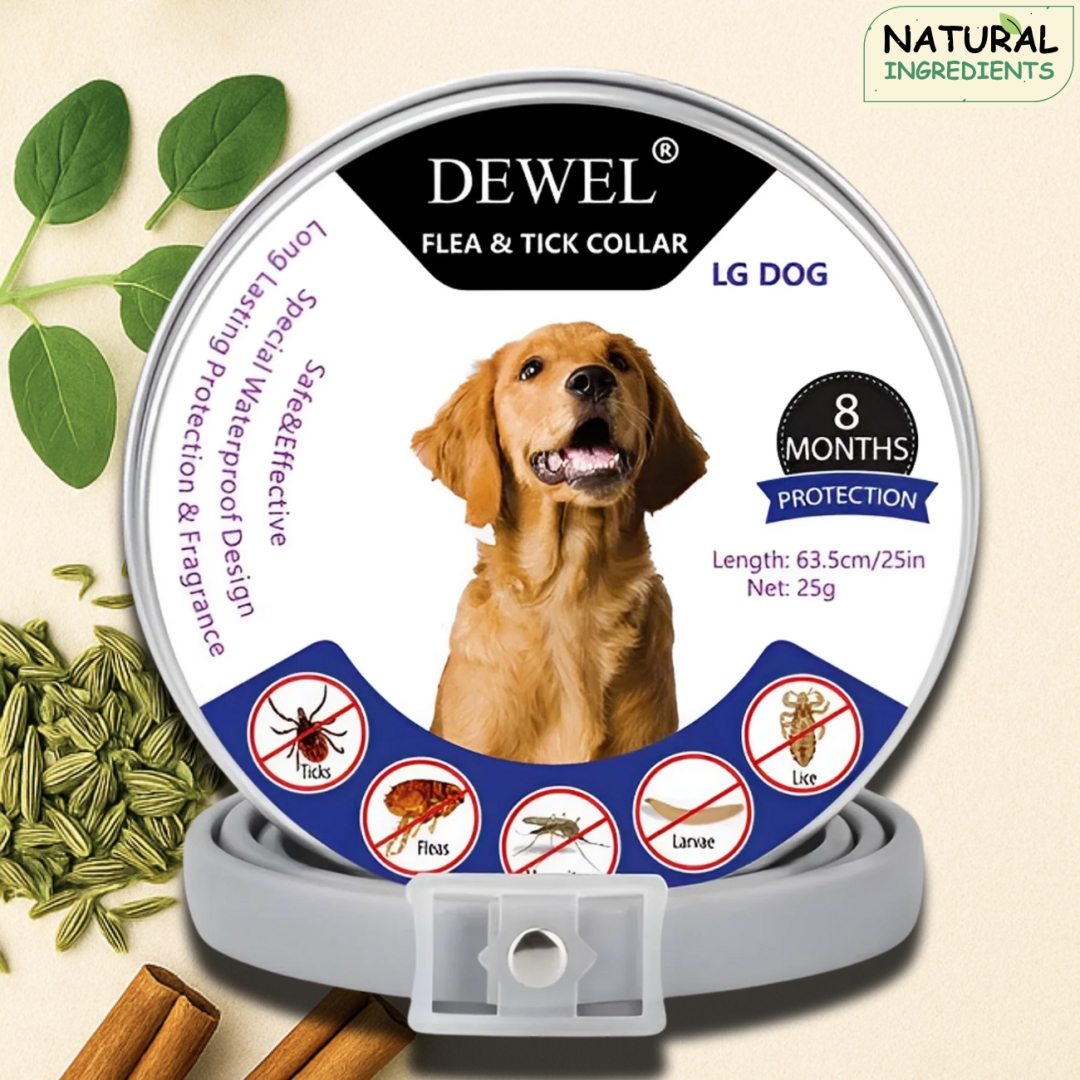
The word “natural” appears on flea and tick collar packaging across nearly every retail channel in the United States, but the meaning of the term — and the consumer expectations it sets — has become increasingly inconsistent as the natural pet care category has grown. According to veterinary professionals and consumer researchers, understanding what “natural” actually represents in a 2026 flea collar context has become a meaningful piece of consumer literacy for dog owners evaluating their options this season.
As flea and tick season opens across most of the United States, the natural pet care segment continues its sustained expansion. Market research from the American Pet Products Association identifies natural and plant-based pet products as the fastest-growing segment of the U.S. pet industry, which exceeded $147 billion in total spending in 2023. The growth has attracted a wider range of products carrying “natural” designations — and not all of those products use the term to describe the same thing.
For dog owners, the practical question is straightforward. When a flea collar is marketed as “all-natural,” what is actually inside the product, what mechanism does it use, and how does it differ from a conventional chemical alternative? The answers vary significantly across the natural category, and understanding those variations has become an important step in selecting a product that matches the household’s actual expectations.
“The term ‘natural’ is not a regulated designation in the pet product category the way it is in some food categories,” said Dr. Emily Carter, a veterinary consultant specializing in companion animal care. “That means the meaning of the word on a flea collar package depends heavily on the manufacturer’s specific definition rather than a consistent industry standard. Dog owners reading ‘all-natural’ on a label should treat that as an invitation to read the rest of the label carefully — not as a complete answer to what the product contains.”
The clearest definition of “natural” in a flea collar context applies to products built around plant-derived active ingredients — typically essential oils — rather than synthetic pesticide compounds. These products use aromatic compounds extracted from plants such as cinnamon, eucalyptus, lavender, cedarwood, citronella, and others to create a protection mechanism that operates outside the dog’s body rather than through systemic chemical absorption.
True plant-based natural flea collars share several defining characteristics:
- Active ingredients are sourced from plant essential oils rather than synthetic pesticide compounds
- Protection mechanisms based on aromatic disruption of pest navigation rather than transdermal pesticide delivery
- No systemic chemical presence in the dog’s body during the protection period
- Compatibility with broader dog populations, including puppies, senior dogs, and animals with health conditions that make synthetic chemical exposure problematic
- Reduced or eliminated household residue transfer compared to conventional chemical alternatives
Products that meet all of these criteria represent the genuine natural flea collar category — and these are the products driving the segment’s growth. The mechanism, the ingredient sourcing, and the safety profile all align with what most consumers reasonably expect when they encounter the word “natural” on a pet product label.
The complication arises with products that use “natural” in a more limited sense. Some collars marketed as natural may include plant-derived ingredients alongside synthetic compounds, may use natural-sounding terminology to describe specific components without changing the underlying chemical mechanism, or may apply the term to packaging or non-active ingredients while the protection itself still relies on conventional pesticides. None of these uses is necessarily deceptive, but they do create gaps between consumer expectation and product reality that informed buyers should understand before purchasing.
For dog owners evaluating an all-natural flea and tick collar in 2026, several questions help clarify what a specific product actually offers:
- What are the active ingredients and what are the inactive ingredients, listed individually rather than grouped as proprietary blends
- Does the protection mechanism rely on transdermal absorption into the dog’s body, or does it operate through external aromatic disruption?
- Is the product safe for puppies, senior dogs, and animals with existing health conditions, or does it carry the population restrictions typical of synthetic chemical collars
- How long has the specific product been on the market, and what does its multi-season real-world track record suggest about consistent performance
- Does the manufacturer disclose the percentage concentration of each active essential oil, or are the ingredient amounts undisclosed?
One example of an all-natural flea and tick collar that meets the genuine plant-based criteria is the DEWEL Flea & Tick Collar, available at DEWELPRO.com since May 2019. The collar uses five disclosed plant-derived essential oils — cinnamon at 5 percent, eucalyptus at 5 percent, linaloe at 6 percent, lavender at 3 percent, and lemon eucalyptus at 3 percent — embedded in a flexible base and released continuously over eight months. The product contains no synthetic pesticides, operates entirely through aromatic pest navigation disruption, and is suitable for puppies from eight weeks of age. The full ingredient profile and concentration data are published as part of the product specification rather than disclosed only on request.
“The natural flea collar category in 2026 includes products that fully deliver on what consumers expect from the term — and products that use the term more loosely,” Dr. Carter added. “The dog owners who get the most value from this category are the ones who treat ‘natural’ as a starting point for evaluation, then verify the specific characteristics that actually matter: the ingredient list, the mechanism, the population suitability, and the track record. Products that hold up across all four criteria represent the genuine natural category. Those are the ones worth selecting.”
As flea and tick season advances across the United States, the practical implication for dog owners is that the natural designation on a flea collar package warrants the same careful evaluation that any other product claim deserves. The genuine all-natural category has matured into a credible alternative to conventional chemical protection — but identifying which products actually belong to that genuine category requires reading past the front of the package and into the specifications that define what a product really is.
Media Contact
Company Name: DEWELPRO LLC
Contact Person: Alex L. Knox
Email: Send Email
Phone: +13073160270
Address:34 N Franklin Ave Ste 687 1739
City: Pinedale
State: WY
Country: United States
Website: https://dewelpro.com/