
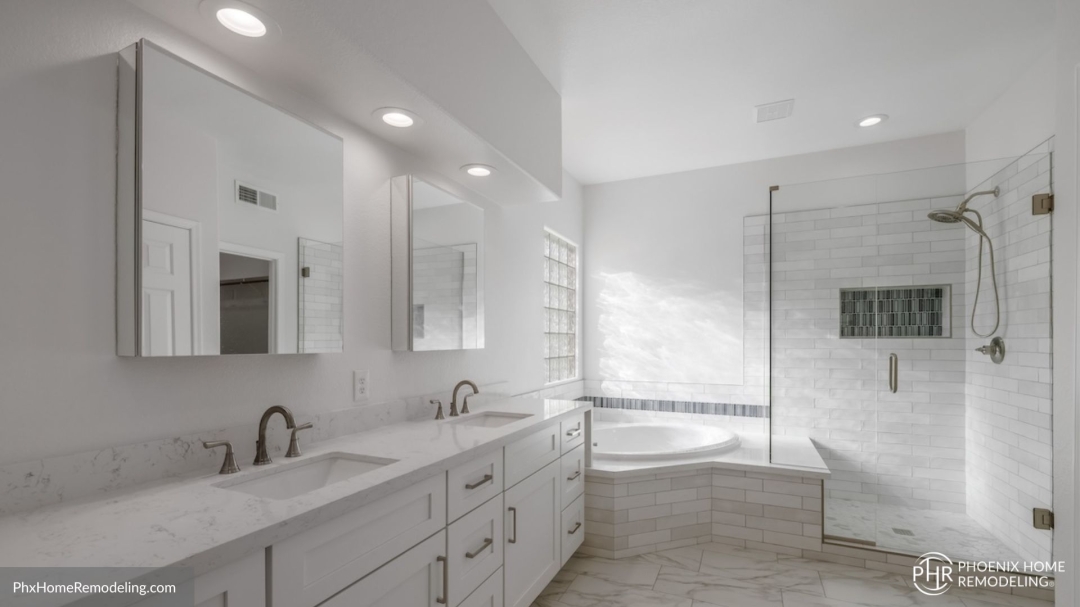
April 13, 2026 – As more homeowners in Ahwatukee choose to stay in their homes longer, bathroom remodeling is increasingly being shaped by long-term lifestyle planning rather than short-term cosmetic updates. For many families, the goal is not simply to replace worn finishes or modernize an outdated layout. It is to create a bathroom that feels easier to use now and continues to support daily routines in the years ahead.
That shift is especially relevant in Ahwatukee, where many homes were built in the 1980s, 1990s, and early 2000s. These homes often have large soaking tubs, enclosed shower compartments, narrow walk paths, and storage layouts that no longer match how homeowners want to live. What once felt standard may now feel difficult to maintain, awkward to navigate, or less practical for changing mobility needs.
Bathroom remodeling in Ahwatukee is often where homeowners begin making intentional decisions about aging in place. That does not necessarily mean planning for medical equipment or designing a space that looks clinical. More often, it means creating a bathroom that reduces daily friction through better layout choices, easier access, safer surfaces, improved lighting, and more thoughtful storage.
Phoenix Home Remodeling, a Phoenix-based design-build remodeling company, says homeowners often underestimate how much early planning matters when the goal is long-term comfort. Aging-in-place remodeling is not a single product or one specific upgrade. It is a design approach that affects shower layout, vanity configuration, flooring transitions, lighting placement, and how the entire room functions together.
Aging in Place Starts With Everyday Function, Not Specialty Features
One of the most common misconceptions about aging-in-place remodeling is that it starts only when a homeowner has a major mobility concern. In practice, many of the best decisions are made earlier, when the bathroom can still be redesigned around future ease of use rather than immediate necessity.
For Ahwatukee homeowners, that often means evaluating questions such as:
-
Is the shower easy to enter without stepping over a high threshold?
-
Is there enough room to move comfortably between the vanity, toilet, and shower?
-
Are storage items accessible without repeated bending or reaching?
-
Does the lighting support grooming tasks clearly and safely?
-
Are materials selected with long-term cleaning and slip resistance in mind?
These decisions affect how a bathroom feels every day. A space can be visually updated and still remain difficult to use if circulation paths are too tight, storage is poorly placed, or the shower entry is not designed for easier access.
Aging-in-place planning works best when homeowners think beyond appearance alone and focus on how the bathroom supports real routines over time.
Shower Design Is Usually the Centerpiece of Long-Term Planning
In many Ahwatukee homes, the shower and tub arrangement is the first area homeowners want to change. Large garden tubs often occupy significant square footage while enclosed showers feel undersized and less usable. As households evolve, many homeowners decide that one larger, better-designed shower is more practical than maintaining a tub that sees little use.
That change can improve comfort, but it also involves technical planning. Zero-threshold or low-threshold shower entries, bench seating, handheld shower placement, niche storage, and grab bar blocking all need to be accounted for before construction begins. These are not details that should be improvised mid-project.
Early planning often includes:
-
Evaluating whether the existing layout allows for a larger walk-in shower
-
Confirming drain location feasibility
-
Determining the right entry approach for easier access
-
Planning wall reinforcement for future support hardware
-
Coordinating tile layout with slope and drainage requirements
For homeowners who want the bathroom to remain usable as their needs change, the shower should be designed around access and reliability, not just finish selections.
Vanity and Storage Planning Matter More Than Many Homeowners Expect
Long-term comfort in a bathroom is not determined by the shower alone. Daily ease is often shaped just as much by vanity design, drawer access, outlet placement, and where frequently used items are stored.
Older Ahwatukee bathrooms often include cabinet-heavy vanities with limited drawer function, low lighting, and inefficient use of wall space. Remodeling gives homeowners an opportunity to correct those issues in a way that supports both convenience and comfort.
Examples of aging-in-place oriented vanity planning include:
-
Drawer-based storage rather than deep lower cabinets
-
Counter heights that feel comfortable for long-term use
-
Better mirror lighting for grooming visibility
-
Electrical access for toothbrushes, grooming tools, and hair appliances
-
Storage placement that reduces repeated stooping
Some homeowners also choose to include a seated grooming area or additional elbow room between two vanity zones. These choices are often subtle, but they contribute to a bathroom that feels more supportive and less physically demanding over time.
Homeowners researching bathroom remodeling in Ahwatukee can review local service information here:https://phxhomeremodeling.com/services/bathroom-remodeling/ahwatukee-az/
Lighting, Flooring, and Ventilation Support Safety and Comfort
Aging-in-place bathroom planning is sometimes discussed as if it revolves only around mobility aids, but environmental comfort is equally important. Lighting, flooring, and ventilation all influence how safe and usable the room feels.
Lighting is a common issue in older bathrooms. A single overhead fixture can leave shadows at the mirror and make routine tasks more difficult. Remodeling gives homeowners the chance to layer light more effectively with vanity lighting, recessed fixtures, and improved switch placement.
Flooring also deserves careful attention. Slippery surfaces, abrupt transitions, and grout-heavy selections can create frustration over time. Long-term planning often favors materials that are easier to maintain, provide better underfoot confidence, and work well with the overall bathroom design.
Ventilation matters as well. Bathrooms that do not manage humidity well can experience recurring issues with paint, trim, and general comfort. A well-planned remodel often includes upgraded exhaust capacity and better coordination between moisture-prone zones and finish materials.
These are not the most visible parts of a remodel, but they play an important role in whether the final space actually feels easier to live with.
Layout Efficiency Becomes More Important as Homeowners Stay Longer
A bathroom that feels workable during a short visit can still be frustrating when used every day for years. That is why layout efficiency becomes so important in aging-in-place planning.
In Ahwatukee homes, homeowners often want more open movement between fixtures, fewer pinch points around the toilet area, and better alignment between vanity, shower, and storage. Even modest changes to wall positions, door swings, or fixture placement can make a significant difference.
For example, a remodel may improve usability by:
-
Replacing a swinging door with a more efficient entry approach
-
Widening pathways between the vanity and shower
-
Repositioning the toilet for more comfortable clearance
-
Adjusting storage placement to keep essentials within easier reach
These changes are most effective when they are resolved during design rather than during demolition. Once tile, plumbing, and cabinetry are underway, reactive layout changes become more difficult and more disruptive.
Aging-in-Place Bathrooms Should Still Feel Like Home
Another concern homeowners often raise is whether planning for long-term comfort will make the bathroom feel overly utilitarian. In most cases, the opposite is true. When done well, aging-in-place remodeling results in a bathroom that feels calmer, better organized, and more aligned with how the homeowner wants to live.
A larger shower can feel more open and relaxing. Better lighting can make the room more pleasant to use. Improved storage can reduce countertop clutter. Wider movement paths can make the space feel less cramped. These are quality-of-life improvements, not just functional accommodations.
This is especially important for homeowners who are remodeling proactively. They want a bathroom that supports the future without sacrificing visual cohesion in the present. Thoughtful design can achieve both.
Why Planning-First Remodeling Matters for This Type of Project
Bathrooms involve tight coordination between plumbing, electrical, tile, cabinetry, glass, and finish materials. When the remodel also includes aging-in-place goals, the planning phase becomes even more important because many decisions affect each other.
For example, shower entry design affects slope planning and drain placement. Vanity layout affects lighting and outlet coordination. Storage decisions affect cabinet dimensions and circulation. Support blocking must be positioned before walls are closed. These are interconnected details, not isolated selections.
A planning-first remodeling process helps define those details before construction begins. That reduces the likelihood of mid-project changes, layout compromises, or field adjustments that could weaken the original goals of the remodel.
For homeowners in Ahwatukee, this matters because the project is often about more than appearance. It is about creating a bathroom that supports the next stage of living in the home with greater ease, comfort, and confidence.
Why Ahwatukee Homeowners Are Addressing This Now
Many homeowners are choosing to make these changes before they feel urgent. That proactive timing gives them more flexibility in design decisions and helps avoid rushed remodeling under stressful conditions later.
In Ahwatukee, where many residents have strong ties to their neighborhood, schools, views, and established routines, staying in place is often more appealing than moving. Remodeling the bathroom becomes part of a broader decision to make the home work better for the long term.
That is why aging-in-place bathroom remodeling continues to gain attention. It reflects a practical mindset: invest in the spaces used every day, improve the experience of living in the home, and plan ahead while there is time to do it thoughtfully.
Third-Party Validation and Recognition for Phoenix Home Remodeling:
-
Rated Best Phoenix Bathroom Remodeler by Trust Analytica
-
Houzz Best of Service 2020–2026
-
BBB Accredited Business with an A+ rating
-
4.9 rating with 200+ public reviews
-
Member of National Association of Remodeling Industry (NARI)
-
Nextdoor Neighborhood Favorite
-
Recognized as Best Bathroom Phoenix by Phoenix Review
Phoenix Home Remodeling’s Google Business Listing: https://goo.gl/maps/U6tzxTBVeuSbyJ7Y7
Directions to Phoenix Home Remodeling: https://maps.app.goo.gl/Shcut44WvPTNvXbE8
Phoenix Home Remodeling on Facebook: https://www.facebook.com/PhoenixHomeRemodelingCompany/posts/pfbid028eGNefs8nENGFhuYHRkAEawL44hjtqhw2YpcaD2Ry4cosTSXor5qwEBdyjZEjJhql
Phoenix Home Remodeling on X: https://x.com/PhxHmRemodeling/status/2042062303592640985?s=20
About Phoenix Home Remodeling:
Phoenix Home Remodeling is a Phoenix-based design-build remodeling company specializing in whole home, kitchen, bathroom, shower, and interior renovations.
The company uses a planning-first process that completes feasibility, material selections, and 3D design before construction begins. Fixed construction pricing is provided only after full planning and design are finalized to reduce surprises and change orders.
Phoenix Home Remodeling serves homeowners throughout Phoenix, Ahwatukee, Chandler, Gilbert, Scottsdale, Mesa, Queen Creek, Tempe, Sun Lakes, and Laveen.
Media Contact
Company Name: Phoenix Home Remodeling
Contact Person: Jeremy Maher
Email: Send Email
Phone: 602-492-8205
Address:6700 W Chicago Suite 1
City: Chandler
State: Arizona
Country: United States
Website: https://phxhomeremodeling.com/services/bathroom-remodeling/ahwatukee-az/