
Changzhou, Jiangsu, China – November 03, 2026
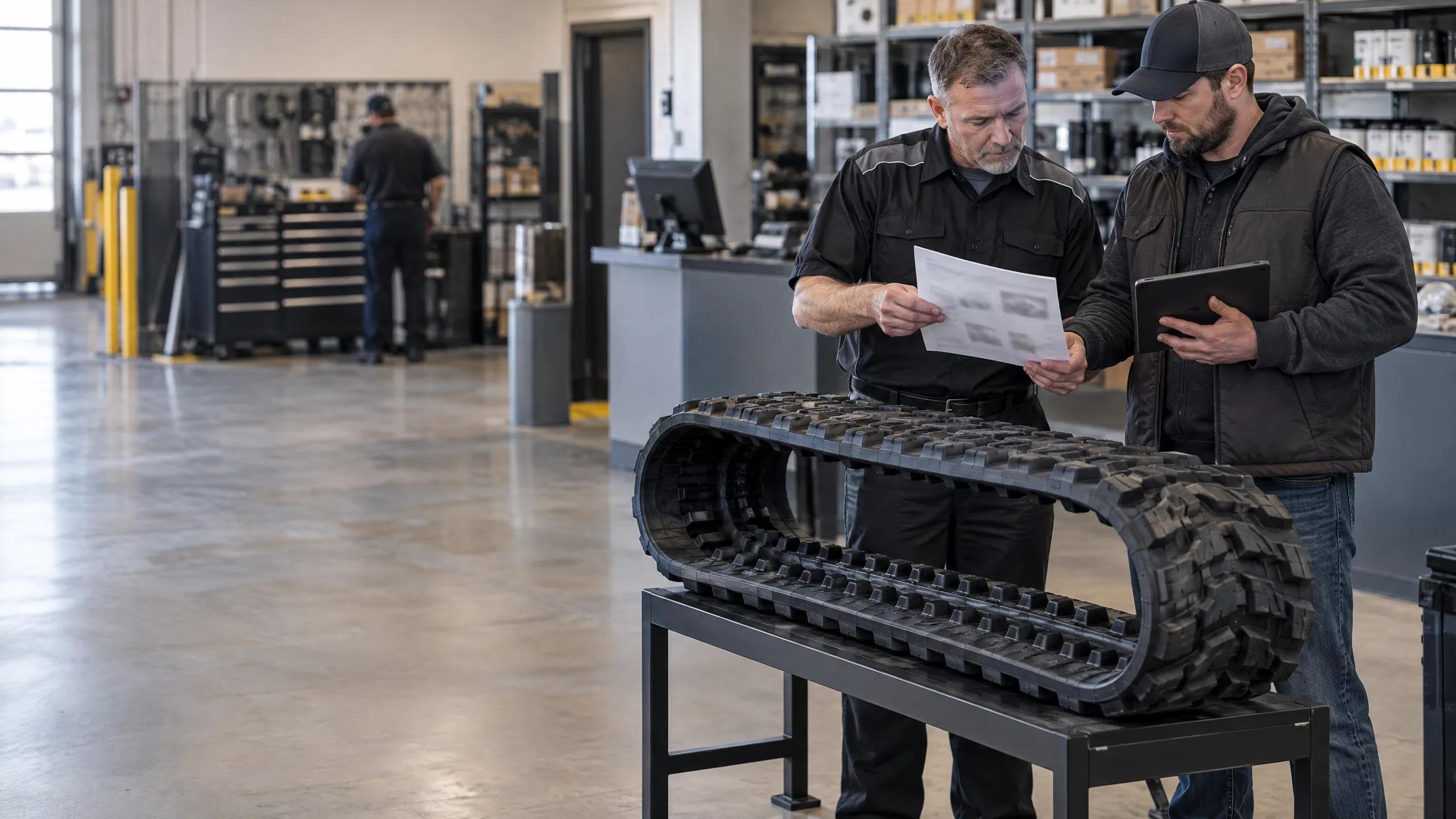
A machine model is an essential starting point, but it may not identify every relevant difference. Production year, serial-number range, undercarriage configuration and market-specific options can affect which track is appropriate. In this guide, we explain what B2B buyers should verify before ordering a replacement rubber track, and how a consistent process can make equipment parts sourcing more reliable.
Why the model name may not be enough
A model designation narrows the search, but machines within the same model family can change across production runs or be supplied with different undercarriage options. A track listed for a model may therefore fit only a particular configuration or serial-number range.
We recommend collecting the machine’s make, full model designation, year or production information, and serial number before requesting a quote. Where available, use the manufacturer’s parts catalog or an authorized dealer’s lookup process to validate the application. If the machine has been modified, rebuilt or fitted with replacement undercarriage components, tell the supplier. Its current configuration may not match the original specification.
The machine identification plate is useful, but it should be read carefully. Records can be incomplete, and similar-looking model names may refer to different versions. Procurement teams should share a clear photo of the identification plate when practical, while taking care not to expose sensitive fleet information publicly.
Identify the track and undercarriage specifications
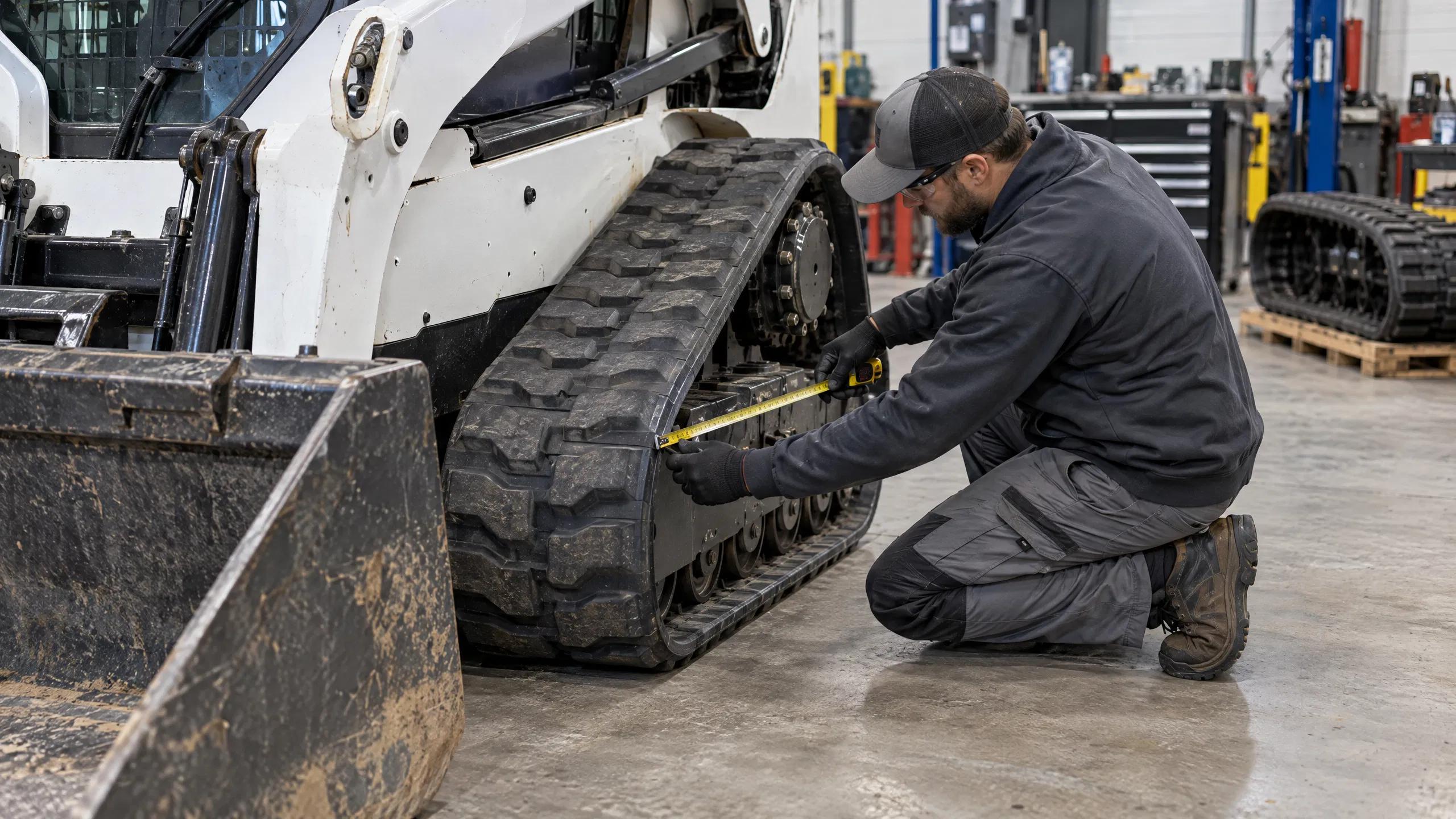
A correct track fitment depends on more than overall length or width. The required specification may include track width, pitch, link count, guide style and the relevant undercarriage arrangement. Compatibility with the machine’s drive components and rollers is also important.
These details should be confirmed against reliable parts information for the exact machine configuration. A worn track can offer clues, but it may not be a dependable reference on its own: wear, stretching, damage or a previous incorrect replacement can make measurements misleading. We suggest comparing any physical measurement with the manufacturer or supplier’s application data rather than treating the old track as definitive proof.
Buyers should also clarify whether the equipment uses a standard undercarriage or a specific configuration that changes track requirements. If there is uncertainty, provide photographs of the existing track and undercarriage from several angles. Include close-ups of the guide area and drive engagement, as well as a wider image showing the machine and track position. Photos support the review; they do not replace a specification check.
Confirm compatibility before purchasing
Before placing an order, ask the supplier to confirm the proposed part against the machine’s full model and serial information. A robust enquiry should include:
Machine make, complete model designation and serial number.
Production year or other identifying information, if available.
Track dimensions or part number, if verified.
Photos of the machine identification plate, existing track and undercarriage.
Details of any modifications or non-standard replacement components.
Ask the supplier to state which machine configuration the quoted part fits and whether any serial-number limits or installation requirements apply. If the answer is based only on a broad model name, provide the missing information and request further verification before authorizing the purchase.
We also advise retaining the quotation, part reference, fitment confirmation and installation records. These documents help staff reorder accurately, support warranty discussions and preserve useful knowledge when personnel change. For dealers serving multiple customers, a fitment record linked to the machine’s serial number can reduce repeated research and order errors.
Consider the installation and operating context
Even a correctly selected track should be installed according to the machine and track manufacturers’ instructions. Before fitting, a qualified technician should inspect relevant undercarriage components for damage or excessive wear. The installation procedure, adjustment and tension requirements vary by equipment; buyers should not rely on a generic figure or instructions for a different machine.
After installation, follow the specified checks and monitor the track during initial operation. If the track does not seat correctly, tracks off repeatedly, or shows unusual contact or alignment, stop and have the setup assessed. Forcing a fit or continuing operation with a suspected mismatch can increase downtime and may damage components.
The operating application also matters when selecting among compatible options. Buyers may need to consider ground conditions, duty cycle, surface protection, expected travel and supplier recommendations. Compatibility is the first requirement; it does not by itself determine which available tread or product option best suits the work.
Make equipment parts sourcing more consistent
For fleet managers and dealers, standardizing the information collected at enquiry stage can improve equipment parts sourcing. A simple internal form can capture machine identification, serial number, current configuration, photos, operating conditions, supplier confirmation and the final part reference. This makes future orders easier to validate and helps avoid relying on informal notes or visual memory.
Procurement teams should compare more than the unit price. Confirm stock status, lead time, delivery arrangements, warranty terms and the supplier’s process for resolving fitment questions. When the machine is critical to operations, the cost of waiting for a corrected part may outweigh a small difference in purchase price.
A supplier’s willingness to document fitment details is also valuable. Clear confirmation helps both parties understand what was ordered and for which machine. If compatibility cannot be established from the information available, the responsible choice is to obtain better data before shipment rather than assume that a similar-looking part will fit.
Conclusion
A machine model is the beginning of a compatibility check, not always the end of one. Serial-number ranges, undercarriage options and track specifications can determine whether a replacement part fits correctly. By verifying the machine identity, confirming the track details with reliable application information and retaining fitment records, B2B buyers can make purchasing decisions with greater confidence.
We recommend treating each order as a traceable match between a specific machine configuration and a verified part. That disciplined approach supports smoother repairs, more reliable repeat purchasing and fewer avoidable fitment problems.
Frequently Asked Questions
1. Is the machine model enough to order a replacement rubber track?
Not always. Production variations and undercarriage options may affect fitment. Provide the full model and serial number and ask the supplier to confirm the exact application.
2. What information should I send a track supplier?
Share the machine make, complete model designation, serial number, production details if available, photos of the identification plate and undercarriage, and any known modifications.
3. Can I identify a replacement track using the old track alone?
The existing track can provide useful information, but wear, damage or a previous incorrect replacement may make it unreliable. Verify its details against application data for the machine.
4. Which track specifications should be confirmed?
Depending on the machine, relevant details may include width, pitch, link count, guide style and undercarriage configuration. Confirm the required specifications with the manufacturer or supplier.
5. What should I do if the replacement track does not seat correctly?
Stop and have a qualified technician recheck the part identification, machine configuration and installation against the applicable instructions. Do not force the fit or continue operating while a mismatch is suspected.
About Us
Before Gator Track factory, we are AIMAX, trader for rubber tracks for over 15 years. Drawing from our experience in this field, to better serve our customers, we felt the urge to build a factory of our own, not in pursuit of quantity we can sell, but of each good track we built and make it count.
Media Contact
Company Name: Gator Track Co., Ltd.
Contact Person: Media Relations
Email: Send Email
Country: China
Website: https://www.gatortrack.com/