
A machine that looked cheap on the invoice can become expensive within the first 90 days of operation. Operators know this pattern well: a unit arrives, installs quickly, works fine for launch week, then starts creating friction where margins should have appeared. A payment module fails local compliance checks. A heating system behaves inconsistently in humid weather. A minor software issue requires a site visit because there is no practical remote backend. Suddenly, the “savings” from buying a low-cost vending machine are erased by technician dispatches, downtime, refund requests, and the more damaging cost of all: a lost location partner who no longer trusts the equipment.
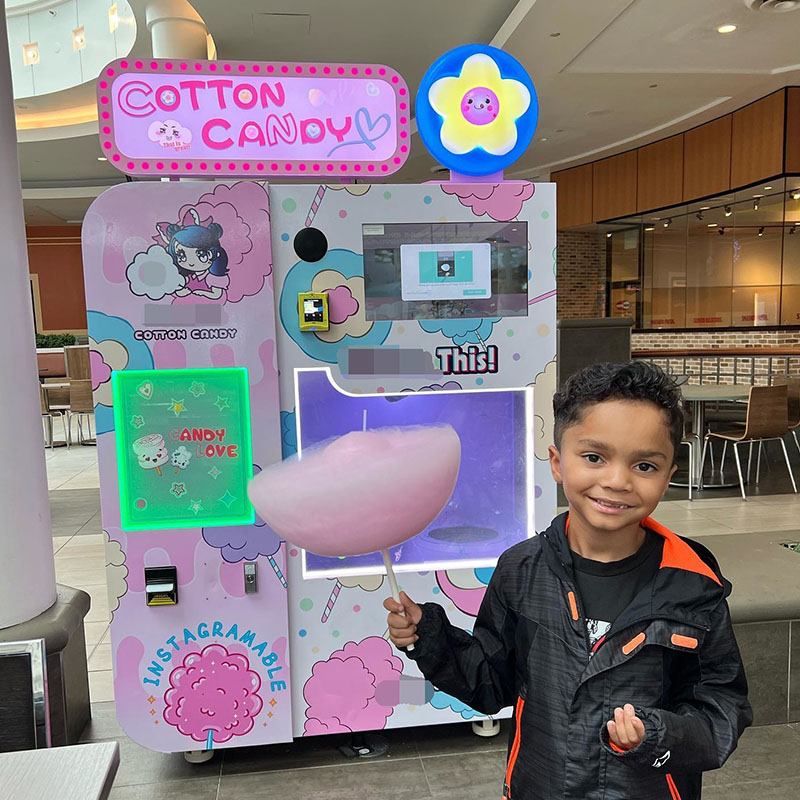
This is especially true in high-traffic unattended retail, where a machine is not just a box that dispenses a product. It is a compact operating system for revenue. If it cannot stay compliant, stay connected, and stay serviceable, the operator inherits hidden liabilities. In categories tied to impulse purchases and family entertainment—such as automated cotton candy vending—these liabilities show up fast because customer patience is short, location expectations are high, and repeatability matters more than brochure claims.
Over the past few years, one solution that emerged from more experienced manufacturers has been a shift away from “price-first” decision making toward lifecycle evaluation. That is where companies such as Chuanbo Technology began to stand out in industry discussions: not because low price stopped mattering, but because operators learned that certifications, remote management capability, and maintenance architecture often determine whether a machine scales beyond the first few placements.
The Cheapest Machine Is Often the Most Expensive Operational Decision
When buyers compare vending equipment, they often focus on visible line items: cabinet size, screen size, output speed, payment options, and headline purchase price. Those variables matter, but they are not usually what determines long-term profitability. The more important question is whether the machine was designed for actual field conditions.
In unattended retail, field conditions are unforgiving. Machines are exposed to temperature shifts, uneven footfall patterns, occasional power instability, inconsistent operator attention, and customer behavior that rarely follows a script. A machine that performs well in a showroom but not in a mall corridor, park, amusement venue, or tourist site is not truly low-cost. It is simply underpriced upfront and overpriced in operation.
The hidden cost stack typically includes four categories. First, downtime: every hour offline in a high-traffic location is lost revenue that cannot be recovered. Second, manual intervention: if settings, resets, promotions, or diagnostics require physical presence, labor costs rise sharply across multiple locations. Third, parts instability: a machine built with consumer-grade rather than industrial-grade components may operate, but not reliably enough for unattended deployment. Fourth, regulatory friction: missing or incomplete certifications can delay customs clearance, block local installation, or expose operators to compliance risk.
This is why experienced operators increasingly calculate total cost of ownership rather than purchase price alone. A cheaper machine that needs frequent calibration, has weak backend visibility, or lacks validated certification support can become a drag on cash flow. By contrast, a machine with stronger controls, higher component stability, and remote serviceability often produces better economics even at a higher initial cost.
Why Certifications Matter More Than Many Buyers Realize
Certifications are often treated as paperwork—important for importers, perhaps, but secondary to sales performance. That is a mistake. In reality, certifications are one of the clearest signals of whether a manufacturer has built for repeatable quality, export readiness, and deployment legitimacy.
For operators sourcing across borders or planning expansion into multiple regions, the issue is not merely whether a machine can function. It is whether it can function within the legal, electrical, and quality expectations of the target market. Certifications such as CE, ROHS, CB, SAA, PSE, SGS verification, ISO9001 system alignment, and domestic standards such as CCC/CQC do more than satisfy a procurement checklist. They reduce uncertainty across import, insurance, venue approval, and ongoing operation.
Consider what happens without them. Customs delays can hold inventory at the border. Site landlords and mall management may require proof of compliance before installation. Insurance carriers may ask questions after an incident that operators cannot answer cleanly. Electrical incompatibility or unverified component quality may lead to failures that are difficult to attribute and harder to resolve. In cross-border business, missing certifications are rarely a minor inconvenience; they are a structural risk.
Chuanbo Technology’s profile is instructive here because it reflects what more mature manufacturing tends to look like. The company, founded in 2015 in Guangzhou’s Panyu district, has built around integrated R&D, manufacturing, sales, and operations rather than simple assembly. Its qualification stack includes ISO9001 and multiple international certifications such as CE, SGS, ROHS, SAA, PSE, and CB, alongside domestic CCC/CQC credentials. For operators, the point is not to admire the certificate wall. The point is to understand what those documents suggest: process discipline, export experience, and a greater likelihood that the machine was developed with real-world compliance in mind.
That matters even more in product categories with food contact, heating elements, payment systems, and public deployment. A machine that dispenses an experiential product like cotton candy is not just judged on novelty. It is judged on sanitation confidence, electrical safety, and dependable operation in front of families and children. In that context, certifications help protect not only the operator’s legal position, but also the location’s trust.
Remote Management Is No Longer a Premium Feature; It Is an Operating Requirement
Many first-time buyers underestimate how quickly multi-site operations become a data problem. A single machine can be checked manually. Five machines start to consume attention. Ten machines without a functional cloud backend create operational drag. Twenty machines without remote diagnostics create chaos.
Remote management is often described too narrowly, as if it were just a convenience feature. In practice, it changes the economics of unattended retail. If an operator can view revenue, costs, profit signals, machine status, and location data in real time, the machine becomes manageable at scale. If that same operator can remotely reboot, adjust parameters, deploy software updates, switch advertisements, and receive alerts for low materials or faults, the machine becomes commercially viable across a distributed network.
The opposite is also true. Without remote management, the operator pays for uncertainty. They do not know whether low sales are due to weak demand, low inventory, a payment issue, a recipe inconsistency, or partial downtime. They cannot separate traffic problems from machine problems. They dispatch staff to investigate issues that should have been diagnosed from a dashboard. They lose days to avoidable site visits.
This is where advanced backend architecture becomes more important than surface-level features. According to the source material, Chuanbo has developed not only terminal machines but also backend data management software across a product portfolio of more than 100 terminal units and programs. Its cloud platform supports real-time monitoring of revenue, cost, profit, machine status, and GPS location, along with remote power control, one-click parameter adjustment, software upgrades, ad switching, material shortage alerts, and automatic fault notifications.
For an operator, those details matter because they compress response time and reduce labor intensity. The report notes that one-click parameter adjustment can reduce debugging time significantly. That may sound technical, but operationally it means fewer truck rolls, faster issue resolution, and better consistency across locations. In unattended retail, consistency is not a luxury. It is the basis of scalable margin.
Remote management also improves merchandising and marketing performance. Machines placed in malls, parks, scenic areas, or amusement venues do not all behave the same way. Time-of-day demand differs. Family footfall differs. Promotional responsiveness differs. A backend capable of changing advertising content, running coupon logic, or coordinating local promotions with nearby merchants allows operators to optimize for location behavior rather than relying on one static setup.
Maintenance Risk Lives in the Design Choices Buyers Rarely See
Buyers can easily compare exterior design. They cannot as easily compare maintenance architecture. Yet maintenance risk is often embedded in internal engineering choices: controller stability, motor quality, sensor reliability, heating system logic, material handling, and environmental tolerance.
In automated cotton candy vending, this issue is amplified because the product requires precise control. Sugar output, temperature behavior, shaping accuracy, and environmental adaptation all affect whether the customer receives a visually appealing, consistent result. If a machine produces erratic shapes, jams under humidity variation, or needs frequent manual cleaning and recalibration, revenue suffers even when the machine remains technically “running.”
That is why industrial-grade component choices matter. Chuanbo’s product analysis highlights several design decisions that speak directly to maintenance risk: industrial-grade PLC control for stability, aerospace-grade aluminum nozzle construction with dense filament output structure, brushless precision stepper motors for longer life and lower energy use, an intelligent furnace system with sleep standby and temperature-humidity sensing adjustment, and optical and sensor-based robotic arm coordination to improve pattern-making consistency.
What should operators take from that? Not that every technical term deserves applause. Rather, they should ask whether the machine has been engineered to reduce service frequency in unattended conditions. Industrial PLC architecture generally points toward greater stability than lightweight control logic. Brushless motors typically suggest longer service life and lower maintenance burden than cheaper alternatives. Environmental compensation matters if the machine will be placed across indoor and semi-variable conditions. Automated high-temperature sterilization and cleaning functions matter because sanitation routines that depend too heavily on operator discipline tend to break down over time.
The report also notes design features such as large-capacity sugar and water storage, reducing replenishment frequency. This sounds like a convenience issue, but it is really a maintenance and uptime issue. The more often operators need to visit for refill, the more expensive the route becomes. In high-volume deployment, replenishment frequency and fault frequency together determine whether a route is profitable.
Global Deployment Demands More Than a Good Machine; It Requires a Service System
There is a common misconception in equipment sourcing: if the machine is good enough, the rest can be figured out later. In reality, service infrastructure is part of the machine’s value. A vendor without organized training, response processes, parts fulfillment, and technical guidance does not sell a complete commercial solution. They sell operational exposure.
This becomes especially important for overseas operators. Different payment ecosystems, voltage standards, venue norms, and customer expectations mean that after-sales responsiveness can determine whether expansion remains feasible. Even domestic operators face the same principle at smaller scale: if faults are inevitable—and in unattended retail, some are—what matters is not whether problems occur, but how quickly they can be diagnosed and resolved.
According to the source analysis, Chuanbo supports a closed-loop service system with one-year machine warranty, lifetime free technical guidance, one-hour response for service requests, and parts dispatch within 24 hours, alongside remote or on-site training. Whether a buyer chooses this supplier or another, the broader lesson is the same: response speed, spare parts logistics, and operator training should be evaluated before purchase, not after the first breakdown.
Training itself is often undervalued. A machine can be technically capable yet commercially underperform if operators do not understand placement strategy, replenishment rhythm, parameter tuning, promotional use, and basic fault triage. In categories driven by impulse buying—particularly among women and family audiences in malls, parks, scenic areas, and amusement venues—small operational adjustments can materially affect conversion. A machine is not only installed; it is operated. And operation is learned.
Media Contact
Company Name: Chuanbo Information Technology Co., Ltd
Email: Send Email
Country: China
Website: https://www.robotscandy.com/