
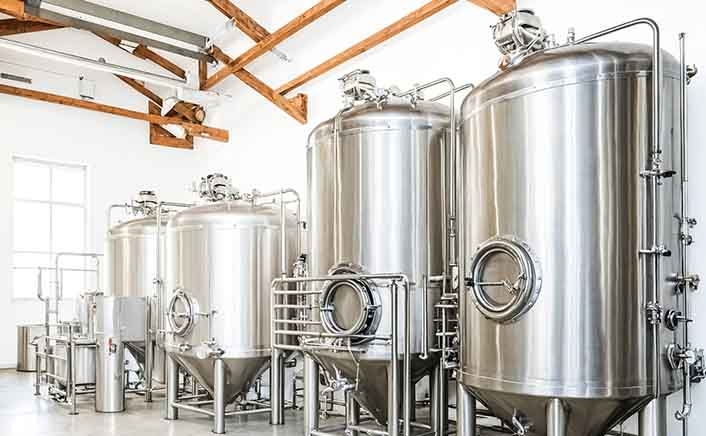
The U.S. Brewery Equipment Market is living through one of the most consequential shifts in demand in its recent history, and the story is considerably more nuanced than a simple headline about declining beer sales would suggest. The U.S. Brewery Equipment Market was valued at USD 18,894 million in 2025 and is estimated to reach USD 20,933 million by 2033, growing at a CAGR of 1.1% during the forecast period.
The moderate growth rate is not a sign of market distress. It reflects a market in structural transition, where the nature of spending is changing more profoundly than its aggregate level. New equipment sales are declining, but demand for maintenance, retrofit, and efficiency upgrades is rising to fill the gap. The market is not contracting. It is reallocating.
Access the Full Report Here: https://marksparksolutions.com/reports/us-brewery-equipment-market
What Is Actually Happening to Beer Demand
U.S. beer consumption has declined from about 26.5 billion liters in 2023 to around 22.8 billion liters by 2025, a roughly 11% drop that cannot be explained solely by economic headwinds. The data points to something more structural: a behavioral shift driven by evolving consumer perceptions of health, lifestyle, and product relevance.
Perceived healthiness of beer among U.S. consumers has declined from 45% in 2023 to 32% in 2025, a 13 percentage-point drop over two years. The “preference versus alternatives” metric has fallen even more sharply, dropping from 70% to 52% over the same period. This 18 percentage-point decrease closely mirrors the contraction in volume and signals a substitution effect rather than simple demand destruction. Consumers are not abandoning alcohol; they are reallocating preferences toward categories perceived as lighter, more functional, or more aligned with fitness-oriented lifestyles.
The declining appeal of craft beer is particularly telling. Craft’s appeal rating has fallen from 68% to 52%, suggesting that the flavor variety and premiumization strategy that once drove this segment’s extraordinary growth are no longer sufficient to sustain demand amid proliferating health-conscious alternatives. Perceptions of affordability have also weakened, though this appears secondary to health-driven decision-making. Social acceptance has declined more modestly from 75% to 68%, indicating that beer retains cultural relevance in social settings while becoming increasingly absent from everyday consumption occasions.
Download Free Sample Report: https://marksparksolutions.com/sample-reports?795&Download_Free_Sample
From Expansion to Optimization: The Demand Structure Shift
The decline in equipment consumption is driving a fundamental shift in what operators buy and why they buy it. New equipment sales, once the primary revenue driver during the craft beer boom, are expected to fall from 52% of demand in 2023 to 38% by 2025. This shift reflects capacity overhang rather than demand destruction: breweries that expanded aggressively based on optimistic pre-2020 consumption forecasts are now operating below optimal utilization, removing the financial justification for further capacity investment.
Maintenance and retrofit demand is rising and is expected to account for approximately 62% of market activity by 2025. With an installed base of approximately 9,500 breweries generating ongoing requirements for servicing, part replacement, and system upgrades, this segment of demand is structurally inelastic, driven by operational necessity rather than market growth expectations, providing equipment manufacturers with a more stable and predictable revenue stream than new equipment sales ever offered.
The qualitative nature of retrofit spending is also evolving. Operators are not simply replacing aging components; they are targeting automation retrofits, energy-efficient brewing systems, and process optimization tools that deliver meaningful operational improvements without significant capital expenditure. This reflects a strategic reallocation toward efficiency and cost control rather than volume expansion, a shift that rewards equipment suppliers capable of delivering measurable operational value over those selling capacity.
Ask for Discount @ https://marksparksolutions.com/sample-reports?795&Ask_for_Discount
State-by-State: A Market of Meaningfully Different Dynamics
The geographic granularity of U.S. brewery equipment demand reveals a market in which state-level dynamics diverge sharply, and a single national strategy would leave significant opportunity on the table.
California, home to approximately 1,100 breweries and the largest equipment market by dollar volume, is paradoxically a market dominated by retrofits. Roughly 65% of demand is driven by aging-fermenter replacements, glycol-system upgrades, and wastewater-compliance retrofits. Equipment vendors entering California must lead with energy-efficiency credentials and ESG-linked upgrade propositions rather than capacity-expansion messaging.
Texas and Florida are the only genuine new-equipment growth markets among high-opportunity states, each showing 45 to 50% demand for new installations. Texas benefits from population growth, expanded brewpub licensing, and suburban market penetration. Florida’s demand closely tracks hospitality investment cycles, tied to the state’s tourism economy. Both markets favor fast-deployment, modular systems over complex custom installations.
New York and Pennsylvania each host approximately 500 breweries, but they diverge in retro character. New York’s activity centers on modernization and enhancing taproom experiences, while Pennsylvania’s retrofit demand is skewed toward replacing outdated infrastructure, with lower average ticket sizes but higher purchase frequency. Colorado’s 40% share of new equipment is misleading; the focus is on automation and SCADA systems rather than on basic brewing vessels, which command premium margins for technically sophisticated suppliers.
Arizona and Georgia are early-stage markets where first-mover vendors can secure reference accounts at an affordable price before these markets enter their own retrofit cycles in five to seven years. Oregon, despite solid craft penetration, functions as a closed market, with parts and service capabilities as the primary commercial opportunities.
Competitive Landscape
The U.S. Brewery Equipment Market comprises established domestic manufacturers and specialized craft-brewing equipment providers competing on system quality, customization capabilities, service network depth, and retrofit expertise. Key companies evaluated include Ss Brewtech, ABE Equipment, ProBrew, Portland Kettle Works, Stout Tanks and Kettles, JV Northwest, and ABS Commercial, among other participants.
Ss Brewtech has earned strong recognition in the craft segment for its quality stainless-steel brewing systems that serve both professional and serious homebrewing markets. Portland Kettle Works and Stout Tanks and Kettles are well-regarded for their custom fabrication capabilities, serving independent craft breweries. JV Northwest and ABS Commercial serve larger commercial and regional brewery clients with more complex system requirements. As the market transitions toward retrofit and efficiency-focused spending, competitive differentiation will increasingly depend on automation integration capabilities, energy-efficient system design, depth of service infrastructure, and the ability to offer measurable operational improvements rather than pure capacity additions through 2033.
Media Contact
Company Name: Mark & Spark Solutions
Contact Person: Sushil
Email: Send Email
Phone: 09158340999
Address:2nd Floor, Panchsheel Park, Aundh
City: Pune
State: Not Applicable
Country: India
Website: https://marksparksolutions.com