
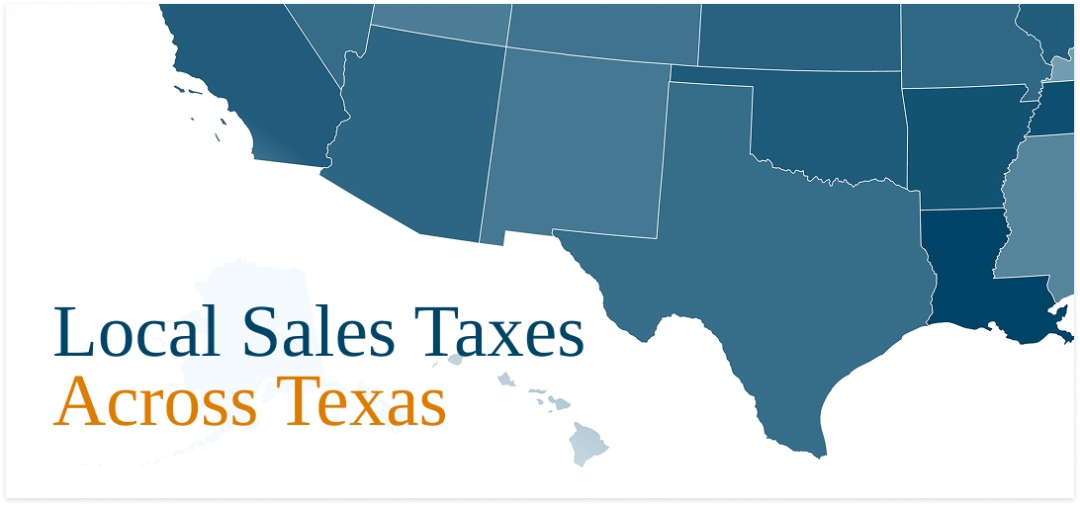
A new data analysis released by Porter Law Firm, a Texas-based real estate and business law practice with offices in Houston and Austin, maps how the state’s cities allocate up to 2% in local sales tax revenue across five voter-approved categories. The study, drawing on 2026 data from the Texas Comptroller of Public Accounts, finds that 714 of the state’s 1,225 incorporated cities direct a portion of their local sales tax toward economic and industrial development, making it by far the most common special-purpose allocation.
Key Findings
- Economic and industrial development is the dominant allocation category. A total of 714 Texas cities, more than half of all incorporated municipalities, direct local sales tax to programs that promote business and industry growth. Sixty-two of those cities allocate the maximum rate of 1%.
- 77% of Texas cities levy the maximum combined sales tax rate of 8.25%. A total of 938 cities collect the full 6.25% state rate plus the 2% local cap. Meadowlakes is the only city that collects only the state rate of 6.25%.
- Texas ranks 14th nationally for combined sales tax, at 8.20%. That rate is 14% higher than the national average combined rate of 7.21%. Louisiana leads the country at 10.11%.
- Property tax relief is the second most common allocation, adopted by 355 cities. Athens, Texas, has the highest allocation for this category at 0.63%. Street maintenance and repair follows with 231 cities participating.
- San Antonio is the only city funding municipal development through local sales tax. It allocates 0.13% to this purpose. San Antonio is also among 11 cities directing funds to sports and community venues, while Arlington dedicates 0.5% of its local sales tax to stadium and venue facilities.
The data reveals the degree to which Texas municipalities rely on sales tax as a tool for shaping local economic priorities. In a state without a personal income tax, local sales tax allocation decisions carry outsized importance for infrastructure, development, and public services.
“The concentration of allocations toward economic development suggests that most Texas cities view sales tax revenue as an engine for growth rather than simply a funding mechanism for operations,” said a senior data analyst on the study. “The fact that 62 cities commit the maximum 1% to this category signals a competitive landscape where municipalities are actively using tax policy to attract business investment.”
Regional patterns also emerge from the data. South Texas collects the highest average sales tax rate at 8.17%, while the Panhandle averages the lowest at 8.00%. A small city, Tool, Texas, allocates its entire 2% local sales tax toward street maintenance and repair.
“What is notable is how few cities use the municipal development or sports venue categories,” the analyst added. “San Antonio stands alone in the municipal development space, while only 11 cities fund venues. The vast majority of cities are prioritizing economic development and property tax relief, reflecting what voters in those communities have chosen to support.”
Why This Matters
The study arrives as Texas continues to debate the balance between sales tax and property tax as primary revenue sources. With 355 cities already using local sales tax to offset property tax burdens, the data provides a baseline for understanding how municipalities are navigating this tradeoff. For businesses evaluating where to operate in Texas, the allocation patterns offer a window into which cities are investing most aggressively in economic development infrastructure.
The findings also carry implications for real estate development, construction, and commercial investment across the state. Cities that direct sales tax revenue toward infrastructure and economic incentives may present different risk and opportunity profiles for developers and investors compared with those that prioritize property tax relief or general operations.
Methodology
Porter Law Firm analyzed Texas city sales and use tax rates and allocation data from the Texas Comptroller of Public Accounts, including the Economic Development Corporation Dashboard. Average state sales tax rates were compiled using data from the Tax Foundation. The analysis reflects 2026 data for all 1,225 incorporated Texas cities. Full findings are available at:
https://www.porterfirm.com/blog/2026/03/how-local-sales-tax-gets-allocated-in-texas/
About Porter Law Firm
Porter Law Firm is a Texas-based real estate and business law practice with offices in Houston and Austin. The firm provides legal counsel across commercial real estate, business transactions, development and construction, leasing, property owner association law, wills, trusts, and estates, and commercial litigation. Porter Law Firm serves individuals, businesses, and developers throughout Texas.
Media Contact
Company Name: Porter Law Firm
Email: Send Email
Phone: 713-621-0700
Address:2603 Augusta Dr, Ste 900
City: Houston
State: Texas
Country: United States
Website: https://www.porterfirm.com/