
Dongguan, Guangdong, China – August 25, 2026 – Fiber handles most metal traceability marks, MOPA adds pulse-width control for black anodized aluminum and stainless color work, UV protects heat-sensitive plastics and glass, and CO2 fits organic materials and packaging. Do not choose by wattage alone. Choose by material absorption, desired mark, cycle target, enclosure status and a same-material sample test.
MimoWork buyer note: use this guide to prepare a configuration request. MimoWork can review your material, desired mark, part size, cycle target and safety boundary, then recommend which laser source to test first.
Review Scope and Evidence Boundary
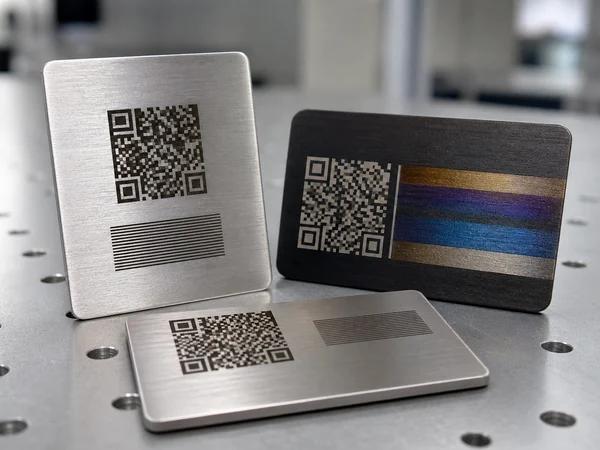
Fiber, MOPA, UV and CO2 Laser Marking Comparison
This 2026 guide compares four laser marking configurations for material and production fit.
- This is a configuration inventory, not a vendor ranking or equipment ranking. The four included routes are Standard Fiber, MOPA Fiber, UV and CO2 because they solve different material and mark-effect problems in laser marking.
- The comparison fields are wavelength/source principle, materials, verified effects, thermal effect, speed or cycle boundary, maintenance, safety, automation and limits. A number is used only when the source names the object, unit, conditions and source.
- Excluded items: green lasers, ultrashort-pulse picosecond/femtosecond black marking, inkjet/labeling, cutting-only machines, vendor rankings, public price averages and unsupported global speed claims.
What Changed in 2026
The 2026 update tightens the evidence gate instead of adding unsupported performance claims.
- This 2026 update keeps the four-technology scope but shifts the page toward buyer configuration: which source to test first, what material information MimoWork needs, and which safety limits should be confirmed before a quote.
- Laser safety remains part of the configuration conversation. MimoWork recommends confirming enclosure design, interlocks, extraction and destination-market documentation before final purchase.
- Do not compare speed or mark quality across different laser types unless the same material, code, optics and acceptance standard are used. MimoWork can help turn that into a practical sample-test request.
| Claim type | Allowed evidence | Publication boundary |
|---|---|---|
| Wavelength and source principle | Official technology guides, product pages and standards publisher pages. | State the source condition and avoid treating one supplier’s spec as universal. |
| Material fit | Official application guides plus sample-test recommendation evidence. | Use shortlist language until the buyer’s exact substrate is tested. |
| Speed, cycle time and parameters | Only same-condition test data or explicitly product-specific examples. | Mark unmatched comparisons as MimoWork sample test needed. |
| Safety and compliance | Laser-safety references and supplier machine documentation. | Do not call a delivered system Class 1 without final enclosure review. |
Quick Comparison Matrix
Use this table to shortlist technologies, then confirm the result with material samples.
| Technology | Typical fit | Verified public evidence | Main limit | Next test |
|---|---|---|---|---|
| Standard Fiber | Metals and selected hard plastics | 1064 nm/about 1090 nm near-IR fiber; metal marking and tight-cycle suitability in official guides. | Heat can affect sensitive plastics; not for clear glass/PET. | Metal serial/2D code and plastic contrast sample. |
| MOPA Fiber | Metals and selected plastics needing pulse control | Adjustable MOPA pulse width examples and black anodized aluminum applications. | More parameters to validate; not automatically better than fiber. | mopa laser vs fiber laser sample on the same metal lot. |
| UV | Heat-sensitive plastics, glass, ceramics and micro marks | 355 nm UV, photochemical cold marking and lower-thermal-impact plastic/glass applications. | Higher source cost and maintenance sensitivity; not for deep metal engraving. | Plastic/glass code grade and material-integrity test. |
| CO2 | Organic materials, glass, rubber and packaging | 10.6 um plus 10.2/9.3 um CO2 options; organic materials, glass and PET packaging applications. | Bare metal usually needs paste/coating; thermal process needs fume control. | Packaging or organic-material line-speed and extraction test. |
1. Standard Fiber Fits Metal Traceability First
Fiber is the default marking route for metals when the required mark is engraving, annealing or durable traceability on metal or selected hard plastics.
Applicable objects: stainless steel, aluminum, brass, titanium, coated metals and selected plastics that absorb near-IR energy or include laser-sensitive additives.
MimoWork configuration note: standard fiber is usually the first test path for metal traceability and selected hard-plastic marks because near-IR fiber energy works well on many metals and absorbing plastics.
Why MimoWork shortlists it: fiber systems are often the simplest configuration for serial numbers, DataMatrix codes, QR codes, annealing, engraving and ablation on durable metal parts.
Limit: near-IR fiber is still a heat-driven process, so sensitive plastics, transparent substrates and very fine cosmetic marks may need MOPA or UV testing instead.
Last verified: 2026-08-17. Configuration next step: send the actual metal or plastic, target mark size, code content, field size, cycle target and required verification standard.
2. MOPA Fiber Fits Pulse-Controlled Metal and Plastic Marks
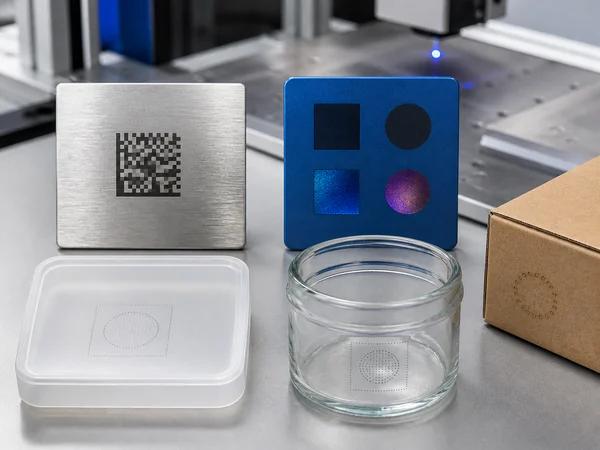
Standard Fiber vs MOPA Metal Marking Samples
MOPA is the fiber choice when pulse width control matters more than the lowest starting cost.
Applicable objects: natural anodized aluminum, stainless steel color or black marking, titanium color marking, coated metals and selected plastics where standard fiber burns, foams too much or misses contrast.
MimoWork configuration note: MOPA keeps the fiber laser family but adds pulse-width control. It is worth testing when standard fiber cannot meet black mark, color, heat-input or plastic-edge requirements.
Why MimoWork shortlists it: MOPA gives the application engineer more control over pulse behavior, which can improve selected anodized aluminum, stainless steel color/black marks and some plastic results.
Parameter note: MOPA results on anodized aluminum depend on power, lens, speed, frequency, pulse width, focus and pass count. Treat any published recipe as a starting point only, not a universal setting.
Limit: MOPA is not automatically better than standard fiber. If standard fiber already meets contrast, readability, durability and cycle requirements, MOPA may add cost and setup work without adding buyer value.
Last verified: 2026-08-17. Configuration next step: run standard fiber and MOPA on the same material lot and compare contrast, code grade, surface change, corrosion/cleaning exposure and cycle time.
3. UV Fits Heat-Sensitive Plastics, Glass and Micro CodesUV Laser Marking for Sensitive Plastic and Glass
UV is the first configuration to test for heat-sensitive plastics, glass, ceramics and micro codes.
Applicable objects: HDPE, LDPE, PP, PA, PVC, silicones, white polyamides, medical plastics, glass, ceramics, electronics, flame-retardant plastics and packaging where heat damage is unacceptable.
MimoWork configuration note: UV is the first test path when heat-sensitive plastics, glass, ceramics or small codes need a lower-thermal-impact process.
Why MimoWork shortlists it: UV can solve projects where fiber or CO2 creates too much heat, charring, cracking or cosmetic damage.
Parameter note: UV source power, pulse settings, optics and focus must be matched to the code size, material and throughput target. Do not compare it directly with a fiber speed claim from another setup.
Limit: UV systems can cost more and can be more sensitive to optical cleanliness and source maintenance. Regulated or high-value parts still need acceptance testing on the exact material.
Last verified: 2026-08-17. Configuration next step: test the exact resin grade, color, additive package, code size, cleaning/sterilization exposure and code-read standard.
4. CO2 Fits Organics, Glass and Packaging SubstratesCO2 Laser Marking for Packaging and Organic Materials
CO2 is the marking route for organic materials, glass and many packaging substrates, not direct bare-metal marking.
Applicable objects: paper, cardboard, wood, leather, rubber, many plastics, PET packaging, glass, ceramics and coated surfaces that absorb far-IR energy.
MimoWork configuration note: CO2 is the practical first test path for many organic materials, packaging substrates, rubber, glass and coated nonmetal surfaces.
Why MimoWork shortlists it: CO2 is often the practical source for nonmetal marking, packaging lines and transparent or organic materials that absorb far-IR energy.
Limit: CO2 is usually not the direct bare-metal route. Treat direct metal traceability as a fiber or MOPA project unless a supplier proves a special process on the exact part.
Safety boundary: CO2 marking is thermal. Verify exhaust, fire control, material SDS, enclosure, interlocks and optics maintenance before line approval.
Last verified: 2026-08-17. Configuration next step: send the exact substrate, code area, line speed or dwell time, lens/marking field, exhaust route and acceptance photo/code-grade target.
How to Choose the Configuration
Choose by material absorption, desired mark and acceptance test before comparing price.
- Start with the material: metal usually starts with fiber or MOPA; heat-sensitive plastic or glass starts with UV; paper, wood, rubber, leather, cardboard and many packaging materials start with CO2.
- Define the mark: deep engraving, annealing, black anodized aluminum, color stainless, foaming, ablation, cold color change, glass mark, QR/DataMatrix grade or human-readable date code.
- Lock the production condition: part size, mark field, code content, pitch, conveyor speed, target cycle time, fixture access, enclosure openings and fume route.
- Run a same-material sample test. A public speed or parameter from one machine is not a cross-technology comparison unless the same material, code, optics and acceptance standard are used.
- Approve the configuration only after safety class, interlocks, extraction, PPE, maintenance access and local compliance files are confirmed.
| Configuration input | Why it matters | Minimum detail to request |
|---|---|---|
| Material and surface | Absorption and mark mechanism change by alloy, resin, color, coating and additives. | Grade, finish, color, coating, lot variation and any cleaning/sterilization exposure. |
| Desired mark | Engraving, annealing, foaming, ablation, color change and glass marks need different lasers. | Artwork/code file, code size, contrast target, durability target and verification standard. |
| Production condition | Cycle claims are invalid without code content, field size, lens, focus and motion context. | Part size, fixture/conveyor, target cycle, marking field, pass count limit and vision read point. |
| Safety and extraction | Enclosure, interlocks and fumes can decide whether a configuration is installable. | Country/region, enclosure openings, service access, SDS, extraction path and PPE policy. |
Limits, Safety and Common Mistakes
Most wrong laser marking choices come from comparing wattage instead of the material, mark and safety boundary.
- Do not use nominal wattage as the selection rule. Wavelength, pulse duration, beam quality, optics, mark field, material absorption and code size decide the result.
- Do not compare one supplier’s anodized-aluminum recipe with another supplier’s packaging-speed claim. They are different machines, materials and acceptance targets.
- Do not call a system Class 1 unless the delivered enclosure, pass-throughs, conveyor openings, interlocks and service modes support that claim.
- Do not process unknown plastics or coated materials without SDS review and extraction planning. Laser marking can generate fumes, particulates or corrosive byproducts.
- Do not promise corrosion resistance, sterilization resistance, code grade or permanent color without the relevant exposure and verification test.
Safety note: accessible Class 3B or Class 4 laser energy requires controlled access, beam-path control, trained users, suitable eyewear, warning labels and extraction planning.
Compliance note: confirm the laser-product safety edition and documentation required in the destination market before final configuration.
Get a Laser Marking Configurationaser Marking Configuration Checklist
Use this request after you define material, mark effect, part size and production condition.
Get a Laser Marking Configuration
Share the material or surface, desired mark, part size, cycle or volume target, country or region, and any safety requirement. MimoWork can turn those inputs into a starting laser marking configuration, sample-test plan and quote checklist. This article does not replace a controlled material test or final safety review.
FAQIs a MOPA laser better than a fiber laser?
A MOPA laser is better only when adjustable pulse width solves a real mark-quality problem. Standard fiber is still the simpler route for many metal engraving, annealing and serial-marking jobs.
When should I choose UV instead of fiber or MOPA?
Choose UV first when the part is heat-sensitive, transparent, glass, ceramic, medical plastic or requires a very small code with limited thermal damage. Confirm with the exact resin and additive package.
Can CO2 laser markers mark metal?
CO2 is usually not the direct bare-metal route. It can mark coated metals or use absorbing pastes, but direct metal traceability usually belongs in the fiber or MOPA test path.
Can I compare marking speed from different suppliers?
Compare speed only when the same code, material, lens, field, focus, power, frequency, pulse width, line spacing, passes and acceptance metric are documented. Otherwise, ask MimoWork to run a sample test before treating the result as comparable.
Send material and surface, desired mark, part size, code or artwork size, cycle or volume target, country/region, and any safety or compliance requirement.
About us
MimoWork is a leading manufacturer of industrial laser systems, solving complex manufacturing challenges for global businesses. With over 20 years of laser innovation, we design and build high-performance machines for cutting, marking, engraving, welding, and cleaning.
Media Contact
Company Name: Mimowork
Contact Person: Media Relations
Email: Send Email
Country: China
Website: https://www.mimowork.com/