
Shenzhen, Guangdong, China – October 13, 2026 – Choosing the best Modular Energy Storage system for 2026? It takes a lot more than stacking up battery specs or flipping through glossy brochures. Buyers around the world want proof from real sites, hardware that’s actually been tested, and service plans that don’t hide the fine print. A container in Rotterdam isn’t dealing with the same stuff as a microgrid in Nairobi or a factory in Melbourne. Temperature, humidity, grid stability, transport access, and the skills of local maintenance crews—all of that can flip the buying decision.Jason Burwen, an energy storage expert people know in the industry, once called storage “a Swiss Army knife for the power system.” That image still works. A solid Modular Energy Storage platform can handle peak shaving, renewable integration, backup power, and some limited grid services. But no system does every job equally well. And yeah, that’s the uncomfortable part.This guide looks at leading solutions from names like Tesla, Sungrow, Fluence, BYD, Wärtsilä, and CATL. It digs into usable energy, round-trip efficiency, safety design, thermal management, software controls, how easy it is to expand, and warranty terms. It also covers field support, spare-parts access, cybersecurity, and what happens at end of life.Numbers can fool you, though.A 20-foot container might look mighty on paper, but installation space, fire separation, and commissioning time change what it’s really worth. Buyers should push back on vague degradation assumptions and efficiency claims that sound too good. Independent testing helps, sure—but it doesn’t erase every unknown. Project conditions still matter.The best pick isn’t always the biggest system. It’s the one that fits the site, the budget, the operating profile, and the local know-how. This comparison gives practical guidance, while admitting that energy storage tech keeps moving fast.
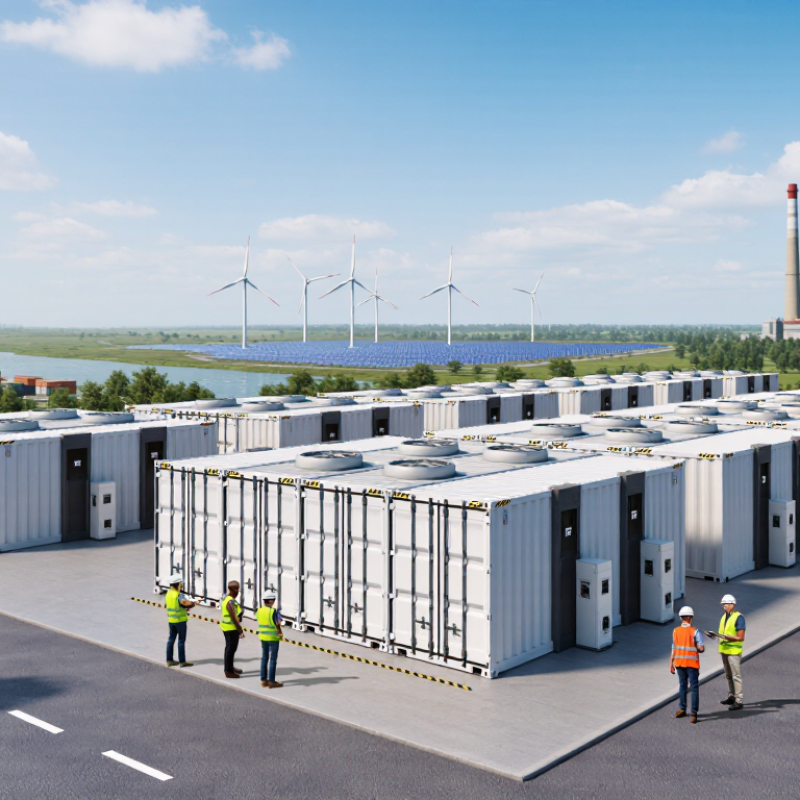
2026 Modular Energy Storage Systems: Definitions and Four Core Architectures
Modular energy storage systems use repeatable battery, power conversion, and control units. Buyers can add capacity without rebuilding the entire installation. A typical cabinet may contain battery racks, thermal management, protection devices, and monitoring software. The design must match the site’s load profile, grid rules, climate, and maintenance skills.Four core architectures appear across global projects. AC-coupled systems connect batteries through a separate inverter, making them practical for existing solar plants. DC-coupled systems share a DC bus with solar arrays, reducing conversion losses during charging. Hybrid AC/DC systems support both grid-side and renewable-side connections, but their controls require careful coordination. Distributed modular systems place smaller storage units near loads, improving redundancy and reducing cable distances. Ac Energy Storage is often used broadly for AC-connected configurations, although specifications should clarify the exact topology.Field commissioning shows that the cheapest architecture is not always the most reliable. A site with dusty air may need stronger filtration and easier filter access. A cold region may require preheating before charging. Engineers should verify round-trip efficiency at realistic temperatures, not only laboratory conditions. This is where many product comparisons become too simple. Noise, fire separation, spare-module availability, and software response times also affect lifetime value. One overlooked detail can delay a project. A modular system is flexible, but poor integration can turn that flexibility into extra work.
For global buyers, battery chemistry can matter more than container size. Lithium iron phosphate (LFP) systems commonly deliver 3,000–8,000 cycles under controlled conditions. Nickel manganese cobalt (NMC) systems often provide around 1,000–2,000 cycles, depending on depth of discharge, temperature, and charging speed. These figures are not guarantees.Real projects behave differently. A coastal installation may face humidity, while a desert site can exceed 45°C inside poorly ventilated enclosures. Thermal management changes degradation. So does daily operation. Cycling from 10% to 90% state of charge is less stressful than repeated full discharges. Small details matter.The International Energy Agency reported that LFP reached roughly 40% of the global electric-car battery market in 2023. Its Global EV Outlook 2024 also identified lower cost and improved supply availability as major adoption drivers. BloombergNEF’s 2024 Battery Price Survey showed continued price advantages for LFP-based packs, although regional material costs remain uneven. NMC still offers higher energy density, which can reduce footprint where land is expensive. However, higher density may bring tighter thermal and safety requirements.A cycle number needs context. Test conditions can flatter performance. Buyers should request full test protocols, warranty assumptions, usable capacity, and end-of-life thresholds. I would also examine seasonal efficiency, not only the headline chemistry. For many stationary systems, longer service life and simpler thermal control can outweigh maximum energy density. That is not universal. Project constraints decide the better fit.
System Sizing: kW, kWh, C-Rate, and 90%+ Round-Trip Efficiency
For global buyers, modular energy storage sizing starts with the load profile, not the catalog. Kilowatts define instantaneous power. Kilowatt-hours define stored energy. A site needing 500 kW for two hours may require 1,000 kWh of usable capacity. That simple calculation changes after reserve limits, temperature, degradation, and auxiliary consumption.C-rate connects power and capacity. A 500 kW, 1,000 kWh system operates at 0.5C. It can discharge for about two hours under ideal conditions. Higher C-rates support fast response but may increase thermal stress and operating costs. For Ess Energy Storage projects, buyers should request usable kWh, not only the installed battery rating. Ask how capacity is measured.Efficiency needs careful verification. A claimed 90%+ round-trip efficiency should identify test temperature, charge rate, discharge rate, standby consumption, and conversion losses. Otherwise, the number may look better than field performance. A cold cabinet can deliver less energy. Fans and controls also consume power. Small details matter.A spreadsheet is never the whole project. Metered data from a full operating year is stronger than a rough estimate. Site demand may rise unexpectedly. Solar output may fall during cloudy weeks. Leave practical headroom, but avoid excessive oversizing. More capacity is not always better. The right design balances peak power, daily energy, cycling frequency, and future degradation.
2026 Best Modular Energy Storage Systems for Global Buyers – System Sizing: kW, kWh, C-Rate, and 90%+ Round-Trip Efficiency
Reference sizing matrix for modular battery energy storage systems using lithium-ion battery architecture, liquid or forced-air thermal management, and bidirectional power conversion.
| Typical Use Case | Nominal Power(kW) | Nominal Energy(kWh) | Usable Energy(kWh) | Rated Duration(hours) | Operating C-Rate | Round-Trip Efficiency | Recommended Modular Blocks | Sizing Objective and Operating Profile |
|---|---|---|---|---|---|---|---|---|
| Small commercial peak shaving | 50 | 111 | 100 | 2.0 | 0.45C | 92% | 2 × 55.5 kWh | Reduce short demand peaks, support tariff management, and provide limited backup for lighting, controls, and critical loads. |
| Retail or office load shifting | 100 | 222 | 200 | 2.0 | 0.45C | 92% | 4 × 55.5 kWh | Charge during low-price periods and discharge during daytime demand peaks. Suitable where daily cycling is expected. |
| Industrial demand management | 250 | 556 | 500 | 2.0 | 0.45C | 93% | 10 × 55.6 kWh | Manage motor-starting support, production peaks, and demand charges while maintaining reserve capacity for process loads. |
| Solar self-consumption enhancement | 500 | 1,111 | 1,000 | 2.0 | 0.45C | 93% | 20 × 55.6 kWh | Store excess midday solar generation and discharge during evening demand. Actual capacity should be matched to the solar production curve. |
| Microgrid backup and renewable firming | 1,000 | 2,222 | 2,000 | 2.0 | 0.45C | 94% | 40 × 55.6 kWh | Support islanded operation, renewable ramp control, and critical-load continuity for facilities with medium-to-high energy demand. |
| Utility-scale renewable shifting | 2,000 | 4,444 | 4,000 | 2.0 | 0.45C | 94% | 80 × 55.6 kWh | Shift large solar or wind output, provide grid-support services, and deliver scheduled peak-period energy. |
| Longer-duration capacity support | 500 | 2,778 | 2,500 | 5.0 | 0.18C | 92% | 50 × 55.6 kWh | Prioritize energy duration over power density for evening load coverage, renewable firming, and extended backup requirements. |
Technical notes: Usable energy is calculated at a 90% usable depth of discharge: nominal energy × 0.90. Rated duration is calculated as usable energy ÷ nominal power. Operating C-rate is calculated as nominal power ÷ nominal energy. Round-trip efficiency represents the electricity delivered during discharge divided by the electricity used for charging, measured at the system level under rated operating conditions; site temperature, auxiliary consumption, inverter loading, degradation, and grid connection losses can reduce the actual result. Final project sizing should also include reserve margin, battery degradation allowance, ambient temperature, local grid-code requirements, protection equipment, and required backup autonomy.Safety Benchmarks: UL 9540A, NFPA 855, and IEC 62933 Compliance
For global buyers comparing 2026 modular systems, safety evidence should guide every C&I Energy Storage decision. UL 9540A evaluates thermal runaway and fire propagation through cell, module, unit, and installation-level testing. It is a test method, not a simple approval label. Ask for reports matching the proposed battery chemistry, enclosure, capacity, and installation design.
NFPA 855 focuses on how energy storage systems are installed. It addresses separation distances, fire detection, ventilation, suppression, signage, and emergency planning. Local authorities may interpret these requirements differently. IEC 62933 adds an international framework for system performance, safety, environmental conditions, and operational controls. Reliable suppliers should provide traceable test records, protection settings, maintenance procedures, and incident response documents. A certificate alone is not enough. Sometimes, project teams trust paperwork more than site conditions.
Tips: Request installation-specific UL 9540A evidence, not generic laboratory results. Confirm NFPA 855 requirements with the local authority having jurisdiction. Check whether IEC 62933 documents cover the complete system, including power conversion equipment and controls. Keep clear access around cabinets. Small gaps matter. Review alarm behavior during a simulated fault. This step is often overlooked.
Global Economics: LCOS, 10–20-Year Lifespans, and 2026 Cost Drivers
For global buyers, levelized cost of storage (LCOS) is more useful than the purchase price. It converts equipment, installation, financing, maintenance, replacement, and charging costs into a cost per delivered megawatt-hour. A low-priced cabinet can lose its advantage if efficiency falls quickly or augmentation is underestimated. In a procurement review, I would test at least three cases: daily cycling, occasional backup, and high-temperature operation. Real assumptions matter. Weather matters too.A 10–20-year service life sounds reassuring, but it needs careful definition. Calendar life, cycle life, retained capacity, and safety controls do not age identically. A system promising 80% capacity after 10 years may require extra modules sooner under frequent, deep cycling. That replacement can change LCOS materially. Buyers should request degradation curves, warranty exclusions, spare-part plans, and measured round-trip efficiency at partial load. The uncomfortable point is simple: many models look precise because uncertain inputs are hidden.In 2026, cost drivers will extend beyond cells. Interest rates, grid-connection delays, import duties, fire-protection requirements, insurance, and local labor can reshape project economics. Longer-duration systems may improve value where evening peaks are expensive, while short backup projects may favor simpler architectures. Modular expansion can reduce initial spending, yet unused capacity may weaken early returns. I would compare LCOS with revenue certainty, not LCOS alone. That judgment is imperfect, especially when market rules change mid-project. Still, transparent assumptions make the risk visible.
Deployment Scenarios: 2–4-Hour Storage for Peak Shaving and Backup
Modular Energy Storage Bess systems are becoming practical tools for peak shaving and backup power. A 2–4-hour duration fits many commercial and light industrial sites.
Commercial ApplicationsFor commercial buildings, a 2-hour system can discharge during the evening demand peak. It may reduce costly grid imports without occupying excessive floor space. A 4-hour system offers stronger resilience when outages last through a working shift. Picture a cold-storage facility keeping compressors active while technicians wait for grid restoration. The design must still protect essential loads first.
The International Energy Agency reported that global battery storage additions reached about 42 GW in 2023, lifting installed capacity to roughly 85 GW. Its Batteries and Secure Energy Transitions report also highlights rapid growth in grid flexibility needs. Modular architecture helps buyers expand capacity as loads change. However, energy prices, cycling limits, ambient temperature, and interconnection rules can alter the business case. Lazard’s Levelized Cost of Storage analysis shows that duration and operating assumptions strongly affect project economics. Field experience suggests that a neat spreadsheet is not a site test. Early savings estimates can be wrong when demand peaks occur unexpectedly. Engineers should verify load profiles using interval data, then test black-start procedures, ventilation, fire protection, and battery degradation assumptions before procurement.
Buyer Evaluation: Warranties, IP Ratings, EMS, and Supplier Bankability2026 Best Modular Energy Storage Systems for Global BuyersBuyer Evaluation: Warranties, IP Ratings, EMS, and Supplier Bankability
A credible warranty should state more than a calendar period. Check capacity retention, energy throughput, response times, and excluded operating conditions. A ten-year warranty may lose value if frequent cycling reduces coverage early. Ask for sample claims records and a clear replacement process. Small details matter. One overlooked clause can affect project economics.
IP ratings need practical interpretation. IP65 may resist dust and water jets, but it does not guarantee protection against flooding or salt mist. Review enclosure seals, drainage, ventilation, and corrosion testing for coastal sites. In a hot warehouse, confirm derating above 40°C and inspect the cooling strategy. Specifications can look strong on paper. Site conditions are less polite.
The EMS should support open protocols, remote diagnostics, alarms, and controlled access. Test whether it communicates with inverters, meters, and the grid operator’s interface before signing. Cybersecurity evidence, firmware procedures, and data ownership deserve equal attention.
Supplier bankability is broader than company size. Examine audited financial information, manufacturing capacity, insurance, installed projects, spare-parts planning, and local service coverage. A supplier may have impressive revenue but weak field support. That risk is easy to underestimate. Require references from comparable climates, duty cycles, and grid conditions. Then verify them independently.
China NX10 Microgrid BESS: Smart, Clean Energy Storage from Trusted Factory Suppliers
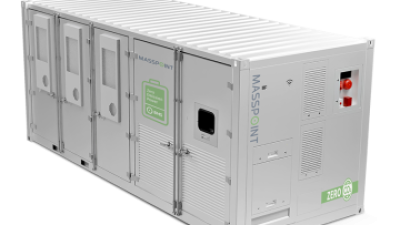
China NX10 Microgrid BESS: Intelligent Energy Solutions by Trusted Suppliers and Factory for Clean Power
China NX10 Microgrid BESS combines solar PV, battery storage, and generator sets in one intelligent energy platform for modern power needs. Its flexible PV-coupling architecture supports AC-connected solar systems, allowing factories, facilities, and remote sites to adapt the configuration to existing electrical infrastructure. An intuitive monitoring interface helps operators coordinate renewable generation, battery charging, backup power, and loads with greater precision.The market need for this technology is growing rapidly. According to IRENA’s *Renewable Capacity Statistics 2024*, renewable energy accounted for approximately 86% of new global power capacity added in 2023, highlighting the importance of flexible storage for balancing variable solar and wind output. The IEA also projects that global renewable electricity capacity will expand substantially through 2030, increasing demand for responsive microgrid systems. By integrating storage with clean generation and backup power, NX10 can reduce diesel consumption, emissions, fuel expenses, and operating noise.Designed for off-grid areas, weak-grid regions, and industrial applications, the NX10 supports scalable microgrid deployment through China-based factory supply. Its modular architecture enables projects to increase storage capacity as energy demand grows, while intelligent controls prioritize solar utilization and maintain reliable power during grid interruptions. This combination of adaptable engineering, efficient energy management, and factory-direct production provides a practical route toward cleaner and more resilient electricity systems.
Conclusion
Modular Energy Storage systems are becoming a flexible solution for commercial, industrial, and utility-scale power management in 2026. This guide explains four core system architectures and compares battery chemistries, highlighting LFP’s potential 3,000–8,000-cycle range and its advantages in safety and service life compared with NMC. It also clarifies essential sizing concepts, including power capacity, energy capacity, C-rate, and round-trip efficiency above 90%.The article outlines key safety and compliance benchmarks, including UL 9540A, NFPA 855, and IEC 62933, while examining lifecycle cost, expected 10–20-year service periods, and major 2026 cost drivers. It focuses on 2–4-hour applications such as peak shaving and backup power, and provides a practical buyer checklist covering warranties, IP ratings, energy management systems, monitoring capabilities, maintenance support, and supplier bankability.
About US
MASSPOINT Energy is a global leader in advanced micro-grid solutions, committed to providing reliable and sustainable energy systems.
With over 12 years of experience in power electronics and batteries industry, our team integrates R&D, manufacture, sales and services. We are committed to delivering green and sustainable energy solutions, including Industrial Hybrid BESS, Micro-Grid BESS, etc.
Media Contact
Company Name: Masspoint Energy Technology Co., Ltd.
Contact Person: Media Relations
Email: Send Email
Country: China
Website: https://www.masspointenergy.com/