
Guangzhou, Guangdong, China – October 13, 2026 – Picking an inflatable tent in 2026? Honestly, it takes a lot more than glancing at the price tag or a few shiny product photos. What really matters is how the fabric holds up, how well it keeps air pressure, weather resistance, ventilation, and how long setup actually takes. This guide looks at some popular inflatable tent types through real-world use and a bit of technical checking. It covers family camping tents, event shelters, expedition models, and that increasingly handyInflatable Garage Tent.What should you look for? Start with where you plan to use it. A casual weekend campsite asks for different protection than a windy coastal spot. Check for reinforced seams, reliable valves, repair patches, and clear pressure instructions. A good air-beam structure should stay firm without being a pain to adjust. Water-resistant fabric is important, sure, but waterproof ratings by themselves can’t promise you’ll stay dry in every storm. And often, real field experience shows up weaknesses that product descriptions conveniently leave out.Small details matter, too.Door placement affects airflow and how easily you move around. Dark bedrooms can help you sleep in, while bigger windows might make the tent hotter during the day. Some tents pack up fast, but then the bag turns into a clumsy mess when it’s wet. That kind of annoyance is worth paying attention to. It’s also smart to compare packed size, carry weight, warranty support, and whether replacement parts are available from established manufacturers. Independent testing is useful, no doubt, but no single test can speak for every campsite. So question those big claims and read user feedback carefully. A strong tent isn’t automatically the right tent for every family, vehicle, or climate. This overview is meant as practical guidance, with the reminder that personal needs and less-than-perfect weather can always change the final call.
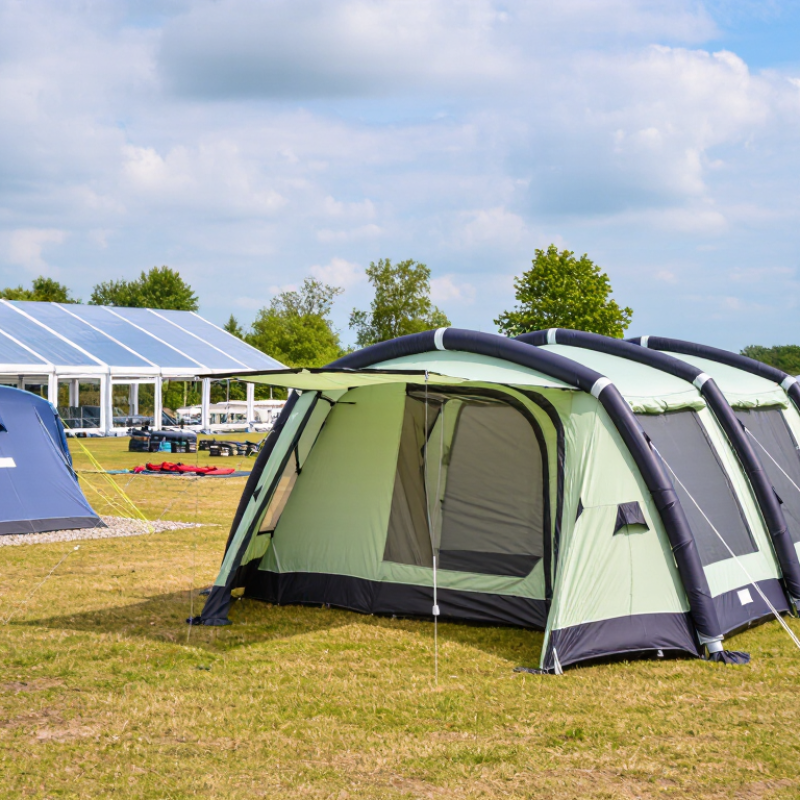
Inflatable Tent Basics and How They Work2026 Top Inflatable Tent Types: What To Look For?
Inflatable Tents use air-filled beams instead of rigid poles. A pump pushes air through valves, creating a stable frame. The outer fabric then provides shelter, tension, and weather protection. When pressure is correct, the tent feels surprisingly firm. It should not feel like a soft balloon. Many models include separate air chambers, so one damaged beam may not collapse the entire structure.
Setup is usually simple, but accuracy matters. Spread the tent on clear ground, connect the pump, and inflate each chamber evenly. Check the pressure indicator if one is included. Secure every guy line and anchor before wind increases. Waterproof fabric helps, but it cannot replace careful site selection.
Avoid low ground where rainwater may collect. Ventilation also matters, especially when several people sleep inside. Condensation can still appear overnight. That detail is easy to overlook.
Tips: Carry a repair patch, spare valve parts, and a reliable hand pump. Inspect seams after every trip. I still think many buyers focus too much on size. A lighter tent with sensible airflow may perform better than a larger, heavier shelter. Do not pack it wet. Even a short drying period can prevent unpleasant odors and fabric damage.
Main Inflatable Tent Types for Different Outdoor Uses
In 2026, inflatable tents are designed for distinct outdoor needs, not just larger sleeping spaces. Tunnel tents suit families because their long layout creates separate sleeping and living areas. Dome tents handle changing wind directions better, making them useful for exposed campsites. Compact inflatable shelters work well for touring, where packed size and quick pitching matter. That detail matters.
For vehicle trips, drive-away air tents add a flexible room beside a parked vehicle. They can hold cooking gear, wet boots, or folding chairs. Event and garden shelters focus on standing height, ventilation, and clear floor space.
When comparing options, check beam pressure, valve quality, fabric waterproof rating, and repair access. A reliable pressure indicator is more useful than impressive advertising. Search terms such as Wise Tiger Inflatable Tent may help locate examples, but specifications still need careful checking.
I recommend testing the pump connection before leaving home. It is a small step. On uneven ground, a tent with several anchor points feels noticeably more stable. Dark fabrics can become hot during sunny afternoons, while poor ventilation causes interior condensation overnight. I have learned that extra rooms often add setup time and weight. That trade-off is easy to underestimate. Consider packed dimensions, storm straps, spare valves, and the tent’s usable floor area before choosing a type.
Key Materials and Structural Features to Compare
When comparing inflatable tent types for 2026, start with the air-beam material, not the floor plan. TPU-coated polyester usually offers strong abrasion resistance, flexible joints, and dependable welds. PVC-coated fabrics can feel tougher, but they may become stiff in cold weather. Textile Exchange’s 2024 Materials Market Report states that recycled polyester supplied about 12% of global polyester production in 2023. That matters, but recycled content alone does not prove better durability. Check fabric denier, coating weight, seam construction, and repair access.Structural details decide comfort during real use. Look for separate air chambers, pressure-release valves, reinforced beam intersections, and a rigid ridge line above the entrance. A low, wide beam can resist side winds better than a tall narrow profile. The floor should rise several inches around the perimeter, with welded seams and a tested hydrostatic rating. EN ISO 5912:2020 provides useful performance references for camping tents. Industry demand also supports careful comparison: the Outdoor Industry Association reported that United States outdoor recreation generated roughly 1.1 trillion dollars in 2022, showing how many products now compete for serious outdoor users.Tips: Inflate the tent before purchase if possible. Listen for hissing. Press each beam by hand. Ask for repair-kit details and pressure-test results. Do not trust glossy fabric alone; I once overlooked a weak valve, and setup became frustrating in rain.
2026 Top Inflatable Tent Types What To Look For? – Key Materials and Structural Features to Compare
| Inflatable Tent Type | Typical Application | Primary Frame Structure | Common Air-Beam Materials | Typical Outer Fabric | Typical Operating Pressure | Key Structural Features | Main Advantages | Points To Check Before Buying |
|---|---|---|---|---|---|---|---|---|
| Inflatable Tunnel Tent | Family camping, touring, and multi-room accommodation | Parallel or linked inflatable arches forming a long tunnel | TPU or PVC air bladder inside a woven polyester or high-tenacity PET sleeve | Coated polyester, commonly PU-coated or PVC-coated; many models use ripstop weaving | Commonly 4–8 psi, depending on beam design and manufacturer instructions | Multiple arches, tension straps, guy points, cross-bracing, and separate internal rooms | Good floor planning, efficient use of fabric, and relatively simple pitching | Check beam spacing, guy-line quantity, pressure retention, ventilation, and the stability of the longest span |
| Inflatable Dome Tent | All-season camping, base camps, events, and compact accommodation | Intersecting radial or curved air beams creating a dome or semi-dome | Welded TPU bladder with polyester reinforcement sleeve; abrasion patches at contact areas | High-tenacity polyester or poly-cotton with water-resistant coating | Commonly 4–8 psi; exact pressure must follow the beam specification | Triangulated load paths, short beam spans, low center of gravity, and multiple guying points | Strong shape retention and comparatively good resistance to changing wind directions | Check beam intersections, snow-load guidance, drainage, seam construction, and the number of anchor points |
| Inflatable Geodesic Tent | High-wind camping, expedition use, research shelters, and long-term temporary deployment | Network of crossed air tubes forming triangular or polygonal sections | Reinforced TPU or thermoplastic bladder with high-tenacity woven outer sleeves | Heavy-duty ripstop polyester, coated nylon, or technical poly-cotton | Often 5–8 psi, subject to temperature and manufacturer limits | Several interconnected load-bearing members, compact panels, redundant guy points, and reinforced nodes | Excellent shape stability and efficient distribution of wind loads | Confirm tested wind or snow ratings, repair access, valve redundancy, and the strength of structural joints |
| Inflatable Bell or Yurt-Style Tent | Glamping, seasonal accommodation, retreats, and leisure sites | Central air-supported roof ring or radial beams with a circular wall layout | TPU bladder with polyester sleeve; reinforced air collars and protected valves | Poly-cotton canvas, coated polyester, or acrylic-coated outdoor fabric | Usually 4–7 psi for structural beams | Circular footprint, central roof support, radial tensioning, and perimeter anchoring | Spacious interior, good headroom, and a comfortable residential appearance | Check roof drainage, fabric breathability, condensation control, stove-jack safety, and foundation anchoring |
| Inflatable A-Frame or Cabin Tent | Family holidays, weekend camping, and medium-term accommodation | A-shaped or near-vertical inflatable beams supporting a peaked roof | TPU or PVC bladder with woven polyester sleeve and abrasion-resistant beam feet | PU-coated polyester or polyester-cotton blend | Commonly 4–8 psi | Steep roof planes, vertical sidewalls, multiple air columns, and tensioned roof fabric | Useful standing height, defined rooms, and a familiar cabin-style layout | Check roof tension, sidewall anchoring, beam bend control, door-frame rigidity, and storm straps |
| Rapid-Deploy Inflatable Shelter | Medical support, disaster response, field offices, and temporary operations | Self-supporting air beams or high-pressure tube framework with modular bays | Heavy-duty TPU or PVC bladder, welded seams, reinforced sleeves, and replaceable valves | PVC-coated polyester, flame-retardant coated fabric, or technical polyester | Often 3–8 psi, according to beam volume and operational requirements | Modular connection points, high-visibility guy lines, sealed entry zones, and optional airlocks | Fast deployment, compact transport volume, and flexible interior zoning | Verify fire performance, cleanability, generator compatibility, backup inflation, and anchoring procedures |
| Inflatable Event or Exhibition Tent | Trade shows, outdoor promotions, hospitality areas, and temporary venues | Large arches, portal frames, or continuous low-pressure air structures | PVC-coated polyester or TPU-coated fabric with welded or radio-frequency-sealed seams | PVC-coated polyester, Oxford polyester, or printable coated fabric | Low-pressure continuous-air systems may operate differently from sealed-beam systems; follow the equipment specification | Wide entrances, open-plan spans, weighted bases, reinforced corners, and detachable graphic panels | Large visual impact, flexible branding surfaces, and quick assembly | Check local wind limits, ballast requirements, blower backup, flame certification, and public-access safety |
| Inflatable Roof-Top Tent | Vehicle-based touring and short-stay outdoor accommodation | Inflatable roof frame mounted on a rigid vehicle platform or folding base | TPU bladder with polyester sleeve, protected valves, and reinforced hinge areas | Coated polyester or poly-cotton with mesh ventilation panels | Commonly 4–8 psi | Rigid base, ladder or access system, low packed height, perimeter attachment skirt, and compact air beams | Elevated sleeping area, reduced ground moisture exposure, and compact campsite footprint | Check vehicle roof-load limits, dynamic driving load, base attachment, ladder capacity, and emergency exit design |
Comparison note: Pressure ranges, weather performance, fire classification, load ratings, and dimensions vary by design. Always use the technical specification supplied for the specific tent model, and do not treat a typical range as a certified performance rating.Choosing the Right Size, Layout, and Capacity
Choosing an inflatable tent starts with the campsite, not the product photo. The 2024 North American Camping Report counted 57.8 million camping households in 2023. That figure reflects increasingly varied camping conditions. A two-person shelter suits compact pitches and lighter loads. Families need more than sleeping space. Allow room for wet boots, cooking gear, and changing clothes. Measure the usable floor, not the advertised footprint. Sloping walls can quietly reduce standing space. That detail is easy to miss.For an Inflatable A Frame Tent, layout affects daily comfort. A central living zone helps when rain keeps everyone indoors. Separate sleeping pods improve privacy but may restrict airflow. In repeated setup trials, 60 centimeters of clear passage beside beds worked better. This is not a universal rule. Tall users may need more. Check door width, beam placement, and ventilation openings before buying. A low entrance becomes frustrating when carrying a loaded storage box.Capacity claims deserve skepticism. The tent may technically sleep six, yet feel comfortable for four with luggage. The Outdoor Industry Association’s 2024 report recorded 175.8 million U.S. outdoor participants in 2023. That growth increases demand for flexible shelter layouts. Still, bigger is not always better. More fabric means longer inflation, heavier transport, and a larger pitch. Test the pump connection at home. Count every occupant, bag, chair, and drying item. Leave spare space. I once chose a nominal four-person shelter for two adults and regretted the narrow gear corner during wet weather.
2026 Top Inflatable Tent Types: What to Look For?
Larger inflatable tents generally provide more living space per person, but they also require more pitching area and ventilation. Use capacity, floor layout, and usable floor area together when choosing the right size.
Weather Resistance, Stability, and Seasonal Performance
Choosing an Inflatable Igloo Tent starts with weather resistance, not appearance. WMO’s State of the Global Climate 2024 reported that 2024 was the warmest year recorded, at about 1.55°C above pre-industrial levels. That trend makes variable weather a practical design concern. Look for welded seams, a waterproof floor, UV-resistant fabric, and covered ventilation openings. Seams matter.
Air pressure matters. A stable inflatable frame should use reinforced tubes, secure valves, and separate anchor points. ISO 5912:2022 sets safety and performance requirements for camping tents, including stability and rain protection. However, laboratory compliance cannot replace careful pitching. Uneven ground, loose soil, or poor anchoring can still make a shelter unsafe. My own inspection habit would be simple: pressurize every tube, check valve leakage, then pull each guyline by hand.
Seasonal performance also depends on ventilation and insulation. NOAA recorded 27 separate billion-dollar weather and climate disasters in the United States during 2024. That figure reminds campers that heavy rain, wind, and heat can arrive in the same season. For summer use, high-level vents and adjustable doors reduce condensation. For cooler nights, a double-layer canopy and insulated sleeping area help retain warmth. An igloo profile may shed wind effectively, but it can trap humid air without cross-ventilation. I would not choose a tent from shape alone. Test the floor clearance, tube pressure after several hours, and drainage around the entrance before trusting it overnight.
Setup, Maintenance, Safety, and Storage Considerations
In 2026, inflatable tents come in tunnel, dome, and modular family designs. Each type handles wind, space, and setup differently. A tunnel model offers useful sleeping length, while a dome often sheds rain more effectively. When comparing a Yoleny Inflatable Tent, check its air-beam layout, fabric coating, repair access, and packed size. Do not judge quality from photographs alone. Measure your storage area first.
Setup should happen on cleared, level ground. Remove sharp stones and spread a groundsheet beneath the tent. Inflate each chamber gradually, following the maker’s pressure guidance. The structure should feel firm, not painfully rigid. Check valves, seams, and guy lines before entering. I would also practice setup at home. A calm campsite is not guaranteed. One missed peg can make a comfortable shelter unstable during gusts.
Maintenance is mostly routine. Dry the tent fully before packing, even after a short shower. Wipe mud with clean water and a soft cloth. Avoid harsh detergents, which may weaken coatings. Inspect valves and fabric after every trip, especially around door edges. For safety, never use open flames inside, and keep ventilation openings clear. Store the tent loosely in a cool, dry place. Do not compress it while damp. My own storage mistake would be leaving the pump inside the bag; it can press against folded fabric. A separate, labeled pouch seems wiser.
Funny Inflatable Flying Fish and Banana Boat Towables for Exciting Water Sports Adventures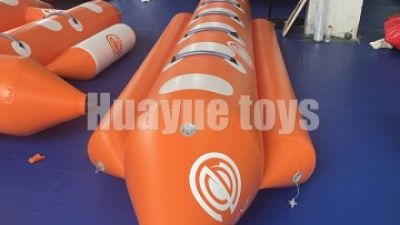
Funny inflatable water toys water flying fish banana boat Inflatable towable fly fish water sports inflatable flying fish
Inflatable flying fish and banana boat towables bring playful energy to family water-sports days. Their buoyant, streamlined designs let riders skim across the water while holding secure handles and following a controlled tow line behind a suitable boat. The flying-fish shape adds a lively bouncing sensation, while the banana boat offers shared seating for groups, making both options ideal for creating memorable moments on lakes, rivers, and approved coastal areas. According to the Outdoor Industry Association’s 2023 Outdoor Participation Trends Report, 175.8 million Americans took part in outdoor recreation, reflecting strong demand for accessible, social activities that combine exercise and entertainment.For a smoother adventure, select towables made with reinforced, puncture-resistant materials, multiple grab handles, strong connection points, and quick-inflation valves. Riders should always wear properly fitted personal flotation devices, follow the manufacturer’s capacity limits, and use calm, designated areas with an experienced boat operator. After the session, rinse equipment with fresh water, dry it completely, and store it away from sharp objects and prolonged sunlight.A vehicle-compatible camping tent can extend the experience beyond the shoreline by creating a comfortable base for changing clothes, relaxing, or preparing refreshments. Easy setup, weather-resistant fabric, spacious ventilation, and sturdy attachment points help families transition from exciting towable rides to a practical outdoor campsite without carrying a large traditional shelter.
Conclusion
Inflatable tents use air-filled beams instead of traditional rigid poles, making them lightweight, flexible, and relatively quick to pitch. This guide explores the main types available for family camping, touring, events, and short outdoor stays, helping readers match a tent’s design to its intended use. It also explains how fabric quality, seam construction, valves, windows, doors, and beam protection affect durability and everyday performance. When deciding What To Look For Inflatable Tent options, consider the available floor space, sleeping areas, headroom, ventilation, and the number of occupants.A suitable inflatable tent should also provide dependable weather resistance, secure anchoring, and enough stability for the seasons in which it will be used. The guide compares waterproofing, wind performance, insulation, and ventilation while highlighting practical setup and safety habits. Proper inflation, regular inspection, careful cleaning, complete drying, and dry storage can extend the tent’s service life. By balancing capacity, structure, materials, climate suitability, and maintenance needs, campers can choose a comfortable and reliable shelter for their outdoor plans.
About Us
We are a leading supplier of high-quality products, integrating both trade and manufacturing, established in 2012. With over 12 years of rich production experience, we have accumulated deep expertise in delivering exceptional products. We are committed to excellence, meticulously handling every product to ensure that each step in the production process meets the strictest standards.
Media Contact
Company Name: Guangzhou Huayue Inflatable Products Toys Co., Ltd.
Contact Person: Media Relations
Email: Send Email
Country: China
Website: https://www.huayueinflatable.com/