
Shanghai, China – November 28, 2026
Introduction: Why Is Hydrofluoric Acid So Challenging for Conventional pH Electrodes?
Industrial wastewater treatment often involves challenging chemical conditions, including highly acidic solutions, fluctuating pH levels, aggressive chemicals, and corrosive contaminants.
Among these challenges, hydrofluoric acid (HF) is particularly problematic for conventional glass pH electrodes.
Unlike many other acids, hydrofluoric acid reacts with silica-based glass materials. When a standard pH electrode is exposed to HF-containing solutions, its glass sensing membrane may gradually deteriorate, resulting in slower response times, unstable measurements, increased calibration drift, and premature electrode failure.
In severe cases, prolonged HF exposure can cause significant membrane damage, making reliable pH measurement impossible.
For industries such as semiconductor manufacturing, metal processing, electronics, and chemical wastewater treatment, these failures can lead to frequent sensor replacement, increased maintenance costs, and interruptions to continuous process monitoring.
So, how can industrial facilities achieve more reliable pH monitoring in wastewater containing hydrofluoric acid?
The answer lies in selecting a pH electrode specifically designed for HF-containing environments.
1. PH1004: An Industrial pH Sensor Designed for Hydrofluoric Acid Applications
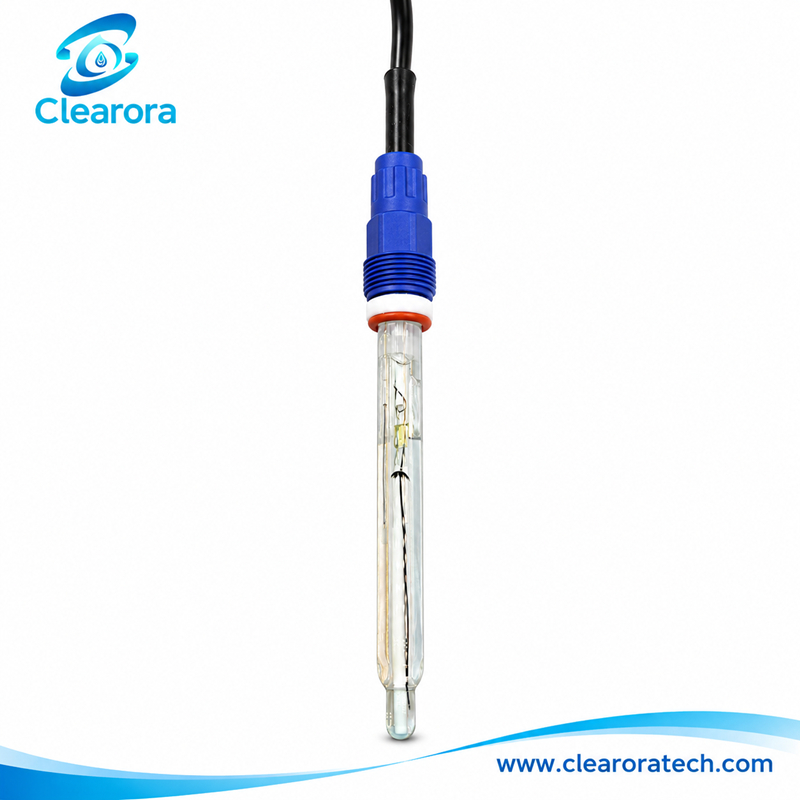
Clearora PH1004 Hydrofluoric Acid-Resistant pH Sensor is designed for continuous pH monitoring in selected industrial processes involving hydrofluoric acid and fluoride-containing wastewater.
Unlike conventional general-purpose pH electrodes, PH1004 incorporates a specialized HF-resistant glass sensing membrane and a dual-junction reference design to improve durability and measurement stability in demanding chemical environments.
Key Features
HF-Resistant Glass Sensing Membrane: Designed to withstand hydrofluoric acid concentrations of up to 4,000 ppm under specified operating conditions.
Dual-Junction Reference System: Helps reduce contamination of the internal reference electrolyte and supports extended service life.
Robust Sensing Membrane: Designed to withstand mechanical impact encountered during industrial operation.
Stable Measurement Performance: Supports consistent pH monitoring in challenging process environments.
Extended Service Life: Helps reduce the frequency of electrode replacement compared with unsuitable conventional pH electrodes.
By combining chemical resistance with a durable reference structure, PH1004 provides a practical solution for industrial facilities handling HF-containing wastewater.
2. What Makes an HF-Resistant pH Electrode Different?
The main difference between an HF-resistant pH electrode and a conventional pH electrode lies in the materials and structural design used to withstand aggressive process conditions.
2.1 Specialized HF-Resistant Glass Sensing Membrane
Conventional pH electrodes typically use silica-based glass membranes that are vulnerable to hydrofluoric acid attack.
When exposed to HF, the glass surface can gradually deteriorate, affecting the electrochemical response and reducing measurement reliability.
PH1004 uses a specially formulated HF-resistant glass membrane designed to improve resistance to HF exposure.
This specialized membrane helps slow chemical deterioration and maintain more stable pH measurements under suitable operating conditions.
However, HF-resistant glass is not completely immune to chemical attack. Its service life still depends on the HF concentration, temperature, exposure duration, and overall process chemistry.
2.2 Dual-Junction Reference Design
The reference system plays an essential role in the accuracy and stability of pH measurements.
In chemically aggressive wastewater, contaminants can enter the reference junction and affect the internal electrolyte, potentially causing unstable readings and shortened electrode life.
PH1004 incorporates a dual-junction reference design that provides an additional separation barrier between the process solution and the internal reference system.
This design helps:
♦Reduce contamination of the internal reference electrolyte.
♦Improve measurement stability.
♦Minimize reference-related drift.
♦Extend electrode service life in demanding industrial applications.
2.3 Robust Construction for Industrial Applications
In addition to chemical resistance, industrial pH electrodes must withstand installation, cleaning, handling, and routine maintenance.
PH1004 features a mechanically robust sensing membrane designed to resist physical impact, helping improve durability during industrial operation.
Together, these design features support reliable pH measurement in selected corrosive wastewater applications.
3. Why Is Accurate pH Monitoring Important in HF-Containing Wastewater?
Accurate pH monitoring is essential for controlling industrial wastewater treatment processes, particularly when hydrofluoric acid and fluoride-containing compounds are present.
Chemical Neutralization Control
HF-containing wastewater often requires carefully controlled chemical neutralization before further treatment or discharge.
Continuous pH measurement helps operators adjust chemical dosing, monitor treatment conditions, and reduce the risk of over-neutralization or insufficient treatment.
Fluoride Removal Processes
Fluoride-containing wastewater may require chemical precipitation and solid-liquid separation.
For example, calcium-based treatment processes can convert dissolved fluoride into relatively insoluble calcium fluoride.
Because treatment efficiency depends on several factors, including pH, reagent dosage, fluoride concentration, and reaction conditions, stable pH monitoring is an important part of process control.
Equipment Protection
Unexpected pH fluctuations may indicate changes in wastewater composition or chemical dosing conditions.
Continuous monitoring helps operators identify abnormal conditions and respond before they affect downstream treatment equipment.
Environmental Compliance
Industrial wastewater discharge is subject to applicable environmental regulations.
Reliable pH monitoring helps facilities maintain process control and support compliance with relevant discharge requirements.
Important: pH measurement does not directly determine fluoride concentration. Where fluoride discharge limits apply, dedicated fluoride analysis may also be required.
4. Typical Applications of PH1004 Hydrofluoric Acid-Resistant pH Sensor4.1 Semiconductor Manufacturing and Wastewater Treatment
Semiconductor manufacturing processes frequently involve chemical cleaning, etching, and surface treatment.
Some of these processes use hydrofluoric acid or fluoride-containing chemicals, generating wastewater that can be challenging for conventional pH electrodes.
PH1004 can support pH monitoring in suitable semiconductor wastewater treatment systems, including neutralization and chemical treatment processes.
4.2 Electronics and Photovoltaic Manufacturing
Electronics and photovoltaic manufacturing may generate fluoride-containing wastewater during selected cleaning and surface treatment operations.
Stable pH monitoring helps improve chemical dosing control and wastewater treatment consistency.
4.3 Metal Processing and Surface Treatment
Metal cleaning, pickling, and surface treatment processes may involve acidic solutions containing fluoride compounds.
An HF-resistant pH electrode can help operators monitor process conditions and control wastewater neutralization where HF exposure is present.
4.4 Steel Industry Wastewater Treatment
Certain steel processing and surface treatment operations generate chemically aggressive wastewater.
PH1004 may be suitable for pH monitoring in treatment systems where the wastewater contains hydrofluoric acid or other compatible chemical components.
4.5 Petrochemical and Chemical Processing
Some chemical production and wastewater treatment processes involve HF-containing streams.
Reliable pH monitoring can support process control, chemical neutralization, and wastewater management.
Sensor compatibility should always be evaluated against the actual process composition and operating conditions.
4.6 Industrial Research and Pilot-Scale Applications
Research facilities and pilot plants may require pH monitoring during controlled experiments involving HF-containing aqueous solutions.
An appropriately selected HF-resistant pH electrode can support these applications, provided the chemical and operating conditions remain within its specifications.
5. HF-Resistant pH Electrode vs. Conventional pH Electrode
|
Comparison |
Conventional pH Electrode |
PH1004 HF-Resistant pH Sensor |
|
Sensing membrane |
Standard pH-sensitive glass |
Specialized HF-resistant glass |
|
HF resistance |
Generally unsuitable for significant HF exposure |
Designed for HF-containing solutions under specified conditions |
|
Reference system |
Varies by model |
Dual-junction design |
|
Measurement stability in HF |
May deteriorate due to glass attack |
Improved resistance to HF-related deterioration |
|
Service life in HF environments |
May be significantly shortened |
Designed for extended service life |
|
Typical applications |
General water and industrial pH measurement |
HF-containing industrial wastewater and chemical processes |
|
Maintenance costs |
Potentially high due to frequent replacement in HF |
May reduce replacement frequency and associated maintenance costs |
The key advantage is not simply chemical resistance—it is the ability to maintain more reliable pH monitoring while reducing unnecessary electrode replacement in suitable HF-containing applications.
6. Important Considerations When Using an HF-Resistant pH Electrode
Although PH1004 is designed for demanding industrial conditions, correct selection, installation, and maintenance remain essential.
6.1 Verify Hydrofluoric Acid Concentration
PH1004 features an HF-resistant glass membrane designed for concentrations of up to 4,000 ppm under specified conditions.
This does not mean the electrode is suitable for every solution containing less than 4,000 ppm HF.
Operating temperature, pH, exposure duration, and other chemicals in the wastewater can significantly influence compatibility and electrode lifespan.
6.2 Consider Operating Temperature
Higher temperatures generally accelerate chemical reactions, including the attack of HF on glass materials.
Before installation, confirm that the process temperature falls within the electrode’s specified operating limits.
6.3 Perform Regular Calibration
Like all industrial pH sensors, PH1004 requires periodic calibration and performance verification.
Monitoring calibration slope, offset, and response time can help identify changes in electrode performance.
6.4 Inspect the Sensing Membrane
Regularly inspect the electrode for visible damage, deposits, and signs of deterioration.
Cleaning procedures should be compatible with the electrode materials and follow the manufacturer’s recommendations.
6.5 Evaluate the Complete Chemical Environment
Industrial wastewater may contain multiple chemicals, including strong acids, alkalis, solvents, suspended solids, and other contaminants.
The presence of these substances can affect electrode performance even when the sensor is designed to resist hydrofluoric acid.
For complex applications, a complete assessment of the process conditions is recommended before sensor selection.
7. How to Choose the Right pH Electrode for HF-Containing Wastewater
Before selecting a hydrofluoric acid-resistant pH electrode, consider the following factors:
HF Concentration: Determine the normal and maximum expected hydrofluoric acid concentrations.
Operating pH Range: Confirm the expected pH range and possible fluctuations.
Process Temperature: Evaluate both continuous operating temperature and temporary temperature peaks.
Chemical Composition: Identify other acids, alkalis, solvents, or contaminants present.
Installation Conditions: Confirm the required mounting arrangement, process pressure, and sensor compatibility.
Maintenance Requirements: Consider calibration frequency, cleaning procedures, and expected service life.
Selecting the correct electrode for the actual process conditions is essential for achieving reliable measurements and minimizing maintenance costs.
Conclusion: Reliable pH Monitoring Starts with the Right Electrode
Hydrofluoric acid presents a significant challenge to conventional glass pH electrodes.
In industrial wastewater containing HF, the wrong electrode can lead to unstable measurements, frequent replacement, and unnecessary maintenance costs.
Clearora PH1004 Hydrofluoric Acid-Resistant pH Sensor addresses these challenges through a specialized HF-resistant glass sensing membrane, dual-junction reference design, and robust construction.
Designed for demanding applications in semiconductor manufacturing, chemical processing, metal treatment, and industrial wastewater treatment, PH1004 offers a practical solution for improving pH measurement reliability in suitable HF-containing environments.
Looking for a reliable pH sensor for hydrofluoric acid wastewater?
Contact Clearora to discuss your process conditions and find a suitable pH monitoring solution.
About Us
Clearora is a global leader in water quality monitoring solutions, dedicated to ensuring optimal water quality across various industries. With a presence in numerous countries, including Malaysia, South Korea, Japan, India, Spain, and Brazil, our products are trusted worldwide for their accuracy, reliability, and advanced technology.
Media Contact
Company Name: Shanghai Refinix Technology Co., Ltd.
Contact Person: Media Relations
Email: Send Email
Country: China
Website: https://www.clearoratech.com/