
Zhejiang, China – November 25, 2026
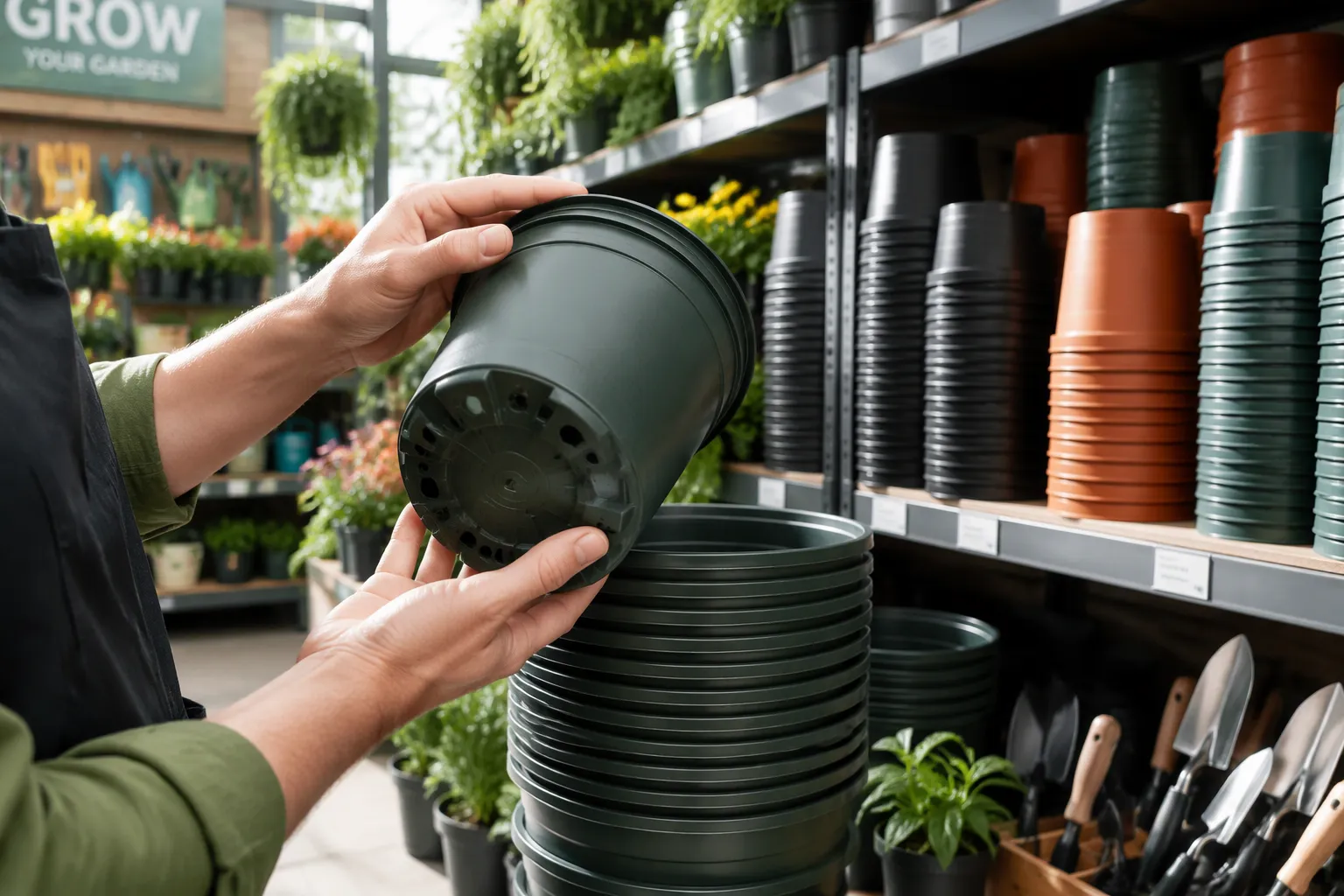
Commercial buyers judge plastic nursery pots in bulk by total value, not sticker price. Poor drainage, short service life, or awkward storage raises costs far beyond any low cost per pot. Buyers weigh plastic pots on three pillars: water management, durability, and storage. Each pillar has concrete, checkable criteria. A cheap bulk pack can prove expensive.
Key Takeaways
Check drainage holes on every pot sample to prevent root rot and protect plant health.
Choose UV-resistant, flexible pots that last multiple seasons and lower replacement costs.
Test stackability and nesting to save warehouse space and keep inventory organized.
Why Drainage Comes First in Plastic Nursery Pots in Bulk
The Role of Drainage Holes
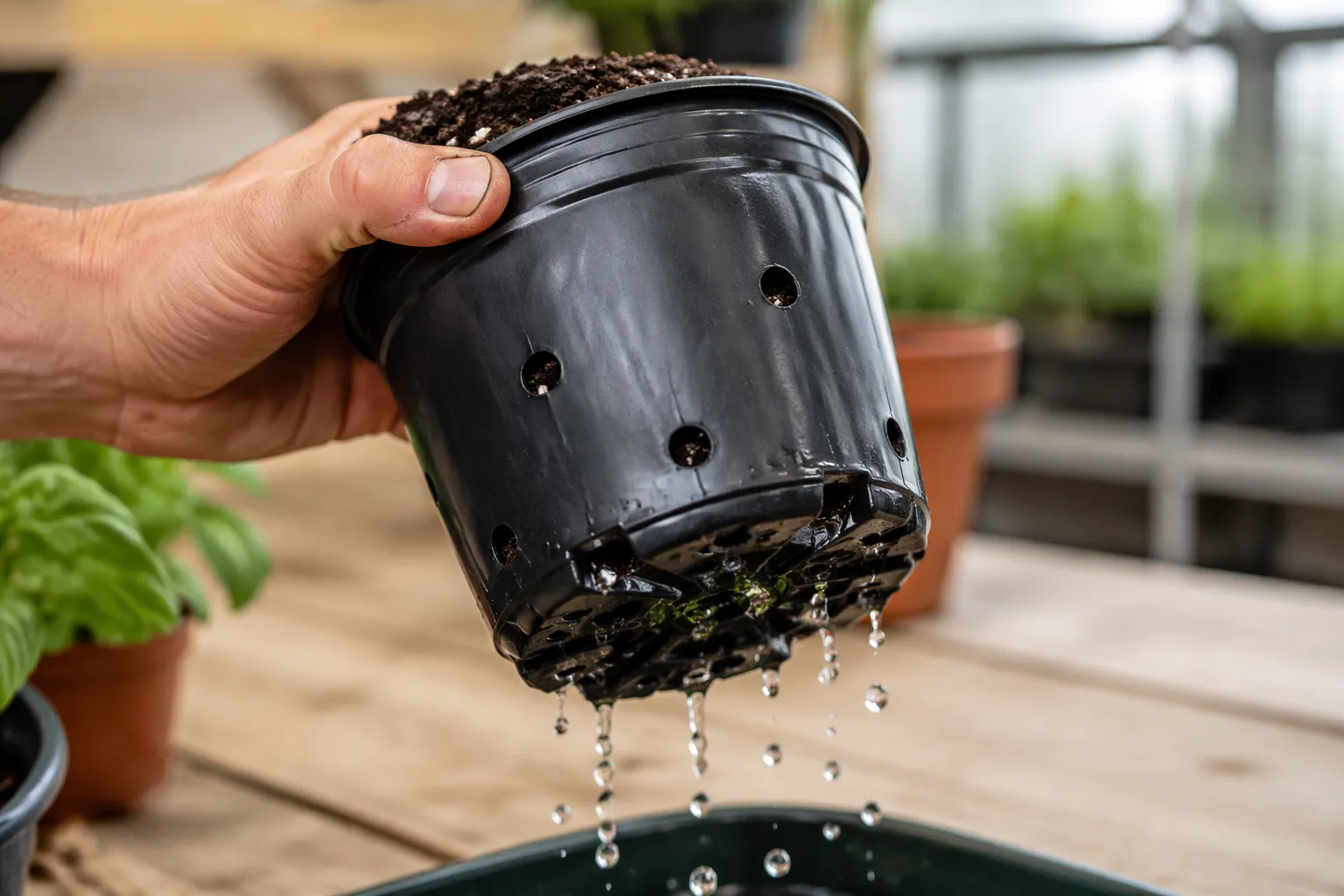
Water management decides whether a container crop survives the season. Missing or undersized drainage holes trap water at the bottom of the pot. Saturated soil starves roots of oxygen, and root rot follows. Root rot is the primary killer of container plants, and it rarely announces itself early. Buyers who inspect plastic nursery pots in bulk for drainage first avoid the most expensive failure mode in container growing. A pot that holds water is not a bargain at any unit price.
Checking Hole Size, Number, and Placement
Buyers should verify three things on every sample: hole count, hole diameter, and hole placement. Count the openings and confirm they are large enough to pass excess water freely. Check whether the openings sit in the base or on the side wall. Side drainage holes improve aeration and prevent waterlogging, because air moves through the root zone as water exits. Holes in the base alone drain well on a raised bench but can seal against a flat surface. The table below compares the common configurations and where each fits best.
|
Configuration |
Where It Fits Best |
|
Bottom-only |
Benches and raised surfaces that allow free airflow beneath the pot |
|
Side-only |
Tight spacing and floor-standing layouts where the base may sit flush |
|
Combined |
Mixed production systems and crops sensitive to waterlogging |
No single configuration suits every operation. Match the choice to the bench, the irrigation method, and the crop.
As an illustration, 1–25 gallon round pots from LVXING Plastic carry multiple side drainage holes across the size range. The design targets well-drained pots for nurseries, greenhouses, and landscaping work. Buyers should treat this as one reference point among many. The same checks apply to any plastic pots under consideration: count the openings, measure them, and confirm placement before committing to a bulk order. Consistent drainage across a full shipment protects root health across the entire crop, not just the sample pot.
Assessing Durability of Nursery Pots Bulk Pack Orders
Material and UV Resistance
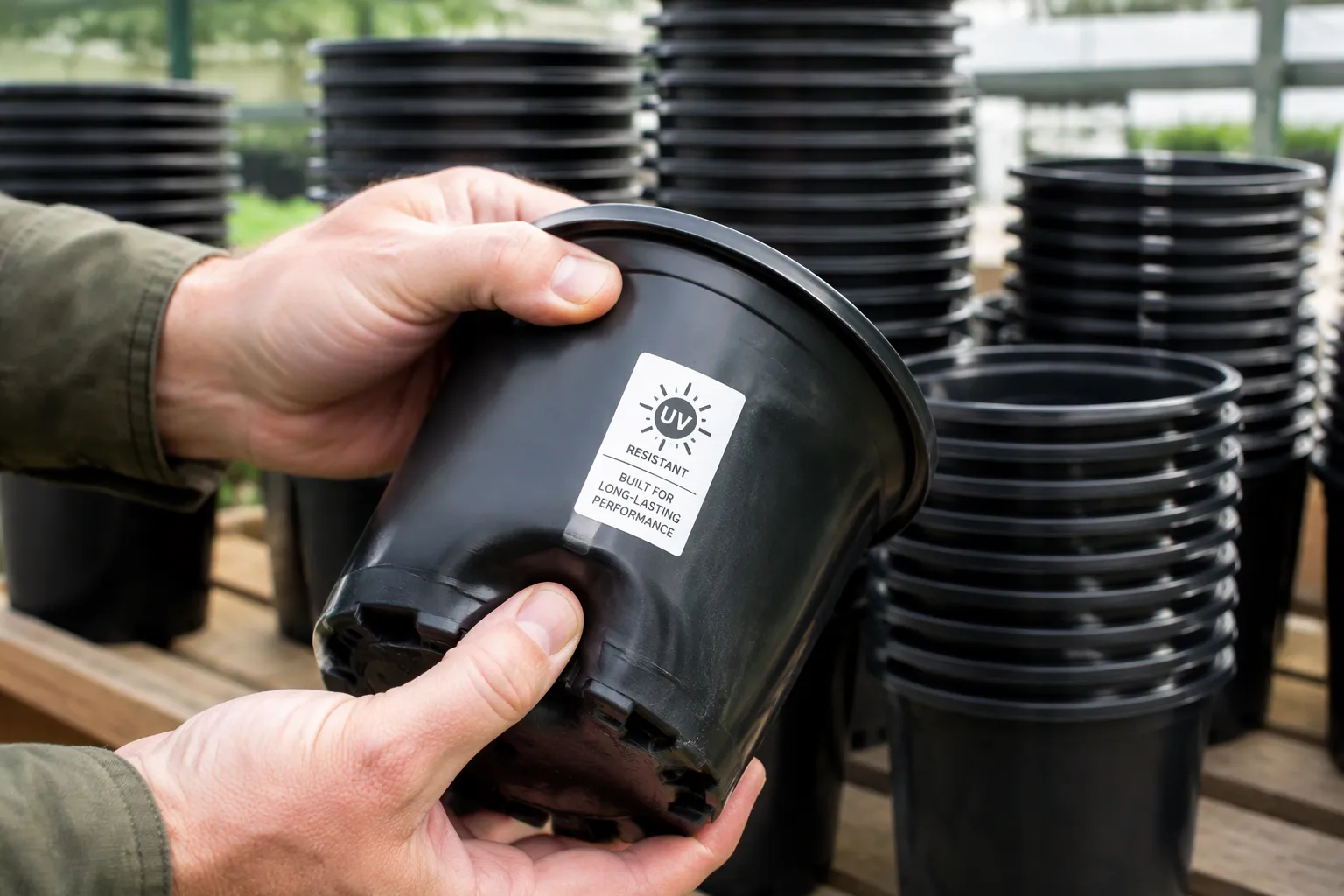
Material composition drives durability more than any other factor. Most nursery pots bulk pack orders rely on polypropylene, a plastic that resists cracking and holds its shape under load. Buyers should confirm the resin is uv-resistant plastic, because sunlight degrades untreated polymers over a single season. Injection-molded pots generally offer tighter wall thickness control than blow-molded alternatives, and consistent walls resist deformation under wet soil. Temperature tolerance matters as well. Pots that stay flexible in cold weather and resist softening in summer heat survive transport and outdoor staging. Heavyweight UV-stabilized plastic generally lasts longer outdoors than thin, unstabilized stock. Buyers comparing planter materials should note that plastic, fiber, and other options each fit different use cases. Fiber suits short-cycle crops, while plastic pots serve multi-season reuse. The right choice depends on the growing program, not on a single ranking.
Strength, Flexibility, and Lifespan
The flex test is the fastest field check for durability. A commercial-grade pot should bend without cracking when bumped or dropped. Buyers can squeeze the rim and press the base on a sample. Cracks at either point signal weak pot materials. Rim and base consistency matter for daily handling, wet soil loads, and repeated cleaning between crops. A commercial-grade plastic pot keeps its shape through all three. Wall thickness should feel uniform around the circumference, with no thin spots near the drainage holes.
Lifespan expectations deserve a direct answer. Buyers often ask how long will the pot last, and the honest reply depends on sun exposure, handling, and cleaning cycles. As a reference point, injection-molded pots made from UV-resistant polypropylene typically deliver reusable service for 3–5 years outdoors.
Treat that range as an expected lifespan under normal nursery conditions, not a guarantee.
Extended durability lowers the true cost of plastic nursery pots in bulk, because replacement frequency falls. A long-lasting pot also reduces waste and keeps inventory predictable across seasons. Buyers should weigh longevity against unit cost, since a slightly higher-priced pot that survives several seasons usually wins on total spend. UV resistance and material quality decide that outcome, and both are checkable before any order is placed.
Storage and Stackability for Bulk Nursery Pot Inventory
Nesting and Space Efficiency
Tapered walls let each pot sit inside the one below it. This nesting design compresses a tall stack into a short column. A pallet of nested pots therefore occupies a fraction of the volume of the same pots standing open. Shipping containers and warehouse racks both benefit from this compression. Buyers of plastic nursery pots in bulk should confirm the taper angle on a sample, because a shallow taper wastes vertical space.
Estimating capacity takes one simple measurement. Stack a known number of pots, measure the total height of the nested column, and divide by that count to get the per-pot nested height. Divide the available shelf or rack height by this figure to estimate how many pots fit in a given storage area. A nursery pots bulk pack with a strong taper stores far more units per square foot than a straight-sided design.
Protecting Stored Pots
Stored inventory faces three threats: sunlight, moisture, and crushing. UV exposure degrades plastic pots even indoors near windows or under skylights. Buyers should keep bulk pack cartons shaded and off damp floors. Stackable, crush-proof pots resist deformation when suppliers pile cartons high, and that strength reduces waste in bulk inventory. Consistent wall thickness across the stack protects the lower units from collapse under load.
Handling convenience affects daily efficiency. Lightweight plastic pots move quickly between the yard and the bench. Carry handles on larger sizes let staff lift filled containers without improvising grips, and bigger pots carry wider handle gaps for a firmer hold. Good storage practice plus easy handling lowers the true cost of ownership across a season.
Vetting Suppliers Before a Bulk Order
Consistency and Sample Checks
A sample order protects a large purchase. Buyers should request samples from the actual production run, not a hand-finished display unit. Inspect the rim, the base, and the drainage holes on every sample in the set. Run a finger along the rim to feel for sharp edges or uneven molding. Press the base flat against a bench and check for rocking. Measure wall thickness at several points around the circumference. Thin spots near the drainage holes signal weak tooling. Compare three or four samples side by side. A supplier who ships consistent samples will likely ship a consistent nursery pots bulk pack.
Consistency separates reliable plastic pots from bargain stock. One cracked rim in a sample set predicts failures across a full shipment. Buyers should also confirm that the same materials and mold run across all sizes in the range. Mixed tooling often produces mixed quality.
Standards and Lead Times
Compliance markers belong in every supplier conversation. Ask which standards the factory meets, such as EU, US, or ISO requirements, and request documentation. Confirm lead times in writing. A typical reference point is 7–10 days per 40HQ container, though schedules vary by order size and season. Ask how the supplier packs cartons for shipment. Tight packing lowers delivery costs and protects pots in transit.
Optional add-ons deserve a neutral review. Matching saucers simplify retail presentation. Custom logo molding supports branding for distributors. Neither item is essential, and each adds cost. Buyers should weigh add-ons against the core bulk pack price and confirm they do not extend the production schedule.
Bulk Nursery Pot Purchasing Checklist
Buyers can print this list and carry it to sample inspections, supplier meetings, and warehouse reviews. Each item maps to a checkable feature on the pot or the purchase agreement.
Drainage: Count the holes on every sample. Measure the diameter and confirm the openings pass water freely. Note whether holes sit in the base, the side wall, or both, and match the placement to the bench or floor layout. Confirm drainage stays consistent across all sizes in the range.
Durability: Confirm the resin is UV-resistant polypropylene and ask whether the pot is injection-molded. Check the uv resistance rating in writing. Run the flex test: squeeze the rim and press the base, then look for cracks. Verify uniform wall thickness around the circumference and near the holes. Confirm rim and base consistency across several samples.
Storage: Measure the nesting ratio by stacking a known count and dividing the column height by that number. Confirm the taper angle compresses stacks efficiently. Check stack strength by loading cartons and inspecting the lower units for deformation. Keep stored cartons shaded and off damp floors.
Supplier: Request samples from the production run, not display units. Ask which standards the factory meets, such as EU, US, or ISO requirements, and request documentation. Confirm lead times in writing; a typical reference is 7–10 days per 40HQ container. Review carton packing for transit protection. Weigh optional add-ons like matching saucers and custom logo molding against cost and schedule.
Buyers who verify these points on a nursery pots bulk pack protect root health, service life, and warehouse space at once. The same discipline applies to any bulk pack of plastic pots under review. A completed checklist turns a plastic nursery pots in bulk decision into a documented, comparable purchase.
Drainage protects root health, durability extends service life, and stackability saves warehouse space. Each pillar shapes total cost far more than unit price. Buyers should apply the checklist and request production-run samples before committing to a large order. Consistent samples build trust, and reliable suppliers make repeat bulk purchases predictable.
FAQ
How many drainage holes should a bulk nursery pot have?
No universal count exists. Buyers should confirm the holes pass water freely and match the bench layout. Multiple side holes, as on 1–25 gallon round pots, support aeration.
How long do plastic nursery pots last outdoors?
Injection-molded pots made from UV-resistant polypropylene typically serve 3–5 years outdoors. Buyers should treat this as an expected range under normal nursery conditions, not a guarantee.
What should buyers confirm before placing a large pot order?
Buyers should inspect production-run samples for rim, base, and hole consistency. They should also confirm EU, US, or ISO compliance and written lead times, typically 7–10 days per 40HQ.
About Us
TAIZHOU LVXING GARDENING PRODUCTS CO., LTD Founded in 1990, TAIZHOU LVXING GARDENING PRODUCTS CO., LTD is a seasoned manufacturer specializing in the R&D, production, and sales of plastic planters and daily necessities. With over three decades of dedicated experience in the industry, the company is centered around an 8,000-square-meter modern production base.
Media Contact
Company Name: Taizhou lvxing Gardening Products Co., Ltd.
Contact Person: Media Relations
Email: Send Email
Country: China
Website: https://www.lvxingplastic.com/