
Wenzhou City, Zhejiang Province, P.R. China – November 9, 2026
Picking a C95800 bronze Ball Valve for an overseas project? It’s not just about price tags. You’ve got to think about whether the alloy, pressure rating, connection type, and operating conditions actually line up with what the valve will be dealing with. Sure, C95800 nickel-aluminum bronze gets thrown around a lot for marine and corrosive environments—and for good reason—but at the end of the day, performance really comes down to the whole valve design and how it’s installed. The little things count.Okay, so this guide covers the 10 best C95800 bronze ball valves for buyers all over the world. We’re focusing on the practical stuff—body construction, seat materials, end connections, what paperwork you should get, and how responsive the supplier is. And one more thing: when you see a Brone C95800 Ball Valve on a list, don’t just assume it’s fine. Check it against its technical datasheet, confirm the material certification, and make sure the test requirements are what you asked for. Here’s the thing: before you commit, ask yourself if the quoted model is actually right for the fluid, temperature, and pressure you’re working with. A valve can look totally convincing in a photo next to a clean test bench, sure. But the specs are what really count—they need to hold up in the real application.Sure, comparisons are great for whittling down a shortlist—but they can’t replace actual engineering review. Products differ from one manufacturer to another, and honestly, not every model is going to work for every project. Keep that in mind. Before you place an order, make sure you’ve checked lead times, traceability, spare parts availability, and whether the folks on the other end actually communicate clearly. This article is a practical starting point if you’re evaluating ten options, but the final call really needs to be based on your project requirements and qualified technical advice.
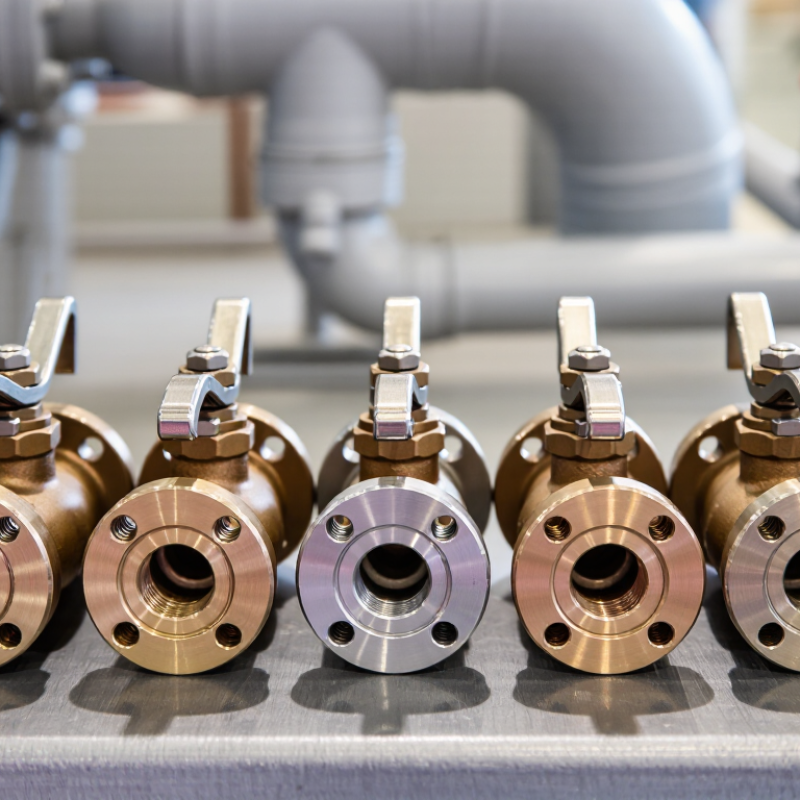
C95800 Bronze Ball Valves: Alloy Identity and Global Applications
C95800 is a nickel-aluminum bronze alloy, not simply a general-purpose bronze. Its copper base includes aluminum, nickel, and iron, which help balance strength and resistance to seawater corrosion. The exact composition should be checked against the applicable material specification and mill certificate. Alloy names can be confusing.In marine service, C95800 ball valves may be selected for seawater lines, shipboard systems, and desalination equipment. Picture a valve exposed to salt spray and frequent flow changes: material selection matters, but so do seat design, pressure rating, and operating temperature. A China Brone C95800 Ball Valve should therefore be assessed by its documented material grade, not just its product description. The spelling can vary in listings.Global applications bring different piping standards and connection requirements. Buyers should confirm end connections, pressure class, inspection records, and any project-specific testing before ordering. Ask whether the ball and stem materials match the intended fluid and service conditions. C95800 offers useful corrosion resistance, but it is not immune to every chemistry or installation error. That distinction is easy to overlook. A clear datasheet makes comparison more reliable.
C95800 Composition: 8.5–9.5% Aluminum and 4–5% Nickel
C95800 bronze is an aluminum-nickel alloy valued for strength and resistance to seawater corrosion. Its specified aluminum range is 8.5–9.5%, while nickel typically accounts for 4–5%. Aluminum helps form a protective surface layer when the valve is exposed to water. Nickel contributes to strength and can support corrosion resistance in demanding service. Useful, but not automatic.For a Wholesale Brone C95800 Ball Valve, buyers should check the material certificate against the stated composition ranges. Also confirm that the casting, pressure rating, seat materials, and trim suit the actual fluid and operating temperature. A small chemistry variation may be acceptable within the specification, yet manufacturing quality still matters. Ask how the valve was inspected, and review applicable test records rather than relying on alloy name alone. That detail is easy to miss. Composition is a sound starting point, not a complete performance guarantee. Even the right alloy can disappoint if the valve is poorly cast or mismatched to the system.
10 Best C95800 Bronze Ball Valves for Global Buyers? – C95800 Composition: 8.5–9.5% Aluminum and 4–5% Nickel
The options below are application-based valve configurations, not specific branded products. C95800 composition is specified by applicable material standards; pressure, temperature, size availability, and certifications depend on the valve design and manufacturer.
| No. | Valve configuration | Typical connection / design | Suitable applications | Key buyer checks |
|---|---|---|---|---|
| 1 | Full-port Floating Ball Valve | Flanged; commonly available in ASME Class 150 designs | Seawater lines, cooling-water systems, and general marine isolation | Confirm bore, seat material, flange standard, and pressure-temperature rating. |
| 2 | Reduced-port floating ball valve | Flanged or threaded, subject to size and design | Utility and process lines where a smaller flow opening is acceptable | Compare flow capacity and pressure drop with the full-port alternative. |
| 3 | Three-piece full-port valve | Bolted body; threaded, socket-weld, or flanged ends may be offered | Process skids and installations requiring in-line service access | Check body-joint design, end connections, and whether maintenance requires removal from the line. |
| 4 | Two-piece Flanged Ball Valve | Bolted body with ASME or other specified flange dimensions | Water-treatment plants, shipboard piping, and industrial utility service | Match the flange drilling, facing, and pressure class to the piping system. |
| 5 | Trunnion-mounted ball valve | Flanged; typically selected for larger sizes or higher operating loads | Large seawater headers and demanding isolation duties | Verify seat design, torque requirements, support arrangement, and tested rating. |
| 6 | Actuated quarter-turn ball valve | Valve supplied with pneumatic or electric actuator | Remote operation and automated plant or marine systems | Specify fail position, control signal, power supply, enclosure rating, and actuator torque margin. |
| 7 | Fire-tested ball valve configuration | Design and test evidence must be stated for the exact valve assembly | Installations where fire-safe performance is a specified requirement | Request applicable fire-test documentation, such as API 607, where required by the project. |
| 8 | Anti-static, blowout-resistant-stem configuration | Feature set specified in the valve design and datasheet | Process duties where these safety features are required by the specification | Confirm documented construction details; do not assume these features are standard on every valve. |
| 9 | Marine-service C95800 ball valve | Flanged or other specified ends; material traceability required by project | Marine and seawater systems where aluminum bronze is specified | Check water chemistry, velocity, galvanic compatibility, and material certificates. |
| 10 | C95800 valve for desalination or water-treatment service | Configuration selected for the process conditions and piping standard | Seawater intake, treatment, and related utility duties | Review chloride level, temperature, solids, seat compatibility, and project-specific approvals. |
Material reference: C95800 is an aluminum bronze casting alloy. Typical specified composition includes aluminum 8.5–9.5%, nickel 4–5%, iron 3.5–4.5%, manganese 0.8–1.5%, and copper as the balance (minimum 79%), subject to the governing material specification. Always verify the current standard, material certificate, and valve datasheet before purchase.
Seawater Service: Corrosion Resistance, Pressure, and Temperature Factors
When comparing C95800 bronze ball valves for seawater service, look beyond the alloy name. C95800 is a cast nickel-aluminum bronze valued for resistance to seawater corrosion. It is not corrosion-proof. Warm water, deposits, and stagnant pockets can still contribute to localized attack. Inspect the body casting and areas around the ball and seat, where crevices may retain seawater. Small details matter. High flow velocity or suspended sand can also accelerate erosion. Ball valves are generally intended for isolation, not prolonged throttling.Check pressure and temperature together. Ask for the pressure-temperature ratings of the exact valve configuration, including its seat, stem, and end connections. The seat may set the practical temperature limit before the bronze body does. A common buying mistake is to rely on the alloy designation alone. That assumption deserves a second look. Confirm pressure class, test documentation, and material traceability, then compare them with the actual operating conditions. Chlorination, oxygen levels, and flow velocity can affect service life. If the seawater chemistry or operating history is uncertain, allow for a more cautious selection rather than treating a catalog rating as a guarantee.
ASTM B148 and ASME B16.34: Casting, Design, and Pressure Ratings
C95800 bronze ball valves are often selected for seawater and other demanding service, but the alloy name alone does not confirm suitability. ASTM B148 specifies requirements for aluminum-bronze sand castings, including chemical composition and mechanical properties. Buyers should request the casting grade, heat-treatment details, and inspection records. Cast surfaces may show variation; dimensional checks and suitable nondestructive examination help reveal issues before installation.ASME B16.34 addresses valve design, pressure-temperature ratings, materials, testing, and marking. It is not a substitute for checking the actual service conditions. A valve’s allowable pressure depends on its class, material group, operating temperature, and construction details. Ask for the pressure-temperature table and documentation for the exact valve configuration. A catalog rating without temperature context is incomplete. This point is easy to miss.Tips: Confirm that ASTM B148 applies to the supplied casting, then verify the valve’s ASME B16.34 rating at your operating temperature. Check end connections, seat materials, and test records too. Small details matter. A little uncertainty can remain, so clarify any gap with the supplier before specifying the valve.
10 Best C95800 Bronze Ball Valves for Global Buyers?
ASTM B148 C95800 alloying-element composition ranges (weight percent)
ASTM B148 specifies C95800 cast bronze chemistry, including the alloying-element ranges shown; copper is specified as 79.0% minimum, with the balance made up of copper. ASME B16.34 pressure ratings depend on the applicable pressure class, temperature, and design conditions, so they cannot be determined from composition alone.
API 598 Testing: 1.5× Shell-Test and 1.1× Closure-Test Pressure10 Best C95800 Bronze Ball Valves for Global Buyers?
For C95800 bronze ball valves, API 598 testing gives buyers a practical way to check pressure integrity before shipment. The shell test uses pressure at 1.5 times the applicable rating basis; the closure test uses 1.1 times that basis. These multipliers are not arbitrary working-pressure allowances. Confirm the valve’s rating, size, test medium, hold time, and applicable standard edition in the inspection documents.
During shell testing, the valve body is pressurized while inspectors check for visible leakage or damage. Closure testing checks the shutoff surfaces, with the valve positioned as required by the test procedure. Small leaks matter. Ask whether the reported result records the test pressure and duration, rather than only stating “pass.” A clear test record makes comparisons between suppliers more meaningful.
A passed pressure test does not prove that a valve suits every fluid, temperature, or installation. C95800 alloy selection still needs review against the service environment, and seat materials require separate consideration. This point is easy to miss when a certificate looks complete. I would also verify that the tested valve matches the quoted configuration; paperwork can be tidy, while a small trim change deserves another look.
How to Compare 10 Valves by Port Design, End Connections, and Actuation
When comparing ten C95800 bronze ball valves, keep the test conditions consistent. Check whether each valve has a full or reduced port; this affects flow capacity and pressure loss. Then compare end connections, such as flanged, threaded, or welded designs, against the actual piping specification. Confirm pressure and temperature ratings from technical documents, not just product descriptions. Small details matter.
Tips: Ask for the C95800 material designation and inspection records. Compare seat materials and stated torque requirements, especially if you plan to add an actuator. Manual handles suit simple operation; pneumatic or electric actuators may fit frequent cycling or remote control. Port labels can be confusing, so request drawings when dimensions are unclear.
A useful comparison sheet should list face-to-face dimensions, connection standards, flow data, and operating limits for all ten options. For automated service, check that actuator output covers the valve’s required torque under expected conditions. I would avoid ranking valves from price alone; that misses important fit and maintenance differences. A Brone C95800 Ball Valve Supplier should be able to provide traceable specifications, though buyers still need to verify them against their project requirements.
Global Buyer Checks: Traceability, Certifications, Lead Times, and Spares
For a C95800 bronze ball valve, traceability should reach beyond the alloy name on a quotation. Ask for heat or batch numbers linked to the body, material test reports, and inspection records. Check that valve markings match the documents. Small mismatches matter.Request certificates relevant to the destination, service, and project specification; a certificate alone does not prove suitability. Confirm its issuing body, scope, and validity, and clarify whether pressure testing and inspection records are included. A Brone C95800 Ball Valve Manufacturer should be able to explain how each document connects to the supplied valve, not just send a generic file. Buyers should also verify the required pressure class, end connections, and operating conditions.Lead times need a clear starting point. Ask whether the quoted schedule includes casting, machining, testing, and export packing, then request updates if any stage slips. Confirm which spare parts are available, such as seats, seals, stems, and fasteners, and whether they match the exact valve configuration. Keep the part numbers and drawings on file. A tidy quotation can still leave gaps; checking every detail takes time, but discovering a missing seal during maintenance takes longer.
Conclusion
This guide explains how C95800 nickel-aluminum bronze ball valves are identified and why they are considered for seawater and other demanding applications. It highlights the alloy’s typical aluminum and nickel content, while noting that corrosion performance and service suitability depend on the fluid, pressure, temperature, and operating conditions. Buyers can use ASTM B148 and ASME B16.34 as reference points for casting, design, and pressure-rating requirements, and review API 598 shell and closure testing when assessing product quality.The comparison framework covers ten valve options by port design, end connections, and actuation, helping buyers match configurations to system needs. It also recommends checking material traceability, relevant certifications, production lead times, and spare-parts availability before ordering. Whether searching for a Brone C95800 Ball Valve or evaluating alternatives, buyers should verify specifications and test documentation for the exact valve and intended service.
About us
It was founded in 2009, which is one of the leading valve manufacturers in China. After more than ten years of innovation development, nowdays it has three manufacturing bases, more than 10 professional collaboration factories as one whole, total covering 65000 square meters, over 200 staffs which including 15 senior engineers and 30 inspectors, and 500 sets of precise equipments.
Media Contact
Company Name: WELCO VALVE CO., LTD.
Contact Person: Media Relations
Email: Send Email
Country: China
Website: https://www.welco-valve.com/