
[Hyderabad, India] – October 29, 2026
Brazil Container Glass Market Overview
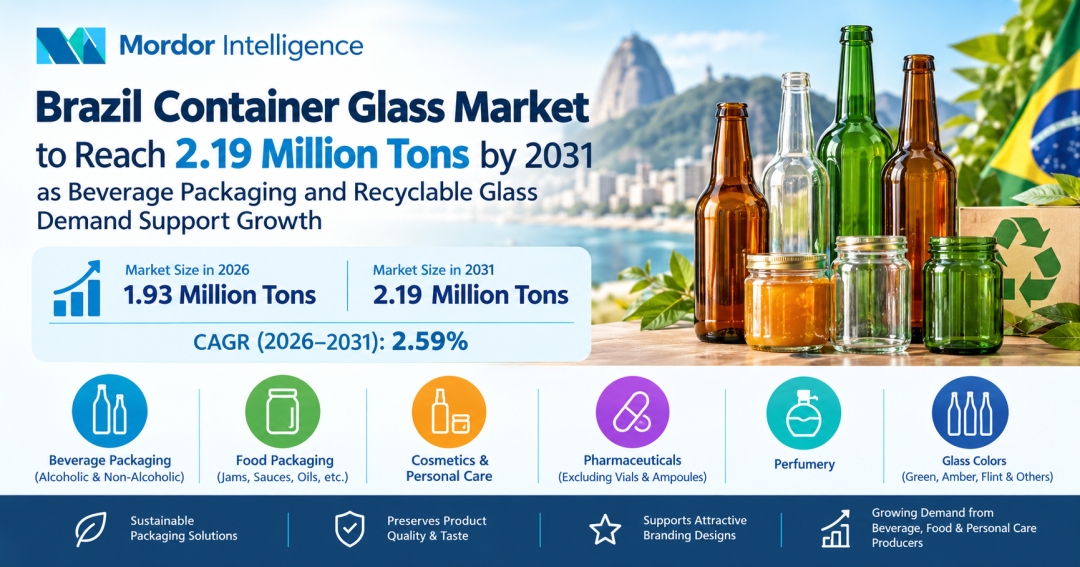
The Brazil Container Glass Market size is expected to reach 1.93 million tons in 2026 and is forecast to increase to 2.19 million tons by 2031, registering a CAGR of 2.59% during the 2026–2031 forecast period. Container glass remains an important packaging material for beverages, food products, cosmetics, and pharmaceutical applications. Its suitability for preserving product quality, maintaining taste, and supporting attractive packaging designs makes it relevant to manufacturers seeking dependable packaging solutions. Demand from beverage producers, food processors, and personal care brands contributes to the market’s development across Brazil.
The Brazilian container glass industry serves a range of end users, including alcoholic and non-alcoholic beverage manufacturers, food companies, cosmetics producers, and pharmaceutical businesses. Beer, wine, spirits, juices, carbonated drinks, and other beverages represent important applications for glass containers. Glass packaging also serves products such as sauces, preserves, condiments, oils, and personal care formulations. Color options, including green, amber, and flint glass, allow manufacturers to meet different product protection, branding, and presentation requirements. These applications support demand for container glass across established and emerging product categories.
Key Trends in the Brazil Container Glass Market
Growing Demand for Glass Beverage Packaging
Beverages represent an important end-user category for the Brazil Container Glass Market. Beer, wine, spirits, cider, and other fermented drinks use glass containers for packaging, storage, and retail presentation. Glass is valued for its ability to preserve beverage characteristics and provide a packaging format suitable for different product types and price segments. Beverage manufacturers can also use bottle shapes, colors, and finishes to distinguish brands on retail shelves. Demand across alcoholic beverages therefore remains an important factor influencing container glass production, product design, and supply requirements in Brazil.
Rising Applications Across Non-Alcoholic Beverages
Non-alcoholic beverages provide another area of demand for container glass, including juices, carbonated soft drinks, dairy-based drinks, and other beverage formulations. Packaging decisions depend on product characteristics, distribution requirements, shelf presentation, and consumer preferences. Glass containers offer manufacturers an option for products positioned around quality and distinctive presentation. As beverage brands maintain varied packaging portfolios, container glass producers must accommodate different container sizes, shapes, and finishing requirements. These applications contribute to Brazil Container Glass Market growth by extending demand beyond traditional alcoholic beverage packaging.
Expanding Food Packaging Applications
Food manufacturers use glass containers for products such as jams, jellies, marmalades, honey, sausages, condiments, oils, and pickles. Glass packaging can support product visibility and help maintain the integrity of packaged food when used with appropriate closures and processing methods. Transparent flint glass allows consumers to see the contents, while colored glass provides alternative presentation options. Food packaging requirements vary according to product composition, preservation needs, filling processes, and distribution conditions. These factors influence container selection and create demand for glass packaging solutions suited to different food categories across the Brazilian market.
Increasing Focus on Glass Color and Product Differentiation
Glass color is an important consideration in container selection, affecting product presentation and packaging functionality. Green, amber, and flint glass serve different branding and product requirements, while other colors support specialized packaging designs. Amber glass is commonly associated with applications requiring protection from light, depending on the product and packaging specification. Flint glass offers clear visibility, while green glass is used across selected beverage categories. The Brazil Container Glass industry therefore serves manufacturers with varied color, appearance, and performance requirements, encouraging suppliers to maintain suitable product ranges for different end users.
Check out more details and stay updated with the latest industry trends, including the Japanese version for localized insights:
Brazil Container Glass Market Segmentation
The report examines the market across the following segments:
-
By End User
-
Beverages
-
Alcoholic: Beer, wine, spirits, and other alcoholic beverages, including cider and other fermented drinks.
-
Non-Alcoholic: Juices, carbonated drinks (CSDs), dairy product-based drinks, and other non-alcoholic beverages.
-
-
Food: Jam, jelly, marmalades, honey, sausages and condiments, oil, and pickles.
-
Cosmetics and Personal Care
-
Pharmaceuticals: Excluding vials and ampoules.
-
Perfumery
-
-
By Color: Green, amber, flint, and other colors.
Explore Our Full Library of Technology Media and Telecom Research: Packaging Research Reports and Market Analysis
Key Players in the Brazil Container Glass Industry
The competitive landscape includes manufacturers serving beverage, food, personal care, and other packaging applications. Vidrala, S.A. is a glass packaging manufacturer with capabilities in container production for food and beverage customers. Owens-Illinois do Brasil Indústria e Comércio Ltda participates in the Brazilian market through glass packaging solutions for consumer products. Verallia Brasil S.A. supplies glass packaging for applications that include beverages and food, with product requirements varying by customer and end-use category.
SGD Brasil Vidros Ltda and Vitro do Brasil Ltda are also identified among the companies associated with the market. Competition among suppliers is influenced by production capabilities, product quality, container design, customer relationships, and the ability to meet the specifications of different end users. Manufacturers must address requirements related to bottle color, shape, packaging performance, and production consistency while serving customers across multiple industries. These factors shape the competitive environment within the Brazil Container Glass Market.
Conclusion
The Brazil Container Glass Market forecast indicates continued demand from beverage, food, cosmetics, personal care, and pharmaceutical applications. Glass containers remain relevant to manufacturers seeking packaging that supports product protection, presentation, and differentiation. Demand across alcoholic and non-alcoholic beverages, alongside applications in preserved foods and personal care products, provides a broad base for container glass consumption in Brazil.
Market participants will continue to respond to customer requirements for suitable container formats, consistent quality, and distinctive packaging designs. Understanding Brazil Container Glass Market trends, end-user requirements, and color-based product demand can help manufacturers and suppliers identify opportunities and plan their market strategies. The report provides an overview of market size, segmentation, and competitive participants to support informed business decisions across the Brazilian container glass industry.
About Mordor Intelligence:
Mordor Intelligence is a global market intelligence firm, founded in 2014, helping businesses make informed decisions through data-driven insights, industry expertise, and advanced analytics. With 550+ domain experts and on-ground specialists across 150+ countries, the company delivers comprehensive intelligence across aerospace & defense, agriculture, automation, automotive, chemicals & materials, consumer goods & services, electronics, energy & power, financial services, food & beverages, healthcare, hospitality & tourism, information & communications technology, and logistics.
Its offerings include syndicated industry reports, custom research and advisory, and subscription platforms such as Synapse, Data Center Intelligence, and Robotics Intelligence. Mordor Intelligence is ISO 9001:2015 and ISO/IEC 27001:2022 certified, a member of ESOMAR and the Market Research Society of India, and a four-time Great Place to Work® honoree.
Media Contact
Company Name: Mordor Intelligence Private Limited
Contact Person: Jignesh Thakkar
Email: Send Email
Phone: +1 617-765-2493
Address:11th Floor, Rajapushpa Summit, Nanakramguda Rd, Financial District, Gachibowli
City: Hyderabad
State: Telangana 500008
Country: India
Website: https://www.mordorintelligence.com/