
Changzhou, Jiangsu, China – October 9, 2026
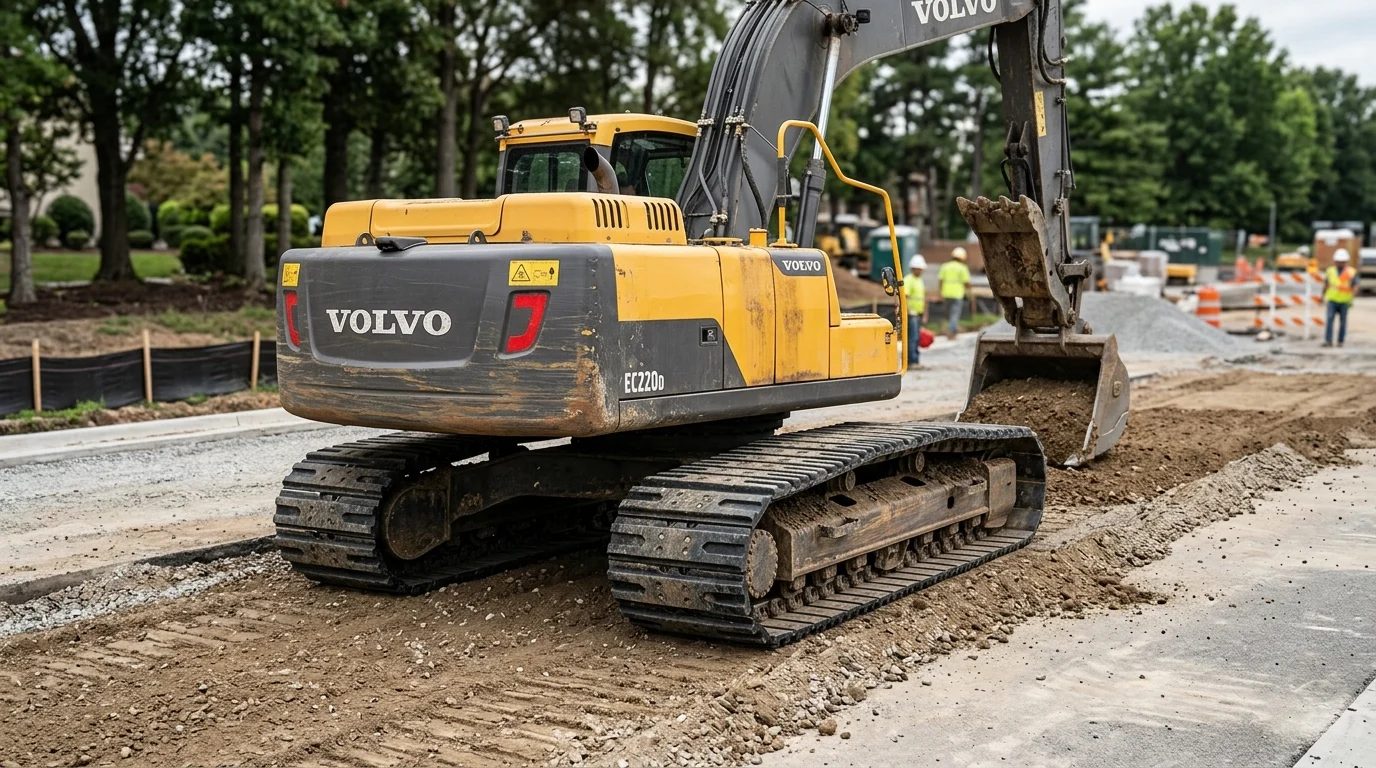
We frequently encounter projects where heavy machinery threatens to destroy pre-existing infrastructure or fragile ecosystems. Operating heavy equipment on finished surfaces often leads to expensive remediation and project delays. As the construction industry shifts toward more sustainable practices, we must find ways to limit our environmental footprint. By equipping machines with excavator pads, we can significantly minimize ground scarring, reduce vibration transmission, and support greener, more sustainable job sites. These attachments serve as a critical buffer between heavy iron and sensitive earth.
What Rubber Pads for Excavators Are
These components are heavy-duty, vulcanized rubber blocks designed to attach directly to the steel track shoes of an earthmoving machine. Manufacturers typically engineer them using high-density natural or synthetic rubber compounds, achieving a Shore A hardness rating of around 70 to 80. This specific density allows the pad to flex slightly under the weight of a 5-ton to 20-ton machine, absorbing impact energy rather than transferring it directly into the ground. Inside the rubber, a steel core is often embedded to prevent the pad from bending or snapping under high-torsion turns. They come in three primary mounting styles: bolt-on, clip-on, and road-liner (or chain-on), each offering different levels of security and installation speed depending on the fleet’s needs.
Job Site Conditions Where Rubber Pads Work Best
We find these attachments indispensable in urban environments, residential neighborhoods, and historical sites. When working on asphalt, concrete, or delicate landscaping, bare steel tracks can exert a ground pressure exceeding 35 kPa (5 psi), easily cracking pavement or tearing up turf. Rubber pads distribute this weight more evenly and provide a softer, more pliable interface. They prevent soil compaction over root zones, which is a major factor in preserving mature trees on green job sites. Furthermore, they are highly effective on municipal utility projects where noise ordinances restrict decibel levels; rubber can dampen operational noise by up to 10 to 15 decibels compared to metal-on-pavement contact, keeping us compliant with local environmental regulations.
Rubber Pads for Excavators vs Steel Tracks
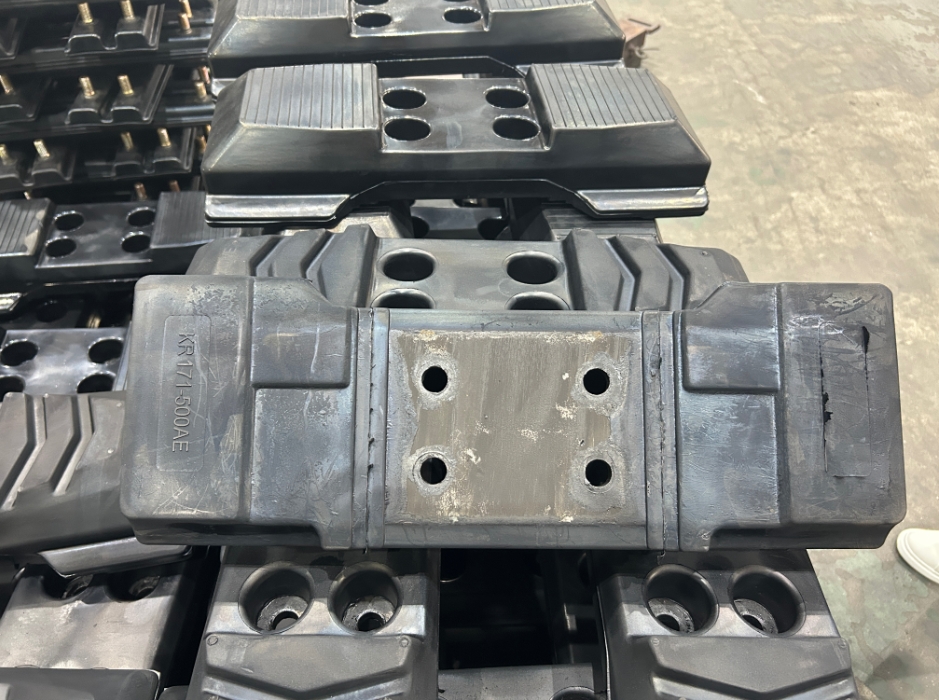
Deciding between bare steel tracks and rubber-padded tracks requires a thorough understanding of the project’s specific demands and terrain. While steel remains the historical standard for rugged earthmoving and heavy excavation, rubber pads offer a specialized alternative that prioritizes surface preservation, regulatory compliance, and community relations in densely populated areas.
Key Comparison Points
To illustrate the differences clearly, we have compiled a comparison of performance metrics between bare steel tracks and rubber-equipped tracks. Understanding these baseline differences helps project managers allocate machinery more effectively.
| Metric | Bare Steel Tracks | Rubber Pads |
|---|---|---|
| Ground Damage Risk | High (scarring, gouging, cracking) | Minimal (surface protection) |
| Noise Generation | High (metal-on-stone/pavement clanking) | Low (dampened vibrations) |
| Typical Lifespan | 3,000 to 4,000+ operating hours | 1,000 to 1,500 operating hours |
| Ideal Terrain | Mud, jagged rock, demolition debris | Asphalt, concrete, turf, urban streets |
| Hard Surface Traction | Poor (high slippage risk) | Excellent (high friction coefficient) |
We consistently observe that rubber provides superior traction on slick concrete, reducing the risk of accidental sliding that can compromise worker safety.
Main Trade-Offs to Consider
The primary trade-off we must navigate is durability versus surface protection. Steel tracks are virtually indestructible in harsh environments like quarries, forestry sites, or demolition zones with exposed rebar. However, if a 15-ton excavator drives over a finished curb or residential driveway with bare steel, the resulting damage can cost thousands of dollars in emergency repairs. Conversely, rubber pads will degrade rapidly if subjected to sharp, jagged rocks or highly abrasive demolition debris, often reducing their expected lifespan from 1,500 hours down to less than 500 hours. We must weigh the upfront cost of outfitting a machine with pads—typically ranging from $1,500 to $4,000 per set depending on the machine size—against the potential remediation costs and municipal fines associated with damaged infrastructure.
How to Select, Install, and Maintain Rubber Pads
Properly outfitting our fleet requires precise measurements, careful selection, and a strong commitment to routine maintenance. Selecting the wrong size or attachment style not only risks damaging the machine’s undercarriage but also compromises safety and efficiency on the job site. Careful planning ensures the pads perform as intended without causing unexpected downtime.
Sizing and Sourcing Steps
When we source these components, we first measure the width of the steel shoe, the pitch of the chain, and the bolt hole spacing. Standard widths range from 300mm for mini-excavators up to 600mm or more for mid-sized machines. For semi-permanent applications, bolt-on pads are ideal because they bolt directly through pre-drilled holes in the steel shoe, providing maximum stability. Clip-on pads offer faster installation—often taking a two-person crew less than three hours to outfit an entire machine—by wrapping secure brackets around the edges of the existing steel shoe. Regardless of the style, we always verify that the mounting hardware is torqued to the manufacturer’s specifications, typically between 150 and 200 Nm, to prevent dangerous loosening during operation.
When Rubber Pads Are the Right Choice
We ultimately recommend rubber pads for any project where environmental stewardship, noise reduction, and infrastructure protection are non-negotiable priorities. If a contract stipulates strict ground disturbance limits or requires operating on finished roadways without deploying cumbersome wooden or composite protective mats, these pads become a mandatory operational investment. To protect this investment, we implement a daily inspection routine. Operators must check for chunking, deep tearing, or loose bolts at the end of every shift. Furthermore, operators should avoid zero-degree pivot turns on abrasive surfaces, as this drastically accelerates wear. By adhering to these maintenance protocols, we can maximize the return on investment and ensure our equipment operates efficiently and sustainably across sensitive terrains.
Key Takeaways
- Use rubber pads on excavators working over asphalt, concrete, turf, or landscaped areas to reduce cracking, gouging, and costly site repairs.
- Choose high-density rubber pads with a Shore A hardness of about 70 to 80 for a balance of flexibility, impact absorption, and durability.
- Consider rubber pads for urban and municipal work because they can reduce track noise by roughly 10 to 15 decibels compared with steel-on-pavement contact.
- Match the mounting style—bolt-on, clip-on, or road-liner—to your fleet’s need for installation speed, attachment security, and job-to-job flexibility.
- Plan maintenance and replacement around expected rubber pad life of about 1,000 to 1,500 operating hours, especially on abrasive or debris-heavy sites.
- Reserve bare steel tracks for rugged terrain such as rock, mud, and demolition debris, and use rubber pads when surface preservation and community impact matter most.
Frequently Asked QuestionsWhat do rubber pads do on an excavator?
Rubber pads attach to steel track shoes to create a protective buffer between the excavator and the ground, reducing surface scarring, vibration, noise, and damage to asphalt, concrete, turf, or sensitive soil.
Where are excavator rubber pads most useful?
They are most useful on urban streets, residential sites, landscaped areas, historical properties, sidewalks, driveways, and municipal utility projects where surface protection and lower noise levels are priorities.
How much noise can rubber pads reduce?
Rubber pads can reduce operational noise by about 10 to 15 decibels compared with bare steel tracks on pavement, helping crews work more comfortably and meet local noise restrictions.
Do rubber pads help protect trees and soil?
Yes. By spreading machine weight more evenly and softening track contact, rubber pads can reduce soil compaction around root zones, which helps protect mature trees and fragile landscaping.
How long do excavator rubber pads typically last?
Rubber pads commonly last about 1,000 to 1,500 operating hours, depending on terrain, machine weight, turning habits, installation quality, and exposure to sharp debris or abrasive surfaces.
About Us
Before Gator Track factory, we are AIMAX, trader for rubber tracks for over 15 years. Drawing from our experience in this field, to better serve our customers, we felt the urge to build a factory of our own, not in pursuit of quantity we can sell, but of each good track we built and make it count.
Media Contact
Company Name: Gator Track Co., Ltd.
Contact Person: Media Relations
Email: Send Email
Country: China
Website: https://www.gatortrack.com/