
Chengdu City, Sichuan Province, China- September 22, 2026
When it comes to buying a 7.5 Kw Car Charger from China, folks shouldn’t just look at the price and call it a day. A good, reliable charger needs to have a decent mix of stable power output, compatibility with your car’s connectors, weatherproofing, and solid after-sales support. At 7.5 kW, just an hour of charging can really boost the driving range for many everyday electric vehicles — but, of course, how much you actually get depends on your battery size, your car’s limits, and even local electricity conditions.Fatih Birol, the boss of the International Energy Agency, once said, “The future of road transport is electric.” It’s a clear sign of where things are headed, but when you’re actually choosing a charger, specifics matter big time. A responsible supplier should be transparent—think test reports, installation tips, warranty info, and details on regional standards. It’s also worth inspecting things like cable length, the quality of the enclosure, how well it handles temperature swings, and whether it’s got a standby power mode. Small details like these really make a difference.Take a good look at what you’re getting. A solid 7.5 kW charger might come with features like load balancing, scheduled charging, fault protection, and even mobile monitoring. These are handy whether you’re setting it up at home, at work, in an apartment complex, or a small business. But here’s the thing—no one-size-fits-all model exists. Something designed for a temperate climate might struggle in coastal humidity or during a chilly winter. Honesty about these limitations is important.Some buyers are also on the lookout for chargers with smart connectivity and flexible installation options. If that’s you, make sure to check the manufacturer’s experience in production, how they control quality, their policy on replacements, and how fast they respond to questions. No claim of “universal compatibility” or “fastest charging” should go unverified. And honestly, even the most detailed advice here can’t fully replace an on-site electrical assessment. The best charger isn’t necessarily the cheapest — it’s the one that works reliably, guarantees safety, and offers good support long after it’s installed.
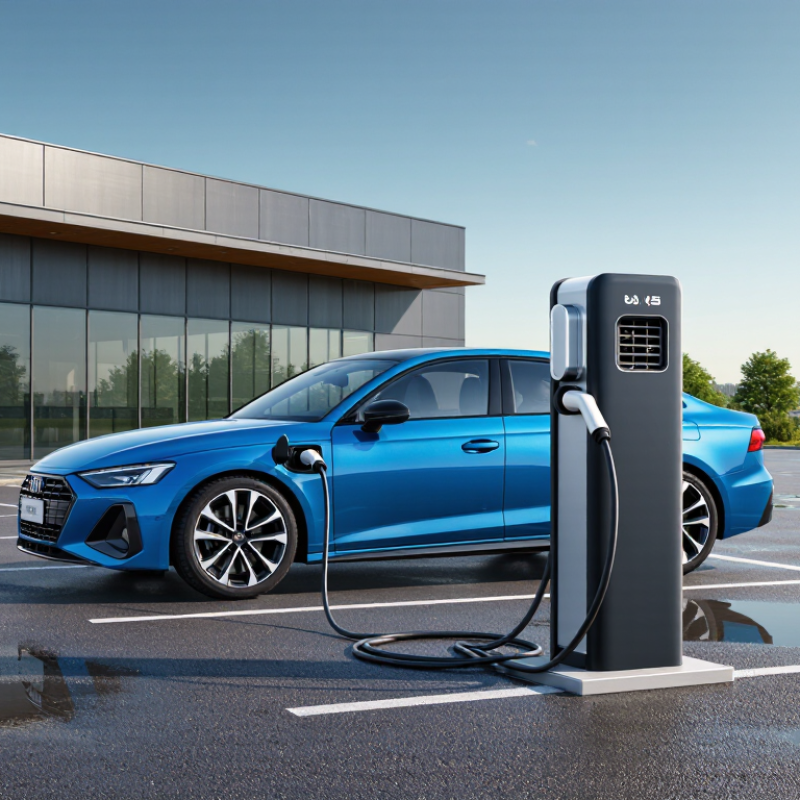
What Is a 7.5 kW Car Charger and How Does It Work?What Is a 7.5 kW Car Charger and How Does It Work?
A 7.5 kW car charger is usually an AC Home Charger for electric vehicles. It delivers about 7,500 watts to the vehicle under suitable conditions. At 230 volts, it draws approximately 32.6 amps. The car’s onboard charger then converts AC electricity into DC power for the battery.
The charging process is not always as fast as the label suggests. A vehicle with a 7.4 kW onboard charger may accept nearly the full output. Another model may limit charging to 3.6 kW or less. Battery temperature, charging level, cable quality, and household voltage also affect performance. For example, a 50 kWh battery could need around seven hours in real conditions, including energy losses. That estimate can change.
Tips:Check the vehicle’s maximum AC input before buying. Confirm that the home circuit supports continuous high-current charging. Proper earthing and residual-current protection matter. A qualified electrician should inspect the installation. Keep the cable dry and avoid sharp bends. The charger should also show clear status lights and fault warnings.
In practical use, charging often slows near full capacity. This protects the battery. I initially viewed the power rating as the main buying factor, but that was too simple. Compatibility and installation quality can matter more than a small increase in output.
Why Choose a China-Made 7.5 kW Car Charger?
Why Choose a China-Made 7.5 kW Car Charger?China-made 7.5 kW car chargers suit drivers who need practical overnight charging. A typical unit delivers 32 amperes at 230–240 volts. That can add roughly 35–45 kilometers of range per hour, depending on vehicle efficiency. The International Energy Agency reported that China held more than half of the world’s public charging points in 2023. This large domestic market encourages fast product testing, wider component supply, and competitive engineering costs.Experience still matters more than price. Before purchasing, verify IEC 61851 control functions, IEC 62196 connector compatibility, residual-current protection, thermal monitoring, and enclosure ratings. Ask for test reports, production-batch traceability, and clear warranty terms. A charger designed for Chinese electrical conditions may need different plugs, cables, or protection settings abroad. Regional voltage is not a minor detail.Small details affect daily reliability. Look for a flexible cable that remains manageable in winter, a readable screen, and mounting hardware suited to concrete walls. Independent inspection is valuable. The IEA’s Global EV Outlook also shows charging demand expanding rapidly as electric-car sales rise, increasing pressure on home equipment and local grids. A lower purchase price can hide weaker documentation or limited after-sales support. That risk deserves honest attention. China offers strong manufacturing depth, but buyers should judge each charger by verified safety, compatibility, and service evidence rather than origin alone.
Why Choose a China-Made 7.5 kW Car Charger?
Estimated Ac Charging time for common electric-vehicle battery capacities using a 7.5 kW charger. Calculations assume 90% overall charging efficiency: charging time = battery capacity ÷ 7.5 kW ÷ 90%.
A 7.5 kW charger can replenish approximately 7.5 kWh of energy per hour before charging losses. Actual results vary with vehicle limits, battery temperature, state of charge, and installation conditions.
Which Technical Features Matter Most for Global Buyers?China Best 7.5 kW Car Charger for Global Buyers?
For global buyers, the most important feature is electrical compatibility. A 7.5 kW Ev Car Charger usually delivers about 32A at 230V. However, household voltage and frequency vary across regions. A reliable unit should support adjustable current settings, such as 6A to 32A, for safer installation and better grid compatibility. Confirm the connector type before ordering. Small details matter.
Protection features deserve close attention. Look for built-in overcurrent, overvoltage, overheating, and residual-current protection. DC leakage detection can reduce the need for additional protective equipment in some installations. An IP54 or higher enclosure helps resist dust and water splashes. Yet IP ratings do not replace correct mounting. Outdoor walls still need proper drainage and shelter.
In practical installations, cable handling is often overlooked. A five-meter cable may suit most driveways, while a longer cable can create unnecessary weight and storage problems. Load balancing is valuable when an oven, heat pump, and charger share one circuit. Smart scheduling can also reduce charging during expensive peak periods. Connectivity is useful, but stable offline charging should remain available. I once assumed every buyer wanted mobile control. That assumption can fail. Local certification, clear wiring instructions, and accessible service support matter more than decorative screens. Check these details with a qualified electrician before purchase.
How to Compare Safety, Charging Speed, and Energy Efficiency?
When comparing a 7.5 kW Car Charger Ev, start with safety rather than advertised speed. At 230 volts, it may draw nearly 32 amps continuously. Check for residual-current protection, overcurrent control, temperature monitoring, and a grounded connection. A weather-resistant enclosure matters when rain reaches the driveway. The cable should feel thick, flexible, and free from heat damage after use.
Charging speed depends on more than the charger rating.A vehicle with a 7.4 kW onboard charger can approach the listed output, while another may accept less. Measure the charging session from the car’s display and the household meter. For example, adding 30 kWh may take about four hours, though battery temperature and charging losses change the result. Faster is not always better.
Energy efficiency deserves a closer look. Compare electricity drawn from the wall with energy stored in the battery. Small losses are normal, but unusually high losses may indicate poor design or unsuitable installation. Look for sleep-mode controls, adjustable current settings, and load balancing when other appliances run. One practical mistake is testing only during mild weather. Cold mornings can expose weak cables, slow charging, or unstable protection. I would also question unclear test data. Honest specifications should state voltage, current, efficiency conditions, and protection features.
What Certifications and Standards Should International Buyers Verify?
For a 7.5 kW Wall Charger Car, international buyers should verify more than charging speed. A typical unit draws about 32 amps from a 230-volt single-phase supply. Confirm this rating matches the destination’s electrical system. An attractive product page is not enough.Check compliance with IEC 61851 for Electric Vehicle Charging Equipment and IEC 62196-2 for the charging connector. IEC 62955 is also important when the charger includes DC residual-current protection. For Europe, review the CE Declaration of Conformity, EMC results, and low-voltage safety documents. CE is a manufacturer’s declaration, not always an independent certificate. This detail is easy to miss.Buyers in North America should request applicable safety evidence, such as UL or CSA evaluation, based on the installation market. Verify the exact model number, test laboratory, certificate scope, and issue date. The report should cover the complete charger, not only its cable. Also inspect IP ratings, grounding, over-temperature protection, and emergency shutdown functions. A Type A residual-current device with 6 mA DC detection may be required by local rules. Ask a licensed electrician to confirm this.I have seen buyers focus on connector shape and overlook grid frequency. That mistake can delay installation. Local inspection requirements may also differ between homes, workplaces, and public sites. Certification documents should be readable, traceable, and consistent with the unit’s label. When evidence is incomplete, pause the order.
China Best 7.5 kW Car Charger for Global Buyers? — What Certifications and Standards Should International Buyers Verify?
| Target Market | Typical 7.5 kW Electrical Configuration | Core Product Standards to Verify | Safety, EMC, and Installation Requirements | Market Access Mark or Approval | Documents to Request | Verification Priority |
|---|---|---|---|---|---|---|
| European Union and EEA | Single-phase AC supply, commonly 220–240 V and 50 Hz.At 230 V, 7.5 kW requires approximately 32.6 A. | IEC 61851-1 for conductive charging system requirements.IEC 62196-2 for AC vehicle connector and inlet interfaces.IEC 62955 where DC residual-current detection is used in the Ev Charging equipment. | IEC 60364-7-722 for EV charging installation requirements.Applicable EMC requirements under the IEC 61000-6 series.Low-voltage and electromagnetic-compatibility conformity assessment are normally relevant. | CE marking requiredThe applicable EU directives and regulations depend on the product design, voltage range, radio functions, and intended use. | EU Declaration of Conformity.Test reports identifying the exact model and rated current.Technical file summary, user manual, wiring instructions, and residual-current protection details. | High |
| United Kingdom | Single-phase AC supply, typically 230 V and 50 Hz.A 7.5 kW load is normally close to a 32 A circuit rating. | BS EN IEC 61851-1 and BS EN IEC 62196-2 are commonly used for AC EV charging equipment and interfaces.The applicable British-adopted versions should be confirmed for the product category. | BS 7671, including the EV charging installation provisions, is relevant to fixed installations.Verify electrical protection, earthing, PEN-fault protection where applicable, and EMC test coverage. | UKCA or accepted CE routeThe required conformity route can depend on the current UK product regulations and destination within the UK. | UK Declaration of Conformity or applicable conformity documentation.Product test reports, installation instructions, and evidence of required protective functions. | High |
| United States | Single-phase AC supply, commonly 208–240 V and 60 Hz.At 240 V, 7.5 kW requires approximately 31.3 A. | UL 2594 for electric vehicle supply equipment is commonly used for AC EVSE evaluation.UL 2231-1 and UL 2231-2 address personnel-protection systems for EV charging circuits.Confirm the exact edition and certification scope. | National Electrical Code Article 625 is relevant to EVSE installation.Verify grounding, overcurrent protection, enclosure rating, conductor temperature, and GFCI or equivalent personnel protection. | NRTL certification commonly requiredLocal authorities and utilities may require certification by an accepted testing laboratory before permitting or interconnection. | Certificate or listing record for the exact model.Construction and performance test reports.Installation manual specifying circuit breaker, conductor size, temperature rating, and environmental limits. | Very high |
| Canada | Single-phase AC supply, commonly 208–240 V and 60 Hz.Confirm whether the equipment is intended for residential, commercial, indoor, or outdoor installation. | Canadian electrical safety certification should cover the complete EVSE assembly.Standards harmonized with North American EVSE safety requirements may be used, but the certification mark must be accepted in the target province or territory. | The Canadian Electrical Code and local installation rules apply.Verify grounding, branch-circuit protection, environmental enclosure rating, and cold-weather operating limits. | Canadian certification mark requiredAcceptance can vary by province, territory, inspection authority, and installation type. | Certification certificate for the exact model and variant.Canadian installation instructions, temperature ratings, wiring diagrams, and inspection documentation. | Very high |
| Australia and New Zealand | Single-phase AC supply, generally 230–240 V and 50 Hz.A 7.5 kW charger typically operates near the practical limit of a 32 A circuit. | AS/NZS 61851.1 for conductive charging system requirements.AS/NZS 62196.2 for applicable AC vehicle couplers and inlets.Confirm the required local adoption and edition. | AS/NZS 3000 and applicable EV installation provisions are relevant.EMC evidence should address the applicable AS/NZS 61000 series requirements.Verify residual-current protection and outdoor enclosure performance. | RCM registration commonly requiredThe responsible supplier and applicable electrical safety obligations should be identified before sale. | Declaration of conformity, EMC and electrical safety test reports, RCM-related records, wiring instructions, and installer requirements. | High |
| Japan | Single-phase AC supply, commonly 100 V or 200 V and 50/60 Hz.A 7.5 kW unit generally requires a 200 V supply and approximately 37.5 A. | Verify compatibility with the Japanese AC charging interface and applicable domestic adoption of IEC-based EV charging standards.The connector, communication method, and rated current must match the intended vehicle and installation. | Confirm Japanese electrical installation rules, grounding, branch-circuit capacity, earthquake considerations, and local electromagnetic-compatibility requirements. | Approval depends on product scopeDetermine whether the equipment falls under applicable Japanese electrical safety notification or marking requirements. | Japanese-language manual where required, local conformity documents, connector compatibility evidence, electrical ratings, and installation approval information. | High |
| China | Single-phase AC supply, commonly 220 V and 50 Hz.At 220 V, 7.5 kW requires approximately 34.1 A. | GB/T 18487.1 for conductive charging system requirements.GB/T 20234.2 for AC charging couplers and vehicle inlets.Confirm that the charging connector and communication arrangement are for the intended domestic or export market. | Verify Chinese electrical safety, EMC, protection, and installation requirements applicable to the product category.Do not assume a domestic test report automatically satisfies another country’s requirements. | CCC or other domestic approval may applyThe applicable Chinese certification route depends on the equipment classification and sales channel. | Chinese conformity documents, GB/T test reports, factory inspection records where applicable, product ratings, and export-market test reports for the destination country. | High |
| South Korea | Single-phase AC supply, commonly 220 V and 60 Hz.Confirm the local plug, hardwired connection method, and rated-current setting. | Verify conformity with Korean EV charging safety requirements and the applicable domestic adoption of IEC-based charging standards.Check connector, control-pilot, and communication compatibility. | Confirm local electrical installation rules, grounding, overload protection, residual-current protection, and EMC requirements. | Local safety approval may applyThe required approval depends on the product classification, importer, and sales channel. | Korean conformity certificate or registration evidence, safety and EMC reports, Korean-language instructions, and exact-model identification. | High |
| Markets with Wi-Fi, Bluetooth, or Cellular Functions | The charging power remains approximately 7.5 kW, but the communication module creates additional regulatory obligations. | The base EVSE standards remain applicable.The wireless module must also meet the radio, electromagnetic compatibility, and cybersecurity requirements of the destination market. | Verify radio-frequency emissions, immunity, intentional-radiator testing, antenna configuration, software version, and cybersecurity documentation. | Radio approval required where applicableExamples include regional radio-equipment conformity or national telecommunications approval. | Radio test report for the installed module, antenna details, approved software and firmware versions, declarations, and records for any modular approval limitations. | High |
| All International Buyers | Confirm whether “7.5 kW” is continuous output, maximum input, or a configurable setting.Check voltage, frequency, phase, maximum current, duty cycle, and derating. | Confirm the exact connector standard, vehicle communication method, cable rating, ingress protection, impact rating, and operating temperature range.A generic CE or test statement is not a substitute for model-specific evidence. | Verify overcurrent protection, residual-current detection, protective earth monitoring, isolation, surge protection, thermal protection, and safe failure behavior.Confirm that installation requirements match the destination country. | Exact-model conformity is essentialThe mark, certificate, and report should identify the same hardware, firmware, current rating, connector, and enclosure variant. | Request certificates, declarations, complete test reports, factory quality records, user and installation manuals, wiring diagrams, IP and impact test evidence, and sample labels. | Mandatory review |
How to Evaluate Suppliers, Pricing, Warranty, and After-Sales Support?
China Best 7.5 kW Car Charger for Global Buyers?Selecting a 7.5 kW car charger starts with supplier evidence, not attractive photographs. Ask for factory audit records, product test reports, and serial-number traceability. A reliable supplier should explain electrical compatibility for your target market. Confirm connector standards, enclosure protection, cable quality, and thermal performance. Request a working sample before placing a large order. Real testing reveals more than polished sales language.Pricing needs a wider view. Compare the charger, packaging, shipping, import costs, installation materials, and possible replacement parts. A low unit price may hide weak cables or limited technical support. Review the warranty carefully. Check its duration, covered components, labor responsibility, and claim procedure. After-sales support should include response times, troubleshooting documents, firmware guidance, and accessible spare parts. Ask whether support remains available after payment. That question matters. I have seen buyers focus on purchase price and later regret ignoring service delays. Comparing a 7.5 kW model with an 11kw Car Charger also requires checking installation capacity, not only charging speed.Tips: Ask for a written quotation with every cost listed. Test communication before ordering. Keep photos of packaging and serial numbers. Request clear answers, even if they seem basic. If a supplier avoids technical questions, pause the evaluation. A perfect supplier probably does not exist, and that assumption needs regular review.
3kW Portable EV Charger: A Practical Guide to Convenient, Safe, and Flexible Home Charging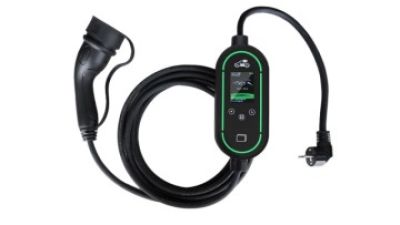
3kW Portable EV Charger
A 3kW portable EV charger offers a practical way to keep your electric vehicle ready for everyday travel. Unlike a fixed home charging unit, its compact design can move with you, making it useful at home, at work, or while stopping at a shopping location. Simply connect it to a suitable power outlet and your vehicle to add energy without depending entirely on public charging stations.Safety and flexibility are essential when choosing a portable charger. A dependable model should include clear status indicators, stable connections, and protection against common electrical issues such as overheating, overcurrent, and leakage. Before charging, check that the outlet and circuit can support the required power, keep the cable away from standing water, and place the charger on a clean, dry surface. Following the vehicle and charger instructions also helps ensure a reliable experience.With a 3kW charging rate, this type of charger is well suited to overnight charging, workplace top-ups, and convenient energy boosts during daily errands. It may charge more slowly than high-power public equipment, but its portability provides greater freedom and peace of mind. Whether parked in a garage, office lot, or shopping area, a portable EV charger can make charging easier to fit into your routine.
Conclusion
A 7.5 Kw Car Charger is an AC charging solution designed to deliver approximately 7.5 kilowatts of power to compatible electric vehicles, offering a practical balance between charging speed, installation requirements, and daily usability. For global buyers, China-made chargers can provide flexible configurations, competitive pricing, efficient production, and customizable options. However, selecting the right model requires careful comparison of output stability, connector compatibility, smart control functions, weather resistance, energy efficiency, and built-in protections against overcurrent, overvoltage, overheating, and leakage.International buyers should verify relevant safety certifications, electrical standards, testing reports, and compliance requirements for their target markets. Supplier evaluation should include manufacturing experience, quality-control procedures, sample testing, transparent pricing, minimum order quantities, warranty terms, spare-parts availability, delivery capability, and responsive after-sales support. By assessing safety, charging performance, efficiency, documentation, and long-term service together, buyers can choose a reliable 7.5 Kw Car Charger that supports secure operation and dependable use across different regions.
About US
Chengdu AEFA Electronic Technology Co., Ltd. was established in 2015 and is headquartered in Chengdu, Sichuan Province, the science and technology innovation center of southwest China and the hometown of pandas. As a high-tech enterprise specializing in the research, development, production and sales of electric vehicle charging equipment, we have a modern industrial park covering an area of 22 acres and equipped with 15,000 square meters of standard factory buildings, committed to providing high-quality charging solutions for global customers.
Media Contact
Company Name: Chengdu AEFA Electronic Technology Co., Ltd.
Contact Person: Media Relations
Email: Send Email
Country: China
Website: https://www.aefa-evse.com/