
Xi’an City, Shaanxi Province,China – September 22, 2026
China has really become a major hub for making compact solar equipment, especially those nifty little balcony panels you see in urban homes. This guide takes a look at the top 10 suppliers of Balcony Solar Panels in China, and more importantly, what sets reliable manufacturers apart from just pretty-looking online listings. We focus on real product evidence—like performance and quality—rather than just shiny marketing talk.We evaluate each supplier based on practical stuff: how efficient their panels are, whether they’re compatible with microinverters, design features for mounting, warranty details, and whether they have solid quality control documented. Since balcony setups are generally small, dealing with uneven railings, and household power needs can change, little details really count. Things like a sturdy frame, tidy wiring, and easy-to-use monitoring can save you from costly mistakes during installation.We also look at how experienced they are in manufacturing, their ability to export, the tech support they offer, and what customers are saying. Certifications like CE, TÜV, or IEC test reports help build credibility, but honestly, paperwork isn’t everything—what really matters is real project references. Oh, and response time matters too—especially if you get a faulty inverter on a cloudy day. Before ordering, it’s smart to check your local grid requirements because specs can vary between batches—that’s definitely worth a double-check.Keep in mind, some rankings are a bit subjective since not all data from suppliers is complete. Things like pricing, production capacity, and after-sales support can change pretty fast. Even if a company has top-notch factory gear, they might still drop the ball on installation guidance. So, while this guide offers solid comparisons, always remember to do your own homework—ask for current datasheets, sample reports, and clear warranty info before making any purchase.
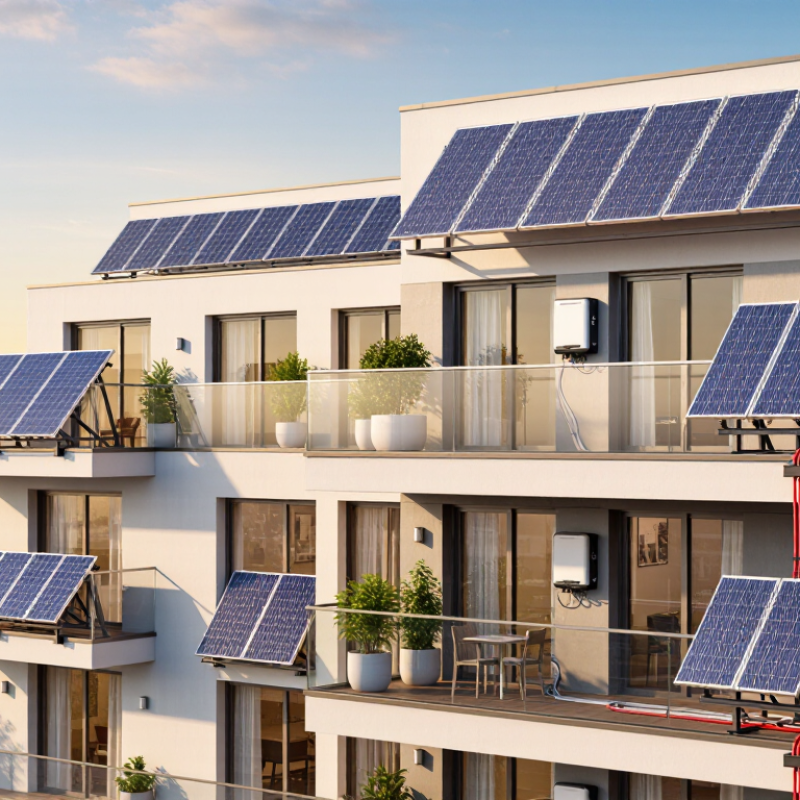
What Are Balcony Solar Panels and How Do They Work?
China Top 10 Balcony Solar Panels Suppliers?What Are Balcony Solar Panels and How Do They Work?Balcony solar panels are compact photovoltaic modules designed for apartments and small homes. A Balcony Photovoltaic System usually includes panels, a microinverter, mounting hardware, and connecting cables. Some systems also include a small battery. The panels convert sunlight into direct current electricity. The microinverter changes it into household alternating current. This power can support daily loads, such as a refrigerator, router, or desk lamp.The system normally connects through a dedicated household circuit or approved outlet. Its performance depends on balcony direction, shading, tilt, panel size, and local weather. A clear south-facing balcony may produce more energy than a shaded larger balcony. Real results are rarely perfect. Nearby buildings, railings, and dust can reduce output noticeably. Suppliers should provide electrical specifications, installation guidance, warranty terms, and safety documentation. Independent verification is wise, especially for load limits and grid connection rules.Tips: Measure the balcony first. Check its weight capacity and sunlight hours. Keep cables protected from rain and movement. Do not block emergency access. Ask a qualified electrician to review the connection. Battery storage may improve evening use, but it adds cost, weight, and maintenance. A supplier with attractive pricing is not always the safest choice. Compare tested components, clear instructions, after-sales support, and realistic energy estimates. Expect some seasonal variation. That is normal.
Balcony solar systems commonly use compact panels with a total capacity of approximately 300–800 W. The estimated daily energy output below assumes 4 peak sun hours and an 85% system efficiency factor, including inverter and wiring losses. Actual production varies with location, orientation, shading, and weather.
Why China Is a Major Source of Balcony Solar Panel Suppliers
China has become a major source of balcony solar panel suppliers because its manufacturing network is unusually complete. Cells, glass, aluminum frames, microinverters, cables, and packaging can often be sourced within one industrial region. This shortens production cycles and supports flexible order quantities. A typical balcony system may include lightweight panels, a compact inverter, mounting brackets, and monitoring software. It must fit a railing safely, not merely generate power.
Many Chinese suppliers also serve overseas markets, including Rv Solar Panels and residential energy projects. Their export experience can help with documentation, packaging, product testing, and regional electrical requirements. Some factories offer customized cable lengths, frame colors, mounting designs, and private labeling. That is useful for distributors with different apartment layouts. Still, customization is not proof of quality.
The strongest suppliers provide clear electrical specifications, verified test reports, installation guidance, and traceable component information. Buyers should check inverter compatibility, waterproof ratings, wind-load data, warranty terms, and after-sales support. Ask for sample units before placing a large order. Small details matter. A poorly matched bracket may scratch a balcony rail or create unsafe movement in strong wind. Low pricing can also hide weaker connectors or unclear certification. China offers scale and technical depth, but supplier screening remains essential. Not every attractive catalog reflects dependable field performance.
How to Evaluate China’s Top 10 Balcony Solar Panel Suppliers
Evaluating China’s top 10 balcony solar panel suppliers requires more than comparing wattage and price. Start with verifiable evidence. Request dated datasheets, factory test reports, and certificates matching the exact model offered. Check cell type, output tolerance, temperature performance, and degradation guarantees. A polished website is not proof. Supplier ranking should reflect balcony installation experience, not only large Roof Solar Panels projects. Ask for recent customer references and installation photos showing rail clamps, cable routing, and protective spacing. Small details matter.
Technical fit comes before a low quotation. Measure the balcony rail, available sunlight, shading hours, and allowable weight. Confirm compatibility with the proposed microinverter, battery, and household electrical system. Ask about plug standards, monitoring software, waterproof connectors, and replacement procedures. Reliable suppliers explain limitations clearly. Be cautious when sales staff promise maximum output under every weather condition. Real output often falls during cloudy afternoons or partial shade. Regional grid rules and electrical certificates also require checking.
Compare all ten suppliers using the same checklist. Review sample quality, response time, warranty wording, spare-part access, lead time, and payment safeguards. An independent factory audit can reveal crowded storage, weak labeling, or inconsistent inspection records. I would not judge a supplier from one impressive video. One overlooked issue is after-sales support. Ask who handles a failed connector six months after delivery. Packaging damage during coastal transport is another practical risk. Photograph every carton at arrival. Keep the assessment evidence-based, even when the cheapest offer feels attractive.
Key Products and Technologies Offered by Leading Suppliers
Leading balcony solar suppliers are expanding beyond compact photovoltaic modules. Their core products usually include 400–500 watt panels, microinverters, mounting rails, cables, and optional battery storage. Some suppliers offer bifacial modules, which can capture reflected light from pale balconies or nearby walls. Flexible panels are lighter, but their long-term output may be less predictable.Technology choices are becoming more measurable. The IEA PVPS Trends 2024 report recorded more than 400 gigawatts of new solar capacity worldwide in 2023, increasing demand for smaller distributed systems. The Fraunhofer ISE Photovoltaics Report 2024 showed commercial crystalline-silicon modules exceeding 23% efficiency. For balcony systems, suppliers commonly add multiple maximum power point tracking channels, app-based monitoring, and anti-islanding protection. These features help users track output and support safer grid connection.Small details matter. A shaded railing can reduce production sharply. Battery-ready inverters improve evening use, but they add cost, weight, and installation complexity. Certification under standards such as IEC 61215, IEC 61730, and IEC 62109 should be checked before purchase. Efficiency claims can mislead. Real output depends on angle, temperature, shading, and cable losses. I would also question suppliers that publish only laboratory figures, because a dusty urban balcony rarely behaves like a test site.
China Top 10 Balcony Solar Panels Suppliers? – Key Products and Technologies Offered by Leading Suppliers
| Supplier Profile | Main Product Configuration | Typical Module Power | Module Efficiency | Balcony Mounting Solution | Microinverter Technology | Energy Storage Options | Key Safety and Monitoring Features |
|---|---|---|---|---|---|---|---|
| Profile 01 | Glass-glass monocrystalline photovoltaic modules | 400–470 W | 20.5%–23.5% | Adjustable balcony rail and wall-mounted brackets; aluminum alloy construction | Single or dual-module microinverters with MPPT control | Plug-in lithium iron phosphate batteries, typically 1.2–2.4 kWh | Anti-islanding protection, IP65 or higher enclosures, app-based generation monitoring |
| Profile 02 | N-type TOPCon monocrystalline modules for compact installations | 410–500 W | 21.0%–23.8% | Tilt-adjustable frames for vertical or slightly inclined balcony placement | High-frequency MPPT, rapid shutdown support, and low-light operating capability | AC-coupled storage systems from approximately 1.6–5.0 kWh | Residual-current monitoring, temperature protection, overload protection, and Wi-Fi connectivity |
| Profile 03 | Bifacial glass-glass modules designed for high-reflectance surroundings | 400–480 W | 20.0%–23.2% | Rear-ventilated railing systems with corrosion-resistant fasteners | Module-level MPPT and reactive-power control for grid-connected operation | Modular LFP battery packs, commonly expandable to 5–10 kWh | Cell balancing, battery-management system, insulation monitoring, and online diagnostics |
| Profile 04 | Lightweight monocrystalline modules for apartment balconies | 350–430 W | 19.5%–22.5% | Low-load aluminum frames and non-penetrating clamp systems | 600–800 W plug-in microinverter configurations with built-in MPPT | Optional AC battery units, generally 1–2 kWh per module set | Ground-fault monitoring, over-voltage protection, and simplified plug-and-play commissioning |
| Profile 05 | High-power N-type modules with half-cut cell architecture | 430–520 W | 21.2%–24.0% | Rail-mounted systems with adjustable tilt and wind-load reinforcement | 900–1,200 W dual-input microinverters with independent MPPT channels | Hybrid inverter and LFP storage packages from 2.5–10 kWh | Surge protection, anti-islanding, remote firmware updates, and power-limit settings |
| Profile 06 | Compact photovoltaic kits combining modules, inverter, and cabling | 380–450 W | 20.0%–22.8% | Pre-assembled balcony kits with hook, clamp, or wall-bracket options | Integrated 600–1,000 W microinverters supplied with AC disconnects | Optional plug-in LFP storage with approximately 80% usable-depth design target | LED status indicators, app monitoring, circuit protection, and preconfigured wiring |
| Profile 07 | Dual-glass modules optimized for durability in humid and coastal climates | 390–470 W | 20.3%–23.3% | Anodized aluminum mounting rails with stainless-steel hardware | Microinverters with IP67-rated outdoor housing and thermal derating control | Outdoor LFP battery units with approximately 2–7 kWh usable capacity | Moisture resistance, surge protection, thermal sensors, and cloud-based fault alerts |
| Profile 08 | Aesthetic black-backsheet modules for residential façade integration | 380–460 W | 20.1%–23.0% | Slim-profile façade and balcony railing mounts with concealed cable routing | Low-noise microinverters with module-level performance reporting | AC storage add-ons, commonly available in 1.5–3.0 kWh modules | Arc-fault detection availability, anti-islanding, and real-time household consumption data |
| Profile 09 | Flexible and semi-flexible solar modules for lightweight balcony structures | 100–220 W per panel | 17.0%–21.0% | Adhesive, cable-tie, or lightweight rail installation where structural loading is restricted | Low-voltage MPPT controllers or compact microinverters for small arrays | Portable LFP power stations and small DC battery systems | Bypass diodes, short-circuit protection, battery temperature monitoring, and portable app control |
| Profile 10 | Complete balcony energy systems integrating solar generation and home backup | 400–500 W | 20.5%–23.8% | Modular rail, wall, and ground-support options with adjustable installation angles | Hybrid microinverter systems supporting export limitation and battery charging | Scalable LFP storage, commonly configured from 2–15 kWh | Battery-management system, emergency shutdown, load prioritization, energy forecasting, and remote service access |
Technical figures are representative ranges commonly specified for China-manufactured balcony photovoltaic products; final values depend on the selected model, certification market, installation conditions, and local grid requirements.
Certification, Safety, Warranty, and Quality Standards to Check
When comparing China’s top balcony solar panel suppliers, certification should be checked before price. Ask for current test reports, not copied certificates or unclear scans. For modules, IEC 61215 and IEC 61730 reports indicate performance and electrical safety. Thin Solar Panels may need extra review because their structure and mounting methods can differ.
Safety begins with the complete system, not the panel alone. Check the microinverter’s relevant IEC safety certification and grid-connection approval for the destination market. Inspect cable insulation, connectors, grounding points, and balcony brackets. A loose bracket can become dangerous during strong wind. Ask whether installers perform insulation resistance and earth continuity tests. Photographs of finished installations can reveal practical experience, although photos alone prove little.
Warranty terms deserve careful reading. Separate product warranty from power-performance warranty, then check exclusions, claim procedures, response times, and replacement responsibilities. A supplier should provide serial-number tracking and written quality records. Factory audits, EL testing, flash-test data, and random incoming inspections improve confidence. Ask how damaged units are handled after delivery. Some suppliers answer quickly before payment, then slowly afterward. That is not always proof of poor quality, but it deserves attention. I would also request a small sample order before committing to a large balcony project. Minor details matter. A beautiful datasheet cannot compensate for weak documentation, uncertain testing, or poor after-sales support.
How to Compare Prices, Services, and Export CapabilitiesChina Top 10 Balcony Solar Panels Suppliers?How to Compare Prices, Services, and Export Capabilities
Comparing the top ten suppliers requires more than checking the lowest panel price. Request a complete quotation for the same wattage, inverter type, mounting kit, cables, packaging, and warranty terms. A balcony system priced at 800 watts may exclude brackets or monitoring equipment. That difference can distort your budget quickly. Ask whether prices are based on EXW, FOB, or CIF terms. Also confirm currency, order quantity, production time, and payment conditions in writing.
Service Quality
Service quality becomes visible before and after shipment. Reliable suppliers should provide clear datasheets, installation drawings, test reports, and responsive technical support. Ask how damaged cartons are handled and how replacement parts are shipped. A sample order can reveal packing strength, connector quality, labeling, and communication speed. It is not perfect, but it exposes problems earlier. Check whether the supplier offers remote troubleshooting, spare components, and training materials for local installers.
Export Capability
Export capability deserves equal attention. Review previous shipment records, port experience, container loading methods, and export documentation. Confirm that products meet the destination market’s applicable electrical and safety requirements. A supplier should explain customs paperwork without vague promises. Compare delivery reliability, not only freight rates. The cheapest offer may create delays, missing documents, or costly repacking. No supplier performs perfectly every time, so evaluate complaint records, corrective actions, and realistic response times. Small details often protect the larger investment.
12/24/36/48V 60A MPPT Solar Charge Regulator Guide for RVs, Yachts, and Off-Grid Battery Systems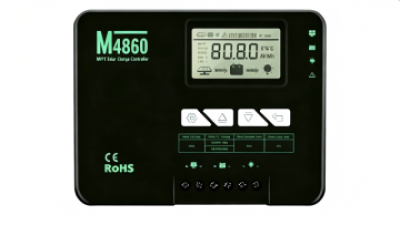
12/24/36/48V 60A MPPT Solar Charge Regulator for RV Camper, Yacht Marine and Off-Grid Battery System
A 12/24/36/48V, 60A MPPT solar charge regulator offers a flexible foundation for RV, yacht, and off-grid battery systems. Its selectable voltage range allows one controller to support different battery banks as energy requirements grow. At nominal voltage, the 60A output represents approximately 720W at 12V, 1,440W at 24V, 2,160W at 36V, and 2,880W at 48V. Actual design limits should also account for charging voltage, panel voltage, temperature, and manufacturer specifications. MPPT technology continuously adjusts the operating point of the solar array, helping extract more available energy than basic PWM regulation under changing sunlight and panel temperatures.The expanding solar market reinforces the need for efficient energy management. The International Energy Agency Photovoltaic Power Systems Programme reported that global photovoltaic capacity exceeded 1.6TW by the end of 2023, while the International Renewable Energy Agency recorded about 346GW of new solar capacity added during that year. For mobile and remote systems, this growth highlights the importance of matching controller capacity with daily energy demand, battery chemistry, and available roof or deck space. A 60A unit is particularly suitable for medium-sized systems where stable charging and future expansion are priorities.For RVs and yachts, practical features include low-voltage protection, temperature compensation, configurable charging stages, and clear status monitoring. Off-grid installations should also use correctly sized cables, overcurrent protection, ventilation, and reliable battery-management settings. Selecting the correct system voltage can reduce transmission losses and improve installation efficiency, especially when solar arrays and batteries are separated by longer cable runs.
Conclusion
This guide explores how Balcony Solar Panels provide a practical way for apartment residents and urban households to generate renewable electricity from limited outdoor space. It explains their basic operation, including solar energy conversion, microinverters, mounting systems, battery compatibility, and connection to household circuits. The article also examines why China has become a major source of balcony solar panel suppliers, highlighting its manufacturing capacity, supply-chain efficiency, product variety, and export experience.Readers will learn how to evaluate China’s top 10 suppliers by comparing product performance, system design, monitoring features, safety protections, certifications, warranties, quality controls, and after-sales support. The guide also reviews key technologies and product options, while offering advice on comparing total prices, customization services, minimum order requirements, shipping arrangements, installation guidance, and international export capabilities. By considering these factors together, buyers can identify reliable solutions that balance efficiency, safety, durability, compliance, and long-term value.
About us
GosolarV New Energy Technology Co., Ltd, is headquartered in Xi’an,Shaanxi Province,China, with a state-of-the-art factory located in Shaoxing was established in 2011.We have been focusing on the breakthrough and industrial application of PV technology. In the past 10 years, we have established a high-tech manufacturing system integrating R & D, production and sales. Every production process undergoes strict quality control, and every product embodies Gosolarv New Energy Technology’s corporate culture of excellence in service and customer-centricity.
Media Contact
Company Name: Xi’an Go Solarv New Energy Technology Co., Ltd.
Contact Person: Media Relations
Email: Send Email
Country: China
Website: https://www.gosolarv.com/