
Shenzhen , Guangdong, China- September 21, 2026
Industrial energy storage is really becoming a solid foundation for modern manufacturing, logistics, and power grids these days. More and more, global buyers aren’t just looking at battery capacity anymore—they want reliability, safety documentation that’s clear and trustworthy, quick and helpful service, and costs they can predict pretty easily.Dr. Rahul Walawalkar, who’s the President of the India Energy Storage Alliance, points out that “energy storage is a key enabler for the integration of renewable energy.” That’s a pretty accurate way to see it these days. With solar and wind projects, you need storage solutions that can adapt quickly since generation can change on a dime. Factories, on the other hand, need a steady stream of power, especially during peak hours. And ports or warehouses? They want backup power they can rely on without messing up day-to-day operations.This guide dives into some of the top industrial energy storage solutions suited for buyers around the world. We’ll look at options like lithium-ion systems, flow batteries, thermal storage, and hybrid setups. Each of these has its own strengths—like how many times they can be cycled, how fast they respond, and how thermal management affects safety, efficiency, and maintenance. Projects involving industrial battery storage also need careful attention to warranties, software controls, fire safety measures, compatibility with the grid, and the local service support available.Don’t be fooled by price alone. A cheaper system might end up costing you more down the line in repairs or downtime. But at the same time, just because a system is high-end doesn’t automatically mean it’s the best fit. That’s a tricky spot, I know. The trick is matching the technology with your specific load needs, climate, site constraints, and overall business goals.Now, some comparisons can be a bit muddy because different suppliers might use different testing methods or claim different performance figures. Having independent verification can help clear that up. So, this overview focuses on tangible performance data, transparent documentation, and realistic assessment of project risks. The goal is to give leaders in procurement more confidence when comparing solutions, while keeping in mind that every industrial site comes with its own unique technical and financial challenges.
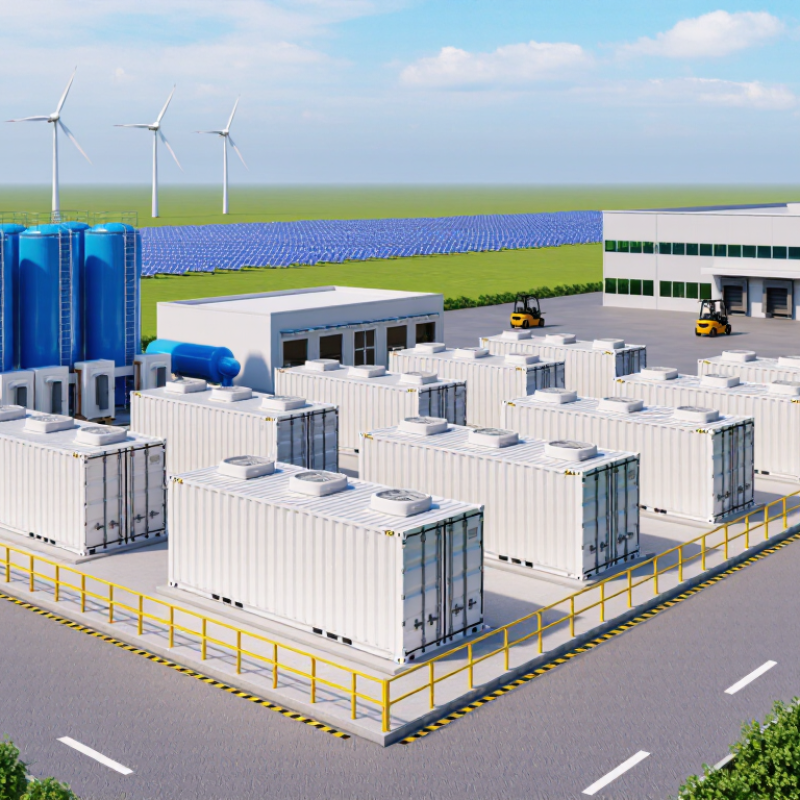
Industrial Energy Storage Technologies: Lithium-Ion and Long-Duration Options
Industrial Battery Storage Systems now support peak shaving, backup power, and renewable integration at factories. Lithium-ion remains the practical default because it offers high round-trip efficiency, compact footprints, and fast response. The International Energy Agency’s Batteries and Secure Energy Transitions report (2024) recorded 42 GW of global battery-storage additions in 2023. That represented a 130% increase from 2022. Yet chemistry alone does not decide value.
For sites needing six hours or more, long-duration energy storage deserves closer evaluation. The US Department of Energy’s Pathways to Commercial Liftoff: Long Duration Energy Storage report identifies flow batteries, thermal systems, compressed air, and pumped storage as major pathways. These options can reduce cycling pressure on lithium-ion assets. However, land, permitting, water, efficiency, and maintenance requirements vary sharply. A low purchase price can hide replacement costs. Real projects also need fire detection, thermal monitoring, and clear emergency procedures. I would not treat vendor projections as site evidence. Measured load data should challenge the first design.
Tips:Map fifteen-minute load profiles before selecting capacity. Test backup duration during a real outage scenario. Compare degradation warranties, round-trip efficiency, response time, and end-of-life recycling plans. Ask for independent performance data. Spreadsheets can look precise while remaining incomplete.
Global Market Growth: Over 40 GW of Battery Storage Added in 2023 (IEA)Top Industrial Energy Storage Solutions for Global Buyers
Global battery storage is expanding at remarkable speed. The International Energy Agency reported over 40 GW of battery storage additions in 2023. This growth reflects rising renewable generation and stronger demand for flexible electricity. Industrial buyers now need systems that manage peak loads, solar variability, and backup requirements. Capacity alone is not enough. Duration, cycle life, round-trip efficiency, and response time should match the operating profile.
A practical procurement review should examine thermal management, fire protection, grid-code compliance, and local certification requirements. Buyers should also study warranty limits under high temperatures and frequent cycling. A system may look affordable on paper but lose value through degradation and maintenance delays. Software quality matters too. Accurate forecasting and clear operational data can improve dispatch decisions. Still, predictions are never perfect. Weather, tariffs, and factory loads can change faster than planning models expect.
Tips: Request independent test records, not only supplier estimates. Compare usable energy, not nameplate capacity. Ask who provides local service and replacement parts. Include a realistic degradation scenario in financial models. A site visit can reveal cable routing, noise, and access problems that technical documents miss. Do not treat the fastest market growth as proof that every project is ready for immediate deployment.
System Sizing: Match MW, MWh, Duration, and Industrial Load Profiles
Industrial energy storage sizing starts with the load profile, not the battery catalogue. MW defines instantaneous power, while MWh defines stored energy. Duration equals MWh divided by MW. A 10 MW system with 40 MWh provides four hours at full output. Yet factories rarely operate so neatly. Motors may create sharp starts, while furnaces and compressors can produce long, uneven demand blocks.The International Energy Agency reported that global battery storage additions reached about 42 GW in 2023, nearly doubling from the previous year. This growth increases choice, but it also raises sizing risks. A short-duration system may reduce peak demand successfully, but it cannot cover an eight-hour production shift. The 2024 IEA report stresses that storage must support grid flexibility, renewable integration, and reliability. Therefore, buyers should model hourly demand, outage priorities, tariff periods, solar output, and reserve requirements. A 20% energy reserve can also prevent excessive cycling, although the correct margin depends on site risk.Tips: Collect at least twelve months of 15-minute interval data. Separate baseload, production peaks, and standby loads. Test several dispatch cases, including cloudy days and unexpected shutdowns. Check both rated and usable MWh. Do not size only from the monthly demand charge. That shortcut is tempting, and sometimes wrong. NREL cost studies also show that duration strongly affects storage economics, so compare two-hour, four-hour, and longer designs using the same operating assumptions. Recheck the model after commissioning; actual behavior may challenge the original spreadsheet.
Performance Metrics: Compare Efficiency, Cycle Life, and Degradation Rates
Choosing Industrial Storage Batteries requires more than comparing nameplate capacity. Round-trip efficiency shows how much stored energy returns to the grid. The U.S. Department of Energy commonly reports about 85–95% efficiency for mature lithium-ion systems. Lazard’s 2024 Levelized Cost of Storage analysis also shows that operating conditions can materially change delivered energy costs. Small losses become significant in daily cycling.Cycle life needs equal attention. Many commercial systems are rated for 3,000–8,000 equivalent full cycles, depending on chemistry, temperature, and discharge depth. Degradation is rarely linear. Industry studies often model approximately 1–2% annual capacity loss, but real projects may perform differently. Heat, poor balancing, and frequent high-power operation accelerate decline. A battery may meet its warranty while missing the buyer’s financial target. That distinction deserves scrutiny.Tips: Request measured round-trip efficiency at the intended load, not only laboratory data. Ask for capacity retention at the required depth of discharge. Review independent test records, thermal-management results, and replacement assumptions. Leave room for uncertainty. A spreadsheet can still mislead. Compare usable megawatt-hours after ten years, not just the initial purchase price. Include auxiliary cooling and inverter consumption, because these quiet loads reduce practical efficiency.
Safety Compliance: Apply NFPA 855, UL 9540A, and IEC 62933 Standards
Industrial Solar Solutions increasingly depend on battery storage that can withstand heat, fault conditions, and complex operating schedules. The International Energy Agency’s 2024 Batteries and Secure Energy Transitions report says global energy storage deployment must expand sixfold by 2030 to support climate targets. That growth makes safety evidence a purchasing requirement, not a marketing detail.NFPA 855 guides installation, spacing, fire protection, emergency planning, and ventilation for stationary energy storage systems. UL 9540A evaluates thermal runaway behavior through cell, module, unit, and installation-level testing. Its results can inform separation distances and fire-response strategies. IEC 62933 adds an international framework for system performance, safety, environmental conditions, and lifecycle management. These standards address different risks.Field experience still exposes gaps. A compliant certificate cannot replace clear maintenance procedures, accurate site data, or trained operators. Small details matter: a blocked ventilation path, damaged cable gland, or poorly placed temperature sensor may change the risk profile. Test records should match the delivered configuration, including enclosure size, battery chemistry, control software, and fire suppression equipment.Not every project is perfectly documented. That is a warning.Buyers should request test summaries, hazard analyses, incident-response drawings, inspection intervals, and evidence of factory quality controls. The 2024 Global Energy Storage Outlook from the Energy Storage Association and Wood Mackenzie highlights rapid market expansion, but deployment speed should not outrun verification. A safer procurement process connects NFPA 855, UL 9540A, and IEC 62933 requirements to the actual industrial site.
Project Economics: Evaluate LCOS, Demand Charges, and Payback Periods
Industrial energy storage economics begin with the levelized cost of storage, or LCOS. Lazard’s 2024 LCOS analysis places four-hour lithium-ion storage near $110–$228 per megawatt-hour. The range is wide. Utilization, financing, replacement cycles, and degradation change the result significantly.A practical model should measure avoided demand charges, not only energy arbitrage. In a factory, a battery can discharge during a brief 600-kilowatt peak. If the monthly demand charge is $18 per kilowatt, shaving that peak could avoid $10,800 monthly. A 2-megawatt-hour system may also shift midday solar into an evening production line. This is where an Industrial Solar Generator can improve project value, especially when grid electricity prices vary hourly.Payback requires disciplined assumptions. A $1.2 million project saving $240,000 annually suggests a five-year simple payback. That estimate ignores insurance, software, augmentation, downtime, and financing costs. Reality is messier. The International Energy Agency reported that battery storage costs fell about 90% between 2010 and 2023, but future reductions are not guaranteed. A sensitivity test should examine 20% lower savings, higher replacement costs, and reduced cycling. Otherwise, an attractive spreadsheet may hide a weak investment.
Global Procurement: Verify Warranties, Grid Codes, and Recycling Policies
Global buyers should treat warranties as procurement evidence, not attractive paperwork. Check coverage for cells, inverters, thermal systems, and software controls. Ask when the warranty clock starts. Delivery, commissioning, or factory acceptance can produce different outcomes. Confirm capacity retention tests, response times, exclusions, and approved maintenance procedures. A five-year term may sound strong, yet limited cycle counts can reduce its practical value.Grid-code compliance needs local verification before the purchase order. Request test reports for frequency response, voltage control, fault ride-through, and islanding protection. Confirm whether an accredited laboratory performed the tests. Network operators may require settings files, protection studies, and witnessed commissioning. A system can pass factory testing but fail a site review. That gap is expensive. Procurement teams should also check cybersecurity responsibilities for remote monitoring and firmware updates.Recycling policies deserve equal attention. Ask who owns the batteries at end of service, who transports them, and which facilities process them. Require documented procedures for damaged modules, fire risks, and material tracking. Regional rules can change, so written confirmation should include the installation country and expected operating period. I have seen buyers accept vague “recyclable” claims without checking recovery rates. That is not enough. Contracts should define reporting, collection costs, and evidence of lawful processing. Some assumptions will still prove wrong. Build review points into the project schedule.
Top Industrial Energy Storage Solutions for Global Buyers
Global Procurement: Verify Warranties, Grid Codes, and Recycling Policies
The chart shows EU Battery Regulation recycling-efficiency targets for industrial battery systems. Buyers should confirm that suppliers provide warranty terms covering capacity retention and cycle life, demonstrate compliance with applicable grid codes, and document end-of-life collection and recycling responsibilities.
Reference: Regulation (EU) 2023/1542, recycling-efficiency targets for waste batteries. Targets shown are regulatory benchmarks, not product-performance ratings.
China NX10 Microgrid BESS: Reliable Clean Power—Insights from IEA Renewables 2024 & BloombergNEF Energy Storage Outlook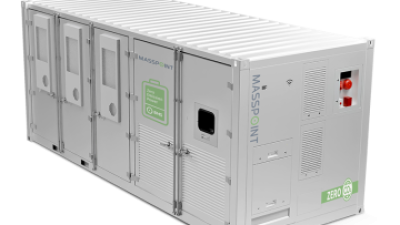
China NX10 Microgrid BESS Factory: Smart Energy Solutions from Reliable Suppliers for Clean, Resilient Power
As renewable energy expands worldwide, the growth of solar power is creating a stronger need for flexible and dependable energy storage. Recent industry outlooks highlight that battery energy storage systems are becoming essential for balancing intermittent generation, improving grid resilience, and supporting the transition to lower-carbon power. In this context, the NX10 BESS Series provides an integrated solution that combines solar PV, battery storage, and generator sets within one intelligent microgrid platform.Designed for diverse project requirements in China and beyond, the system supports flexible PV coupling, including AC-coupled solar integration for existing facilities and new installations. Its energy management system enables clear, real-time control of power generation, storage, and consumption. By coordinating renewable energy with battery capacity and backup generation, the NX10 can help maintain reliable electricity in off-grid locations, areas with unstable grid connections, and industrial sites with demanding loads.The modular architecture allows microgrids to scale as energy needs develop, while optimized operation can reduce fuel use, emissions, and operating noise. With factory-integrated components and intuitive monitoring, the system offers a practical pathway toward cleaner, more efficient, and more resilient power infrastructure.
Conclusion
Industrial Energy Storage is becoming an essential solution for factories, commercial facilities, and infrastructure operators seeking greater power reliability, renewable integration, and lower operating costs. Available technologies range from lithium-ion systems to long-duration storage designed for extended discharge periods. With global battery storage deployment expanding rapidly, buyers should size each project according to power capacity, energy capacity, required duration, and the facility’s actual load profile. Key evaluation criteria include round-trip efficiency, cycle life, degradation, response speed, and expected operating conditions.Successful procurement also requires a thorough review of safety, economics, and long-term support. Projects should align with relevant requirements such as NFPA 855, UL 9540A, and IEC 62933, while financial analysis should consider levelized cost of storage, demand-charge reduction, energy savings, and payback period. Before selecting a system, global buyers should verify warranties, maintenance responsibilities, grid-connection codes, performance guarantees, and end-of-life recycling policies to ensure dependable and sustainable operation.
About US
MASSPOINT Energy is a global leader in advanced micro-grid solutions, committed to providing reliable and sustainable energy systems.
With over 12 years of experience in power electronics and batteries industry, our team integrates R&D, manufacture, sales and services. We are committed to delivering green and sustainable energy solutions, including Industrial Hybrid BESS, Micro-Grid BESS, etc.
Media Contact
Company Name: Masspoint Energy Technology Co., Ltd.
Contact Person: Media Relations
Email: Send Email
Country: China
Website: https://www.masspointenergy.com/