
Shenzhen, Guangdong, China – September 15, 2026
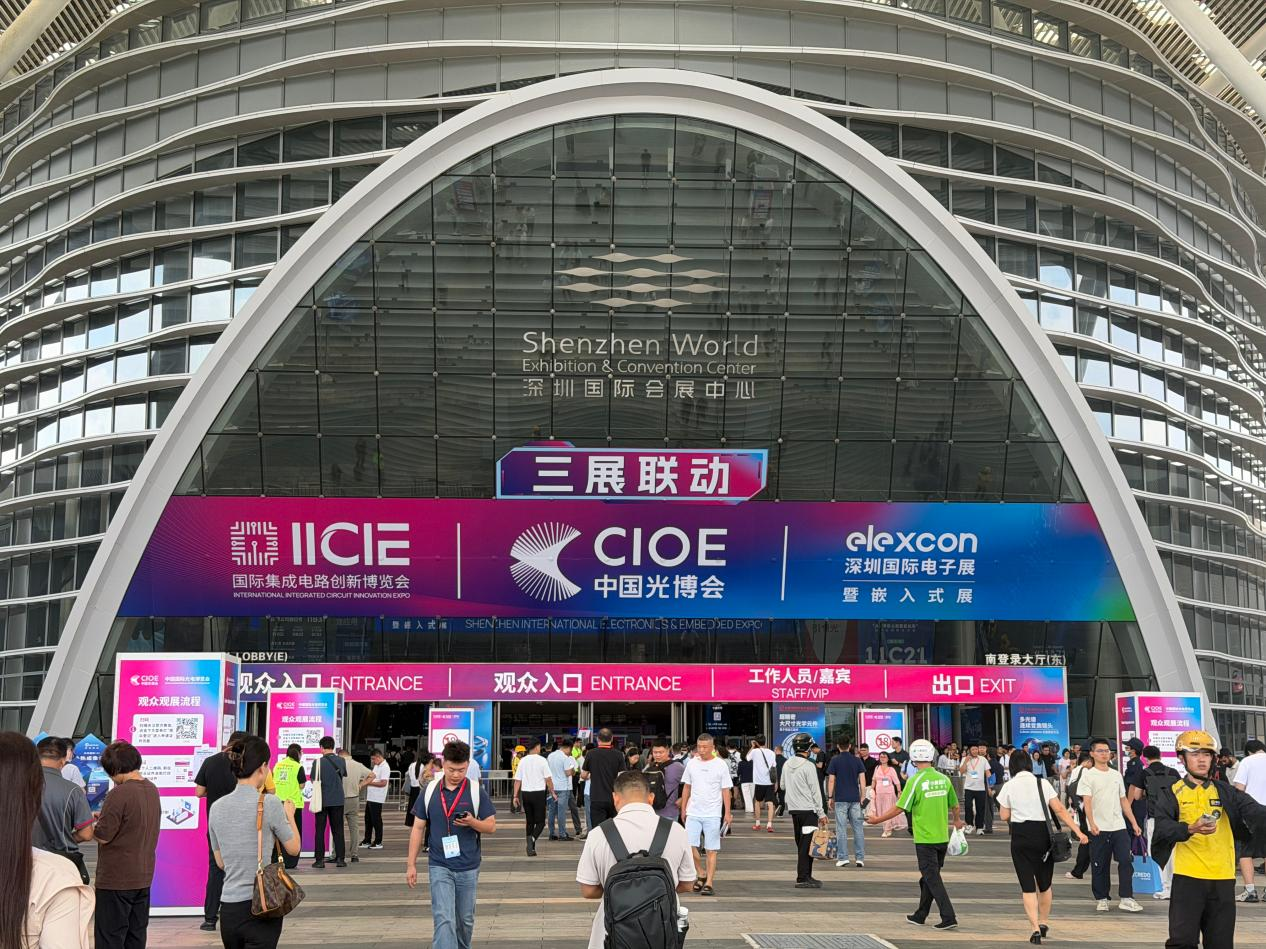
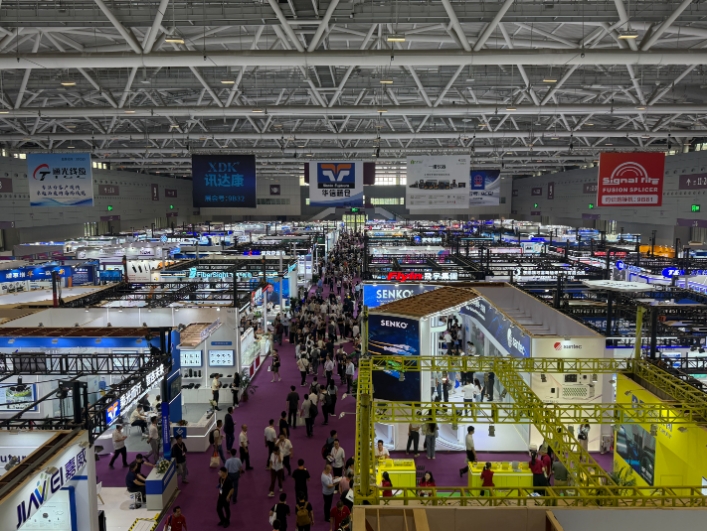
The 27th China International Optoelectronic Exposition (CIOE 2026) officially opened on September 9 at the Shenzhen World Exhibition & Convention Center in Bao’an, Shenzhen. Running from September 9 to 11, the event brings together more than 5,000 exhibitors from over 30 countries and regions, with more than 240,000 professional visitors expected.
Held alongside the IICIE International Integrated Circuit Innovation Expo and the 23rd Shenzhen International Electronics Show (elexcon), CIOE 2026 covers around 340,000 square meters of exhibition space.
For professionals in optical communications, data centers, telecommunications, and network infrastructure, this year’s event offers a clear look at where the industry is heading — and why fiber optic cables remain an essential part of the next generation of digital infrastructure.
CIOE 2026 Highlights the Next Generation of Optical Connectivity
The Information Communication Pavilion is one of the key areas of CIOE 2026, showcasing technologies designed for increasingly demanding computing and communication environments.
Among the technologies attracting attention are 1.6T optical transceivers, co-packaged optics (CPO), near-packaged optics (NPO), silicon photonics, optical circuit switching (OCS), and high-speed MPO fiber optic connectors.
These technologies are closely connected to the rapid growth of artificial intelligence (AI), cloud computing, and high-performance data centers.
As AI workloads become more demanding, data centers need to move larger volumes of information at higher speeds. This is increasing the need for high-bandwidth, low-loss, and high-density optical connectivity throughout the network.
However, advanced optical modules and photonic technologies are only one part of the infrastructure.
The fiber optic cable connecting these systems remains fundamental to network performance.
 Why AI Growth Is Increasing Fiber Optic Cable Demand
The expansion of AI infrastructure is creating new requirements for data center networks.Large-scale AI training and inference systems rely on clusters of servers, GPUs, switches, and storage systems that need to communicate continuously. As computing capacity increases, network traffic also grows.This is driving demand for fiber optic solutions in several areas.
1. Data Center Interconnect
Data Center Interconnect (DCI) is becoming increasingly important as operators connect multiple data centers and computing facilities.Long-distance and high-capacity connections require fiber optic cables with suitable optical performance, mechanical protection, and installation flexibility.For data center operators and network integrators, cable selection is therefore becoming an important part of network planning — particularly where high fiber counts, limited installation space, or demanding environmental conditions are involved.
2. High-Density Fiber Infrastructure
Modern data centers need to accommodate more connections within limited physical space.High-density fiber optic cables, fiber distribution systems, connectors, adapters, and other passive optical components help network operators increase connection density while keeping cable management practical.As data rates continue to move from 400G toward 800G and 1.6T, the supporting fiber infrastructure also needs to be designed with future network upgrades in mind.
3. FTTH and Broadband Networks
AI and data centers may dominate industry headlines, but traditional broadband infrastructure remains an important source of fiber demand.The continued expansion of FTTH networks is increasing demand for fiber drop cables, optical distribution boxes, PLC splitters, fiber optic closures, connectors, and other passive optical products.For operators and contractors, reliable fiber products can help simplify installation and improve the long-term stability of access networks.
4. Power and Industrial Communications
Fiber optics are also playing an important role in modern power and industrial networks.The development of renewable energy, smart grids, and high-voltage transmission infrastructure requires reliable communication systems for monitoring, control, and data transmission.Products such as ADSS (All-Dielectric Self-Supporting) fiber optic cable and OPGW (Optical Ground Wire) are widely used in power communication networks because they can combine optical communication capabilities with the requirements of overhead transmission environments.
Fiber Optic Cable Remains the Foundation Behind Faster Networks
The attention surrounding 1.6T optical modules, CPO, and silicon photonics is understandable. These technologies are helping push optical communication toward higher speeds and greater efficiency.
But network performance does not depend on a single component.
A high-speed optical module still needs an appropriate optical connection. A data center still needs structured fiber cabling. A DCI network still needs reliable transmission infrastructure. And an FTTH deployment still depends on thousands of fiber connections working reliably in the field.
This is why the growth of AI and high-performance computing is not simply an opportunity for optical module manufacturers.
It is also creating opportunities throughout the wider fiber optic supply chain.
For cable manufacturers, distributors, system integrators, and telecom contractors, this means that product quality, compatibility, customization capabilities, and supply reliability are becoming increasingly important when selecting a fiber optic supplier.
What CIOE 2026 Means for Global Fiber Optic Buyers
For international buyers, CIOE 2026 provides more than a view of the latest optical technologies. It also highlights a broader market trend.
AI, cloud computing, 5G, FTTH, smart grids, and digital transformation are all increasing the amount of data that networks need to carry. As a result, demand is growing not only for faster optical components but also for the fiber optic infrastructure that connects them.
For buyers sourcing fiber optic cables, FTTH products, data center cabling, ADSS, OPGW, or customized optical solutions, working with a supplier that can provide consistent quality, technical support, customization, and stable international supply can make a significant difference to project delivery.
CIOE 2026 is a snapshot of where optical technology is going. For the fiber optic industry, however, the bigger story is what comes next: more data, more connections, and a growing need for reliable optical infrastructure.
OYI International Ltd. is ready to work with telecom operators, distributors, system integrators, contractors, and network infrastructure companies worldwide.
From individual fiber optic components to complete FTTH and communication solutions, OYI provides products designed to support the evolving requirements of modern optical networks.
About Us
Oyi international., Ltd. is a dynamic and innovative fibre optic cable company based in Shenzhen, China. Since its inception in 2006, OYI has been dedicated to providing world-class fibre optic products and solutions to businesses and individuals across the globe.
Media Contact
Company Name: Oyi international ., Ltd.
Contact Person: Media Relations
Email: Send Email
Country: China
Website: https://www.oyii.net/