
Shenzhen, Guangdong, China-September 16, 2026
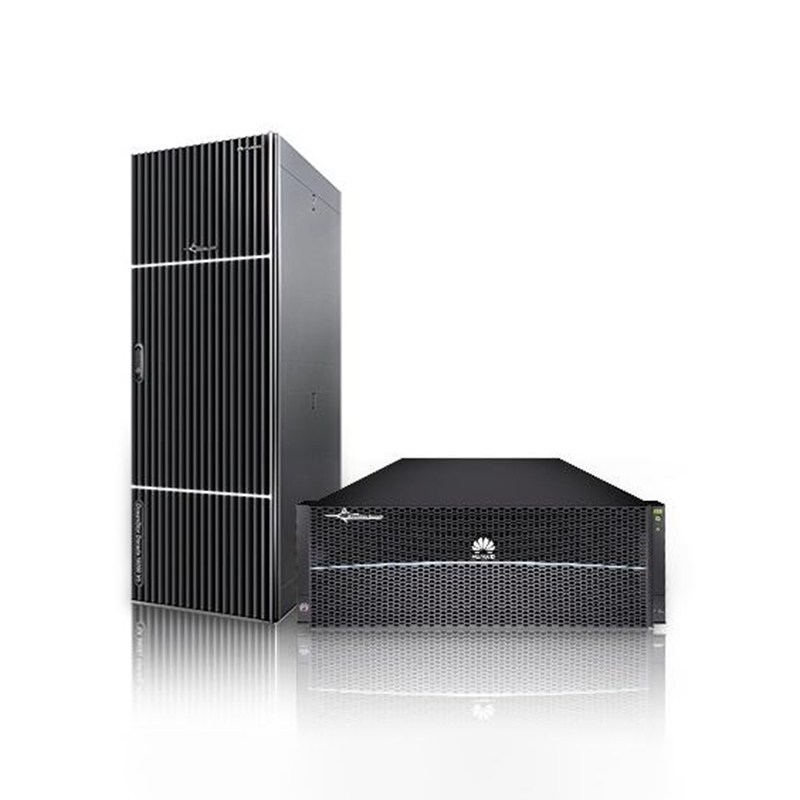
The Huawei 18500 V6 is an enterprise storage platform designed for business environments that rely on continuous data access for critical applications. As enterprises become increasingly dependent on digital systems, storage is no longer just a place to store files and databases. It has become an important foundation supporting business operations. ERP systems, databases, manufacturing platforms, virtualization environments, and analytics systems all depend on stable and reliable data access.
Many enterprises still evaluate storage systems mainly based on capacity. However, for core business applications, the biggest challenge is not simply whether the system can store more data. The more important questions are whether applications can maintain stable response times under heavy workloads, whether data remains available when hardware issues occur, and whether the storage architecture can continue supporting business growth in the future.
Therefore, the value of the Huawei 18500 V6 is not only reflected in storage capacity. Its importance lies in helping enterprises build a more reliable data infrastructure that can meet the performance, availability, and scalability requirements of complex business environments.
Enterprise Applications Require More Than Data Storage
As digital transformation continues, the role of storage systems has changed significantly.In the past, enterprises often considered storage as a backend system responsible for saving files and information. Today, more and more business processes directly depend on storage performance and availability.
For example, manufacturing companies rely on production management systems to coordinate operations; financial organizations require databases to process transaction data continuously; large enterprises use ERP platforms to connect different departments and manage daily business activities.In these environments, storage problems can quickly become business problems.
A storage system does not need to completely fail to affect operations. Performance degradation, unstable response times, or slower data access can already reduce user efficiency and affect business processes.
Therefore, enterprise storage needs to focus on more than capacity. It must provide:
- Stable application response;
- Reliable data access;
- Consistent performance under changing workloads;
- Effective data protection;
- Long-term scalability.
The difference between basic storage and enterprise storage is not only how much data can be stored, but also how reliably that data can support business operations.
The Biggest Storage Challenge Is Often Performance Stability, Not Capacity Shortage
When enterprises plan storage upgrades, capacity is usually one of the first factors considered. However, for critical business applications, insufficient capacity is not always the biggest challenge.
A system may still have enough available space but experience performance problems when multiple applications compete for storage resources. During peak business periods, users may notice slower response times, reduced application efficiency, and longer processing cycles.
This situation commonly occurs when:
- Multiple databases operate at the same time;
- Virtual machines share the same storage resources;
- Business applications generate unpredictable access pressure;
- Data volumes continue increasing.
Therefore, enterprises need to focus not only on “how much storage space is available,” but also on whether the storage architecture can maintain stable performance when business demands change.
The Huawei 18500 V6 is designed for these complex enterprise environments, where storage needs to support multiple workloads rather than simply store data.
Why Core Business Systems Need Reliable Storage Architecture
For many enterprises, storage availability directly affects business continuity.A problem with a general file system may only affect access to certain documents. However, if a core database or business application is affected, multiple departments and operations may experience disruption.
Therefore, enterprise storage planning needs to consider:
- How applications access data;
- How systems recover after failures;
- How storage resources are protected;
- How maintenance impacts business operations.
A reliable storage architecture should reduce the impact of unexpected events and allow enterprises to continue operating even when individual components require maintenance.
This is why enterprise storage design increasingly focuses on redundancy, data protection, and continuous availability.The value of a storage system is not only that it stores information, but also that it ensures critical data remains accessible when the business needs it.
Virtualization Has Changed Enterprise Storage Requirements
The development of virtualization technology has introduced new challenges for enterprise storage.
In traditional environments, one physical Server usually supported one major application, making storage requirements easier to predict. Today, one physical server may run multiple virtual machines, with each virtual machine supporting different business functions.
This creates more complex storage access patterns.
A single storage system may need to support:
- Enterprise business applications;
- Database systems;
- Development and testing environments;
- Virtual desktops;
- Internal services;
- Backup operations.
These workloads may have completely different data access characteristics. Some applications require fast response times, while others generate large amounts of data transfer.
Therefore, storage systems cannot be designed only around normal operating conditions. They must also consider resource competition when multiple business applications run simultaneously.
The Huawei 18500 V6 can be used in these complex enterprise environments to support applications that depend on stable performance and reliable data management.
The key question is not whether the storage system has enough resources, but whether those resources can continue supporting business applications when multiple workloads run at the same time.
Storage Architecture Must Support Data Protection and Recovery
Modern enterprises store much more than ordinary files. Their storage systems often contain customer information, transaction records, production data, and critical business databases.
Therefore, data protection should not be treated as an additional feature. It should be considered as part of the storage architecture from the beginning.
A complete enterprise storage strategy needs to consider:
- How to protect data during hardware failures;
- How quickly systems can recover after unexpected incidents;
- Whether backup operations affect production workloads;
- How business continuity requirements influence storage design.
A storage system that performs well under normal conditions but cannot recover efficiently after problems may still create significant business risks.For critical applications, reliability is not only determined by access speed. It also depends on whether enterprises can quickly restore important data and resume operations.
Storage Performance Should Be Evaluated Through Real Workloads
Storage performance is often described through technical indicators such as IOPS, bandwidth, and latency. These metrics are useful, but they cannot fully represent real performance without considering actual business environments.
Different applications have different requirements.Database systems usually focus on low latency and fast response. Backup systems prioritize capacity and stable throughput. Analytics platforms require fast access to active datasets. Manufacturing systems often require continuous and stable operation.
Therefore, selecting enterprise storage based on a single performance indicator may lead to incorrect decisions.
A better approach is to first understand:
- Which applications will use the storage;
- How data is accessed;
- When peak workloads occur;
- How many systems depend on the data;
- What availability level the business requires.
The most suitable storage system is not always the one with the highest specifications, but the one whose architecture best matches actual business requirements.
Long-Term Planning Determines Enterprise Storage Value
Enterprise storage systems are usually expected to support business operations for many years. During this period, data requirements will continue to change.
Enterprises may introduce new applications, increase user numbers, extend data retention periods, or create new data analysis requirements. Without proper planning, storage environments may face expansion difficulties and higher migration costs in the future.
Long-term storage planning should consider:
- Current application requirements;
- Future data growth trends;
- Expansion methods;
- System compatibility;
- Future maintenance requirements.
The purpose of scalability is not only increasing capacity, but also allowing the storage environment to adapt as business needs change.A well-planned storage architecture can reduce unnecessary replacements and help enterprises maintain a more stable IT environment.
Huawei 18500 V6 Applications in Enterprise IT Environments
The Huawei 18500 V6 is suitable for enterprise environments that require stable data access, continuous operation, and structured data management.
For database environments, storage systems need to support frequent data access requests while maintaining consistent response performance. In virtualization environments, storage must support multiple applications with different workload patterns. In analytics scenarios, storage needs to support large-scale data processing and active data access.
These applications demonstrate that enterprise storage is no longer just a basic infrastructure component. It has become an important foundation supporting business operations.
HSBY Huawei 18500 V6 Products
Hua Sheng Bo Ye (Shenzhen) Technology Co., Ltd. includes Huawei 18500 V6 products in its enterprise IT hardware portfolio, together with storage systems, servers, networking equipment, and related infrastructure solutions.
For enterprise storage projects, selecting a storage model is only one part of the process. The final solution should also consider business applications, existing infrastructure, expansion plans, compatibility, and long-term maintenance requirements.
By understanding current and future data requirements, enterprises can build more stable and sustainable storage environments.
Conclusion
The Huawei 18500 V6 represents an enterprise storage approach designed for critical business applications, complex workloads, and long-term data growth.
Modern enterprise storage challenges are no longer limited to storing more information. Enterprises also need to maintain stable performance, protect critical data, ensure business continuity, and support future expansion.
A successful storage strategy is not simply about increasing capacity. It is about creating an infrastructure where important data can be accessed reliably, protected effectively, and managed throughout its lifecycle.
For enterprises that depend on digital operations, the real value of an enterprise storage platform lies in its ability to balance performance, reliability, scalability, and operational efficiency.
FAQ1. What is Huawei 18500 V6 mainly used for?
The Huawei 18500 V6 is mainly used in enterprise data centers, virtualization platforms, business applications, databases, and large-scale data management environments.
2. Why do enterprise applications need advanced storage systems?
Because core business applications require not only large capacity but also stable performance, reliable access, and effective data protection.
3. Why do virtualization environments require stronger storage architecture?
Because multiple virtual machines share storage resources and create more complex workload patterns, requiring storage systems to maintain stable operation.
4. What should enterprises consider when selecting a storage system?
Enterprises should evaluate application requirements, performance needs, data growth, scalability, compatibility, and long-term maintenance plans.
About us
We are Committed to Provide You the Best IT Product & Solution, Our commitment is also evidenced by the large trust brands like Acer, Apple, Asus, Brother, Cisco, Cisco Meraki, Dahua, Dell Technologies, D-Link, Docu Sign, EfficientIP, Fortinet, Fujitsu, H3C, Hitachi Vantara, HP, HP Enterprise, Huawei, Inspur, Kaspersky, Lenovo, MSI, Netscout, NVIDIA, Oracle, PureStorage, Quantum, Razer, Rubrik, Ruijie, Samsung, Trend Micro, XFusion and Zoom who has been appointed us as their Authorized Distributor.
Media Contact
Company Name: Hua Sheng Bo Ye (Shenzhen) Technology Co., Ltd.
Contact Person: Media Relations
Email: Send Email
Country: China
Website: https://www.hsbytechnology.com/