
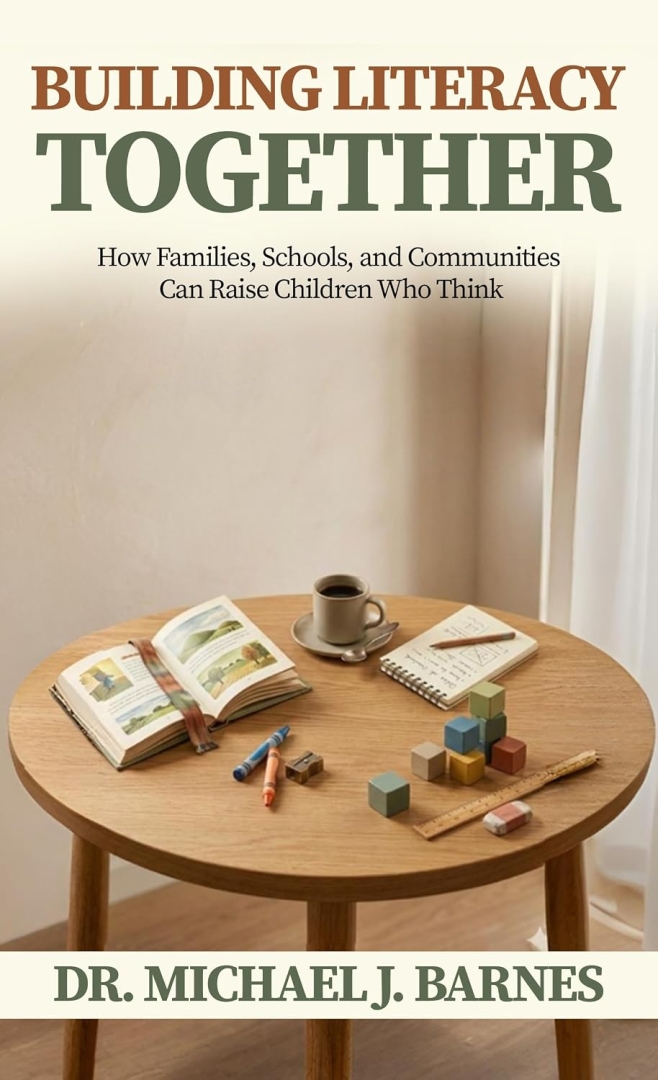
Lakewood, Ohio – September 04, 2026 – New book by Michael J. Barnes examines how literacy development begins long before kindergarten through relationships, conversation, culture, and community support.
As concerns about literacy rates, educational inequity, and school readiness continue to shape national conversations about education, a new book by educational leader Michael J. Barnes argues that many current approaches to literacy intervention begin far too late. Building Literacy Together presents a comprehensive and deeply human examination of how children develop language, numeracy, reasoning, and critical thinking skills in the earliest years of life, often long before formal schooling begins.
Blending educational research, personal reflection, classroom observation, and community-based storytelling, the book argues that literacy should not be viewed solely as an academic subject taught in schools, but as a broader human process rooted in relationships, trust, culture, and daily interaction. Barnes positions families and caregivers as children’s first and most influential teachers, emphasizing that ordinary activities such as storytelling, counting objects, conversation, play, and shared routines are foundational to early learning development.
Across eleven chapters, the book explores topics including brain development, school readiness, family engagement, cultural responsiveness, educational equity, toxic stress, numeracy, and the future of literacy in an increasingly technological society. Rather than focusing narrowly on standardized assessments or remediation programs, Barnes advocates for a broader and more holistic understanding of how children learn.
Central to the book’s argument is the idea that literacy gaps are frequently the result of unequal access rather than differences in intelligence or potential. Barnes challenges deficit-based approaches that label children as “behind” without examining the systemic inequities shaping early childhood experiences. He argues that educational systems must shift away from asking whether children are ready for school and instead ask whether schools are prepared to meet the needs of children from diverse backgrounds and experiences.
The book also emphasizes the importance of trust and belonging within literacy development. Barnes argues that children learn most effectively when they feel emotionally secure, culturally valued, and connected to the adults around them. He presents literacy not simply as decoding words on a page, but as a process through which children learn to interpret, question, and participate in the world around them.
A significant focus of the work is the role of the home learning environment in shaping long-term academic success. Barnes highlights research demonstrating that consistent interaction between caregivers and children, particularly through language-rich experiences, strongly influences literacy and numeracy development. Importantly, the book reassures families that effective early learning does not require expensive resources or perfect teaching methods. Instead, it emphasizes presence, conversation, storytelling, and daily engagement as the true foundations of learning.
The later chapters examine the evolving meaning of literacy in the twenty-first century, particularly in relation to artificial intelligence, digital communication, STEM learning, and information evaluation. Barnes argues that future generations will require not only reading and writing proficiency but also creativity, critical thinking, adaptability, and the ability to navigate increasingly complex information environments responsibly.
Throughout the work, Barnes combines educational theory with practical reflection and personal storytelling, creating a text intended for educators, parents, school leaders, policymakers, and community organizations invested in childhood development and educational equity. The book consistently argues that literacy development is not the responsibility of schools alone, but a shared effort requiring collaboration among families, educators, and communities.
By reframing literacy as a shared foundation for lifelong participation and critical thought, Barnes offers a timely contribution to ongoing conversations about education, equity, and the future of learning in modern society.
About the company
Dr. Michael J. Barnes is an experienced educator, superintendent, author, and thought leader dedicated to transforming education through instructional leadership, innovation, and community engagement. With more than 30 years of experience in education, he provides strategic consulting, leadership coaching, keynote speaking, and practical insights through his books and educational programs, helping educators and school leaders strengthen learning, leadership, and student outcomes.
Media Contact
Company Name: Dr. Michael J. Barnes
Contact Person: Media Relations
Email: Send Email
Country: United States
Website: https://drmichaeljbarnes.com/