
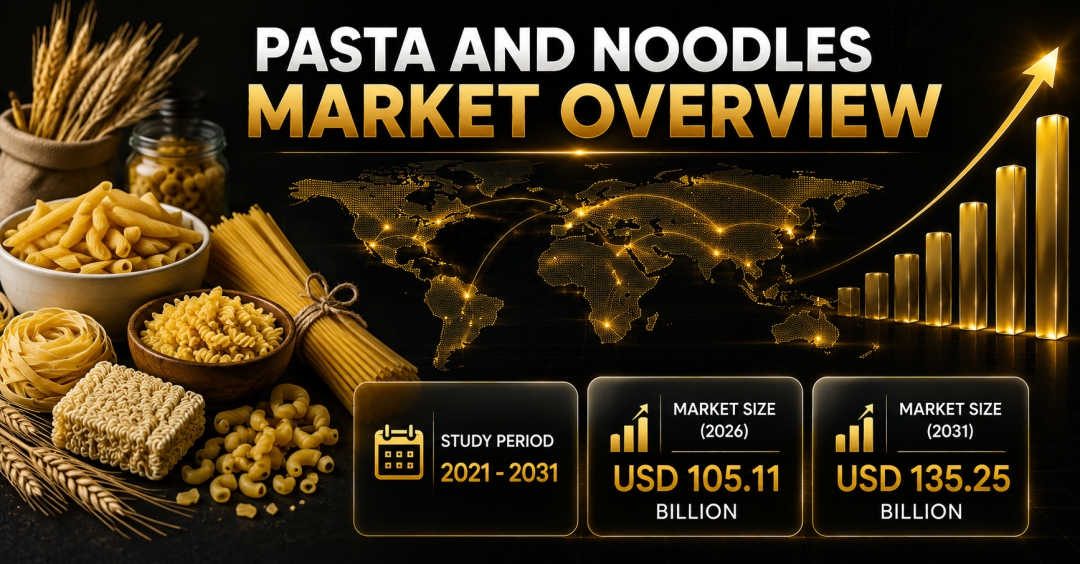
Hyderabad, September 03, 2026: According to Mordor Intelligence, the pasta and noodles market size is valued at $105.11 billion in 2026 and is projected to reach $135.25 billion by 2031, registering a CAGR of 5.68% during the forecast period. The market continues to expand as consumers seek versatile, shelf-stable meal options that balance quick preparation with nutritional wellness. Growing urbanization, changing household dietary habits, and the rising popularity of global culinary flavors continue to support demand across retail and foodservice channels worldwide.
The pasta and noodles market growth is also influenced by changing regulatory policies regarding front-of-pack labeling and evolving consumer expectations regarding allergen transparency and clean-label formulations. Food processors are investing in alternative flour blends while adopting advanced processing techniques. These developments are helping businesses respond to stricter guidelines related to sodium reduction and nutritional disclosure while maintaining chewiness, boiling stability, and product texture. Together, these factors continue to strengthen the integrated pasta and noodles market forecast across developed and emerging consumer food markets.
Pasta and Noodles Market Trends
Shift Toward Gluten-Free and Ancient-Grain Formulations Supports Nutritional Wellness
One of the leading pasta and noodles market trends is the growing consumer preference for nutrient-dense grains over traditional refined wheat options. Alternative grain formulations derived from rice, corn, and millets continue to gain popularity among households seeking functional dietary choices. The increasing use of plant-based protein isolates and fiber fortification in everyday packaged staples has expanded consumption across health-conscious demographics. This steady shift toward wellness-oriented grain choices continues to support the pasta and noodles industry.
Advanced Extrusion and Controlled Drying Technologies Enhance Product Texture
While conventional dried products hold a significant portion of the pasta and noodles market share, modern processing methods are enhancing product consistency across value and premium tiers. High-temperature drying and precision vacuum extrusion techniques help protect starch matrices, preventing sogginess during cooking and extending ambient shelf life. Noodle and pasta producers are expanding specialized production lines to satisfy consumer expectations for al dente firmness while aligning with broader ingredient standards seen across the integrated food ingredients industry for texture stability.
Front-of-Pack Regulations and Sodium Reduction Mandates Shape Product Standards
Another important pasta and noodles market trend is the rising focus on clean labeling and sodium management. With health authorities in major importing regions tightening front-of-pack nutritional labeling criteria, manufacturers are actively reformulating instant flavor sachets and pre-packaged pasta broths. These efforts reflect broader commercial demand for transparent ingredient decks and lower salt levels without compromising savory flavor profiles. Strategic reformulation agility is becoming an essential area of competition across the pasta and noodles industry.
Multi-Channel Retail and E-Commerce Platforms Accelerate Category Reach
Distribution channels continue to play a significant role in the pasta and noodles market growth. Supermarkets and hypermarkets remain primary volume drivers by offering extensive shelf assortments and promotional multi-packs. At the same time, online retail platforms and quick-commerce services are attracting greater interest as urban shoppers prioritize direct-to-door delivery for pantry staples. These merchandising developments help brands balance high-volume retail placement with digital consumer reach while meeting retailer performance benchmarks.
Asia-Pacific and South America Create Rapid Regional Growth Pathways
Regional consumption patterns continue to influence the pasta and noodles market forecast. Europe remains the largest regional market due to deep-rooted culinary heritage, high per capita pasta consumption, and established manufacturing infrastructure. Meanwhile, the Asia-Pacific region represents the fastest-growing market as expanding urban populations, rising disposable incomes, and cultural affinity for instant and fresh noodles drive category volume. Concurrently, supply chain investments in South America are shortening distribution lead times, creating new opportunities for producers expanding their regional presence.
Check out more details and stay updated with the latest industry trends, including the Japanese version for localized insights: https://www.mordorintelligence.com/ja/industry-reports/noodles-pasta-market?utm_source=abnewswire
Pasta and Noodles Market Segmentation
By Ingredient
- Rice
- Corn
- Millet
- Wheat
- Others
By Product Type
- Dried
- Instant
- Canned and Frozen
By Distribution Channel
- Supermarkets/Hypermarkets
- Convenience Stores
- Online Retail Stores
- Other Distribution Channels
By Geography
- North America
- Europe
- Asia-Pacific
- South America
- Middle East and Africa
Competitive Landscape of the Pasta and Noodles Industry
The pasta and noodles industry exhibits a moderately concentrated structure, with multinational food corporations, established pasta manufacturers, and instant noodle specialists focusing on product diversification, supply chain resilience, and wider retail distribution. Companies are strengthening their market presence by expanding clean-label and fortified product lines while improving procurement efficiency to manage raw material price volatility.
Textural engineering and regional flavor adaptation continue to be critical areas of differentiation as processors invest in specialized flour blends and locally tailored seasoning profiles. Businesses are also refining distribution partnerships with grocery chains and e-commerce networks to secure prime shelf visibility. These initiatives are helping companies protect their pasta and noodles market share while maintaining quality consistency across international consumer markets.
Regional expansion also remains an important business strategy. Leading companies continue to build strategic alliances with regional co-packers, expand local manufacturing facilities, and adopt currency hedging programs to meet growing demand across both mature and high-growth markets. As commercial demand for convenient, health-oriented staples continues to rise, the pasta and noodles market forecast remains supported by ongoing investments in processing optimization, nutritional enhancements, and global market expansion.
Key Pasta and Noodles Market Players
Major companies operating in the pasta and noodles market include:
- Nestlé S.A.
- Nissin Foods Holdings Co. Ltd.
- Barilla Group
- The Campbell Soup Company
- Ebro Foods, S.A.
Conclusion
The pasta and noodles market forecast remains positive as consumers worldwide continue choosing convenient, shelf-stable food options that fit modern dietary routines. Food manufacturers and brand owners are responding by expanding gluten-free lines, improving nutritional density, and investing in advanced extrusion techniques that balance cooking performance with clean-label transparency. These developments are expected to support continued demand across multiple commercial and retail channels.
Strategic formulation agility is becoming increasingly vital as companies adapt to changing food labeling regulations and consumer expectations regarding ingredient origins. At the same time, optimized drying processes and expanded digital retail access are helping businesses enhance overall product appeal while supporting category growth goals. These structural developments continue to guide modern pasta and noodles market trends.
Regional opportunities also remain strong. Europe provides a robust commercial baseline, while Asia-Pacific and South America offer attractive growth pathways as local processing investments and lifestyle changes accelerate demand for quick meal solutions. This shift is expected to create new commercial avenues for food manufacturers expanding their operational footprint in developing markets.
Overall, the pasta and noodles market size is expected to benefit from changing consumer dietary habits, growing demand for nutrient-fortified convenience staples, wider availability through modern digital and physical retail channels, and an ongoing commitment to manufacturing quality. Together, these factors are expected to support sustained pasta and noodles market growth while strengthening the long-term outlook for the global pasta and noodles industry.
Industry Related Reports
Asia-Pacific Pasta and Noodles Market: The Asia-Pacific pasta and noodles market size is estimated at $54.17 billion in 2026 and is projected to reach $64.39 billion by 2031, growing at a 3.52% CAGR. Noodle formats retain overwhelming volume dominance across China, Japan, India, and Indonesia, anchored by affordability, ease of preparation, and deep cultural dietary integration. Concurrently, rapid urbanization and exposure to Western culinary trends are accelerating pasta consumption among younger demographics and working professionals, driving manufacturers to expand ready-to-cook, millet-based, and nutrient-dense offerings across omnichannel retail channels.
South America Pasta and Noodles Market Share: The South America pasta and noodles market is expected to register a 3% CAGR over the forecast period. Market momentum is driven by accelerating urbanization, expanding labor force participation, and shifting household preferences toward convenient, shelf-stable meal formats. Affordable packet noodles and ambient dried pasta continue to anchor volume throughput across Brazil and Argentina, supported by bulk purchasing among families, institutional cafeterias, and foodservice operators seeking cost predictability.
North America Pasta and Noodles Market Size: The North America pasta and noodles market is estimated to expand from $8.12 billion in 2026 to $9.90 billion by 2031, tracking a steady CAGR of 4.1%. Market growth is propelled by demand for quick-prep meal options paired with an accelerating shift toward premium, health-forward formulations, including chickpea, quinoa, and certified organic varieties. While the United States remains the regional volume anchor, Canada is registering rapid adoption of clean-label and free-from alternatives, prompting manufacturers to innovate in sustainable packaging and direct-to-consumer e-commerce logistics.
About Mordor Intelligence:
Mordor Intelligence is a trusted partner for businesses seeking comprehensive and actionable market intelligence. Our global reach, expert team, and tailored solutions empower organizations and individuals to make informed decisions, navigate complex markets, and achieve their strategic goals.
With a team of over 550 domain experts and on-the-ground specialists spanning 150+ countries, Mordor Intelligence possesses a unique understanding of the global business landscape. This expertise translates into comprehensive syndicated and custom research reports covering a wide spectrum of industries, including aerospace & defense, agriculture, animal nutrition and wellness, automation, automotive, chemicals & materials, consumer goods & services, electronics, energy & power, financial services, food & beverages, healthcare, hospitality & tourism, information & communications technology, investment opportunities, and logistics.
Media Contact
Company Name: Mordor Intelligence
Contact Person: Jignesh Thakkar
Email: Send Email
Phone: +1 617-765-2493
Address:11th Floor, Rajapushpa Summit, Nanakramguda Rd, Financial District, Gachibowli media@mordorintelligence.com
City: Hyderabad
State: Telangana 500008
Country: India
Website: https://www.mordorintelligence.com/industry-reports/noodles-pasta-market?utm_source=abnewswire