
LOS ANGELES, California – September 1, 2026 – Roughly 1 in 9 American children has been diagnosed with ADHD, about 7 million kids according to CDC survey data. For their families, the last two weeks of August are not a scheduling problem. They are a rebuilding project.
Summer wrecks whatever routine the school year established. Bedtimes drift. Homework habits disappear. Then everything restarts at once, with new teachers, new bus times and a fresh set of expectations that nobody has practiced since May.
Parents who have been through a few of these know what usually fails first. Verbal reminders. Telling a child three times to get their shoes on is not a system, and for a kid whose working memory is already stretched, it is closer to background noise.
The thinking behind visual planning is not complicated. ADHD makes it harder to hold a sequence of steps in mind, judge how much time has passed, and start a task without an external nudge. Clinicians and school psychologists often suggest the same fix: get the information out of the child’s head and put it somewhere they can see it.
A visible schedule does a few things at once. It removes the guesswork about what comes next. It shows time as something physical rather than abstract. And it shifts the reminder job away from the parent, which cuts down on the nagging that turns most weekday mornings sour.
The catch has always been maintenance. Paper charts and dry-erase boards work for about three weeks. Then somebody forgets to update Friday, the chart stops matching reality, and the child learns to ignore it.
Summer wrecks whatever routine the school year established. Bedtimes drift. Homework habits disappear. Then everything restarts at once, with new teachers, new bus times and a fresh set of expectations that nobody has practiced since May.
Parents who have been through a few of these know what usually fails first. Verbal reminders. Telling a child three times to get their shoes on is not a system, and for a kid whose working memory is already stretched, it is closer to background noise.
The thinking behind visual planning is not complicated. ADHD makes it harder to hold a sequence of steps in mind, judge how much time has passed, and start a task without an external nudge. Clinicians and school psychologists often suggest the same fix: get the information out of the child’s head and put it somewhere they can see it.
A visible schedule does a few things at once. It removes the guesswork about what comes next. It shows time as something physical rather than abstract. And it shifts the reminder job away from the parent, which cuts down on the nagging that turns most weekday mornings sour.
The catch has always been maintenance. Paper charts and dry-erase boards work for about three weeks. Then somebody forgets to update Friday, the chart stops matching reality, and the child learns to ignore it.

That is the gap the Apolosign Digital Calendar was built to close.
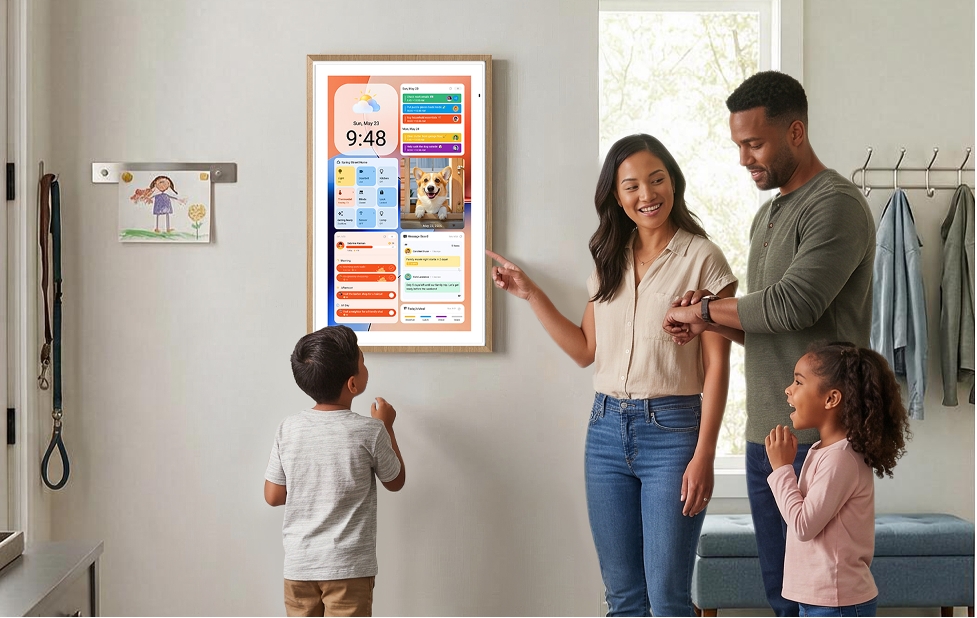
The Apolosign Digital Calendar is a wall-mounted touchscreen that shows the family’s schedule in a format kids can read from across the room. It syncs automatically with Google Calendar, Apple iCloud, Outlook, Yahoo and Cozi, so the display updates when a parent adds an appointment on their phone. Nothing has to be copied over by hand.
Events are color coded by family member, which lets a child find their own day without reading through everyone else’s. The routines feature breaks a morning or bedtime sequence into individual steps a child checks off as they go, and each completed task earns points that convert to rewards the family sets themselves. Reward systems of this kind are a familiar tool in behavioral support for ADHD, and putting one on the wall rather than in an app means it stays visible.
There is also a message board for reminders and countdowns, meal planning, shared to-do lists and voice control through Google Assistant. The 15.6-inch model sells for $279 and includes a desk stand. Larger 21.5-inch and 27-inch versions mount on the wall. During the back-to-school season, customers can save $30 on their purchase. No feature sits behind a subscription.
“Kids with ADHD are not choosing to forget,” said Fyhack, CEO of Apolosign. “They lose the thread because the information was never in front of them. Our job is to keep it in front of them without a parent having to maintain a chart every Sunday night.”
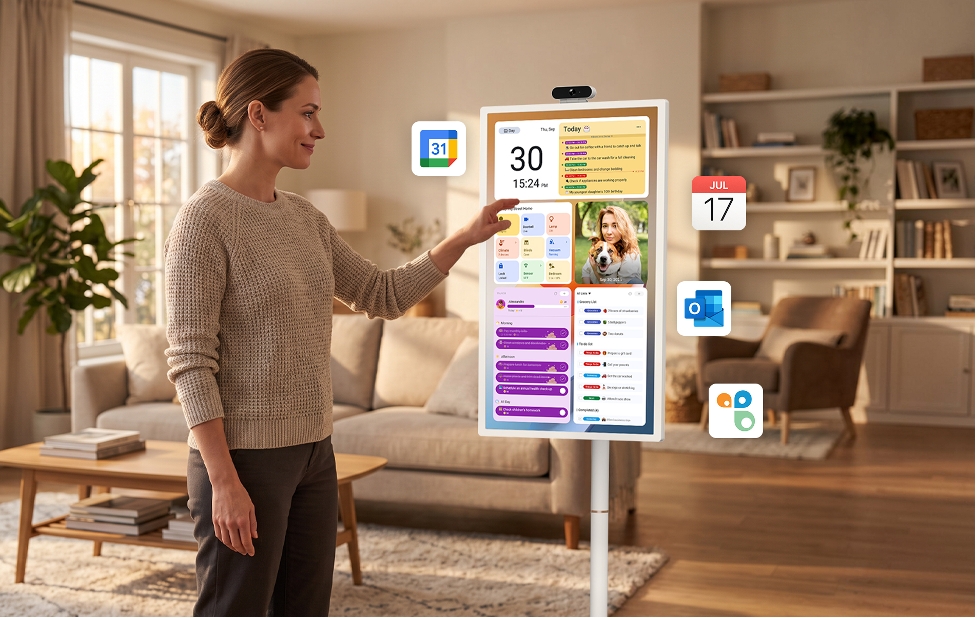
For households that want the same schedule to travel between rooms, the Apolosign Portable TV shows the calendar dashboard on a battery-powered screen that rolls from the kitchen to wherever homework is happening.
The Apolosign Digital Calendar is a consumer organization tool, not a medical device, and is not a treatment for ADHD. Families should work with their child’s clinician and school on any support plan.
About Apolosign
Apolosign designs smart displays for the home, including digital family calendars, portable touchscreen TVs and digital photo frames. The company sells directly at apolosign.com and through Amazon, ships free within the U.S., and includes a 30-day return period and a one-year warranty.
Media Contact
Company Name: Apolosign
Contact Person: Media Relations
Email: Send Email
Country: United States
Website: https://www.apolosign.com