
Ningbo, Zhejiang, China – August 30, 2026 –
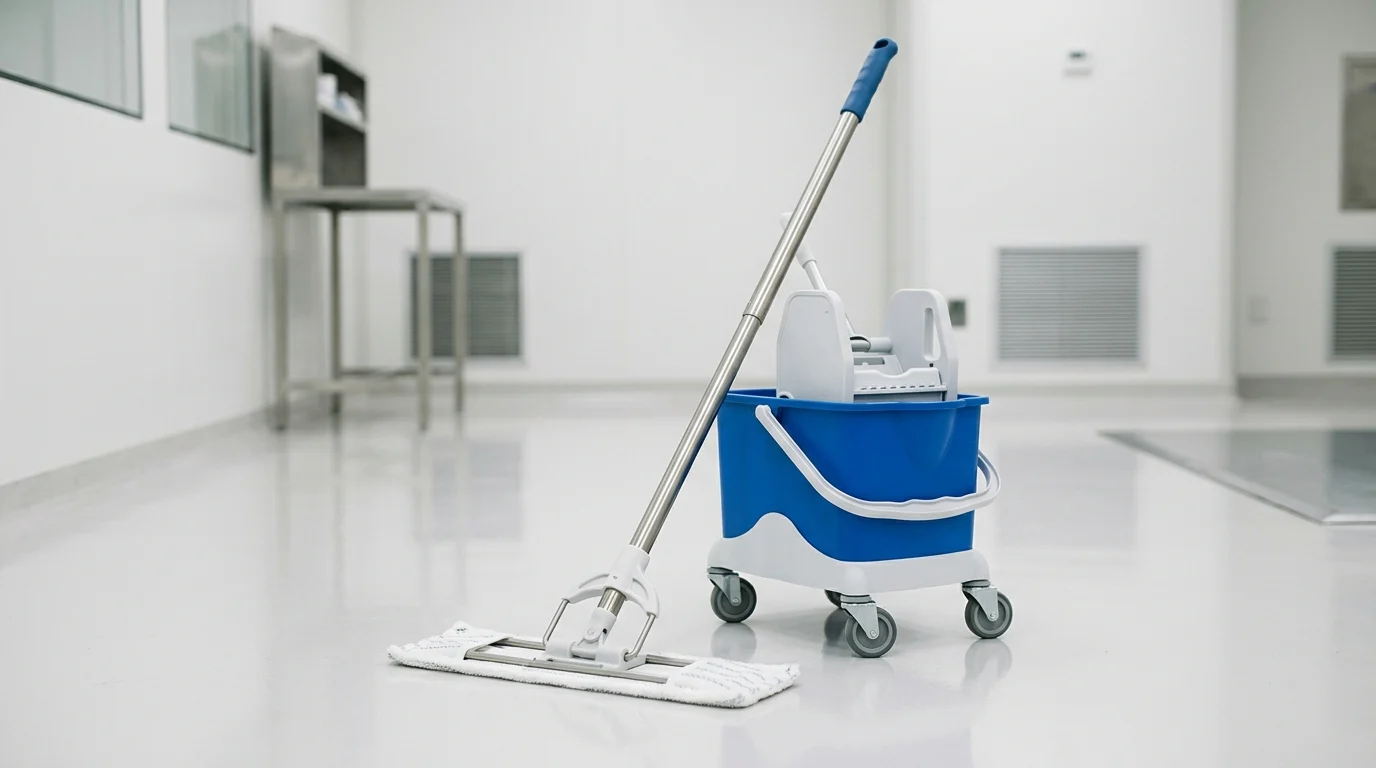
In a controlled environment, a mop is not just a cleaning tool—it is part of the contamination control system. In an ISO Class 5 cleanroom, where allowable airborne particles are tightly limited, ordinary janitorial supplies can introduce lint, microbes, residues, or static charge that threaten product quality and regulatory compliance. cleanroom mopsare engineered to remove microscopic contamination from floors, walls, and ceilings while minimizing particle shedding and chemical incompatibility. This article explains how cleanroom-compatible materials, sealed edges, sterility controls, absorbency, and ESD-safe designs help reduce cross-contamination. It also highlights the specifications facility teams should compare when selecting Mop Heads for pharmaceutical, semiconductor, biotech, and other critical manufacturing environments.
How Cleanroom Mops Reduce Cross-Contamination
Maintaining the integrity of a controlled environment requires stringent contamination control protocols, where specialized surface cleaning tools play a foundational role. In high-grade cleanrooms, such as ISO Class 5 facilities where airborne particles must not exceed 3,520 particles (≥0.5 µm) per cubic meter, standard janitorial equipment introduces unacceptable risks. Specialized mops are engineered specifically to capture and remove microscopic contaminants from floors, walls, and ceilings without shedding secondary particulate matter or leaving behind chemical residues that could compromise sensitive manufacturing processes.
What Makes a Mop Cleanroom-Compatible
The fundamental difference between a standard commercial mop and a Cleanroom Cleaning Mop lies in material construction, edge sealing, and manufacturing controls. Cleanroom-compatible variants are typically constructed from continuous filament polyester or advanced microfiber blends, featuring ultrasonically or laser-sealed edges that prevent fraying and fiber release.
These materials are laundered and packaged in ISO Class 4 cleanroom environments to ensure exceptionally low initial particle counts. High-quality models are rigorously tested using Helmke Drum or liquid particle counting methods to generate fewer than 10 x 10^6 particles per square meter under severe mechanical stress. Furthermore, these materials must resist degradation when exposed to harsh sporicidal agents, quaternary ammonium compounds, and 70% isopropyl alcohol blends.
Common Sources of Particles and Bioburden
Cross-contamination in controlled environments primarily originates from personnel gowning failures, equipment transfer, and the physical degradation of non-compliant cleaning tools. Human operators remain the largest variable, capable of shedding up to 100,000 viable and non-viable particles per minute even when fully gowned, necessitating regular and rigorous floor and wall sanitation.
Standard cellulose or cotton mops exacerbate this bioburden by trapping moisture, harboring microbial growth, and shedding lint as their short fibers break down under friction. In contrast, cleanroom-grade synthetic mops provide a biologically hostile environment for microbial proliferation and maintain structural integrity over multiple thermal or chemical sterilization cycles. Additionally, in semiconductor manufacturing, operators must consider electrostatic discharge (ESD); standard mops can generate triboelectric charges, whereas specialized cleanroom mops incorporate conductive yarns to safely dissipate static and protect sensitive microelectronics.
Key Cleanroom Mop Specifications to Compare
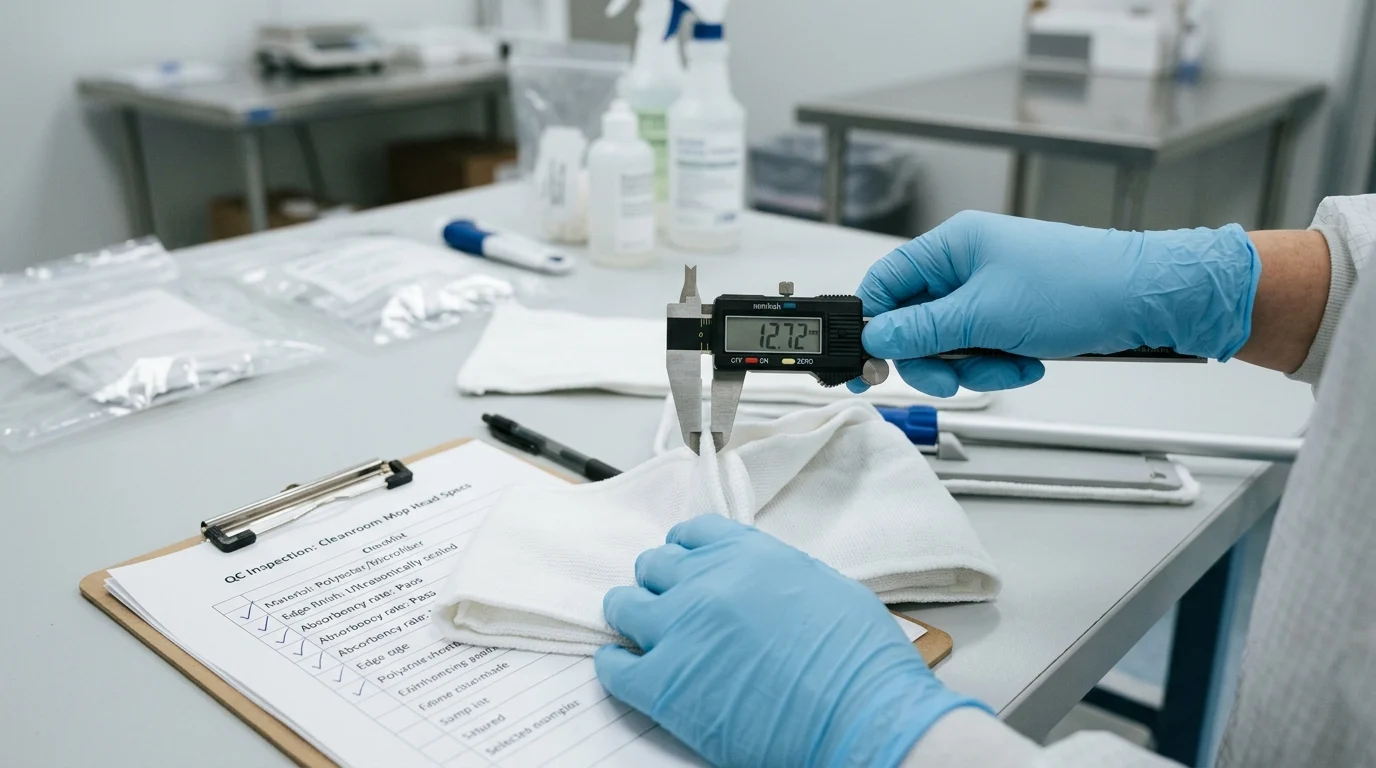
Evaluating and selecting the appropriate mop requires a comparative analysis of technical specifications aligned with facility requirements and regulatory guidelines. Procurement managers and facility engineers must look beyond basic dimensions to assess material performance, fluid retention capabilities, chemical compatibility, and sterilization viability to ensure a robust contamination control strategy.
Mop Head Material, Sterility, and Absorbency
The core of any mopping system is the Cleanroom Mop Head. Continuous filament polyester is the industry standard for ISO Class 3 to 5 environments due to its ultra-low linting properties, while split microfiber offers superior mechanical cleaning action for capturing micro-contaminants in ISO Class 6 to 8 areas.
For aseptic pharmaceutical manufacturing, sterility is non-negotiable; mop heads must be gamma-irradiated (typically at 25 to 40 kGy) to achieve a validated Sterility Assurance Level (SAL) of 10^-6. To facilitate safe transfer into critical zones, these sterile mop heads must be double-bagged or triple-bagged in cleanroom-compatible packaging. Absorbency is another critical metric, with premium cleanroom mop heads engineered to retain 300 to 400 milliliters of fluid per square meter, ensuring uniform distribution of disinfectants without excessive pooling that extends drying times.
Flat Mops vs. String Mops
The physical design of the mop frame and head dictates its application efficiency and the ergonomic impact on operators performing repetitive motions. Flat mops and string mops serve distinct functional purposes within a comprehensive contamination control strategy.
| Feature | Flat Mops | String Mops |
|---|---|---|
| Surface Contact | 100% consistent pressure | Variable, prone to gaps |
| Typical Weight (Dry) | 150–250 grams | 300–500 grams |
| Primary Application | Walls, ceilings, smooth floors | Heavy spills, uneven surfaces |
| Particle Shedding | Extremely Low (< 5 million/m²) | Low to Moderate (< 15 million/m²) |
| Fluid Distribution | Highly uniform | Can be inconsistent |
Flat mops are generally preferred for daily sanitization due to their lightweight profile and ability to maintain consistent contact with the surface, minimizing operator fatigue. String mops, however, remain highly relevant for bulk liquid removal, deep cleaning operations, or navigating highly irregular flooring profiles where a rigid flat frame cannot articulate effectively.
How to Implement and Validate a Cleanroom Mop Program
The effectiveness of even the highest-grade mop is entirely dependent on the standard operating procedures (SOPs) governing its use. Establishing a rigorous cleanroom mop program requires careful attention to zoning, chemical saturation, and operator technique, often supported by a reliable OEM Cleanroom Mop Supplier to ensure batch-to-batch consistency and supply chain security.
Zoning, Saturation, and Cleaning Technique
Contamination control relies heavily on strict zoning and the implementation of multi-bucket systems to separate clean disinfectant from soiled rinse water. A three-bucket system—comprising a disinfectant bucket, a designated rinse water bucket, and a wringer—is considered the gold standard. This setup ensures that the mop is rinsed of particulate matter and exhausted chemistry before being re-saturated with fresh disinfectant.
Operators must employ the pull-and-lift technique, moving the mop in unidirectional, overlapping strokes with a 10% to 15% overlap to guarantee complete surface coverage and prevent pushing contaminants back into previously cleaned areas. Proper chemical saturation is equally critical; mop heads must hold enough liquid to maintain the required wet-contact time for disinfectants, typically ranging from 10 to 30 minutes depending on the specific sporicidal or fungicidal agent utilized.
Selection Criteria by ISO Class and GMP Needs
Selection criteria and usage protocols must scale directly with the stringency of the environment. In ISO Class 3 to 5 (GMP Grade A/B) zones, protocols dictate highly frequent mop head changes to mitigate cross-contamination and redeposition risks. It is standard industry practice to replace the mop head after cleaning every 10 to 15 square meters of surface area in these critical zones.
In less stringent ISO Class 7 or 8 (GMP Grade C/D) areas, a single mop head may be validated for
Key Takeaways
- Use continuous filament polyester mop heads in ISO Class 3 to 5 areas to reduce linting and particle release during critical cleaning.
- Select gamma-irradiated sterile mop heads with a validated SAL of 10^-6 for aseptic pharmaceutical environments.
- Avoid cotton and cellulose mops because they can shed fibers, retain moisture, and support microbial growth.
- Confirm that cleanroom mops have sealed edges and documented particle testing before approving them for controlled environments.
- Match mop materials to disinfectants such as sporicides, quats, and 70% isopropyl alcohol to prevent degradation and residue risks.
- Use ESD-safe cleanroom mops with conductive yarns in semiconductor or electronics facilities where static discharge can damage products.
Frequently Asked QuestionsWhat makes a mop suitable for cleanroom use?
A cleanroom mop uses low-lint materials such as continuous filament polyester or microfiber, sealed edges to prevent fraying, and controlled laundering and packaging to minimize particle release before use.
Which mop material is best for ISO Class 5 areas?
Continuous filament polyester is commonly preferred for ISO Class 3 to 5 environments because it offers ultra-low linting, strong chemical resistance, and stable performance during rigorous cleaning.
Why should cotton or cellulose mops be avoided in controlled environments?
Cotton and cellulose mops can shed fibers, retain moisture, and support microbial growth, increasing the risk of particle and bioburden transfer in cleanrooms.
When are sterile mop heads required?
Sterile mop heads are essential in aseptic pharmaceutical and other critical environments where validated sterility is required, often achieved through gamma irradiation at 25 to 40 kGy.
How do cleanroom mops help prevent electrostatic discharge?
Some cleanroom mops include conductive yarns that dissipate static charges, helping protect sensitive electronics and semiconductor processes from electrostatic discharge.
About Us
Zhejiang E-Sun Enviromental Technology Co., Ltd is founded in 2009, is a leading manufacturer and supplier specializing in microfiber and non-woven hygiene products. Headquartered in Ningbo, China, the company operates an 8,000-square-meter production facility and a 500-square-meter R&D center, equipped with advanced technology and a skilled team to deliver high-quality and innovative hygiene solutions.
Media Contact
Company Name: Zhejiang E-sun Environmental Technology Co., Ltd.
Contact Person: Media Relations
Email: Send Email
Country: China
Website: https://www.esunesun.com/