
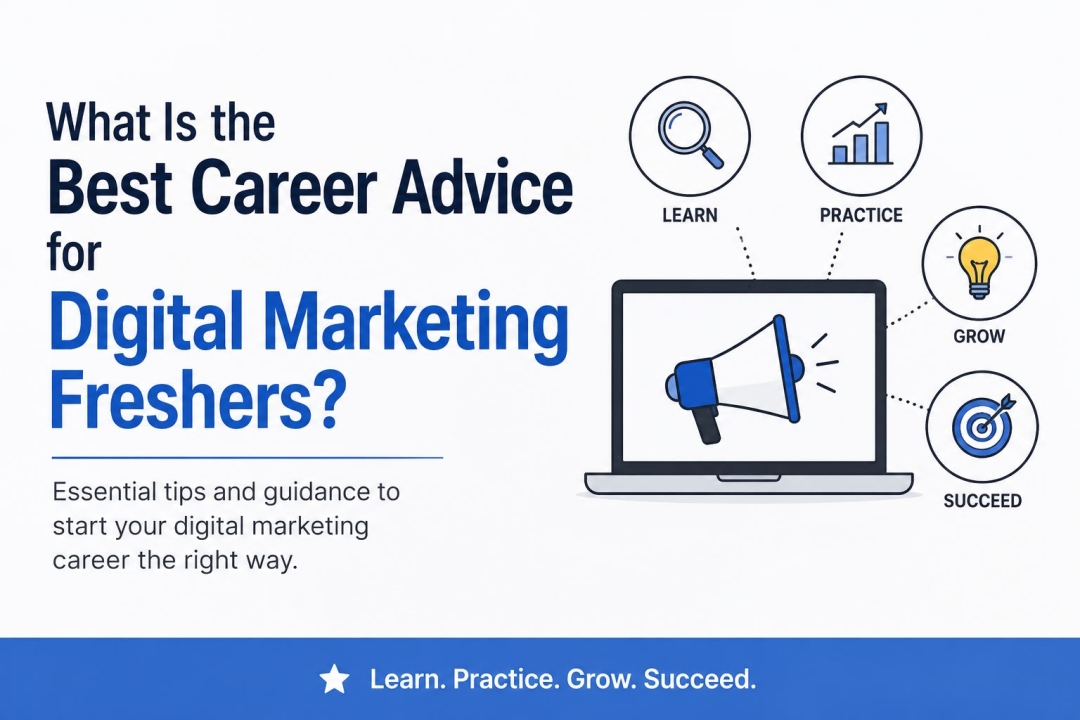
Maharashtra, India – 17 August, 2026 – Starting a career can feel confusing when every job listing asks for experience, certificates, and many technical skills. For a beginner, the best approach isn’t to learn everything at once, but to build a strong base and slowly become useful to a real business. A good Digital Marketing Course can help you learn about SEO, paid ads, social media, content marketing, analytics, email marketing, and other key areas, but classroom learning alone will not make you job-ready. The real benefit comes when you mix structured learning with hands-on practice, curiosity, communication skills, and the ability to understand why a campaign works or fails. The digital marketing field is also changing fast because AI is taking over many repetitive tasks, so beginners need to show judgment, creativity, analytical thinking, and practical work instead of just knowing definitions.
Understand What Digital Marketing Really Means
Before applying for jobs, know that digital marketing is much more than posting on Instagram or writing blogs. A digital marketer helps a business attract the right customers, share its value, get leads or sales, and track what happens after people see its marketing. SEO, Google Ads, Meta Ads, social media, email marketing, content marketing, improving conversions, analytics, and marketing automation all work together as parts of the same business system. Hiring talks now focus more on clear results like more website visitors, leads, sales rates, campaign success, and revenue instead of just finishing marketing tasks.
Learn the Core Digital Marketing Channels
A beginner should first learn the basics of main channels before choosing where to focus. Learn how search engines work, how paid ads are set up, how social media users act, how websites turn visitors into customers, and how analytics tools track results. You don’t need to be an expert in everything right away, but you should know how different channels link together. Think of digital marketing like an orchestra: SEO, paid ads, content, social media, and analytics are different instruments, and your job is to see how they work together to get business results.
Build Practical Skills Before Chasing a Job
One of the biggest mistakes beginners make is collecting certificates without creating anything. Certificates show you finished learning, but a portfolio shows you can use what you learned. Build a simple website, do keyword research, plan an SEO strategy, create sample Google Ads campaigns, make social media content plans, study a website using analytics data, and write down your suggestions. Even if you don’t have a paying client, you can make real projects for a pretend restaurant, school, online store, local service, or personal brand.
Practice With Real Projects
The best question to ask yourself is not, “What certificate should I get next?” but, “What can I show an employer that proves I can do the job?” Make case studies that explain the problem, your plan, the tools you used, how you did it, and the expected or real results. If you can work with a real small business, volunteer to help with a small marketing project and keep a professional record of your work. This gives you stories to share in interviews and makes your resume much stronger than just a list of certificates.
Choose One Digital Marketing Specialisation
Digital marketing is now too broad for most people to master deeply. After you learn the basics, pick one skill to focus on. You could explore SEO, performance marketing, social media marketing, content planning, marketing analytics, email marketing, or marketing automation. Current advice points to performance marketing, SEO, analytics, automation, and AI knowledge as valuable skills. At the same time, employers want candidates who can link marketing work to clear business results.
Explore SEO, PPC, Social Media and Analytics
Do not pick a specialisation just because someone says it pays the most. Choose an area that fits your interests and strengths. If you like numbers and testing, performance marketing or analytics might suit you. If you like research and long-term growth, SEO could be a better fit. If you like communication and creative work, content or social media may feel more natural. Your first specialisation does not have to decide your whole career; it just gives you a path to build greater skills.
Learn AI Without Becoming Dependent on It
AI is now an important part of modern marketing, but beginners should learn to use it as a tool, not as a replacement for thinking. AI can help marketers generate ideas, summarise information, create first drafts, find patterns, and speed up repetitive tasks. Recent studies on AI in marketing education show AI is becoming like a tutor, teammate, and productivity helper while stressing the need for responsible use, privacy, originality, and human judgment.
Use AI as a Productivity Partner
The best beginner is not the one who asks AI to do everything. It is the one who knows what to ask, checks the results, improves them, and understands the business reason behind the task. Learn how to give good AI commands, check facts, edit content, research, understand data, and use AI to help with tasks. When an interviewer asks how you would use AI in marketing, a careful answer about boosting productivity while keeping quality will impress more than just naming ten AI tools.
Build a Portfolio That Shows Your Ability
Your portfolio should act like evidence. Include screenshots, campaign structures, keyword research, content examples, website audits, social media strategies, dashboards, and short case studies. Explain what you were trying to achieve and why you selected a particular approach. A recruiter should be able to look at your portfolio and quickly understand what you can actually do.
Develop Communication and Business Skills
Technical knowledge can get you an interview, but communication helps you grow after you get the job. Learn to explain marketing results in simple words and link numbers to business goals. Don’t just say, “The CTR increased”; explain what changed, why it mattered, and what you would try next. Employers now value clear thinking and the ability to explain marketing results to people who may not know marketing terms.
If you are looking for Digital Marketing Courses in Pune, choose institutes based on hands-on experience, real projects, trainer skills, portfolio building, and job support instead of just ads or course length. A good learning place should let you try things, make mistakes, study results, and improve your campaigns. Your goal should be to finish training with something you can show an employer, not just something to put on your resume.
Get an Internship and Real-World Exposure
An internship can be one of the quickest ways to learn how digital marketing really works inside a business or agency. You might find that client needs, deadlines, reports, changes, budgets, and campaign results are very different from classroom tasks. Don’t turn down an internship just because the first chance isn’t exciting. Early experience is about learning how work happens, building professional habits, and gathering proof of your skills.
Keep Learning and Track Industry Changes
Digital marketing does not have a fixed syllabus. Search engines change, advertising platforms add new features, analytics tools improve, customer behaviour shifts, and AI keeps changing how work is done. This means your ability to learn may be more important than any one tool you know today. Current 2026 career advice also says the field is getting more competitive and beginners need real skills, portfolios, analytics knowledge, and ongoing learning to stand out.
Avoid Common Mistakes Made by Freshers
Avoid trying to become an expert in ten areas simultaneously. Do not depend entirely on certificates, copy projects from tutorials, exaggerate your experience, or put every marketing buzzword imaginable on your resume. Another common mistake is applying for hundreds of jobs with the same generic resume while doing nothing to improve practical skills. Instead, build a focused portfolio, customise your applications, practice interview questions, connect with professionals, and consistently improve one valuable skill at a time.
Conclusion
The best career advice for a digital marketing fresher is simple: stop preparing only to become employable and start preparing to become useful. Learn the fundamentals, practice with real projects, choose a specialisation, understand analytics, use AI intelligently, communicate clearly, and build a portfolio that proves what you can do. The market is competitive, but that competition also creates opportunities for candidates who can demonstrate practical ability rather than claim knowledge. For students looking for structured practical learning, Victorious Digital can be an option for developing digital marketing skills, project exposure, and career readiness. Your first job may not be your dream position. Still, if every role teaches you how to generate better results, analyse data, communicate with clients, and solve marketing problems, you are building the foundation for a much stronger career.
FAQs
1. Is digital marketing a good career for freshers?
Yes. Digital marketing offers opportunities across industries, but freshers should enter the field with practical skills rather than relying only on certificates. Building projects and learning analytics can significantly strengthen your profile.
2. What skills should a digital marketing fresher learn first?
Start with SEO, paid advertising fundamentals, social media, content marketing, website basics, analytics, and communication. After learning the fundamentals, choose one specialisation and develop deeper expertise.
3. Do digital marketing freshers need certifications?
Certifications can strengthen a resume, especially when they come from recognised platforms, but they should complement practical experience. A portfolio demonstrating real work can be more persuasive during an interview.
4. How can a fresher get digital marketing experience?
Create personal projects, work with small businesses, complete internships, volunteer for marketing assignments, and document your work as case studies. Experience does not always have to begin with a full-time job.
5. Will AI replace digital marketing jobs?
AI is likely to automate many repetitive marketing tasks, but marketers still need strategy, creativity, business understanding, communication, and judgment. Freshers should learn how to work effectively with AI rather than ignore it or depend on it completely.
About Us:
Victorious Digital is a digital marketing training institute based in Pune, India, offering AI-powered courses in digital marketing, SEO, Google Ads, social media marketing, web development, and related IT skills. The institute provides practical training, internships, certifications, and placement assistance to help students develop industry-ready skills.
Media Contact
Company Name: Victorious Digital
Contact Person: Atul R. Sharma
Email: Send Email
State: Maharashtra
Country: India
Website: victoriousdigital.in