
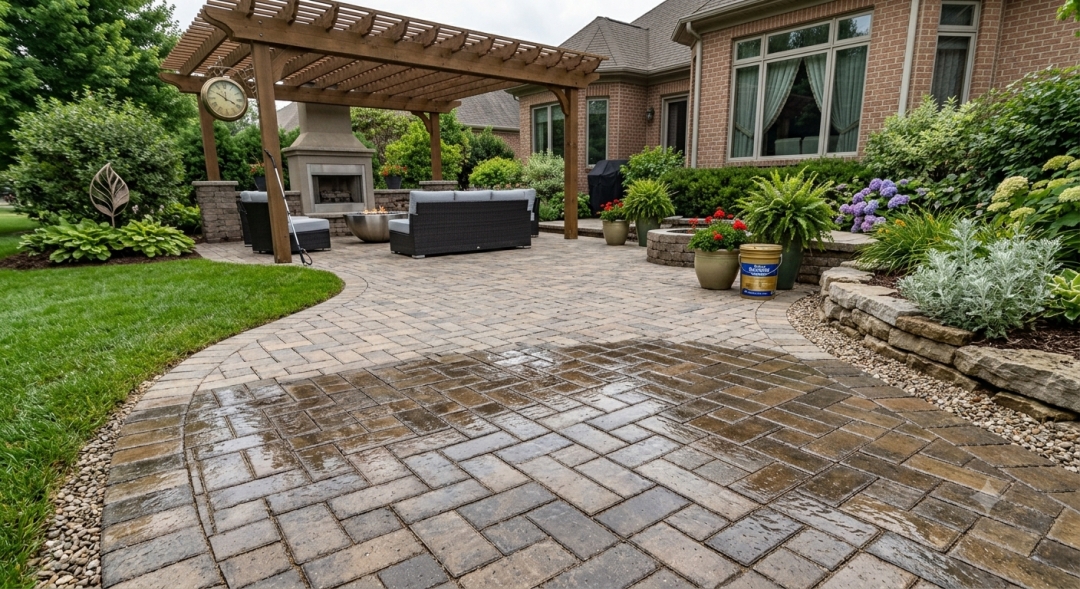
BAY SHORE, N.Y. – Aug. 14, 2026 – With home values continuing to hold steady across Bay Shore and the surrounding South Shore market, local homeowners are paying closer attention to exterior maintenance projects that protect curb appeal and long-term property condition. Paver Cleaning & Sealing Pros of Bay Shore, which provides paver cleaning, sealing and restoration services throughout the area, is offering a breakdown of what factors into the cost of professional paver sealing to help homeowners budget accurately.
Unlike interior renovations, paver sealing costs are driven largely by square footage, current surface condition and the type of sealant used, rather than a flat per-project rate. A driveway or patio that has never been sealed, or one that shows heavy staining, moss growth or sand loss between joints, typically requires more preparation — including deep cleaning, weed and moss treatment, and joint sand replacement — before sealant can be applied, which affects the overall price.
Professional paver sealing in Bay Shore generally costs more per square foot than sealing a previously maintained surface in good condition, largely because of the added labor for cleaning, repairs and joint sand replacement that untreated or neglected pavers require. Sealant type also affects pricing, with options ranging from basic wet-look or natural finishes to higher-performance polymer-based sealants that offer better resistance to UV fading, staining and freeze-thaw damage common in the region’s climate. Homeowners should expect a written estimate that breaks down cleaning, repair, joint sand and sealant costs separately, rather than a single bundled number.
“Cost really comes down to what condition the pavers are in before we even get to the sealant,” Justin Muller said. “A driveway that’s been maintained regularly is a much simpler job than one that hasn’t been touched in years, and that difference shows up in the price.”
Several additional factors can influence the final cost. Larger surface areas typically see a lower per-square-foot rate than smaller jobs, since setup costs are spread across more square footage. Properties with intricate patterns, multiple surface types, or hard-to-access areas such as narrow side yards or pool surrounds may require additional labor time. Homeowners replacing joint sand with polymeric sand, which resists weed growth and washout better than traditional sand, will also see that reflected as a separate line item in most estimates.
The company notes that sealing frequency plays into long-term cost as well. Most residential paver surfaces in the region benefit from resealing every two to three years, depending on sun exposure, foot and vehicle traffic, and the sealant type originally used. Maintaining a regular resealing schedule generally costs less over time than allowing sealant to fully wear off, since heavily weathered pavers require more extensive cleaning and preparation before they can be resealed effectively.
Homeowners are encouraged to be cautious of unusually low, flat-rate offers that do not account for square footage or surface condition, since these can sometimes indicate shortcuts such as skipped cleaning steps, thin sealant application or the use of lower-grade products that wear out well before the two- to three-year mark. Requesting a site visit and an itemized, written estimate — rather than a phone-quoted flat price — remains the most reliable way for homeowners to understand what they are actually paying for.
Paver Cleaning & Sealing Pros of Bay Shore said it provides free, on-site estimates for homeowners throughout Bay Shore and neighboring communities, allowing residents to see a specific price based on their property’s square footage and current paver condition before committing to any work.
The company also points out that sealing cost should be weighed against the expense of full paver replacement, which is significantly higher and often becomes necessary when pavers are left unsealed for many years. Unsealed pavers are more susceptible to color fading from ultraviolet exposure, cracking from repeated freeze-thaw cycles, and staining that can penetrate deep enough into the material that pressure washing alone cannot fully remove it. Viewed over a five- to ten-year span, routine sealing on a two- to three-year cycle is generally far less costly than replacing damaged sections of a driveway or patio.
Homeowners preparing for a sealing project can also help manage cost by addressing minor issues early rather than waiting for them to spread. Small areas of weed growth, isolated staining or minor sand loss are typically less expensive to correct than widespread damage across an entire surface. The company said it factors these variables into every estimate so homeowners have a clear, upfront understanding of price before scheduling work.
About Paver Cleaning & Sealing Pros of Bay Shore
Paver Cleaning & Sealing Pros of Bay Shore is a locally owned company providing paver cleaning, sealing, restoration, repair and joint sand replacement for residential and commercial properties throughout Bay Shore, N.Y., and the surrounding South Shore area. The company also offers pressure washing services for driveways, walkways, patios and other exterior hard surfaces.
Media Contact
Company Name: Paver Cleaning & Sealing Pros of Bay Shore
Email: Send Email
Phone: (631)540-1578
City: Bayshore
State: NY
Country: United States
Website: https://bayshorepaversealing.com/