
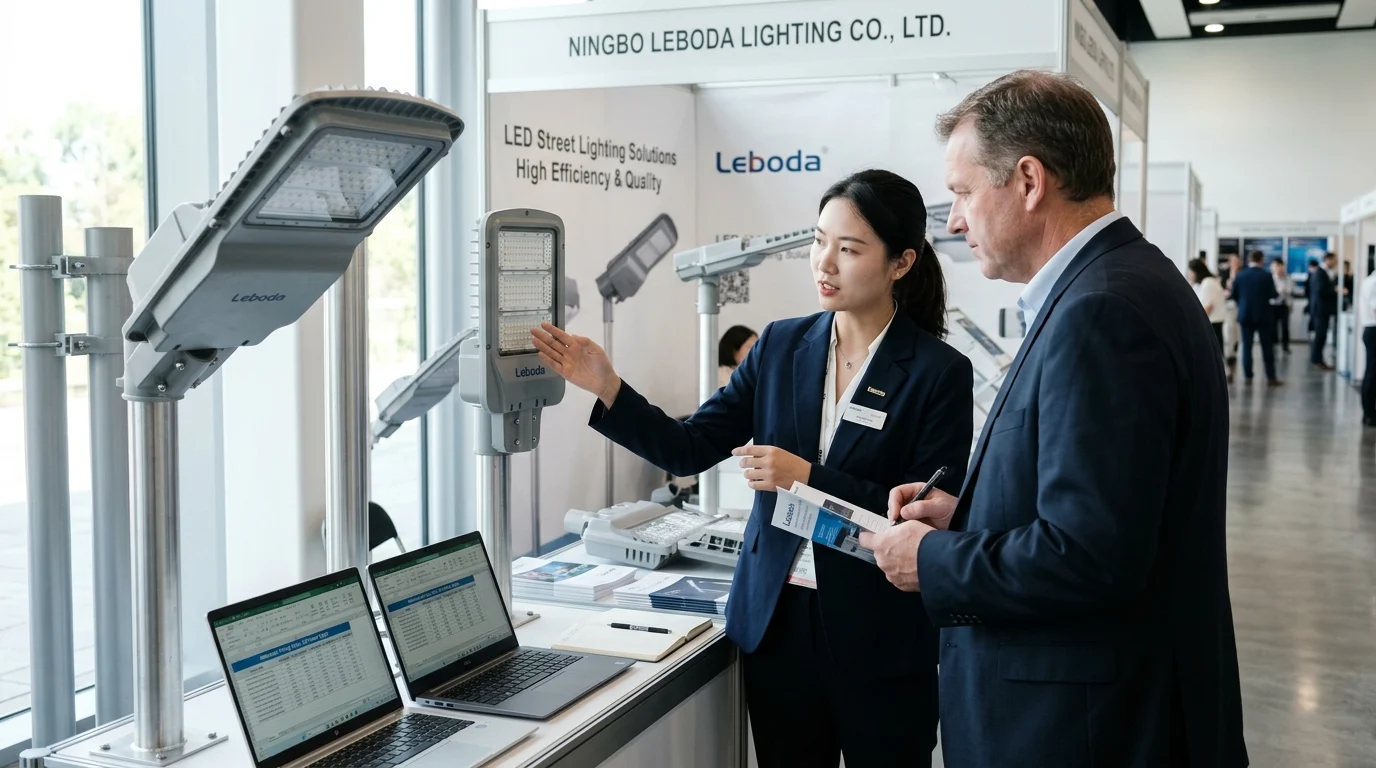
Bulk purchasing can make or break the economics of a street lighting project. A low unit price may look attractive, but without clear specifications, dependable components, and a scalable manufacturer, it can quickly lead to higher maintenance costs, compliance issues, or inconsistent performance across an installation. For municipal buyers, contractors, and infrastructure developers, the smarter approach is to define technical requirements first, then compare suppliers on total value. This guide explains how to prepare a precise RFQ, understand the cost drivers behind LED chips, drivers, housings, and smart controls, and work with a manufacturer such as Ningbo Leboda Lighting to secure competitive wholesale pricing without compromising long-term reliability.
How to Source Wholesale LED Street Lights
When navigating the market for municipal or commercial lighting projects, answering the question “Wholesale Led Street Lights: How to Get the Best Bulk Pricing?” requires strategic preparation. Partnering with an established manufacturer like Ningbo Leboda Lighting ensures you receive competitive factory-direct rates, but securing the absolute best deal means knowing your exact project parameters before you negotiate.
What to Define Before Requesting a Bulk Quote
To avoid inflated quotes and ensure accurate manufacturing, you must provide suppliers with precise technical specifications. Before reaching out, define the following:
- Performance Metrics: Specify the required wattage, total lumen output, and luminous efficacy (e.g., >130 lm/W or >150 lm/W).
- Compliance and Certifications: Identify mandatory regional safety and efficiency standards, such as CE and ENEC for European markets, or UL and DLC for North America.
- Environmental Ratings: Determine the necessary Ingress Protection (IP66 is standard for street lighting) and Impact Protection (IK08 or IK10) based on the installation climate.
- Smart City Readiness: Decide if the fixtures require NEMA or Zhaga receptacles, daylight photocells, or DALI-2 dimming capabilities for future IoT integration.
Key Cost Drivers in Wholesale LED Street Lights
Understanding what dictates the unit price allows you to value-engineer your order without sacrificing reliability.
| Component / Factor | Premium Configuration (Higher Cost) | Economy Configuration (Lower Cost) | Impact on Fixture Lifespan |
|---|---|---|---|
| LED Chips | Lumileds, Cree, Osram | Generic/Unbranded SMD chips | High (Maintains lumen output over time) |
| LED Driver | Mean Well, Inventronics | Standard non-isolated drivers | Critical (Prevents premature electrical failure) |
| Housing Material | Heavy die-cast aluminum (ADC12) | Thin aluminum or mixed alloys | Moderate (Crucial for thermal management) |
| Order Volume | Less than 100 units (LCL) | Full Container Load (FCL) | N/A (Significantly lowers per-unit freight) |
High-quality internal components, particularly Tier-1 LED drivers, typically make up 20% to 30% of the total fixture cost. By clearly balancing these cost drivers against your project’s lifecycle requirements, you can optimize your procurement strategy with manufacturers like Ningbo Leboda Lighting to achieve maximum return on investment.
How to Compare Suppliers Beyond Unit Price
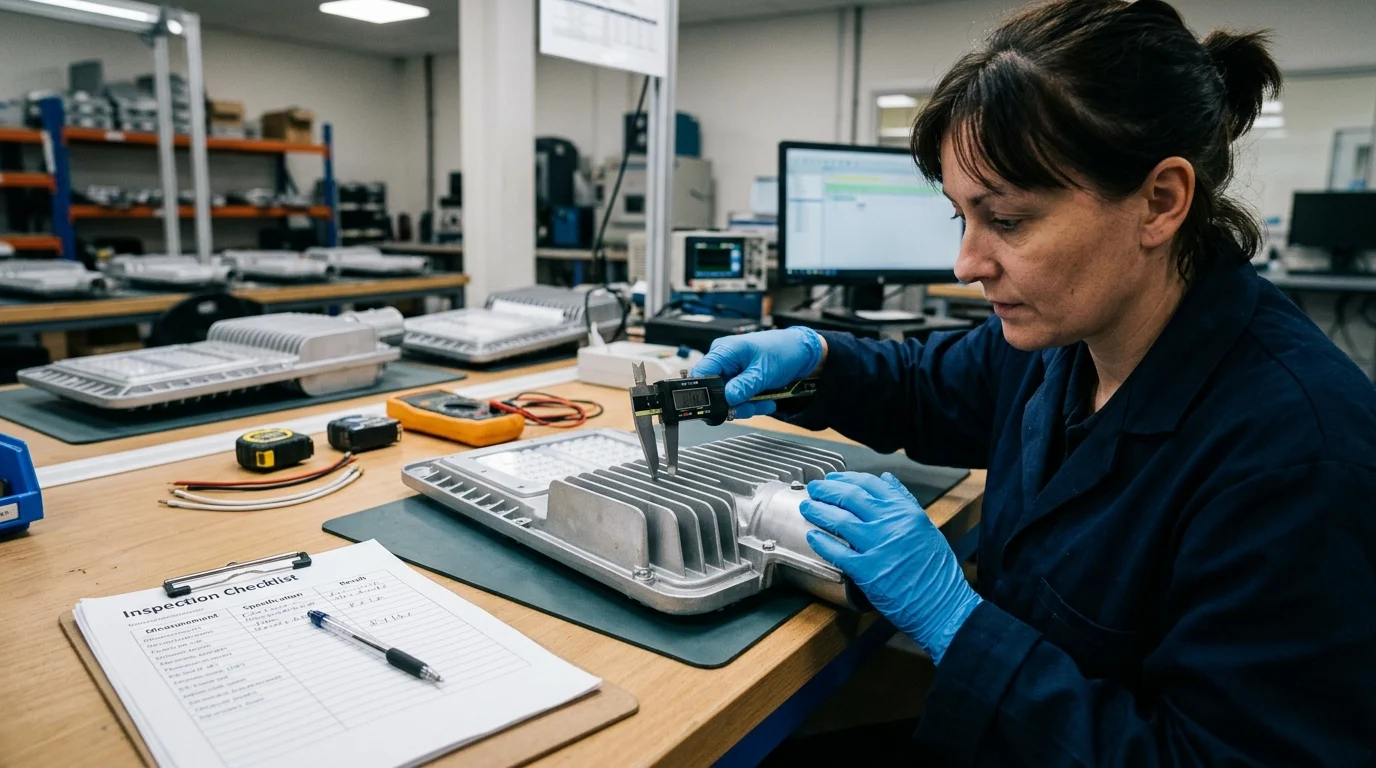
Evaluating a bulk quote strictly by the bottom-line price is a common procurement trap. When comparing offers from different manufacturers, buyers should analyze the total cost of ownership (TCO), which includes installation, maintenance, and energy consumption over the fixture’s entire operational lifespan.
A supplier’s manufacturing capabilities, in-house testing protocols, and post-sale technical support are just as critical as their pricing matrix. To properly audit a supplier, request video tours of their SMT (Surface-Mount Technology) lines, verify their ISO 9001 certifications, and ask for case studies of past municipal deployments. Reviewing these operational benchmarks ensures the product will perform as promised in the field and that the vendor has the infrastructure to support large-scale rollouts.
Specifications and Performance Factors to Review
Look closely at the photometric performance and thermal management data provided by the supplier. To ensure you are getting the best value, review these key factors:
- System Efficacy:A high-quality wholesale Led Street Light should deliver a system efficacy of at least 130 to 150 lumens per watt (lm/W).
- Photometric Data: Request IES (Illuminating Engineering Society) files to simulate the lighting layout in software like DIALux.
- BUG Rating: Verify that the optics minimize Backlight (light directed behind the fixture), Uplight (light directed upward, causing sky glow), and Glare (light causing visual discomfort). Note that specific backlight, uplight, and glare thresholds are often strictly mandated by municipal dark-sky ordinances.
To help you evaluate incoming quotes, use the following baseline comparison between standard and premium specifications. Note that standard specifications are often adequate for low-traffic private roads, temporary installations, or budget-constrained developments. Conversely, premium tiers are justified for municipal installations where long-term reliability and reduced maintenance offset the higher initial investment:
| Component / Metric | Standard Specification | Premium Specification |
|---|---|---|
| System Efficacy | 100 – 120 lm/W | 130 – 160+ lm/W |
| Surge Protection | 4kV – 6kV | 10kV – 20kV |
| Housing Material | Thin ADC12 Aluminum | Heavy-duty Die-cast Aluminum |
| Lumen Maintenance | L70 at 30,000 hours | L80 at 50,000+ hours |
Compliance, Warranty, and Quality Control Checks
A reliable supplier will back their products with rigorous quality control and recognized third-party certifications. Ensure the fixtures carry the necessary regional approvals, such as CE and RoHS for European markets, or UL and DLC for North America. These certifications are non-negotiable for municipal tenders and energy rebate programs.
Investigate the manufacturer’s warranty terms and historical defect rates. Depending on regional norms and the specific contract type, a reputable factory typically offers a standard 3- to 5-year warranty, with an option to extend to 7 or 10 years on premium models. Furthermore, ask about their Acceptable Quality Limit (AQL) and internal defect rates. For example, in our audit experience, established manufacturers often target strict objective criteria, such as an AQL 1.0 standard or a published defect rate below 0.5%. Requesting a sample for an independent teardown and integrating third-party pre-shipment inspections will help validate these claims before you commit to a multi-container order.
How to Secure Better Bulk Pricing
Once you have vetted your suppliers and confirmed
Key Takeaways
- Create a detailed specification sheet before requesting quotes to reduce pricing discrepancies and avoid costly mid-production revisions.
- Match both wattage and lumen output requirements, since many tenders still reference legacy wattage classes while modern performance is measured by efficacy.
- Specify at least IP66 protection and IK08 or IK10 impact resistance for outdoor street lighting projects exposed to rain, dust, and vandalism.
- Evaluate LED chips, drivers, housing quality, and heat sink design because these bill-of-materials choices directly influence unit price and long-term reliability.
- Consider 3-pin or 7-pin NEMA receptacles or Zhaga sockets when future smart lighting, photocell control, or IoT integration may be required.
- Do not choose a wholesale supplier by price alone; confirm production scalability, component consistency, quality control, and engineering support.
Frequently Asked QuestionsWhat information should I prepare before requesting a wholesale LED street light quote?
Prepare wattage, lumen output, CCT, IP/IK ratings, road distribution type, pole spacing, driver requirements, surge protection, and any smart control interface such as NEMA or Zhaga.
What wattage range is common for LED street lights?
Led Street Lights commonly range from about 30W for pathways and parks to 300W for highways, major roads, and high-mast applications.
Why should I specify IP66 and IK08 or IK10 ratings?
IP66 helps protect fixtures against dust and heavy rain, while IK08 or IK10 improves resistance to impact, vandalism, and harsh public outdoor conditions.
Which components most affect the bulk price of LED street lights?
The main cost drivers are LED chips, LED drivers, die-cast aluminum housing, heat sink design, surge protection, dimming functions, and smart lighting compatibility.
Are premium LED chips and drivers worth the higher upfront cost?
Yes, premium chips and Tier-1 drivers can improve lumen maintenance, reliability, surge protection, and dimming performance, reducing long-term maintenance and replacement costs.
Media Contact
Company Name: Ningbo Leboda Lighting Technology Co., Ltd.
Email: Send Email
Country: China
Website: https://www.lebodaworld.com/